
What is GDP per capita?
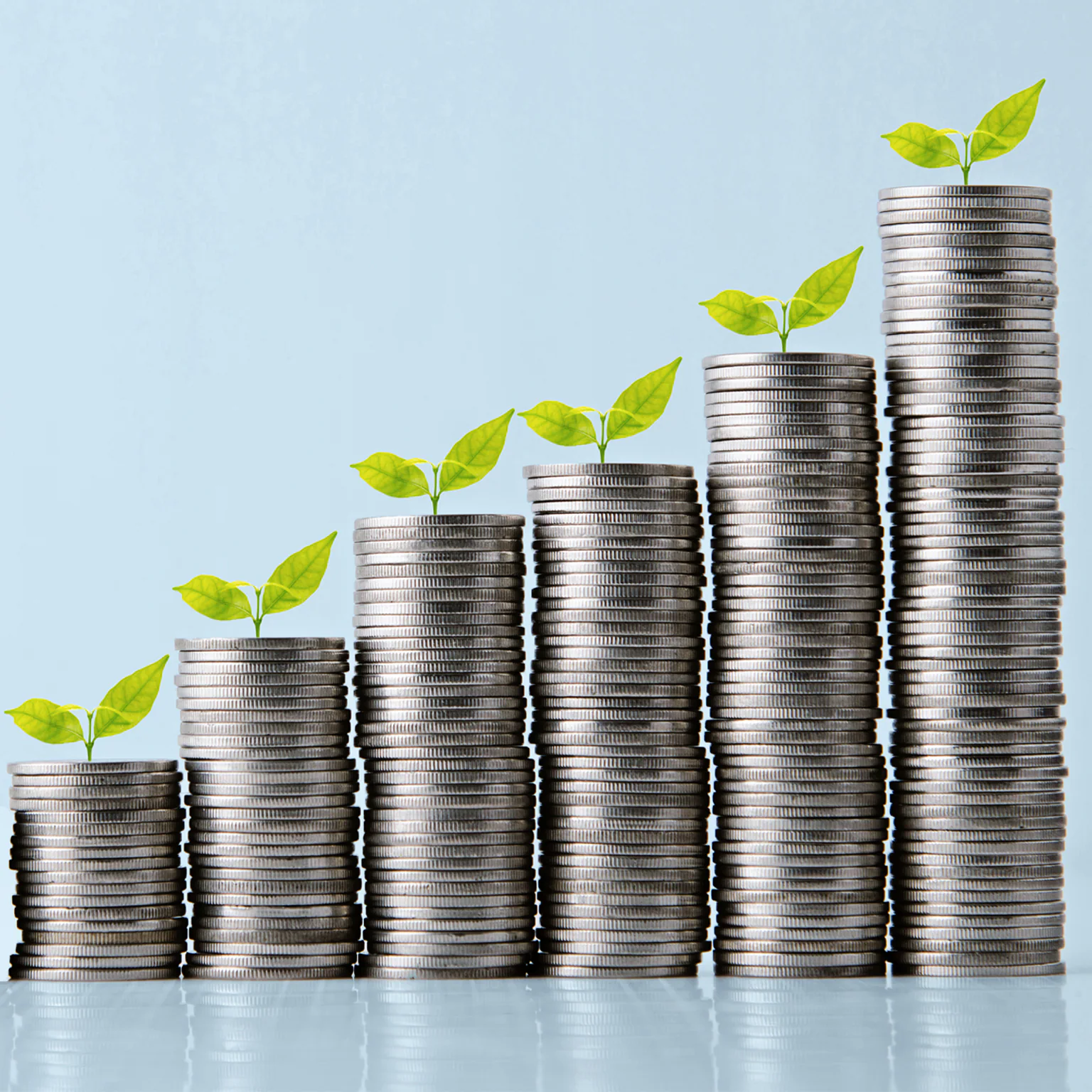
What Is GDP Per Capita?
Economic statistics often acquire a mystique they do not deserve. Policymakers invoke them. Journalists repeat them. Investors react to them. Yet many of these figures are, at their core, remarkably simple. GDP per capita is one such measure.
And still, despite its simplicity, few economic indicators have had a greater influence on how nations understand themselves.
Consider two countries. One possesses vast natural resources, glittering skylines, and a national output measured in trillions of dollars. The other is smaller, less visible on the global stage, and produces far less in total. Which country is richer?
The answer depends on a question that total GDP cannot answer: richer for whom?
GDP per capita emerged precisely because economists needed a way to move beyond the sheer size of an economy and begin thinking about the prosperity experienced by the average person. It is not a perfect measure. In some contexts, it can be deeply misleading. Yet it remains one of the most powerful tools available for comparing living standards across nations and over time.
Understanding GDP per capita therefore requires understanding both what it reveals and what it conceals.
GDP Per Capita Defined
GDP per capita is a country's gross domestic product divided by its population.
In its simplest form:
GDP\ per\ capita=\frac{GDP}{Population}
Gross Domestic Product (GDP) measures the total market value of all final goods and services produced within a country's borders during a specific period, usually a year.
When economists divide this total output by the number of people in the country, they obtain an estimate of average economic output per person.
Suppose a country produces $1 trillion worth of goods and services annually and has a population of 50 million people.
Its GDP per capita would be:
$1,000,000,000,000 ÷ 50,000,000 = $20,000
The calculation itself is straightforward.
The interpretation is where things become interesting.
GDP per capita is often used as a proxy for average income, productivity, and living standards. It does not tell us exactly how much money people earn, but it offers a useful approximation of the economic resources available within a society.
Why Economists Prefer GDP Per Capita Over Total GDP
The world's largest economies are not necessarily the world's richest societies.
This distinction is critical.
A country with a population of 1.4 billion people may generate enormous total output simply because it contains so many workers and consumers. Another country with only 5 million residents might produce much less in aggregate but generate far more wealth per person.
Without GDP per capita, comparisons become distorted.
Imagine comparing a corporation's total revenue without considering how many employees it has. A firm generating $10 billion in revenue sounds impressive until one learns it employs 500,000 workers. Another firm generating $2 billion with only 5,000 employees may actually be more productive.
Countries are similar.
GDP measures scale.
GDP per capita measures average economic performance.
That distinction fundamentally changes how economists evaluate prosperity.
A Comparison of GDP and GDP Per Capita
| Measure | What It Shows | Strengths | Limitations |
|---|---|---|---|
| GDP | Total economic output | Indicates economic size and market scale | Ignores population differences |
| GDP Per Capita | Output per person | Better proxy for average living standards | Ignores inequality |
| Median Income | Income of the typical individual | Reflects everyday experience more directly | Harder to compare internationally |
| Productivity per Worker | Output per worker | Reveals efficiency | Does not capture household welfare directly |
The table highlights an important reality: no single metric captures economic well-being perfectly.
GDP per capita is valuable precisely because it occupies a middle ground. It is broader than income statistics and more informative than aggregate GDP alone.
What GDP Per Capita Tells Us About Prosperity
One of the most striking patterns in economic history is the enormous gap in GDP per capita between nations.
Some countries generate over $80,000 per person annually. Others struggle to reach $2,000.
These differences are not merely statistical curiosities.
They translate into radically different experiences of daily life.
Higher GDP per capita generally correlates with:
-
Longer life expectancy
-
Better healthcare systems
-
Higher educational attainment
-
Improved infrastructure
-
Greater technological adoption
-
Increased economic opportunity
The relationship is not mechanical, but it is remarkably persistent.
When societies become more productive, they acquire greater resources to invest in public services, innovation, and human capital.
This observation lies at the heart of modern development economics.
Economic growth is ultimately not about numbers on spreadsheets. It is about expanding the capabilities and opportunities available to individuals.
GDP per capita provides one way of measuring that expansion.
The Institutional Story Behind GDP Per Capita
Many discussions of GDP per capita focus on arithmetic.
The more interesting question is why some countries achieve high levels of GDP per capita while others remain poor.
This is where economics moves beyond accounting.
Countries do not become wealthy merely because they desire prosperity. Nor do they become rich simply because they possess natural resources.
History provides countless examples of resource-rich societies that remained stagnant and resource-poor societies that became extraordinarily prosperous.
The decisive factor often lies in institutions.
Inclusive institutions encourage investment, innovation, entrepreneurship, and participation in economic life. Extractive institutions concentrate power and opportunity in the hands of a narrow elite.
Over long periods, these institutional differences compound.
A country that rewards innovation today may create technologies that transform productivity tomorrow. A country that suppresses competition may sacrifice decades of future growth.
GDP per capita is therefore not merely a measure of economic output.
It is, in many respects, a reflection of the incentives embedded within a society.
What GDP Per Capita Does Not Measure
Every statistic creates blind spots.
GDP per capita is no exception.
Its greatest limitation is that it represents an average.
Imagine a country where ten individuals each earn $50,000 annually.
GDP per capita would be $50,000.
Now imagine another country where nine individuals earn $10,000 and one billionaire earns millions.
The GDP per capita might still be $50,000.
Yet the lived experience of the average citizen would be dramatically different.
GDP per capita tells us nothing about distribution.
It does not reveal:
-
Income inequality
-
Wealth inequality
-
Poverty rates
-
Social mobility
-
Political freedom
-
Environmental sustainability
-
Quality of life
A society can have a high GDP per capita and still struggle with severe social challenges.
This limitation explains why economists increasingly complement GDP statistics with broader measures of human development and well-being.
Nominal vs. Purchasing Power Parity (PPP)
Another complication arises when comparing countries.
A dollar does not buy the same quantity of goods everywhere.
In some nations, housing, food, transportation, and healthcare are relatively inexpensive. In others, they are costly.
For this reason, economists often use Purchasing Power Parity (PPP) adjustments.
PPP attempts to account for differences in local prices.
A country with a GDP per capita of $20,000 may provide a standard of living comparable to a country reporting $35,000 if goods and services are significantly cheaper.
Nominal GDP Per Capita
-
Uses market exchange rates
-
Useful for financial comparisons
-
Commonly cited in international rankings
GDP Per Capita (PPP)
-
Adjusts for cost-of-living differences
-
Better reflects actual purchasing power
-
Often preferred when comparing living standards
Neither measure is inherently superior.
Each answers a different question.
A Lesson Learned From Looking at Development Data
Years ago, while reviewing long-run development data for dozens of countries, I expected the richest nations to owe their success primarily to geography, resources, or historical luck.
The data told a different story.
Countries with vastly different climates, cultures, and natural endowments frequently converged toward similar levels of prosperity when they developed institutions that supported investment, education, and innovation. Conversely, countries blessed with abundant resources often underperformed when governance structures weakened incentives for productive activity.
The lesson was simple but profound.
GDP per capita is not merely a measure of what an economy produces today. It is often a reflection of decisions made decades earlier—choices about education, property rights, competition, and political accountability.
Looking at GDP per capita without examining those underlying forces is like observing the height of a tree while ignoring the quality of the soil in which it grows.
Why GDP Per Capita Matters for Policy
Policymakers monitor GDP per capita because it provides insight into whether economic growth is translating into broader prosperity.
A growing economy can still leave citizens behind if population growth outpaces production.
Consider two scenarios:
-
GDP grows by 2%, while population grows by 3%.
-
GDP grows by 5%, while population grows by 1%.
In the first case, GDP per capita falls.
In the second, it rises significantly.
The distinction matters because citizens experience living standards, not aggregate output.
Governments therefore pay close attention to per-capita measures when evaluating economic performance.
The objective is not simply to expand production but to increase the resources available to each individual.
The Continuing Relevance of GDP Per Capita
Despite decades of criticism, GDP per capita remains remarkably resilient.
There is a reason for this.
Most alternatives capture only fragments of economic reality. GDP per capita, although imperfect, remains one of the most comprehensive and internationally comparable indicators available.
It condenses enormous amounts of information into a single number.
Productivity. Investment. Innovation. Human capital. Institutional quality. Economic structure.
All leave their imprint on GDP per capita.
No statistic can summarize a society perfectly.
Yet few illuminate so much with so little.
Conclusion: The Number That Reveals—and Hides—Modern Prosperity
GDP per capita occupies an unusual place in economics.
It is simultaneously indispensable and insufficient.
Indispensable because it offers one of the clearest ways to compare economic performance across countries and over time. Insufficient because prosperity is ultimately more complex than output divided by population.
The most consequential mistake is not treating GDP per capita as important. The mistake is treating it as complete.
A nation's future cannot be reduced to a single statistic. The quality of its institutions, the distribution of opportunity, the inclusiveness of its growth, and the resilience of its political system all matter profoundly.
Yet GDP per capita remains a revealing starting point.
Not because it tells us everything about a society.
Because it forces us to ask the deeper question: why do some societies create extraordinary prosperity for ordinary people while others do not?
That question, far more than the statistic itself, remains one of the central puzzles of economics.
- Arts
- Business
- Computers
- Jeux
- Health
- Domicile
- Kids and Teens
- Argent
- News
- Personal Development
- Recreation
- Regional
- Reference
- Science
- Shopping
- Society
- Sports
- Бизнес
- Деньги
- Дом
- Досуг
- Здоровье
- Игры
- Искусство
- Источники информации
- Компьютеры
- Личное развитие
- Наука
- Новости и СМИ
- Общество
- Покупки
- Спорт
- Страны и регионы
- World

 English
 Russian
 Spanish
 Portuguese
 Deutsch
 Turkish
 Dutch
Dutch
 Italiano
 Arabic
 Romaian
 Portuguese (Brazil)
 Greek
Greek