
What Is the Difference Between a Marketplace and an E-Commerce Store?
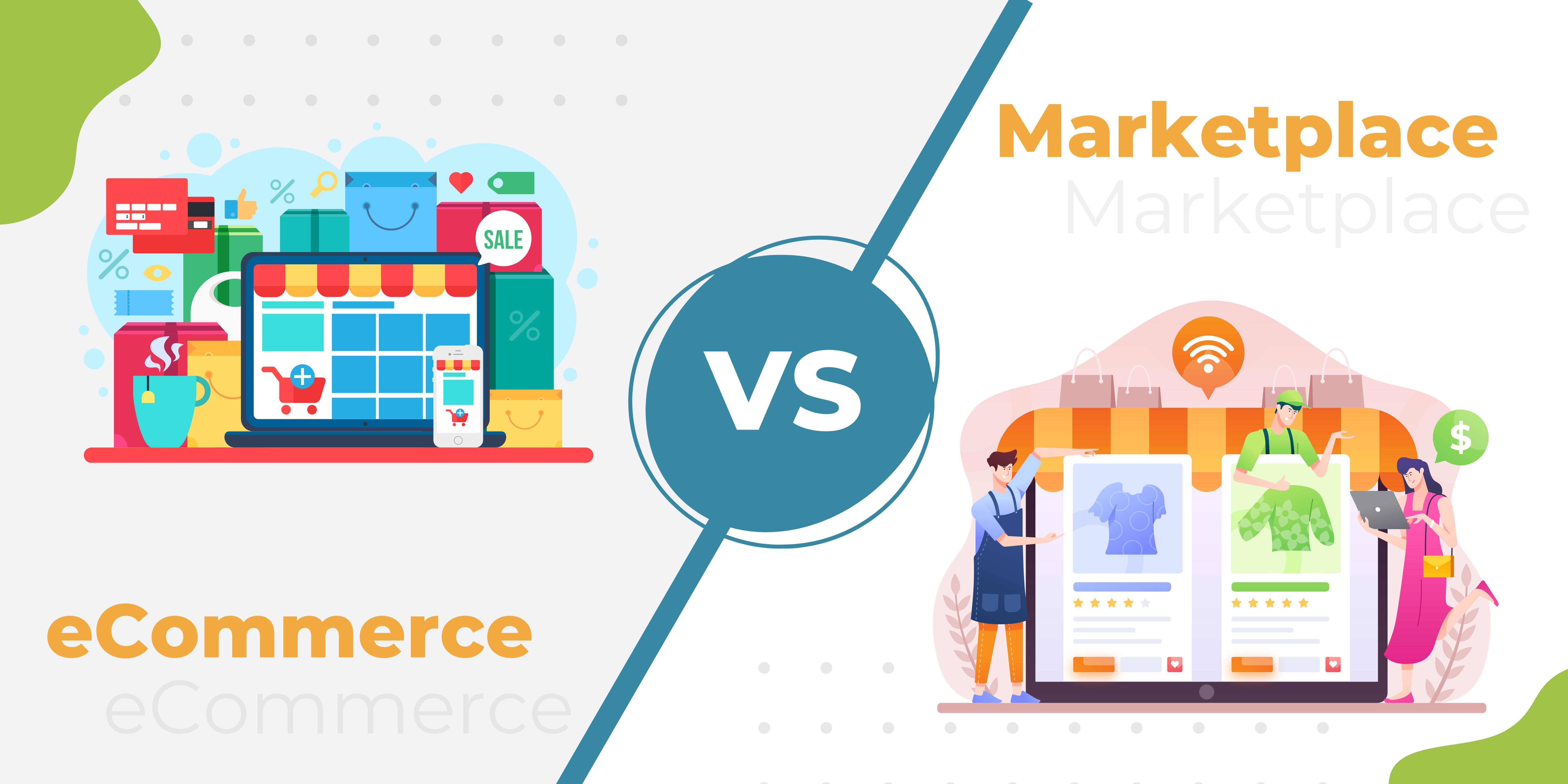
At first glance, the distinction appears almost trivial.
Both sell products.
Both process payments.
Both exist online.
Both allow customers to browse, compare, and purchase.
To many consumers, the difference between a marketplace and an e-commerce store feels largely invisible.
A few clicks.
A checkout page.
An order confirmation.
The experience appears nearly identical.
Yet beneath that familiar customer journey sit two fundamentally different business models.
One owns the relationship with inventory.
The other owns the relationship between participants.
One operates like a merchant.
The other operates like an ecosystem.
The difference influences everything.
Growth strategies.
Profit margins.
Operational complexity.
Customer acquisition.
Competitive advantages.
Risk exposure.
Even valuation multiples.
This is why understanding the distinction matters.
Not merely for entrepreneurs.
Not merely for investors.
But for anyone attempting to understand how modern commerce actually functions.
Because while marketplaces and e-commerce stores may appear similar on the surface, they are built upon remarkably different economic foundations.
The Simplest Difference
The simplest explanation is often the most useful.
An e-commerce store sells its own products.
A marketplace facilitates transactions between buyers and sellers.
That single distinction creates a cascade of consequences.
In an e-commerce business, the company acts as the merchant.
In a marketplace business, the company acts as the intermediary.
Everything else flows from that reality.
An E-Commerce Store Owns the Transaction
Traditional e-commerce businesses generally purchase, manufacture, or control inventory.
They determine:
- Product selection
- Pricing
- Inventory levels
- Fulfillment processes
When a customer purchases a product, the store itself is the seller.
The relationship is direct.
The company owns both the customer experience and the inventory being sold.
Examples can range from small independent retailers to large direct-to-consumer brands.
The operating model remains fundamentally similar.
The business sells what it owns.
A Marketplace Connects Buyers and Sellers
A marketplace operates differently.
The marketplace typically does not own most of the inventory.
Instead, third-party sellers provide products or services.
The marketplace provides infrastructure.
That infrastructure may include:
- Product listings
- Search functionality
- Payment processing
- Reviews
- Customer support
- Dispute resolution
The marketplace facilitates commerce.
The seller provides supply.
The buyer provides demand.
The marketplace orchestrates the interaction.
Ownership Changes Everything
Ownership influences risk.
Ownership influences scalability.
Ownership influences profitability.
And ownership creates one of the most important distinctions between these models.
An e-commerce store must manage inventory risk.
Products must be purchased.
Stored.
Protected.
Forecasted.
Unsold inventory creates financial exposure.
Marketplaces largely avoid this burden.
Because inventory remains with sellers.
This creates a dramatically different operational structure.
Inventory Risk Versus Participation Risk
E-commerce businesses worry about inventory.
Marketplaces worry about participation.
An e-commerce company asks:
Will we sell what we purchased?
A marketplace asks:
Will enough buyers and sellers participate?
The risks differ.
Neither is inherently superior.
They are simply different.
Understanding those differences helps explain why certain businesses choose one model over another.
Customer Relationships Function Differently
Both models serve customers.
But they do so through different mechanisms.
E-Commerce Stores
Customer relationships are highly centralized.
The business controls:
- Product experience
- Packaging
- Branding
- Fulfillment
Consistency becomes easier.
Control remains high.
Marketplaces
Customer experiences involve multiple sellers.
The marketplace manages the environment.
The seller often manages fulfillment.
Control becomes more distributed.
This creates advantages and challenges simultaneously.
Revenue Models Reveal the Difference
Revenue structures often expose the underlying business model.
E-Commerce Revenue
Revenue primarily comes from product sales.
Profit depends on:
- Product margins
- Operational efficiency
- Customer acquisition costs
The company earns money by selling products.
Marketplace Revenue
Revenue often comes from:
- Transaction fees
- Listing fees
- Subscriptions
- Advertising
The marketplace earns money by facilitating transactions.
Not necessarily by selling products directly.
This distinction is fundamental.
Comparing Marketplaces and E-Commerce Stores
| Category | Marketplace | E-Commerce Store |
|---|---|---|
| Inventory Ownership | Third-party sellers | Business-owned |
| Revenue Source | Transaction fees, subscriptions | Product sales |
| Scalability | Participation-driven | Inventory-driven |
| Customer Experience | Shared across sellers | Controlled directly |
| Inventory Risk | Low | High |
| Product Selection | Potentially unlimited | Limited by inventory |
| Operational Complexity | Ecosystem management | Inventory management |
| Brand Control | Moderate | High |
| Capital Requirements | Often lower | Often higher |
| Competitive Advantage | Network effects | Product differentiation |
The table highlights a critical truth.
The customer-facing experience may appear similar.
The underlying economics are not.
Scale Arrives Through Different Mechanisms
Growth is essential.
But growth occurs differently in each model.
E-Commerce Growth
Growth often requires:
- More inventory
- Additional suppliers
- Expanded warehousing
- Greater fulfillment capacity
Scaling demands resources.
Physical constraints frequently matter.
Marketplace Growth
Growth depends largely on participation.
More sellers increase selection.
More buyers increase transaction volume.
The marketplace scales through network expansion.
Not inventory accumulation.
This distinction explains why some marketplaces achieve extraordinary scale with relatively limited inventory investment.
Network Effects Favor Marketplaces
One reason investors frequently favor marketplace businesses involves network effects.
Network effects occur when a product becomes more valuable as participation increases.
More sellers create greater selection.
Greater selection attracts buyers.
More buyers attract sellers.
The cycle strengthens itself.
E-commerce stores rarely benefit from network effects to the same degree.
Their growth depends more heavily on operational excellence and product quality.
Both models can succeed.
The drivers differ.
Brand Building Works Differently
Branding matters in both models.
But the role of branding changes.
E-Commerce Brands
The brand often revolves around:
- Product quality
- Customer experience
- Unique positioning
Customers frequently associate value directly with the business itself.
Marketplace Brands
The brand often revolves around:
- Trust
- Selection
- Convenience
Customers value the environment as much as the individual products.
The marketplace becomes a trusted destination.
That distinction shapes marketing strategies.
The Lesson I Learned Watching Two Businesses Scale
Several years ago, I worked with two organizations operating in adjacent industries.
One was a traditional e-commerce company.
The other was building a marketplace.
Initially, the e-commerce company appeared stronger.
Revenue arrived quickly.
Margins looked attractive.
Growth seemed predictable.
The marketplace struggled.
Recruiting sellers proved difficult.
Attracting buyers proved difficult.
Progress felt frustratingly slow.
Then something changed.
Participation reached critical mass.
More sellers attracted more buyers.
More buyers attracted more sellers.
Growth accelerated dramatically.
Meanwhile, the e-commerce business continued growing—but largely in proportion to operational investments.
The experience taught me an important lesson.
E-commerce businesses scale through execution.
Marketplaces often scale through ecosystems.
Neither model is inherently better.
The mechanics are simply different.
Operational Complexity Looks Different
Some people assume marketplaces are simpler because they avoid inventory.
That assumption can be misleading.
Marketplaces avoid inventory complexity.
They introduce ecosystem complexity.
Marketplace operators must manage:
- Seller relationships
- Quality standards
- Fraud prevention
- Trust systems
- Dispute resolution
E-commerce operators focus more heavily on:
- Inventory
- Logistics
- Warehousing
- Procurement
Complexity exists in both models.
It simply appears in different places.
Profitability Can Follow Different Timelines
Many e-commerce businesses generate revenue immediately.
Products are sold.
Cash flows in.
Marketplaces often face a longer path.
Building liquidity takes time.
Liquidity refers to active participation by both buyers and sellers.
Without sufficient activity, marketplace growth can stall.
Once liquidity emerges, however, marketplace economics often improve significantly.
The timing differs.
The destination may not.
Hybrid Models Are Increasingly Common
The distinction between marketplaces and e-commerce stores is becoming less rigid.
Many organizations combine both approaches.
Hybrid models may:
- Sell owned inventory
- Host third-party sellers
- Offer subscription services
- Provide advertising opportunities
The objective is often diversification.
Companies seek the control of e-commerce and the scalability of marketplaces simultaneously.
The result can be remarkably powerful.
Provided execution remains disciplined.
The Future of Commerce Blurs the Boundaries
Artificial intelligence.
Automation.
Global logistics.
Digital products.
All are reshaping commerce.
Yet the underlying distinction persists.
Some businesses own inventory.
Others facilitate exchange.
Technology changes.
Economic principles remain surprisingly stable.
Understanding those principles becomes increasingly valuable as commerce evolves.
Conclusion: The Difference Is Not About Selling Products
The easiest mistake is assuming marketplaces and e-commerce stores differ because one sells more products than the other.
That is not the distinction.
Both facilitate purchases.
Both generate revenue.
Both serve customers.
The real difference lies in what each business fundamentally owns.
An e-commerce store owns products.
A marketplace owns relationships.
One builds value through inventory, brand, and operational execution.
The other builds value through connections, participation, and trust.
One scales by acquiring more supply.
The other scales by attracting more participants.
Neither model guarantees success.
Neither model guarantees failure.
But understanding the difference explains why some companies behave like merchants while others behave like ecosystems.
And in modern commerce, that distinction often determines how growth unfolds, how risk accumulates, and ultimately how value is created.
- Arts
- Business
- Computers
- Games
- Health
- Home
- Kids and Teens
- Money
- News
- Personal Development
- Recreation
- Regional
- Reference
- Science
- Shopping
- Society
- Sports
- Бизнес
- Деньги
- Дом
- Досуг
- Здоровье
- Игры
- Искусство
- Источники информации
- Компьютеры
- Личное развитие
- Наука
- Новости и СМИ
- Общество
- Покупки
- Спорт
- Страны и регионы
- World

 Russian
 French
 Spanish
 Portuguese
 Deutsch
 Turkish
 Dutch
Dutch
 Italiano
 Arabic
 Romaian
 Portuguese (Brazil)
 Greek
Greek