
How can I become more creative?
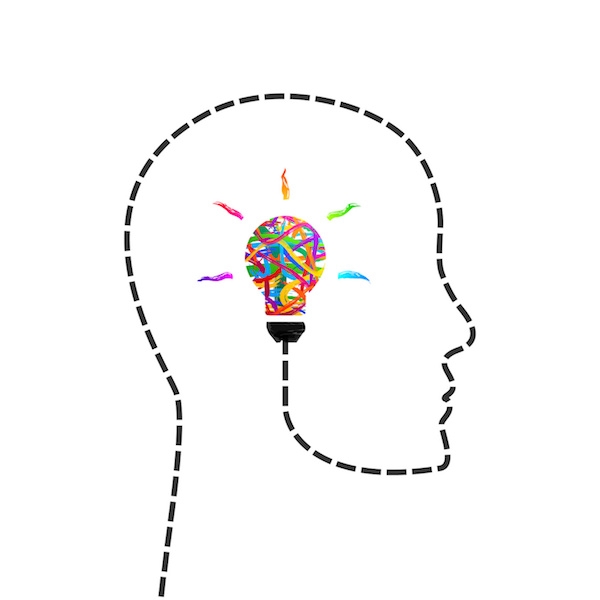
How Can I Become More Creative?
The question usually arrives quietly.
Not during moments of success.
Not when ideas are flowing effortlessly.
It arrives when the page remains blank.
When the solution refuses to appear.
When someone else seems to generate ideas with ease while you're staring at the same problem from the same angle for the tenth time.
How can I become more creative?
Beneath the question sits another one.
A more personal one.
Am I creative enough?
Many people never say this part out loud.
Yet it shapes the entire conversation.
The assumption is that creativity belongs to certain people.
Artists.
Inventors.
Visionaries.
The naturally gifted.
Everyone else is left searching for scraps.
But creativity rarely works this way.
The most creative people I've encountered often possess fewer magical qualities than expected.
What they possess instead are habits.
Perspectives.
Practices.
Ways of engaging with the world.
Creativity is not merely something they have.
It is something they continually cultivate.
Which means becoming more creative is not about transforming into a different person.
It is about changing your relationship with attention, curiosity, and possibility.
The good news is that all three can be developed.
The Biggest Misconception About Creativity
Most people think creativity begins with ideas.
It doesn't.
Creativity begins with perception.
Before an idea exists, something must be noticed.
A pattern.
A problem.
A contradiction.
An opportunity.
The world constantly presents raw material.
Most of it goes unseen.
Creative individuals are often distinguished not by extraordinary imagination but by extraordinary attention.
They notice things.
Tiny details.
Behavioral quirks.
Unexpected relationships.
Subtle tensions.
The creative process starts long before creation.
It starts with observation.
Which means one of the fastest ways to become more creative is surprisingly simple.
Pay closer attention.
Stop Waiting for Inspiration
Inspiration has excellent timing.
Unfortunately, its schedule rarely aligns with ours.
Many people spend years waiting for creative motivation to arrive before beginning work.
The problem is that creativity often behaves in reverse.
Action produces inspiration.
Not the other way around.
Writers discover ideas while writing.
Designers discover solutions while designing.
Entrepreneurs discover opportunities while experimenting.
The process generates momentum.
Momentum generates insight.
Insight generates creativity.
Waiting keeps the cycle inactive.
Participation activates it.
The lesson is uncomfortable.
But valuable.
Start before you feel ready.
Creativity Is Built Through Inputs
Imagine attempting to prepare a meal using an empty refrigerator.
The outcome would be limited.
The same principle applies to creativity.
Creative output depends heavily on creative input.
Many people unintentionally consume the same information repeatedly.
The same opinions.
The same perspectives.
The same sources.
The result is predictable thinking.
Creativity thrives on diversity.
Read outside your field.
Study subjects unrelated to your goals.
Explore unfamiliar environments.
Talk to people with different experiences.
Every new input becomes potential material.
The mind creates by connecting.
Connections require ingredients.
Curiosity Is More Valuable Than Intelligence
This statement surprises people.
Intelligence is useful.
Creativity requires something different.
Curiosity.
Curiosity keeps attention active.
It extends exploration.
It prevents premature conclusions.
Most people stop asking questions once they find an acceptable answer.
Creative individuals often continue.
What else could be true?
What am I missing?
What assumption am I making?
The questions matter because creativity frequently begins where certainty ends.
Curiosity keeps doors open.
Closed doors rarely lead to new ideas.
A Comparison of Creativity-Building Habits
| Habit | Primary Benefit | Time Investment | Long-Term Creative Impact |
|---|---|---|---|
| Daily Journaling | Clarifies thinking | 15–20 minutes | High |
| Reading Outside Your Industry | Expands perspectives | 20–60 minutes | Very High |
| Observation Walks | Improves awareness | 20–30 minutes | High |
| Idea Collection | Captures opportunities | 5–10 minutes | Very High |
| Creative Constraints | Encourages innovation | 15–45 minutes | High |
| Meditation | Strengthens attention | 10–20 minutes | Moderate |
| Collaboration | Introduces new viewpoints | Variable | High |
| Brainstorming Sessions | Generates possibilities | 30–60 minutes | Moderate |
| Reflection Time | Reveals patterns | 15–30 minutes | High |
| Experimentation Projects | Builds creative confidence | Variable | Very High |
Notice something important.
None of these habits require exceptional talent.
Most require consistency.
Creativity often grows through repetition rather than revelation.
Become an Observer of the Ordinary
Many people search for extraordinary experiences to inspire creativity.
Sometimes they help.
More often, creativity emerges from ordinary moments examined carefully.
A conversation.
A habit.
A routine.
A question.
Creative thinkers frequently notice what everyone else overlooks.
The world contains endless material.
The challenge is not scarcity.
It is attention.
Train yourself to ask:
Why does this happen?
Why is it done this way?
What pattern exists here?
What feels unusual?
These questions transform ordinary experiences into creative resources.
Keep an Idea Collection System
Ideas are fragile.
They arrive unexpectedly.
Disappear quickly.
And rarely announce their importance in advance.
Creative people often maintain systems for capturing thoughts.
Notebooks.
Voice notes.
Digital documents.
Scraps of paper.
The format matters less than the habit.
Capture everything.
Questions.
Observations.
Fragments.
Possibilities.
Most ideas will never become anything.
That is perfectly fine.
The objective is not immediate usefulness.
The objective is accumulation.
Creativity often emerges from combinations.
Combinations require inventory.
My Lesson About Becoming More Creative
Several years ago, I became frustrated with my own thinking.
Every solution felt predictable.
Every idea felt familiar.
The harder I tried to be original, the worse the results became.
Eventually I changed my approach.
Instead of focusing on creating better ideas, I focused on collecting more observations.
I carried a notebook.
Recorded questions.
Wrote down strange conversations.
Captured random thoughts.
At first, nothing dramatic happened.
Then patterns began appearing.
Ideas started connecting unexpectedly.
A note from months earlier combined with an observation from yesterday.
A question inspired a solution.
The lesson was simple.
Creativity improved when attention improved.
Not when effort increased.
I stopped forcing ideas.
I started noticing more.
The quality of ideas followed naturally.
Challenge Your Assumptions
Assumptions are creativity's invisible barriers.
Most people never examine them.
They simply accept them.
Creative thinkers do something different.
They question assumptions regularly.
Why must this work this way?
Who decided this process is necessary?
What if the opposite were true?
These questions reveal hidden possibilities.
Many innovative ideas emerge not from creating something entirely new but from challenging something everyone else accepts automatically.
Creativity often begins with skepticism.
Not cynicism.
Curious skepticism.
Learn to Generate Bad Ideas
This may sound absurd.
It may also be one of the most effective creativity exercises available.
Set a goal.
Generate twenty terrible solutions.
Ridiculous ones.
Impractical ones.
Embarrassing ones.
Why?
Because perfectionism weakens creativity.
Judgment arrives too early.
The mind becomes cautious.
Bad ideas remove pressure.
And once pressure disappears, interesting ideas frequently emerge.
Creative breakthroughs often arrive shortly after self-censorship leaves the room.
Embrace Constraints
People often believe unlimited freedom produces creativity.
The opposite is frequently true.
Constraints create focus.
A poet limited by structure.
A filmmaker restricted by budget.
A designer working with fewer resources.
Boundaries force adaptation.
Adaptation creates innovation.
Try introducing limitations intentionally.
Write a story using only one hundred words.
Solve a problem without spending money.
Create something using only existing resources.
The restrictions may reveal possibilities you would never encounter otherwise.
Spend Time Being Bored
Boredom has become increasingly rare.
Many people eliminate it immediately.
A moment of silence appears.
A screen fills the space.
Attention shifts.
The opportunity disappears.
Yet boredom often precedes creativity.
When external stimulation decreases, internal activity increases.
The mind wanders.
Connects.
Explores.
Some of the best ideas emerge during moments when nothing appears to be happening.
Not because boredom creates ideas.
Because boredom creates space.
And creativity requires space.
Walk More
There is something peculiar about walking.
It changes thinking.
The body moves.
Attention softens.
Thoughts become fluid.
Problems feel different.
Many creative breakthroughs arrive while walking.
Perhaps movement influences cognition.
Perhaps environmental variation stimulates observation.
Perhaps the explanation is simpler.
Walking creates mental freedom.
Regardless of the mechanism, the result remains remarkably consistent.
Walking often improves creativity.
Collaborate With Different Minds
Creativity grows through exposure.
Other people provide perspectives unavailable to us.
Different experiences.
Different assumptions.
Different frameworks.
A conversation can unlock an idea that solitary thinking never reaches.
The goal is not agreement.
The goal is expansion.
Creative growth frequently occurs at intersections.
Where perspectives collide.
Where assumptions are challenged.
Where unexpected connections emerge.
Stop Obsessing Over Originality
This advice feels counterintuitive.
Many people pursue creativity by chasing originality directly.
The pursuit often backfires.
The work becomes forced.
Artificial.
Overengineered.
Originality tends to emerge indirectly.
Focus on curiosity.
Observation.
Exploration.
Authentic interest.
Unique perspectives naturally develop from unique experiences.
The more intensely people chase originality, the more elusive it becomes.
The more deeply they engage with reality, the more originality appears.
Develop a Creative Routine
Creativity benefits from consistency.
Not rigidity.
Consistency.
A simple routine might include:
Daily Input
Read.
Observe.
Learn.
Explore.
Daily Output
Write ideas.
Sketch concepts.
Ask questions.
Generate possibilities.
Weekly Reflection
Review notes.
Identify patterns.
Connect observations.
Monthly Experiments
Try something unfamiliar.
Challenge assumptions.
Pursue curiosity.
Small actions repeated regularly create cumulative advantages.
Creativity compounds.
The Relationship Between Creativity and Courage
Creativity requires risk.
Not necessarily dramatic risk.
Psychological risk.
The risk of being wrong.
The risk of appearing foolish.
The risk of exploring uncertainty.
Many people remain trapped inside predictable thinking because predictability feels safe.
Creative growth requires occasional discomfort.
New ideas often look strange before they look useful.
The willingness to explore despite uncertainty becomes a creative advantage.
Courage is not separate from creativity.
It supports it.
The Strange Truth About Creative People
After studying creative individuals across industries, one observation appears repeatedly.
They do not seem obsessed with creativity itself.
They are obsessed with curiosity.
Questions.
Possibilities.
Observations.
The creativity emerges as a consequence.
Not a goal.
This distinction changes everything.
Instead of asking:
"How can I become more creative?"
Perhaps a better question is:
"How can I become more curious?"
The answers often lead to the same destination.
Conclusion: Creativity Is Built Through Attention
Most people believe creativity begins with imagination.
Sometimes it does.
More often it begins with attention.
Attention reveals patterns.
Patterns reveal possibilities.
Possibilities become ideas.
Ideas become innovation.
The process starts earlier than most people realize.
Becoming more creative is not about waiting for inspiration.
Not about discovering hidden talent.
Not about transforming into someone else.
It is about becoming more available to possibility.
Observe more carefully.
Ask more questions.
Collect more experiences.
Generate more ideas.
Explore more perspectives.
Judge less quickly.
Remain curious longer.
Creativity grows when attention deepens.
And attention is available to everyone.
The world is already filled with ideas waiting to be noticed.
The challenge is not creating possibility from nothing.
The challenge is learning how to see more of what is already there.
Because the most creative people are not always those with the greatest imagination.
They are often those who have trained themselves to notice what everyone else walks past.
And once you begin noticing more, creativity stops feeling mysterious.
It starts feeling inevitable.
- Arts
- Business
- Computers
- Games
- Health
- Home
- Kids and Teens
- Money
- News
- Personal Development
- Recreation
- Regional
- Reference
- Science
- Shopping
- Society
- Sports
- Бизнес
- Деньги
- Дом
- Досуг
- Здоровье
- Игры
- Искусство
- Источники информации
- Компьютеры
- Личное развитие
- Наука
- Новости и СМИ
- Общество
- Покупки
- Спорт
- Страны и регионы
- World

 Russian
 French
 Spanish
 Portuguese
 Deutsch
 Turkish
 Dutch
Dutch
 Italiano
 Arabic
 Romaian
 Portuguese (Brazil)
 Greek
Greek