
How do innovators generate ideas?
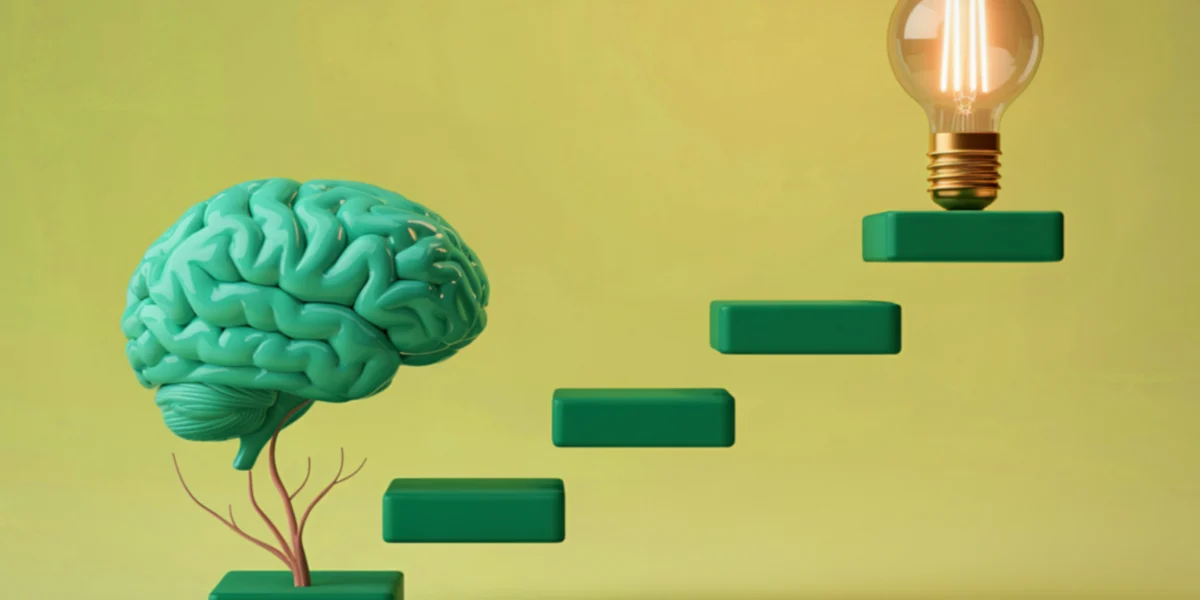
How Do Innovators Generate Ideas?
The most interesting ideas often begin as uncomfortable thoughts.
A question that refuses to leave.
A problem everyone has accepted.
A strange observation that seems meaningless at first.
Innovation rarely begins with certainty.
It begins with curiosity.
Before there is a product, there is a suspicion.
Before there is a solution, there is a frustration.
Before there is a breakthrough, there is usually a person willing to look longer at something everyone else has already explained.
This is the difference between seeing and noticing.
Everyone sees the world.
Innovators notice where the world feels incomplete.
They notice friction.
Inefficiency.
Missing pieces.
Unanswered questions.
They are not necessarily searching for ideas every second of the day.
They are training themselves to recognize opportunities when they appear.
The popular image of innovation is dramatic.
A sudden revelation.
A brilliant moment.
A lightning strike.
But innovation is usually quieter.
It is built from thousands of small observations connected over time.
An inventor reading something unrelated.
A founder noticing a repeated customer complaint.
A scientist questioning a standard assumption.
A designer seeing beauty in a problem.
The idea arrives because the groundwork was already there.
Innovators do not simply create ideas.
They create conditions where ideas can emerge.
Innovation Begins With Seeing What Others Ignore
The world is filled with problems.
Most people adapt.
Innovators investigate.
A broken process becomes a possibility.
An inconvenience becomes a design challenge.
A limitation becomes an invitation.
The difference is not that innovators experience different realities.
They interpret reality differently.
Where others see normal, innovators often see unfinished.
Where others see tradition, innovators see a decision that was made in the past.
And every decision from the past can be questioned.
The innovative mind asks:
Why is this done this way?
Who decided this was the best approach?
What would happen if we removed this assumption?
These questions create movement.
Without movement, ideas remain invisible.
Innovators Are Collectors Before They Are Creators
A common misconception is that innovators generate ideas from nothing.
They do not.
They collect.
They gather information from everywhere.
Science.
Art.
Business.
History.
Nature.
Human behavior.
Technology.
Every experience becomes material.
The mind is a workshop.
Ideas are the raw ingredients.
An innovator with limited inputs has limited possibilities.
An innovator with diverse inputs has more combinations available.
This is why many great innovators are obsessive learners.
They are not collecting knowledge simply to know more.
They are collecting building blocks.
They understand that creativity often comes from unexpected collisions.
One idea meets another.
One field influences another.
One observation changes the meaning of something familiar.
Innovation is often the art of connection.
Curiosity Is the Beginning of Every Innovation
Before innovation comes curiosity.
A person has to care enough to investigate.
Curiosity creates questions.
Questions create exploration.
Exploration creates discovery.
Innovators are often people who refuse to accept the first explanation.
They look underneath.
They search for causes.
They examine patterns.
They remain interested after others lose interest.
A child asks hundreds of questions because the world is new.
Innovators maintain that relationship with the world.
They continue asking.
Not because they lack answers.
Because they understand answers can become limitations.
The Innovator’s Relationship With Problems
Most people view problems as obstacles.
Innovators often view problems as signals.
A problem reveals a gap between reality and possibility.
That gap is where innovation lives.
A slow process suggests improvement.
A frustrating experience suggests redesign.
A limitation suggests invention.
Innovators do not simply ask:
"How do we fix this?"
They ask:
"What opportunity exists inside this problem?"
This shift changes everything.
The problem becomes valuable information.
The frustration becomes a clue.
The obstacle becomes a starting point.
A Comparison of Traditional Idea Generation vs. Innovator Thinking
| Category | Traditional Approach | Innovator Approach |
|---|---|---|
| Problems | Attempts to eliminate problems | Studies problems for opportunities |
| Ideas | Waits for inspiration | Creates systems for discovery |
| Knowledge | Collects information within one area | Combines multiple disciplines |
| Failure | Avoids mistakes | Uses experiments for learning |
| Questions | Looks for immediate answers | Challenges assumptions |
| Existing Systems | Accepts current methods | Examines hidden limitations |
| Risk | Seeks certainty before acting | Tests possibilities quickly |
| Creativity | Depends on talent | Develops through practice |
| Feedback | Takes criticism personally | Uses feedback as data |
| Change | Responds when necessary | Searches for improvement |
The difference is not simply intelligence.
It is a mindset.
Innovators create environments where better questions become possible.
They Combine Unrelated Ideas
One of the strongest sources of innovation is combination.
A new idea often comes from placing two existing ideas together in a new way.
The smartphone combined communication, computing, photography, and entertainment.
Modern transportation combines engineering, software, and human-centered design.
Many innovations are not created by discovering something completely unknown.
They are created by reorganizing what already exists.
Innovators are translators.
They move concepts between worlds.
They ask:
What can this field teach that field?
What principle works somewhere else?
What happens when these two ideas meet?
The distance between concepts is often where originality appears.
They Spend Time Observing Reality
Innovators are students of human behavior.
They watch.
They listen.
They study.
They notice frustrations people have stopped mentioning.
Many opportunities hide inside ordinary experiences.
A person struggles with a task every day.
A process wastes time repeatedly.
A product creates unnecessary confusion.
Most people adjust.
Innovators ask why adjustment is necessary.
Observation turns everyday experiences into potential ideas.
The ordinary world becomes a source of discovery.
My Lesson About How Ideas Are Created
I once believed innovative ideas came from moments of intense inspiration.
I imagined people sitting down and suddenly discovering something extraordinary.
The more I studied creative work, the less accurate that picture became.
The innovators I admired were not waiting for ideas.
They were collecting evidence.
They kept notes.
They asked questions.
They explored unrelated topics.
They paid attention to small problems.
I started doing the same.
I created a simple habit of recording observations throughout the day.
At first, most notes seemed useless.
A strange phrase.
A frustrating experience.
A question without an answer.
A pattern I noticed.
Months later, those fragments started connecting.
A problem from one situation became a solution for another.
An idea from one field influenced thinking in another.
The lesson was unexpected.
Ideas were not appearing from nowhere.
They were being assembled.
Innovation was not a lightning strike.
It was a process of noticing and connecting.
Innovators Experiment Before They Commit
Many people think innovators are confident risk-takers.
A more accurate description is that they are skilled experimenters.
They reduce uncertainty through action.
Instead of asking:
"Will this idea work?"
They ask:
"What is the smallest experiment that can teach us something?"
This approach changes failure.
Failure becomes information.
A failed prototype reveals weaknesses.
A failed test reveals assumptions.
A failed attempt creates knowledge.
Innovation depends on learning faster than circumstances change.
They Challenge Existing Rules
Rules are useful.
They create structure.
They make coordination possible.
But every rule contains a history.
Someone created it.
Someone decided it was necessary.
Innovators examine those decisions.
They ask whether the original reason still exists.
A rule that once solved a problem may later become the problem.
The creative mind respects knowledge.
But it does not worship tradition.
They Use Constraints as Creative Fuel
Innovation is often born from limitations.
Limited money.
Limited time.
Limited resources.
Constraints force decisions.
Decisions force creativity.
When everything is available, choices become overwhelming.
When something is restricted, the mind searches.
A small company competing with larger companies must find different approaches.
A designer working with limitations must discover alternatives.
A scientist with incomplete information must develop new methods.
Constraints create pressure.
Pressure can create invention.
They Protect Time for Deep Thinking
Ideas require space.
Constant reaction leaves little room for original thought.
Innovators often create periods without interruption.
They read.
Reflect.
Walk.
Think.
The goal is not inactivity.
The goal is allowing connections to form.
The brain continues processing information beneath conscious awareness.
Some ideas need silence before they become visible.
They Learn From Failure
Failure is unavoidable in innovation.
The question is not whether failure occurs.
The question is what happens afterward.
Innovators analyze.
Adjust.
Improve.
They separate their identity from their experiments.
A failed idea does not mean a failed person.
It means the current version needs refinement.
Every attempt provides information.
Every result changes the next attempt.
They Build Networks of Diverse Perspectives
Innovation rarely happens in isolation.
Different minds create different possibilities.
A person with a different background notices different problems.
A person with different expertise offers different solutions.
Innovators surround themselves with variety.
Not because disagreement is comfortable.
Because difference creates movement.
Homogeneous thinking creates repetition.
Diverse thinking creates combinations.
The Hidden Discipline Behind Innovation
Innovation appears spontaneous from the outside.
Behind the scenes, it requires discipline.
Reading.
Testing.
Learning.
Observing.
Recording.
Building.
Improving.
The creative moment is supported by consistent preparation.
The innovator creates habits that make discovery more likely.
They do not control inspiration.
They prepare for it.
Conclusion: Innovators Do Not Find Ideas. They Create Conditions for Ideas.
How do innovators generate ideas?
They pay attention.
They stay curious.
They question assumptions.
They collect knowledge.
They connect unrelated concepts.
They experiment.
They learn.
They remain open.
The greatest innovators are not simply people with more imagination.
They are people with better systems for transforming observation into possibility.
An idea begins as something small.
A question.
A frustration.
A curiosity.
A strange connection.
The innovator protects that small beginning.
They give it attention.
They test it.
They develop it.
Eventually, something new emerges.
Innovation is not the act of producing something from nothing.
It is the ability to see potential where others see ordinary.
The world is constantly offering clues.
Most people walk past them.
Innovators stop.
They look closer.
And they ask the question that changes everything:
"What could this become?"
- Arts
- Business
- Computers
- الألعاب
- Health
- الرئيسية
- Kids and Teens
- مال
- News
- Personal Development
- Recreation
- Regional
- Reference
- Science
- Shopping
- Society
- Sports
- Бизнес
- Деньги
- Дом
- Досуг
- Здоровье
- Игры
- Искусство
- Источники информации
- Компьютеры
- Личное развитие
- Наука
- Новости и СМИ
- Общество
- Покупки
- Спорт
- Страны и регионы
- World

 English
 Russian
 French
 Spanish
 Portuguese
 Deutsch
 Turkish
 Dutch
Dutch
 Italiano
 Romaian
 Portuguese (Brazil)
 Greek
Greek