
How do I overcome creative block?
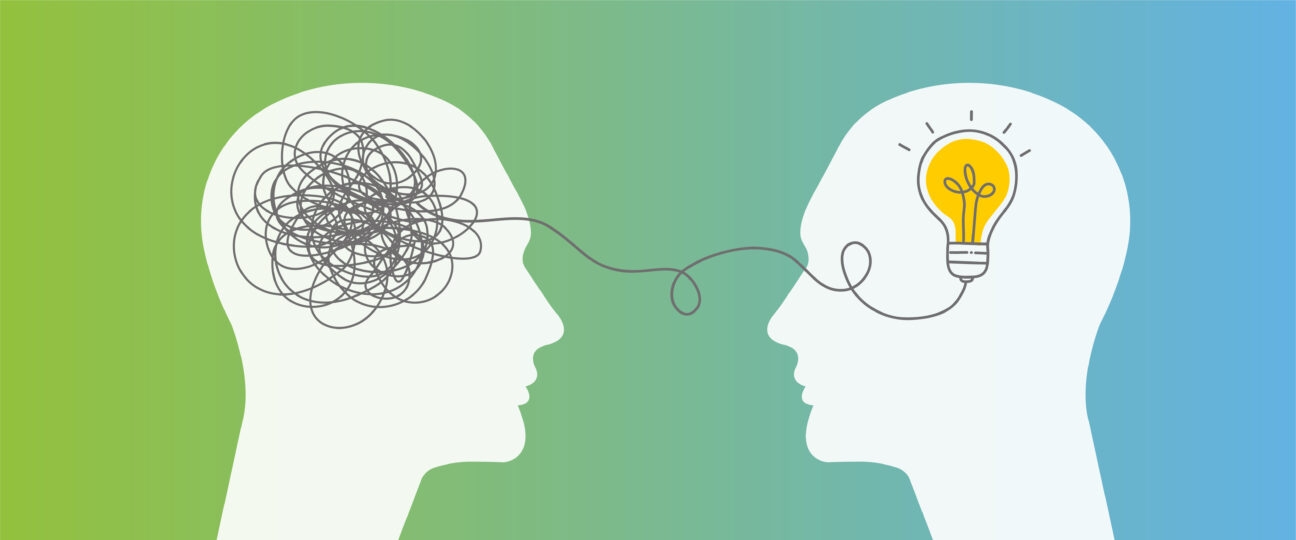
How Do I Overcome Creative Block?
The blank page is not empty.
That is the first thing to understand.
It only looks empty.
Beneath the surface are expectations.
Fear.
Memories of previous failures.
The pressure to create something meaningful.
The invisible weight of wanting the next idea to be good.
Creative block is rarely a lack of ideas.
It is often a conflict between ideas and permission.
The mind produces possibilities.
Then something interrupts.
A judgment.
A comparison.
A demand for perfection.
The creative process stops before it has a chance to move.
This is why creative block feels so frustrating.
The person experiencing it often knows they have something inside them.
They can sense potential.
But the connection between imagination and expression feels disconnected.
A musician hears silence where there should be sound.
A writer sees an empty document.
A designer stares at a blank canvas.
An entrepreneur cannot find the next direction.
The problem is not always that creativity has disappeared.
Sometimes creativity is waiting for the pressure to disappear.
Creative block is not a wall.
It is a signal.
A message from the creative mind saying:
Something needs attention.
Maybe the idea needs time.
Maybe the process needs to change.
Maybe the creator needs to reconnect with curiosity.
The solution is rarely forcing creativity harder.
Often, it is creating better conditions for creativity to return.
Understanding What Creative Block Really Is
Creative block is commonly described as an inability to create.
But that description is incomplete.
A person experiencing creative block can still imagine.
They can still think.
They can still observe.
The difficulty is converting internal possibilities into external results.
This distinction matters.
Because the solution changes.
If creativity itself is missing, the answer seems impossible.
If the connection is blocked, the answer becomes discoverable.
Creative block is often caused by friction.
Between expectation and experimentation.
Between perfection and progress.
Between fear and curiosity.
The Hidden Causes of Creative Block
Creative block rarely has one cause.
It is usually a combination of invisible pressures.
Perfectionism
Perfectionism is one of the strongest creative barriers.
The desire to create something excellent sounds positive.
But when excellence becomes a requirement before beginning, creativity becomes trapped.
The creator demands a finished result from an unfinished process.
This is impossible.
Every meaningful creation begins imperfectly.
A first draft is not supposed to be brilliant.
A prototype is not supposed to be flawless.
An early idea is not supposed to represent the final vision.
Creativity requires movement before refinement.
Fear of Judgment
Many creative blocks are social.
People imagine reactions before they create.
What will people think?
Will this be criticized?
Will this fail?
Will others understand?
The imagined audience enters the creative room too early.
The creator begins editing before creating.
Original ideas often require privacy at the beginning.
They need space to develop before being evaluated.
Repetition
Sometimes creative block appears because the mind has become predictable.
The same environment.
The same information.
The same routines.
The same patterns.
Creativity depends on connection.
If every input is identical, fewer new connections occur.
The solution is not always working harder.
Sometimes it is experiencing differently.
A Comparison of Creative Block Causes and Solutions
| Cause of Creative Block | Common Experience | Root Problem | Effective Response |
|---|---|---|---|
| Perfectionism | Waiting for the perfect idea | Fear of imperfect output | Create rough versions first |
| Fear of Failure | Avoiding creative risks | Concern about judgment | Treat ideas as experiments |
| Lack of Inspiration | Feeling empty or disconnected | Limited inputs | Explore new experiences |
| Overthinking | Endless planning without action | Too much evaluation | Start with small actions |
| Burnout | Lack of energy or motivation | Mental exhaustion | Rest and recover |
| Routine Thinking | Repeating familiar ideas | Limited perspectives | Change environments |
| Comparison | Feeling inferior to others | External validation | Focus on personal progress |
| Unclear Goals | Not knowing where to begin | Too many possibilities | Define a direction |
| Information Overload | Difficulty focusing | Excessive input | Create space for reflection |
| Fear of Being Wrong | Avoiding unusual ideas | Need for certainty | Embrace experimentation |
Creative block is not one problem.
It is a collection of different problems that feel similar.
Understanding the source changes the solution.
Stop Waiting for Inspiration
One of the most damaging beliefs about creativity is that inspiration comes first.
Many people imagine the process like this:
Inspiration.
Then action.
Then creation.
In reality, it often works differently.
Action creates inspiration.
Movement creates momentum.
A person begins with a small attempt.
The attempt creates information.
The information creates direction.
The direction creates better ideas.
Creative people often do not wait until they feel ready.
They begin before readiness arrives.
The process itself creates readiness.
My Lesson About Creative Block
I once believed creative block meant I had run out of ideas.
That was the obvious explanation.
Something was missing.
The creativity was gone.
But after experiencing the same pattern repeatedly, I noticed something different.
The ideas were still there.
The problem was that I was judging them too quickly.
An idea would appear.
Immediately, another voice would respond.
That is not good enough.
That has already been done.
That will not work.
The idea disappeared before it had a chance.
The shift happened when I changed the goal.
Instead of trying to create something valuable, I tried to create something possible.
The standard became exploration, not perfection.
I started making rough versions.
Writing unfinished thoughts.
Testing incomplete ideas.
Something unexpected happened.
The creative energy returned.
The ideas were not suddenly better.
I had simply stopped blocking them at the entrance.
The lesson was clear.
Creative block was not the absence of creativity.
It was creativity being filtered too aggressively.
Change Your Creative Environment
The mind responds to surroundings.
A familiar environment encourages familiar thinking.
This can be useful for productivity.
But creativity often requires disruption.
Change where you work.
Change what you read.
Change what you listen to.
Change who you talk with.
Novelty creates new connections.
The brain notices differences.
Differences create possibilities.
A small environmental change can create a significant mental shift.
Create Bad Ideas on Purpose
One of the fastest ways to escape creative block is to remove the requirement of quality.
Create deliberately bad ideas.
Write the worst possible opening sentence.
Design the most impractical solution.
Imagine the strangest possible approach.
This works because it changes the emotional relationship with creativity.
The mind stops defending itself.
Play returns.
And play is where many ideas begin.
Creativity needs freedom before it needs accuracy.
Reduce the Size of the Problem
Creative block often grows because the challenge feels too large.
A person thinks:
"I need to create something amazing."
That is an enormous demand.
A better approach:
Create one small piece.
Write one paragraph.
Sketch one idea.
Test one assumption.
Small actions reduce resistance.
Momentum creates confidence.
Confidence creates further action.
The creative process becomes easier when the first step becomes smaller.
Separate Creating From Editing
Creation and evaluation are different activities.
They require different mental states.
Creation asks:
"What could exist?"
Editing asks:
"What should remain?"
When both happen simultaneously, creativity becomes restricted.
The creator becomes both the builder and the critic.
The critic usually wins.
Separate the roles.
Allow ideas to exist.
Then improve them.
A rough idea can become excellent.
A nonexistent idea cannot.
Feed Your Creative Mind
A starving creative mind cannot produce endlessly.
Inputs matter.
Read.
Explore.
Listen.
Observe.
Learn.
Experience.
Creative people are often collectors.
They gather material without knowing exactly when it will become useful.
A conversation today may become an idea years later.
A book may influence a project decades afterward.
Nothing interesting is wasted.
The creative mind stores possibilities.
Take Breaks Without Guilt
Rest is not the opposite of creativity.
It is part of creativity.
The brain needs time to process.
Connections often form away from direct effort.
A walk.
A quiet moment.
A change of activity.
These moments allow subconscious thinking to continue.
Constant effort can become another form of resistance.
Sometimes the mind needs distance before it can see clearly.
Use Constraints to Escape Stagnation
Unlimited possibilities can create paralysis.
Constraints create focus.
Give yourself rules.
Write a story using only short sentences.
Create a design using limited resources.
Develop an idea within a specific boundary.
Restrictions force invention.
They create questions.
Questions create solutions.
A limitation can become a creative advantage.
Stop Comparing Your Beginning to Someone Else’s Result
Comparison destroys creative confidence.
People often compare their unfinished process to another person's finished work.
They see the final product.
They do not see:
The failures.
The experiments.
The years of practice.
The discarded attempts.
Creative development is personal.
Your process will not look identical to someone else's.
It should not.
The goal is progress.
Not imitation.
Return to Curiosity
Curiosity is often the cure for creative block.
Fear asks:
"What if this fails?"
Curiosity asks:
"What happens if I try?"
The second question creates movement.
Curiosity removes pressure.
It transforms creativity from a performance into an exploration.
The most creative people are often not the most confident.
They are the most curious.
Build Creative Rituals
Waiting for the perfect mood creates inconsistency.
Creative rituals create reliability.
A specific time.
A specific place.
A repeated practice.
The ritual tells the mind:
This is the moment when we create.
The goal is not forcing inspiration.
It is creating a doorway for inspiration to enter.
Accept That Creative Block Is Part of Creating
Creative block feels like failure.
But it is often part of the process.
Every creator experiences uncertainty.
Every creator encounters resistance.
The difference is how they respond.
They do not interpret resistance as a permanent condition.
They treat it as information.
Something needs adjustment.
The process needs changing.
The approach needs changing.
The creator needs changing.
Block is not the end.
It is feedback.
Conclusion: Creative Block Is Not an Enemy
How do you overcome creative block?
You stop fighting it as if it is an enemy.
You listen to it.
You examine it.
You understand what created it.
Sometimes the answer is rest.
Sometimes it is exploration.
Sometimes it is courage.
Sometimes it is simply beginning again.
Creativity does not disappear because the mind is empty.
It disappears when the mind becomes too restricted.
Too careful.
Too controlled.
The path forward is not always finding a better idea.
Sometimes it is creating enough space for the ideas already present.
The blank page is not a challenge asking:
"Can you prove yourself?"
It is an invitation asking:
"Are you willing to explore?"
Creative people are not people who never experience blocks.
They are people who learn how to move through them.
They know every obstacle contains information.
Every pause contains possibility.
Every unfinished idea contains potential.
The creative process is not a straight line.
It is a conversation.
And the conversation continues when you give yourself permission to speak.
- Arts
- Business
- Computers
- Игры
- Health
- Главная
- Kids and Teens
- Деньги
- News
- Personal Development
- Recreation
- Regional
- Reference
- Science
- Shopping
- Society
- Sports
- Бизнес
- Деньги
- Дом
- Досуг
- Здоровье
- Игры
- Искусство
- Источники информации
- Компьютеры
- Личное развитие
- Наука
- Новости и СМИ
- Общество
- Покупки
- Спорт
- Страны и регионы
- World

 English
 French
 Spanish
 Portuguese
 Deutsch
 Turkish
 Dutch
Dutch
 Italiano
 Arabic
 Romaian
 Portuguese (Brazil)
 Greek
Greek