
Marketplace Business Models: Why the Most Valuable Companies Own Connections Instead of Products
A hotel company with no hotels.
A transportation company with no vehicles.
A retail platform carrying millions of products it never manufactures.
At first glance, these businesses appear incomplete. Something seems missing.
Yet what appears absent is often their greatest strength.
The most influential companies of the last two decades have shifted attention away from ownership and toward orchestration. They do not necessarily create every product, employ every service provider, or hold every asset. Instead, they build environments where buyers and sellers find one another, transact, and return.
That environment is the marketplace.
And while marketplace businesses often look deceptively simple from the outside, they are among the most difficult models to build successfully.
The challenge isn't technology.
It isn't branding.
It isn't even competition.
The challenge is creating a system in which multiple groups derive enough value to keep showing up.
That is where marketplace business models become fascinating.
They are businesses built on relationships, trust, and participation. Their inventory is not products. Their inventory is people.
What Is a Marketplace Business Model?
A marketplace business model connects two or more distinct groups that need one another.
Typically, one side supplies value.
The other side consumes value.
The platform facilitates interaction and earns revenue through commissions, subscriptions, transaction fees, advertising, or premium services.
The marketplace itself often sits in the middle.
Not as a producer.
Not as a buyer.
As a connector.
Consider how different this is from traditional retail.
A retailer buys products, stores inventory, and sells to customers.
A marketplace creates the infrastructure that allows others to conduct business.
The distinction may sound subtle.
It is not.
One model scales through assets.
The other scales through participation.
The Power of Network Effects
Marketplace businesses possess a characteristic that executives in nearly every industry find irresistible.
Network effects.
The concept is straightforward.
The more participants join the marketplace, the more valuable the marketplace becomes.
More sellers attract more buyers.
More buyers attract more sellers.
Each side reinforces growth on the other side.
This creates a virtuous cycle.
But there is a catch.
Actually, several catches.
The marketplace must reach critical mass before network effects begin to work in its favor.
Until then, the same forces operate in reverse.
Too few sellers discourage buyers.
Too few buyers discourage sellers.
The marketplace feels empty.
And empty marketplaces fail quickly.
The irony is striking.
Success creates more success.
Failure creates more failure.
Few business models are as unforgiving.
The Chicken-and-Egg Problem
Every marketplace founder eventually confronts the same question:
Who comes first?
Buyers or sellers?
Supply or demand?
The answer sounds simple until someone has to execute it.
A homeowner considering listing a property wants evidence that guests exist.
Guests searching for accommodations want confidence that attractive listings exist.
Neither side wants to arrive first.
This creates one of the most difficult startup challenges in business.
Founders often spend years solving this imbalance.
Some subsidize one side.
Others manually recruit participants.
Many focus on a narrow geographic area before expanding.
The strategy varies.
The underlying problem remains constant.
Marketplaces are businesses that require multiple customer groups to believe simultaneously.
Why Marketplaces Scale Differently
Traditional businesses often encounter a straightforward constraint.
Growth requires more resources.
More customers require more employees.
More inventory.
More facilities.
More capital.
Marketplace businesses operate differently.
Once infrastructure exists, participants frequently generate much of the value themselves.
Each new seller contributes inventory.
Each new service provider contributes capacity.
Each new buyer contributes demand.
The platform becomes an ecosystem rather than a pipeline.
That distinction dramatically changes economics.
Traditional Business vs. Marketplace Model
| Factor | Traditional Business | Marketplace Business |
|---|---|---|
| Inventory Ownership | Company-Owned | Third-Party Owned |
| Value Creation | Internal Teams | Participants |
| Scaling Method | Asset Expansion | Network Expansion |
| Marginal Cost of Growth | Often High | Often Lower |
| Customer Groups | Usually One | Multiple |
| Network Effects | Limited | Strong Potential |
| Quality Control | Direct | Shared Responsibility |
| Revenue Sources | Product Sales | Fees, Commissions, Subscriptions |
| Geographic Expansion | Resource Intensive | Potentially Faster |
| Competitive Advantage | Products & Assets | Ecosystem Strength |
The table reveals an important truth.
Marketplace businesses are not necessarily simpler.
They merely shift complexity.
Instead of managing inventory, they manage interactions.
Instead of controlling production, they manage trust.
Trust Is the Product
Many executives assume marketplace success depends primarily on technology.
My experience suggests otherwise.
Several years ago, I advised an organization attempting to launch a professional-services marketplace.
The technology was sophisticated.
The design was polished.
The functionality was impressive.
Yet adoption lagged.
Leadership initially focused on feature improvements.
More filters.
More integrations.
More customization.
None of it moved the needle.
Then interviews with prospective users revealed something unexpected.
People were not evaluating software.
They were evaluating risk.
Could they trust the professionals?
Would payments be secure?
Would disputes be handled fairly?
The issue wasn't functionality.
It was confidence.
Once the company redirected investment toward verification systems, reviews, guarantees, and transparent communication, growth accelerated.
The lesson has stayed with me.
Marketplace businesses often think they are selling transactions.
In reality, they are selling trust.
The transaction simply proves whether that trust was warranted.
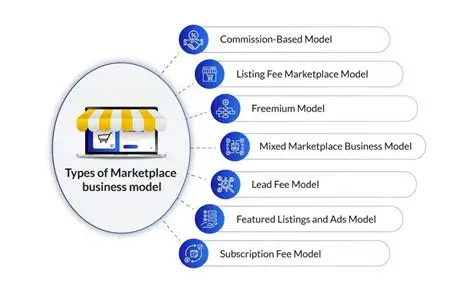
The Different Types of Marketplace Models
Not all marketplaces operate the same way.
Understanding the variations helps explain why some succeed while others struggle.
Product Marketplaces
These platforms connect buyers and sellers of physical goods.
Participants list products while customers browse, compare, and purchase.
Success often depends on selection, pricing transparency, and transaction efficiency.
The marketplace becomes a destination because consumers expect variety.
Service Marketplaces
Service marketplaces connect providers with customers seeking expertise or labor.
Trust becomes particularly important because outcomes are less standardized than physical products.
Reviews, ratings, and verification systems often play a larger role.
Peer-to-Peer Marketplaces
In peer-to-peer models, participants may alternate between buyer and seller roles.
Someone rents today and provides tomorrow.
Someone purchases one month and sells the next.
These ecosystems create particularly powerful engagement loops.
Business-to-Business Marketplaces
B2B marketplaces facilitate transactions between organizations.
While less visible to consumers, they often generate significant transaction volume.
Efficiency, procurement workflows, and supplier management become central concerns.
The Revenue Question
One misconception about marketplace businesses is that scale automatically creates profitability.
The reality is more nuanced.
Marketplaces must carefully determine where and how revenue enters the system.
Charge too early and growth slows.
Charge too little and sustainability suffers.
Most marketplaces rely on one or more approaches.
Transaction Fees
A percentage of every transaction.
This aligns platform revenue with marketplace activity.
The platform succeeds when participants succeed.
Subscription Revenue
Participants pay for access, visibility, or premium functionality.
This model creates recurring revenue but requires ongoing value delivery.
Advertising
Participants pay for enhanced visibility.
This approach is common in crowded marketplaces where discoverability becomes valuable.
Value-Added Services
Payments, insurance, analytics, financing, and logistics often generate additional revenue streams.
Interestingly, some of the most successful marketplaces eventually earn substantial income from services surrounding transactions rather than the transactions themselves.
The Hidden Risk of Marketplace Success
Growth solves many problems.
It creates new ones too.
As marketplaces expand, balancing participant interests becomes increasingly difficult.
Consider the tensions that emerge.
Sellers want lower fees.
Buyers want lower prices.
Providers want greater visibility.
Consumers want better filtering.
Every platform decision benefits some participants while frustrating others.
The marketplace operator becomes less like a retailer and more like a governor.
Rules matter.
Policies matter.
Enforcement matters.
At scale, governance often becomes more important than growth.
That reality surprises many founders.
Building a marketplace is challenging.
Maintaining fairness within a thriving marketplace can be even harder.
Why Membership Thinking Matters
One of the most overlooked aspects of marketplace strategy is retention.
Many leaders focus intensely on acquisition.
How do we attract more buyers?
How do we recruit more sellers?
These questions matter.
Yet sustainable marketplaces depend on repeated participation.
The strongest marketplaces evolve beyond transactions.
They foster belonging.
Participants develop habits.
Relationships emerge.
Trust accumulates.
The marketplace becomes embedded in routines.
This is where membership thinking becomes relevant.
People return because the platform consistently delivers value.
They stay because leaving feels costly.
Not financially.
Emotionally.
Professionally.
Operationally.
The marketplace becomes part of how they work, shop, earn, or connect.
That is a far stronger competitive advantage than promotional discounts or temporary incentives.
The Future of Marketplace Business Models
Marketplace evolution is entering a new phase.
Artificial intelligence is improving matching accuracy.
Automation is reducing transaction friction.
Identity verification is becoming more sophisticated.
Reputation systems are growing more nuanced.
Meanwhile, customer expectations continue to rise.
Participants increasingly expect personalized experiences, instant responsiveness, and transparent governance.
As a result, future marketplace leaders may not be those with the largest participant bases.
They may be those that create the highest levels of trust and engagement.
The next generation of marketplace competition could revolve less around scale and more around confidence.
Because confidence reduces friction.
And friction is the enemy of participation.
Conclusion: The Most Valuable Asset Is Not What You Own
Traditional business thinking rewards ownership.
Own the factory.
Own the inventory.
Own the distribution channel.
Marketplace businesses challenge that assumption.
Their value emerges not from what they possess but from what they facilitate.
The strongest marketplaces do not merely connect buyers and sellers.
They reduce uncertainty.
They create trust.
They encourage participation.
They transform isolated transactions into enduring ecosystems.
That raises an uncomfortable question for many organizations.
If customers increasingly value access over ownership, participation over possession, and connection over inventory, are businesses competing with products anymore?
Or are they competing to become the place where relationships happen?
The answer may determine which companies grow steadily—and which become indispensable.
- Arts
- Business
- Computers
- Games
- Health
- Home
- Kids and Teens
- Money
- News
- Personal Development
- Recreation
- Regional
- Reference
- Science
- Shopping
- Society
- Sports
- Бизнес
- Деньги
- Дом
- Досуг
- Здоровье
- Игры
- Искусство
- Источники информации
- Компьютеры
- Личное развитие
- Наука
- Новости и СМИ
- Общество
- Покупки
- Спорт
- Страны и регионы
- World

 Russian
 French
 Spanish
 Portuguese
 Deutsch
 Turkish
 Dutch
Dutch
 Italiano
 Arabic
 Romaian
 Portuguese (Brazil)
 Greek
Greek