
Growth theories (especially the Solow model)
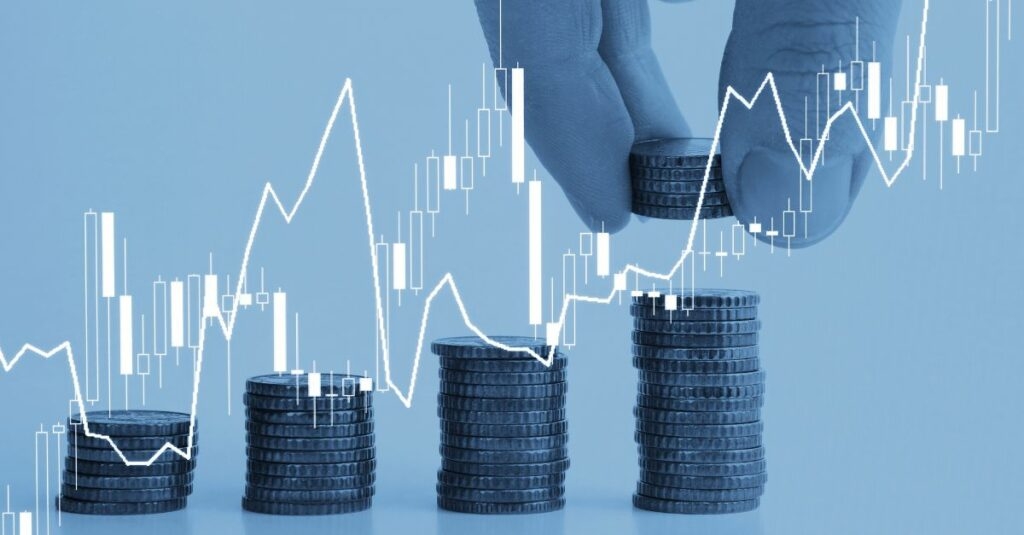
Growth Theories and the Solow Model: Why Some Economies Surge While Others Stall
Economic growth occupies a peculiar place in public debate. Everyone wants it. Politicians promise it. International organizations measure it obsessively. Yet when we ask a deceptively simple question—why do some nations become dramatically richer than others?—the answers become far less obvious.
Consider this puzzle. In the early nineteenth century, average living standards across much of the world were remarkably similar. Differences existed, certainly, but they were modest compared to the chasm we observe today. Fast forward two centuries and the gap between the richest and poorest countries has become staggering. Some societies have experienced sustained increases in productivity, incomes, and technological sophistication. Others have remained trapped in stagnation.
Economists have spent decades trying to understand this divergence. The resulting body of work, known broadly as growth theory, represents one of the most ambitious intellectual projects in the social sciences. At its center sits a framework so influential that virtually every modern discussion of long-run prosperity begins with it: the Solow growth model.
Yet the Solow model is both more powerful and more limited than many realize. It explains a great deal. It also leaves some of the most important questions unanswered.
The story of growth theory, therefore, is not merely a technical discussion about equations and capital accumulation. It is a story about how economists learned what matters for prosperity—and, perhaps more importantly, what does not.
Why Growth Matters More Than Almost Anything Else
A country growing at 1 percent annually will see living standards double roughly every seventy years. A country growing at 3 percent annually will double incomes in less than twenty-five years.
At first glance, the difference appears trivial. Two percentage points hardly sound revolutionary.
Over decades, however, compounding transforms small differences into enormous ones.
This simple arithmetic explains why growth economists focus obsessively on long-run rates rather than short-term fluctuations. Recessions attract headlines. Sustained productivity growth changes the trajectory of civilizations.
The challenge is identifying the forces that generate that growth.
For much of economic history, capital accumulation appeared to be the obvious answer.
Build more factories. Increase investment. Expand infrastructure.
The intuition feels irresistible.
The problem is that intuition, while partly correct, is incomplete.
The Birth of Modern Growth Theory
The earliest formal growth models emerged from attempts to understand how savings and investment affect economic expansion.
Economists observed a straightforward relationship: countries that invested more often grew faster.
But there was a deeper question lurking beneath the surface.
Would growth continue indefinitely if investment rates remained high?
The answer arrived in 1956 when economist Robert Solow introduced a framework that transformed macroeconomics.
The genius of the Solow model was its simplicity.
Rather than treating growth as a mysterious process, Solow reduced it to three fundamental ingredients:
-
Capital accumulation
-
Labor force growth
-
Technological progress
Together, these forces determine the path of an economy over time.
Yet Solow introduced a critical insight that challenged conventional wisdom: capital accumulation alone cannot sustain long-run growth.
That conclusion altered the field permanently.
Understanding the Solow Model
At its core, the Solow model describes how output is produced using capital and labor.
Capital includes machinery, factories, infrastructure, and equipment.
Labor refers to workers.
Output represents the goods and services produced by the economy.
The relationship can be summarized conceptually:
Output = Technology × Capital × Labor
The exact mathematical formulation is more sophisticated, but the intuition is straightforward.
More workers generally increase production.
More capital generally increases production.
Better technology increases the productivity of both.
So far, nothing seems controversial.
The breakthrough emerges when we consider diminishing returns.
The Logic of Diminishing Returns
Imagine a factory with one machine and ten workers.
Adding a second machine dramatically improves productivity.
Adding a third helps as well.
Adding a hundredth machine may contribute very little.
Each additional unit of capital generates progressively smaller gains.
This phenomenon—diminishing marginal returns—is central to the Solow framework.
Because of diminishing returns, simply accumulating capital eventually becomes insufficient as a growth strategy.
An economy may invest heavily for years.
It may experience rapid expansion.
Yet eventually the productivity gains from additional capital begin to fade.
Growth slows.
The economy approaches what Solow called a steady state.
This insight was profound because it explained why investment booms often lose momentum.
The Steady State: Growth's Natural Resting Point
The steady state is perhaps the most misunderstood concept in growth economics.
It does not mean economic activity stops.
It means capital accumulation reaches balance.
Every year, some capital depreciates.
Machines wear out.
Buildings deteriorate.
Infrastructure ages.
At the same time, new investment creates additional capital.
When investment exactly offsets depreciation and population growth, the capital stock stabilizes.
The economy reaches its steady state.
At that point, growth driven purely by capital accumulation disappears.
This prediction carried a radical implication.
If all countries had access to the same technology and institutions, poorer countries should eventually catch up with richer ones.
The logic seemed compelling.
Poor countries possess less capital.
Because returns to capital are higher when capital is scarce, investment should be especially productive there.
Growth should therefore be faster.
Economists call this convergence.
Reality, however, proved more complicated.
What the Solow Model Gets Right
One lesson I learned while studying growth data years ago was how often policymakers overestimate the power of investment alone.
The temptation is understandable.
A new bridge is visible.
A new industrial park is visible.
A new airport is visible.
Technological capabilities, institutional quality, and organizational knowledge are much harder to observe.
Yet the historical record repeatedly validates Solow's insight.
Countries frequently experience investment-led growth accelerations that eventually slow.
The pattern appears across regions, decades, and political systems.
The Solow model correctly predicts several important realities:
-
Higher savings rates increase income levels.
-
Population growth affects capital availability.
-
Capital accumulation faces diminishing returns.
-
Poor economies often grow faster than rich ones under similar conditions.
These predictions remain foundational to modern macroeconomics.
But the model also encounters a major challenge.
Technology.
The Missing Piece: Technological Progress
In the Solow framework, technology is the engine that sustains long-run growth.
Without technological improvement, economies eventually settle into steady states.
With technological improvement, living standards can continue rising indefinitely.
The difficulty is that Solow treated technological progress as exogenous.
In other words, technology simply appears.
It exists outside the model.
This assumption solved one problem but created another.
If technology drives long-run growth, where does technology come from?
The question became impossible to ignore.
Economists increasingly realized that explaining growth required explaining innovation itself.
Comparing Major Growth Theories
| Theory | Main Driver of Growth | Key Insight | Major Limitation |
|---|---|---|---|
| Classical Growth Theory | Capital accumulation and population | Growth constrained by resources | Underestimates innovation |
| Harrod-Domar Model | Savings and investment | Investment fuels expansion | Unstable dynamics |
| Solow Model | Capital, labor, technology | Diminishing returns to capital | Technology remains unexplained |
| Endogenous Growth Theory | Innovation and knowledge creation | Ideas drive sustained growth | Sometimes difficult to verify empirically |
| Institutional Growth Theory | Rules, incentives, governance | Institutions shape prosperity | Hard to measure institutional quality |
This evolution reflects a broader intellectual journey.
Economists gradually shifted attention from physical capital toward ideas, incentives, and institutions.
Beyond Solow: Endogenous Growth Theory
During the 1980s, economists sought to solve the technology problem.
Researchers such as Paul Romer argued that innovation should not be treated as an external force.
Instead, it should be modeled directly.
Firms invest in research.
Scientists create knowledge.
Entrepreneurs develop new products.
Universities generate discoveries.
Ideas emerge from economic decisions.
This perspective gave rise to endogenous growth theory.
Unlike physical capital, ideas do not necessarily suffer from diminishing returns.
A software algorithm can be used by millions simultaneously.
A scientific breakthrough can benefit countless firms.
Knowledge possesses unusual characteristics.
It can spread.
It can compound.
It can create increasing returns.
Growth therefore becomes self-reinforcing.
The implications are enormous.
Education, innovation policy, intellectual property rights, and research institutions become central determinants of prosperity.
Why Institutions Enter the Picture
Yet even endogenous growth theory leaves unanswered questions.
Why do some societies innovate more effectively than others?
Why do talented entrepreneurs flourish in some countries but not elsewhere?
Why do similar technologies produce vastly different outcomes across nations?
These questions point toward institutions.
Institutions are the rules—formal and informal—that shape incentives.
Property rights.
Contract enforcement.
Political accountability.
Competitive markets.
Inclusive institutions encourage investment, innovation, and experimentation.
Extractive institutions discourage them.
Growth therefore becomes inseparable from politics and governance.
Technology matters.
Capital matters.
But incentives determine whether either can be used productively.
The Enduring Relevance of the Solow Model
Despite decades of theoretical advances, the Solow model remains indispensable.
Not because it explains everything.
Quite the opposite.
Its value lies in clarifying what capital accumulation can and cannot achieve.
The model teaches humility.
Investment matters, but it is not enough.
Infrastructure matters, but it is not enough.
Savings matter, but they are not enough.
Long-run prosperity ultimately depends on the ability of societies to generate and deploy new ideas.
That insight remains as relevant today as it was seventy years ago.
The Real Question Growth Theory Forces Us to Ask
The most provocative lesson from growth economics is that wealth is rarely the result of a single factor.
There is no universal formula.
No secret variable.
No magic investment ratio.
The Solow model revealed that piling up capital cannot sustain prosperity forever. Later theories showed that innovation matters. More recent research emphasizes institutions and incentives.
The deeper realization is that growth is not fundamentally about machines, factories, or even technology.
It is about the social arrangements that determine whether people experiment, invest, learn, compete, and create.
Countries become rich not merely because they accumulate resources but because they develop systems capable of continuously generating productive knowledge.
That distinction may sound subtle.
It is not.
It is the difference between temporary expansion and enduring prosperity.
And it remains one of the most important lessons economics has ever produced.
- Arts
- Business
- Computers
- Games
- Health
- Home
- Kids and Teens
- Money
- News
- Personal Development
- Recreation
- Regional
- Reference
- Science
- Shopping
- Society
- Sports
- Бизнес
- Деньги
- Дом
- Досуг
- Здоровье
- Игры
- Искусство
- Источники информации
- Компьютеры
- Личное развитие
- Наука
- Новости и СМИ
- Общество
- Покупки
- Спорт
- Страны и регионы
- World

 Russian
 French
 Spanish
 Portuguese
 Deutsch
 Turkish
 Dutch
Dutch
 Italiano
 Arabic
 Romaian
 Portuguese (Brazil)
 Greek
Greek