
Can creativity be measured?
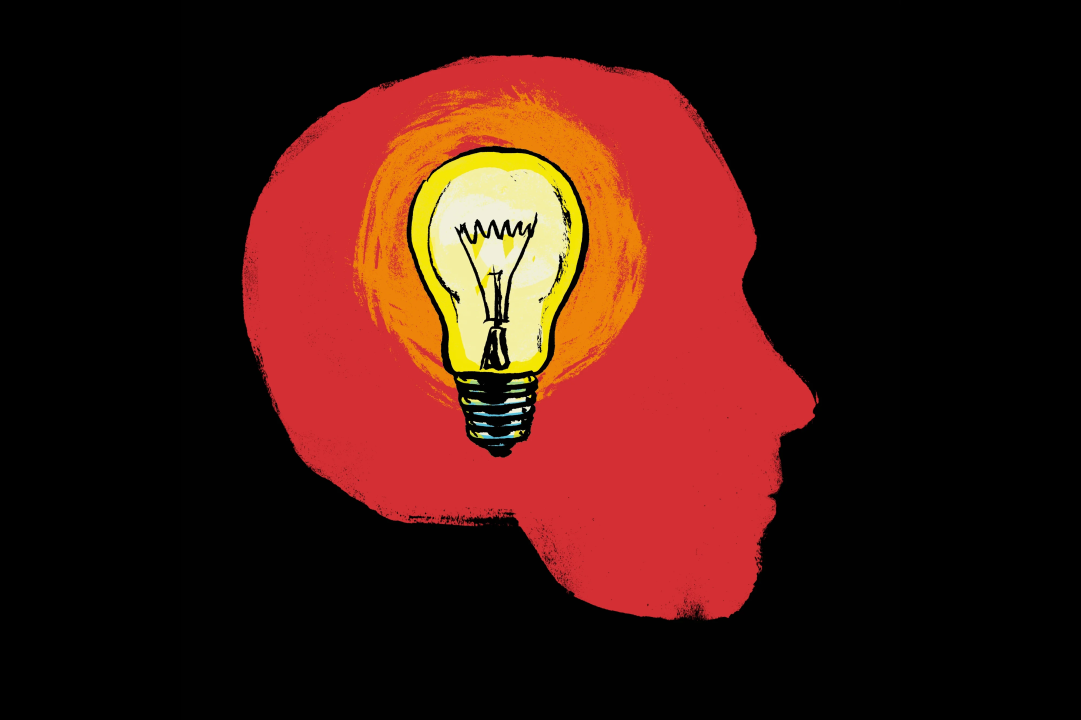
Can Creativity Be Measured?
Walk into a room full of accountants and ask how success is measured.
The answers arrive quickly.
Revenue.
Margins.
Growth.
Assets.
Percentages.
Numbers line up neatly beside outcomes.
Now walk into a room full of artists and ask how creativity is measured.
The room becomes quieter.
Not because creativity lacks value.
Because it resists containment.
A painting can change a life and sell for nothing.
A song can alter culture and begin as a discarded demo.
A scientific insight can arrive during a walk and remain invisible for years before the world recognizes its significance.
Creativity creates a peculiar tension.
We want to understand it.
We want to encourage it.
We want to predict it.
And inevitably, we want to measure it.
Measurement offers comfort.
Numbers create the illusion of certainty.
Yet creativity has always existed in territory where certainty struggles to survive.
Which raises a fascinating question.
Can creativity actually be measured?
Or are we trying to weigh something that changes shape the moment we touch it?
The answer turns out to be far more interesting than either extreme.
Creativity can be measured.
Just not as cleanly as many people hope.
The Human Obsession With Measurement
People measure what they value.
Height.
Speed.
Intelligence.
Productivity.
Economic output.
Measurement allows comparison.
Comparison enables prediction.
Prediction reduces uncertainty.
The desire to measure creativity comes from the same instinct.
Organizations want innovative employees.
Schools want creative students.
Companies want breakthrough products.
Researchers want to understand extraordinary minds.
Measurement appears to offer a shortcut.
Find the metric.
Identify the talent.
Replicate the outcome.
Simple.
Except creativity refuses simplicity.
Because creativity is not a single thing.
It is a collection of processes.
Originality.
Problem-solving.
Curiosity.
Association.
Experimentation.
Risk tolerance.
Flexibility.
Each contributes something.
None tells the entire story.
The First Problem: Defining Creativity
Before measuring creativity, we must answer a more basic question.
What exactly is creativity?
At first glance, the answer feels obvious.
Creativity is producing something new.
But novelty alone isn't enough.
A random collection of words is new.
That doesn't make it meaningful.
Researchers generally define creativity using two criteria:
Originality
The idea must be novel.
Unexpected.
Different from conventional solutions.
Usefulness
The idea must have value.
Practical value.
Artistic value.
Scientific value.
Cultural value.
Some form of significance.
Creativity emerges where originality and usefulness intersect.
Too much originality without usefulness becomes chaos.
Too much usefulness without originality becomes repetition.
The creative act lives between those extremes.
This definition helps.
Yet it introduces a challenge.
How do we objectively measure something partly dependent on subjective judgment?
The Birth of Creativity Testing
Psychologists have spent decades attempting to solve this puzzle.
One of the most influential researchers was J. P. Guilford.
In the mid-twentieth century, Guilford argued that intelligence and creativity were not identical.
A person could score highly on traditional intelligence tests without demonstrating exceptional creativity.
This idea transformed creativity research.
Scientists began developing assessments specifically designed to measure creative thinking.
The most famous became divergent thinking tests.
Their premise was deceptively simple.
Ask participants to generate multiple solutions to a problem.
For example:
How many uses can you think of for a brick?
The exercise appears trivial.
Yet researchers believed the responses revealed important patterns.
Creative individuals often generated:
-
More ideas
-
More unusual ideas
-
More flexible categories of ideas
The results provided measurable data.
At least partially.
Divergent Thinking: Measuring Possibility
Divergent thinking remains one of the most widely used approaches to creativity assessment.
Unlike conventional tests seeking one correct answer, divergent thinking encourages many answers.
Researchers commonly evaluate four dimensions.
Fluency
How many ideas are produced?
Quantity matters.
A person generating fifty possibilities demonstrates different cognitive behavior than someone generating five.
Originality
How uncommon are the ideas?
Rare responses often receive higher scores.
Flexibility
How many different categories do the ideas span?
Moving across conceptual domains indicates cognitive agility.
Elaboration
How much detail accompanies each idea?
Richly developed concepts receive additional credit.
These measurements provide valuable insights.
Yet they reveal only one aspect of creativity.
Generating ideas is not the same as implementing them.
Why Creative Tests Often Feel Unsatisfying
Imagine asking two questions.
How many songs can you write?
How many unforgettable songs can you write?
The difference matters.
Many creativity assessments focus on idea generation because it is easier to measure.
Real-world creativity involves additional variables.
Persistence.
Craft.
Timing.
Taste.
Execution.
Cultural context.
A person may excel at divergent thinking yet never produce meaningful creative work.
Another individual may score modestly on formal tests while creating work that transforms entire industries.
This tension continues to challenge researchers.
Creativity is easier to recognize retrospectively than predict prospectively.
History repeatedly proves this point.
The Problem With Measuring Greatness
Consider some of history's most influential creators.
Their contributions often appeared strange at first.
Unnecessary.
Confusing.
Even ridiculous.
Many groundbreaking ideas initially fail conventional evaluation.
The problem becomes obvious.
If society cannot immediately recognize a breakthrough, how can a test reliably identify one?
Creative value frequently depends on context.
Timing.
Audience.
Culture.
A painting ignored today may become celebrated decades later.
An invention dismissed initially may redefine an industry.
Creativity unfolds across time.
Measurement usually happens in a moment.
The mismatch creates complications.
What Neuroscience Reveals
Modern brain imaging has added another layer to the conversation.
Researchers can now observe neural activity associated with creative thinking.
Several networks consistently appear.
Default Mode Network
Associated with imagination, internal reflection, and idea generation.
Executive Control Network
Responsible for evaluation, planning, and refinement.
Salience Network
Helps identify which ideas deserve attention.
Studies suggest highly creative individuals often demonstrate stronger communication among these networks.
The brain appears particularly effective at balancing freedom and control.
Exploration and evaluation.
Generation and selection.
Researchers can measure these patterns.
But there is an important distinction.
Neural activity is not creativity itself.
It is evidence of processes associated with creativity.
The map is not the territory.
A Lesson I Learned About Measuring Creative Work
Several years ago, I participated in a brainstorming session involving dozens of people.
One participant generated ideas relentlessly.
The quantity was astonishing.
Suggestion after suggestion.
Page after page.
By conventional creativity metrics, the performance looked exceptional.
Another participant spoke only twice.
Two ideas.
Nothing more.
Yet both ideas fundamentally changed the direction of the project.
The experience left a lasting impression.
Creativity is not always visible in volume.
Sometimes its power emerges through precision.
Measurement systems often reward what is easiest to count.
Creative value frequently resides elsewhere.
That lesson continues to shape how I evaluate ideas.
Not everything important announces itself loudly.
Creativity Metrics Used Today
Organizations increasingly attempt to quantify creative performance.
The methods vary widely.
The following table summarizes common approaches.
| Measurement Method | What It Measures | Strengths | Limitations |
|---|---|---|---|
| Divergent Thinking Tests | Idea generation | Easy to administer | Doesn't measure execution |
| Creative Achievement Questionnaires | Past accomplishments | Reflects real-world output | Influenced by opportunity |
| Peer Evaluation | Perceived creativity | Captures expert judgment | Subjective |
| Patent Counts | Innovation output | Objective and measurable | Misses non-patented creativity |
| Artistic Portfolio Reviews | Quality of work | Real-world relevance | Difficult to standardize |
| Brain Imaging Studies | Neural activity patterns | Scientific insight | Not direct creativity measurement |
| Innovation Metrics | Business outcomes | Practical applications | Influenced by many variables |
| Publication Impact | Scholarly influence | Quantifiable | Can overlook unconventional contributions |
The table reveals a recurring theme.
Every method captures something.
None captures everything.
Quantity Versus Quality
One of creativity research's most surprising discoveries involves quantity.
Many highly creative individuals produce enormous amounts of work.
More than most people realize.
Writers generate drafts.
Musicians record discarded songs.
Inventors develop failed prototypes.
Artists create experiments nobody sees.
The relationship matters because quantity increases opportunities for quality.
A larger pool of ideas creates more chances for exceptional outcomes.
This observation inspired a controversial perspective.
Perhaps creativity can partly be measured through output volume.
Not because quantity guarantees brilliance.
Because quantity creates conditions where brilliance becomes more likely.
The distinction matters.
The Role of Personality
Some researchers approach creativity through personality assessment.
Certain traits consistently correlate with creative achievement.
Openness to Experience
Curiosity.
Exploration.
Interest in novelty.
This trait repeatedly emerges as one of creativity's strongest predictors.
Tolerance for Ambiguity
Creative individuals often remain comfortable when answers are unclear.
Persistence
Many breakthroughs require sustained effort across years.
Risk Acceptance
Creative work frequently involves uncertainty.
These traits can be measured.
Yet again, they are indicators.
Not creativity itself.
A thermometer measures temperature.
It does not create heat.
Can Artificial Intelligence Measure Creativity?
Recent advances in artificial intelligence have intensified the debate.
Algorithms can analyze patterns in writing, music, art, and innovation.
They can evaluate novelty.
Identify similarities.
Estimate originality.
This capability creates intriguing possibilities.
Machines may become increasingly effective at detecting creative characteristics.
Yet a deeper question remains.
Can creativity be fully understood through pattern recognition?
Human creativity involves intention.
Emotion.
Meaning.
Context.
A machine may identify unusual combinations.
Determining significance is often more complicated.
The challenge remains philosophical as much as technical.
Why Creative Potential Is Harder to Measure Than Creative Output
Output leaves evidence.
Potential does not.
This distinction may represent the greatest obstacle in creativity assessment.
A published novel can be evaluated.
An unrealized masterpiece cannot.
A successful invention can be measured.
An invention never pursued remains invisible.
Many people possess creative capacity that circumstances never allow them to express.
Access to education.
Resources.
Time.
Encouragement.
Opportunity.
These variables influence creative outcomes profoundly.
Measuring output alone risks confusing opportunity with ability.
The two are not the same.
The Hidden Influence of Environment
Creativity does not emerge in isolation.
Environment shapes expression.
Organizations often focus heavily on identifying creative individuals.
The more useful question may involve designing creative environments.
Psychological safety.
Intellectual diversity.
Freedom to experiment.
Permission to fail.
These conditions significantly affect creative performance.
A highly creative person can become unimaginative inside restrictive systems.
An average performer can produce extraordinary work inside supportive environments.
Measurement becomes more difficult when context influences outcomes so dramatically.
What History Suggests
History provides a humbling reminder.
Many transformative creators were underestimated.
Some were ignored.
Others rejected repeatedly.
Their ideas did not fit existing frameworks.
The pattern appears often enough to warrant caution.
Any measurement system reflects current assumptions.
Creativity frequently challenges those assumptions.
This creates a paradox.
The more revolutionary an idea becomes, the more likely it may be to confuse existing evaluation systems.
Innovation sometimes appears invisible until it succeeds.
Perhaps We Are Measuring the Wrong Thing
What if creativity itself isn't the ideal target?
What if the more valuable measurement involves creative behaviors?
Curiosity.
Experimentation.
Exploration.
Learning.
Risk-taking.
Iteration.
These behaviors often precede creative outcomes.
Unlike creativity itself, they can be observed consistently.
Organizations increasingly recognize this distinction.
Rather than attempting to predict genius, they cultivate conditions where creativity becomes more likely.
The shift changes everything.
Focus moves from identifying talent to nurturing possibility.
The Real Answer
Can creativity be measured?
Yes.
But with an important qualification.
Creativity can be measured partially.
Indirectly.
Approximately.
Researchers can assess idea generation.
Creative accomplishments.
Personality traits.
Neural activity.
Innovation outcomes.
Each measurement captures a fragment.
None captures the whole.
The challenge is not that creativity defies measurement entirely.
The challenge is that creativity exceeds any single measurement.
It behaves more like a constellation than a point.
Multiple signals.
Multiple dimensions.
Multiple interpretations.
The temptation is to keep searching for a perfect metric.
A definitive score.
A universal formula.
History suggests that formula may never arrive.
And perhaps that is appropriate.
Because creativity occupies a unique position in human experience.
It exists at the intersection of imagination and reality.
Structure and surprise.
Skill and mystery.
The moment creativity becomes fully predictable, something essential may disappear.
After all, the most powerful creative acts often emerge from places no measurement system anticipated.
A melody nobody expected.
A theory nobody considered.
A painting nobody understood.
Until suddenly everyone did.
The real value of creativity may not lie in our ability to measure it.
It may lie in its ability to continually exceed the measurements we create.
- Arts
- Business
- Computers
- Jogos
- Health
- Início
- Kids and Teens
- Money
- News
- Personal Development
- Recreation
- Regional
- Reference
- Science
- Shopping
- Society
- Sports
- Бизнес
- Деньги
- Дом
- Досуг
- Здоровье
- Игры
- Искусство
- Источники информации
- Компьютеры
- Личное развитие
- Наука
- Новости и СМИ
- Общество
- Покупки
- Спорт
- Страны и регионы
- World

 English
 Russian
 French
 Spanish
 Deutsch
 Turkish
 Dutch
Dutch
 Italiano
 Arabic
 Romaian
 Portuguese (Brazil)
 Greek
Greek