
Why is creativity important in business?
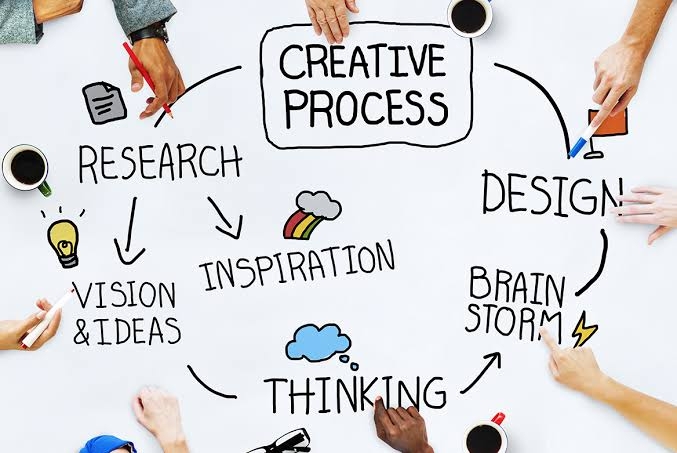
Why Is Creativity Important in Business?
Most businesses don't fail because they run out of effort.
They run out of imagination.
The employees work hard.
The systems function.
The meetings happen.
The reports arrive on schedule.
Everything appears healthy.
Then something shifts.
A competitor introduces a better solution.
Customer expectations evolve.
Technology changes behavior.
The market moves.
The company doesn't.
And suddenly, what once looked like discipline reveals itself as rigidity.
This is one of the great paradoxes of business.
The same processes that create success can eventually threaten it.
Efficiency can become a trap.
Optimization can become a blindfold.
Past victories can quietly transform into future limitations.
Creativity exists as an antidote to that danger.
Not because creativity is a decorative business skill.
Not because it belongs exclusively to designers, marketers, or entrepreneurs.
Because creativity helps organizations adapt.
And adaptation has always been one of the most valuable forms of intelligence.
When people hear the word creativity, they often picture artists standing in front of canvases or musicians experimenting in recording studios.
Business rarely enters the image.
Yet every successful company is, at its core, a creative act.
Someone imagined a solution before it existed.
Someone saw a possibility others overlooked.
Someone challenged an assumption and built something different.
Creativity isn't separate from business.
Creativity is often the reason business exists in the first place.
Creativity Is Problem-Solving Disguised as Innovation
Many discussions about creativity begin in the wrong place.
They focus on expression.
Business operates differently.
In business, creativity often appears as problem-solving.
A customer experiences friction.
A company removes it.
A market contains inefficiency.
An entrepreneur addresses it.
A process wastes resources.
A team redesigns it.
The mechanism remains the same.
Someone sees reality.
Then imagines an alternative version.
Creativity bridges the gap between the two.
This is why creativity matters.
Businesses survive by solving problems.
The quality of those solutions frequently depends on creative thinking.
The Marketplace Rewards Difference
Competition creates pressure.
Pressure creates decisions.
Many companies respond by doing what everyone else is doing.
Sometimes slightly cheaper.
Sometimes slightly faster.
Sometimes slightly louder.
The strategy can work temporarily.
Rarely permanently.
Markets tend to reward meaningful differentiation.
Creativity creates differentiation.
Not artificial differentiation.
Real differentiation.
Products that solve problems differently.
Services that feel distinct.
Experiences customers remember.
Without creativity, companies often become interchangeable.
Interchangeability creates vulnerability.
When customers cannot distinguish between options, price becomes the primary factor.
Price wars rarely produce long-term winners.
Creativity offers another path.
One built on uniqueness rather than discounting.
Innovation Begins With a Question
Most transformative business ideas begin with curiosity.
Not certainty.
Questions drive innovation.
Why does this process exist?
Why do customers tolerate this frustration?
Why hasn't anyone solved this differently?
What assumption are we accepting without examination?
The most creative organizations ask these questions continuously.
They challenge habits.
Investigate routines.
Explore alternatives.
Curiosity becomes a competitive advantage.
Because every industry contains invisible assumptions.
People stop noticing them precisely because they have existed for so long.
Creative thinkers notice.
That observation creates opportunity.
Why Efficiency Alone Isn't Enough
Business culture frequently celebrates efficiency.
For understandable reasons.
Efficiency reduces waste.
Improves margins.
Increases productivity.
The benefits are real.
The problem emerges when efficiency becomes the only priority.
Efficiency improves existing systems.
Creativity invents new ones.
A company can become exceptionally efficient at doing the wrong thing.
History offers countless examples.
Organizations optimized products customers no longer wanted.
Perfected systems markets had already outgrown.
Improved processes that solved yesterday's problems.
Creativity provides an escape route.
It asks whether the system itself deserves reconsideration.
Not merely refinement.
The Human Brain Craves Novelty
Customers rarely describe themselves as seeking creativity.
Their behavior often says otherwise.
People notice what feels different.
Unexpected.
Memorable.
Novel.
The human brain evolved to pay attention to change.
Businesses that understand this principle create stronger connections with audiences.
Creative products attract attention.
Creative branding creates recognition.
Creative experiences generate stories.
Stories spread.
Attention compounds.
Markets are crowded.
Creativity helps companies become visible without simply becoming louder.
There is a difference.
A significant one.
A Lesson I Learned Watching Businesses Compete
Several years ago, I observed two companies operating in the same market.
Both possessed talented employees.
Both had similar resources.
Both offered comparable products.
One company focused almost entirely on operational efficiency.
The other devoted significant time to experimentation.
Not reckless experimentation.
Structured exploration.
Testing new ideas.
Questioning assumptions.
Exploring possibilities.
Initially, the efficiency-focused organization appeared stronger.
Performance metrics looked impressive.
Predictable.
Reliable.
Then market conditions shifted.
Customer expectations changed.
The experimental company adapted rapidly.
The efficient company struggled.
The lesson was impossible to ignore.
Optimization improves the present.
Creativity prepares for the future.
Organizations need both.
When one disappears, vulnerability grows.
Creativity Fuels Innovation
Innovation and creativity are related but distinct.
Creativity generates ideas.
Innovation implements them.
A company may possess countless creative concepts.
Without execution, those ideas remain invisible.
Conversely, execution without creativity often produces incremental improvements rather than breakthroughs.
Innovation requires a partnership.
Imagination provides direction.
Execution provides momentum.
Businesses that consistently innovate tend to cultivate both.
They encourage idea generation while maintaining systems capable of turning concepts into reality.
Neither function thrives alone.
The Relationship Between Creativity and Risk
Many organizations claim to value creativity.
Far fewer embrace the conditions creativity requires.
Creative thinking inevitably involves uncertainty.
Uncertainty introduces risk.
New ideas can fail.
Experiments can disappoint.
Assumptions can prove incorrect.
This reality creates tension.
Businesses desire innovation while simultaneously minimizing uncertainty.
The goals occasionally conflict.
The most creative organizations learn to manage risk rather than eliminate it entirely.
They create environments where intelligent experimentation becomes possible.
Failure remains costly.
Fear becomes less restrictive.
That balance matters enormously.
Creativity Improves Decision-Making
Creativity is often misunderstood as spontaneous inspiration.
In practice, it frequently improves analytical thinking.
Why?
Because creative thinkers generate alternatives.
When confronted with a problem, they avoid assuming the first solution is the only solution.
They explore options.
Consider perspectives.
Challenge assumptions.
This behavior improves decision quality.
A business with multiple viable paths possesses advantages unavailable to a business trapped by a single perspective.
Creativity expands possibility.
Expanded possibility improves choice.
Comparison Table: Business Outcomes With and Without Creativity
| Business Function | High Creativity Environment | Low Creativity Environment |
|---|---|---|
| Product Development | Novel solutions and differentiation | Incremental improvements |
| Customer Experience | Memorable and engaging interactions | Predictable but forgettable experiences |
| Problem-Solving | Multiple solution pathways | Reliance on familiar approaches |
| Adaptability | Rapid response to change | Resistance to change |
| Employee Engagement | Higher ownership and participation | Lower initiative |
| Competitive Positioning | Distinct market identity | Increased commoditization |
| Innovation Pipeline | Continuous idea generation | Limited future opportunities |
| Strategic Planning | Flexible long-term thinking | Dependence on historical assumptions |
| Brand Recognition | Strong emotional connection | Limited differentiation |
| Growth Potential | Greater opportunity creation | Slower expansion possibilities |
The pattern is difficult to ignore.
Creativity influences nearly every major business function.
Not directly in every case.
But significantly.
Creativity Attracts Talent
Talented people often seek environments where ideas matter.
Where contributions matter.
Where curiosity matters.
Organizations that encourage creativity frequently become magnets for ambitious individuals.
Not because every employee wants to become an inventor.
Because people enjoy meaningful participation.
They want opportunities to contribute beyond routine execution.
Creativity provides that opportunity.
A workplace where employees feel heard tends to generate stronger engagement.
Stronger engagement often produces stronger outcomes.
The connection becomes self-reinforcing.
Creativity Helps Companies Survive Change
Markets evolve continuously.
Customer behavior shifts.
Technologies emerge.
Economic conditions fluctuate.
Organizations capable of adapting possess significant advantages.
Adaptation depends heavily on creativity.
The future rarely arrives with clear instructions.
Companies must interpret signals.
Imagine alternatives.
Develop responses.
Each activity requires creative thinking.
Businesses that rely exclusively on established methods often struggle during periods of disruption.
Those willing to reimagine possibilities tend to respond more effectively.
Creativity transforms uncertainty into opportunity.
At least more often than rigidity does.
Why Customer Expectations Keep Rising
Customers compare experiences across industries.
Not just within them.
A seamless interaction with one company influences expectations elsewhere.
A remarkable service experience changes standards.
A superior product redefines convenience.
Businesses therefore compete against more than direct rivals.
They compete against evolving expectations.
Meeting those expectations requires continual innovation.
Continual innovation requires creativity.
The cycle never stops.
Organizations that stop imagining improvements eventually discover customers have continued imagining them independently.
The Hidden Cost of Creative Neglect
When businesses neglect creativity, consequences rarely appear immediately.
The decline tends to unfold gradually.
The organization becomes predictable.
Then repetitive.
Then increasingly disconnected from emerging realities.
Opportunities are missed.
Signals ignored.
Assumptions preserved long after their usefulness expires.
By the time the consequences become obvious, recovery is often more difficult.
Creativity functions partly as an early warning system.
It encourages exploration before necessity demands it.
That timing can be decisive.
Creativity and Company Culture
Culture shapes behavior.
Behavior shapes outcomes.
Creative cultures share several recurring characteristics.
Psychological Safety
People feel comfortable sharing ideas.
Intellectual Diversity
Different perspectives coexist.
Curiosity
Questions receive encouragement.
Experimentation
Learning receives priority over perfection.
Flexibility
Adaptation becomes normal.
These qualities do not guarantee innovation.
They increase its probability.
Culture cannot manufacture creativity.
It can either nurture it or suppress it.
Many organizations underestimate how profoundly this choice influences results.
Small Creative Improvements Create Large Results
Business discussions often focus on dramatic breakthroughs.
Groundbreaking inventions.
Industry-changing innovations.
Those events matter.
Most creative value emerges elsewhere.
Small improvements.
Tiny adjustments.
Incremental innovations.
A slightly better customer experience.
A more intuitive process.
A clearer message.
A smarter workflow.
These modest improvements accumulate.
Over time, accumulation becomes transformation.
Creativity is not always dramatic.
Often it is subtle.
Consistent.
Persistent.
Quietly powerful.
The Connection Between Creativity and Leadership
Leadership fundamentally involves vision.
Vision requires imagination.
Leaders must see possibilities before they exist.
They must communicate futures that remain invisible to others.
This process is inherently creative.
The strongest leaders often demonstrate an unusual ability to combine realism with imagination.
They acknowledge present realities while envisioning future possibilities.
Too much realism creates stagnation.
Too much imagination creates fantasy.
Leadership requires both.
Creativity helps maintain that balance.
Technology Doesn't Replace Creativity
Technological advancement often changes how work happens.
Rarely why it happens.
As automation expands, routine tasks become increasingly manageable through systems and software.
The value of uniquely human capabilities grows.
Creativity sits near the top of that list.
Not because machines lack utility.
Because creativity involves asking new questions.
Exploring new possibilities.
Reframing problems.
Imagining alternatives.
The future of business may depend less on information access and more on interpretation.
Less on repetition and more on invention.
Creativity becomes increasingly important under those conditions.
Not less.
The Real Competitive Advantage
Many advantages eventually become accessible to competitors.
Technology spreads.
Processes spread.
Strategies spread.
Information spreads.
Creativity behaves differently.
Every organization possesses a unique combination of people, experiences, perspectives, and ideas.
This uniqueness creates opportunities competitors cannot easily replicate.
Creative thinking transforms those opportunities into value.
That transformation may represent one of the most sustainable advantages available.
Not because creativity guarantees success.
Because it continually generates possibilities.
Possibilities create options.
Options create resilience.
Resilience creates longevity.
The Business Question Behind Creativity
When executives ask whether creativity matters, they are often asking something deeper.
Can imagination produce measurable value?
The answer appears repeatedly across industries.
Creativity improves products.
Strengthens brands.
Enhances customer experiences.
Supports adaptation.
Encourages innovation.
Attracts talent.
Improves problem-solving.
The effects ripple through organizations in ways both visible and invisible.
Creativity is not merely an artistic concern.
It is an economic one.
A strategic one.
A human one.
The Companies That Endure
Businesses often begin with creative acts.
Someone notices a problem.
Imagines a solution.
Builds something new.
The irony is that success can eventually weaken the very behavior that created it.
As organizations grow, processes multiply.
Systems expand.
Predictability increases.
These developments are necessary.
Yet something important must survive.
Curiosity.
Experimentation.
Imagination.
The willingness to challenge assumptions.
Without those qualities, businesses become caretakers of past success rather than creators of future value.
Creativity is important in business because business itself is an ongoing act of creation.
Markets change.
Customers evolve.
Opportunities emerge.
The companies that endure are rarely the ones that defend yesterday most effectively.
They are the ones willing to imagine tomorrow before everyone else sees it.
That is not a luxury.
It is a survival skill.
And increasingly, one of the most valuable assets an organization can possess.
- Arts
- Business
- Computers
- Jogos
- Health
- Início
- Kids and Teens
- Money
- News
- Personal Development
- Recreation
- Regional
- Reference
- Science
- Shopping
- Society
- Sports
- Бизнес
- Деньги
- Дом
- Досуг
- Здоровье
- Игры
- Искусство
- Источники информации
- Компьютеры
- Личное развитие
- Наука
- Новости и СМИ
- Общество
- Покупки
- Спорт
- Страны и регионы
- World

 English
 Russian
 French
 Spanish
 Portuguese
 Deutsch
 Turkish
 Dutch
Dutch
 Italiano
 Arabic
 Romaian
 Greek
Greek