
How does creativity lead to innovation?
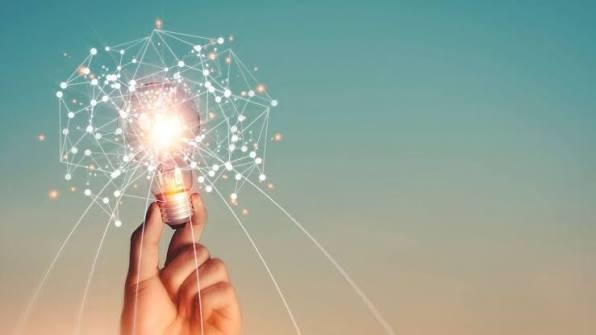
How Does Creativity Lead to Innovation?
Every innovation begins its life as something invisible.
Before the product exists.
Before the company forms.
Before the patent is filed.
Before the market notices.
There is a moment when the innovation lives nowhere except inside someone's mind.
A possibility.
A question.
A fragment.
An intuition that something could be different.
This stage is easy to overlook because innovation receives the headlines.
Creativity rarely does.
The world celebrates the finished bridge.
Not the first sketch.
The successful company.
Not the original observation.
The breakthrough technology.
Not the quiet thought that made it possible.
Yet innovation has a dependency.
It requires creativity in the same way a tree requires a seed.
Without creativity, innovation has no starting point.
Without innovation, creativity remains unrealized potential.
One generates possibilities.
The other transforms possibilities into reality.
Understanding the relationship between the two reveals something important about progress itself.
Most people think innovation begins with solutions.
More often, it begins with imagination.
Creativity and Innovation Are Not the Same Thing
The words are frequently used interchangeably.
That creates confusion.
Creativity and innovation are related.
They are not identical.
Creativity involves generating original ideas.
Innovation involves implementing those ideas in ways that create value.
Creativity asks:
What if?
Innovation asks:
How?
Creativity imagines possibilities.
Innovation builds systems around them.
Creativity creates the spark.
Innovation creates the fire.
The distinction matters because organizations often struggle when they emphasize one while neglecting the other.
Ideas without execution accomplish little.
Execution without ideas eventually becomes repetition.
Progress depends on the partnership.
Every Innovation Starts With Dissatisfaction
Innovation rarely begins with satisfaction.
It begins with tension.
Something feels incomplete.
Inefficient.
Frustrating.
Broken.
A customer encounters friction.
A scientist notices an inconsistency.
An entrepreneur identifies a gap.
A designer sees unnecessary complexity.
Most people experience these moments and move on.
Creative thinkers linger.
They become curious.
The dissatisfaction becomes a question.
The question becomes an investigation.
The investigation becomes an idea.
Innovation often begins with someone refusing to accept an existing limitation as permanent.
Creativity Expands the Number of Possible Futures
Imagine two people facing the same problem.
The first sees one solution.
The second sees ten.
Which person possesses a greater chance of discovering something valuable?
Creativity expands possibility.
That expansion changes outcomes.
Most challenges contain more potential solutions than initially appear obvious.
Creative thinking helps reveal them.
The process is less mystical than many assume.
It often involves perspective shifts.
Unexpected combinations.
New interpretations.
Alternative assumptions.
The more possibilities generated, the greater the probability that one contains exceptional value.
Innovation benefits directly from this expansion.
Because innovation requires options before it can select directions.
The Brain's Natural Innovation Engine
Neuroscience offers fascinating insight into this process.
Creative thinking engages several major brain networks.
The Default Mode Network generates ideas and associations.
The Executive Control Network evaluates and refines those ideas.
The Salience Network identifies which concepts deserve attention.
Innovation emerges when these systems cooperate effectively.
The imagination produces possibilities.
Analysis tests them.
Attention selects promising directions.
The process resembles exploration.
The brain wanders.
Discovers.
Returns.
Evaluates.
Refines.
Eventually something useful emerges.
Innovation is creativity subjected to reality.
Why Most Ideas Never Become Innovations
This is where many discussions become unrealistic.
People often assume that creativity naturally leads to innovation.
It doesn't.
Many ideas remain ideas.
The transition requires additional ingredients.
Execution.
Persistence.
Resources.
Timing.
Collaboration.
Adaptation.
An idea can be brilliant and still fail to become an innovation.
A mediocre idea can succeed when executed exceptionally well.
Innovation depends on creativity.
It also depends on action.
The bridge between the two is often larger than people realize.
The Power of Combining Existing Ideas
Popular culture celebrates originality.
Reality is often more collaborative.
Many innovations emerge through combination rather than invention from scratch.
A creative thinker notices two unrelated concepts.
A connection appears.
Something new emerges.
Consider how often innovation involves merging existing elements:
-
Technology with design
-
Science with business
-
Psychology with marketing
-
Art with engineering
The components already exist.
The arrangement changes.
This pattern appears repeatedly throughout history.
Creativity excels at discovering unusual combinations.
Innovation transforms those combinations into practical outcomes.
Why Constraints Often Increase Innovation
At first glance, constraints appear hostile to creativity.
Limited budgets.
Limited time.
Limited resources.
Yet constraints frequently stimulate innovation.
Why?
Because limitations force exploration.
When the obvious solution becomes unavailable, people search elsewhere.
Alternative approaches emerge.
Assumptions receive scrutiny.
New pathways appear.
Creativity often flourishes when circumstances demand adaptation.
Innovation benefits from that pressure.
Not because constraints are pleasant.
Because they encourage resourcefulness.
The history of innovation contains countless examples of breakthroughs emerging from limitation rather than abundance.
A Lesson I Learned About Innovation
Several years ago, I worked with a team facing a significant challenge.
Resources were limited.
The timeline was aggressive.
The obvious solutions exceeded the budget.
Initially, the situation felt restrictive.
Frustrating.
The conversation eventually changed.
Instead of asking how to execute the preferred solution, we began asking a different question.
What else is possible?
The shift transformed everything.
Ideas emerged that nobody considered earlier because abundance had made them unnecessary.
The final solution proved better than the original plan.
Not despite the constraint.
Partly because of it.
The experience taught me something important.
Innovation often appears after the first solution becomes impossible.
Creativity enters the conversation when certainty leaves.
Curiosity Is the Gateway
Innovation depends heavily on curiosity.
Questions create movement.
Answers create stability.
Both matter.
Innovation begins with questions.
Why does this process exist?
Why does this problem persist?
Why has nobody approached it differently?
Curiosity disrupts assumptions.
Assumptions often hide opportunities.
Many industries operate according to beliefs nobody remembers questioning.
Creative thinkers challenge them.
Innovation frequently emerges from that challenge.
The question itself becomes the beginning of change.
Organizations That Innovate Think Differently
Innovative organizations rarely possess a monopoly on talent.
Their advantage often lies elsewhere.
They create conditions where creativity survives long enough to become innovation.
Several patterns appear repeatedly.
Psychological Safety
Employees feel comfortable sharing ideas.
Experimentation
Testing becomes normal.
Learning
Failure produces information rather than punishment.
Diversity
Different perspectives interact.
Flexibility
Assumptions remain open to revision.
These characteristics encourage idea generation and implementation simultaneously.
That combination matters.
Because innovation requires both.
Comparison Table: Creativity vs. Innovation
| Dimension | Creativity | Innovation |
|---|---|---|
| Primary Focus | Generating ideas | Implementing ideas |
| Core Question | What is possible? | What works? |
| Objective | Originality | Value creation |
| Process Stage | Exploration | Execution |
| Success Metric | Novelty and insight | Adoption and impact |
| Risk Profile | Conceptual uncertainty | Market uncertainty |
| Required Skills | Imagination, curiosity, flexibility | Leadership, planning, execution |
| Typical Output | Ideas, concepts, possibilities | Products, services, systems |
| Time Horizon | Immediate generation | Long-term development |
| Role in Progress | Creates opportunities | Realizes opportunities |
The table highlights a critical insight.
Creativity and innovation are partners.
Neither replaces the other.
Each performs a distinct function.
Progress requires both.
Why Innovation Requires Persistence
Creative breakthroughs often arrive unexpectedly.
Innovation rarely does.
The implementation process demands endurance.
Refinement.
Iteration.
Adjustment.
Feedback.
Improvement.
Many innovations evolve through dozens or hundreds of revisions.
The original idea changes.
The market responds.
New information emerges.
Adaptation becomes necessary.
Persistence allows creativity to survive contact with reality.
Without persistence, innovation remains incomplete.
The most successful innovators often possess both imagination and resilience.
Failure Is Part of the Path
Organizations frequently admire innovation while fearing failure.
The relationship creates tension.
Innovation inherently involves uncertainty.
Uncertainty guarantees occasional disappointment.
The challenge lies in interpretation.
Creative cultures treat failure as information.
Restrictive cultures treat failure as evidence.
The distinction influences behavior dramatically.
When failure becomes survivable, experimentation increases.
When experimentation increases, innovation becomes more likely.
Not every experiment succeeds.
That is precisely why experimentation matters.
The process discovers possibilities that certainty never would.
Customer Problems Drive Meaningful Innovation
Some innovations emerge from technological breakthroughs.
Many emerge from empathy.
Understanding customer frustrations often reveals opportunities invisible from inside conference rooms.
Creative thinkers observe carefully.
How do people behave?
Where do they struggle?
What creates friction?
What feels unnecessarily difficult?
Innovation often begins by addressing these observations.
The most effective innovations frequently appear obvious after they exist.
Before they exist, they require imagination.
Someone must notice the problem differently.
The Relationship Between Creativity and Competitive Advantage
Markets reward value.
Innovation creates value.
Creativity fuels innovation.
The chain matters.
Organizations competing exclusively on efficiency often become vulnerable.
Competitors eventually replicate processes.
Technology spreads.
Information becomes accessible.
Creativity creates differentiation.
Differentiation supports innovation.
Innovation creates unique value.
Unique value strengthens competitive position.
The cycle becomes self-reinforcing.
Creativity is not merely a source of ideas.
It is a source of strategic advantage.
Why Cross-Disciplinary Thinking Produces Breakthroughs
Many innovations emerge at intersections.
Where disciplines overlap.
Where ideas migrate.
Where expertise combines.
A scientist studies design.
A musician learns programming.
An engineer explores psychology.
The resulting connections create opportunities.
Creative individuals often maintain unusually broad interests.
They collect ideas from multiple domains.
Innovation emerges when those domains interact.
The future frequently arrives through combination rather than isolation.
Technology Accelerates Innovation but Doesn't Create It
Technology changes what is possible.
Creativity determines what becomes meaningful.
This distinction grows increasingly important.
Tools can automate processes.
Analyze data.
Generate options.
Human creativity remains responsible for asking valuable questions.
Interpreting significance.
Identifying opportunities.
Imagining outcomes.
Technology expands capability.
Creativity provides direction.
Innovation requires both.
Why Adaptability Matters
Innovation is not a destination.
It is a continuous process.
Markets evolve.
Customer expectations change.
Competitive landscapes shift.
Organizations capable of adapting maintain advantages.
Adaptation depends heavily on creativity.
New circumstances require new responses.
Old assumptions become less reliable.
Fresh perspectives become essential.
Creativity generates alternatives.
Innovation transforms alternatives into action.
Together they support resilience.
The Hidden Connection Between Imagination and Progress
Civilizations advance because people imagine realities that do not yet exist.
Every major innovation begins in this space.
The space between what is and what could be.
A bridge exists there before construction begins.
A company exists there before launch.
A medical breakthrough exists there before discovery.
Creativity occupies this territory.
Innovation transports those possibilities into reality.
The relationship is fundamental.
One without the other remains incomplete.
The Real Mechanism of Change
When people ask how creativity leads to innovation, they are often asking a deeper question.
How does change happen?
How does progress occur?
How do new possibilities enter the world?
The answer begins with imagination.
Someone notices a limitation.
Questions an assumption.
Explores an alternative.
The idea develops.
Tests begin.
Failures occur.
Adjustments follow.
Eventually the possibility becomes reality.
The innovation appears visible and tangible.
Its origin remains creative.
This sequence repeats constantly.
Across industries.
Across cultures.
Across generations.
Creativity creates the blueprint.
Innovation builds the structure.
Neither function can fully replace the other.
And perhaps that is the most important lesson.
Innovation is not the opposite of creativity.
It is creativity in motion.
The moment imagination stops being a private experience and starts changing the world.
Every product.
Every service.
Every invention.
Every breakthrough.
Every transformation.
At some point, each existed only as an idea.
A fragile possibility.
A thought that seemed uncertain.
Perhaps even unrealistic.
Then someone acted.
That action is where creativity becomes innovation.
And where possibility becomes progress.
- Arts
- Business
- Computers
- Jogos
- Health
- Início
- Kids and Teens
- Money
- News
- Personal Development
- Recreation
- Regional
- Reference
- Science
- Shopping
- Society
- Sports
- Бизнес
- Деньги
- Дом
- Досуг
- Здоровье
- Игры
- Искусство
- Источники информации
- Компьютеры
- Личное развитие
- Наука
- Новости и СМИ
- Общество
- Покупки
- Спорт
- Страны и регионы
- World

 English
 Russian
 French
 Spanish
 Portuguese
 Deutsch
 Turkish
 Dutch
Dutch
 Italiano
 Arabic
 Romaian
 Greek
Greek