
Membership vs Subscription: What's the Difference and Why Does It Matter?
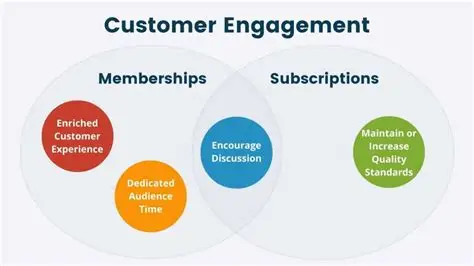
At first glance, membership and subscription appear almost identical.
A person pays regularly.
An organization delivers value.
The relationship continues until one side decides to end it.
Simple.
Except it isn't.
Because beneath the surface, membership and subscription represent fundamentally different philosophies.
One is built primarily around access.
The other is built around belonging.
One focuses on consumption.
The other emphasizes participation.
One asks, "What will you receive?"
The other asks, "What will you become?"
This distinction is easy to overlook.
Many organizations use the terms interchangeably. Marketing materials blur the lines. Business models increasingly combine elements of both.
Yet understanding the difference between membership and subscription is essential because the distinction influences everything from acquisition and engagement to retention and long-term growth.
Organizations that misunderstand the difference often struggle to build loyalty.
Organizations that understand it create relationships that endure.
The question is not whether one model is better than the other.
The question is what kind of relationship you want to create.
Why the Confusion Exists
The confusion is understandable.
Both models typically involve recurring payments.
Both generate predictable revenue.
Both depend on retention.
Both seek long-term customer relationships.
From a financial perspective, they often look remarkably similar.
A streaming service charges monthly fees.
A professional association charges annual dues.
A software platform bills subscribers.
A nonprofit organization enrolls members.
The transactions may appear nearly identical.
The psychology is not.
And psychology ultimately drives behavior.
The Core Difference
The simplest distinction can be summarized in one sentence:
Subscribers pay for access. Members pay for belonging.
Of course, reality is more nuanced.
Subscribers generally join to receive a product, service, or ongoing stream of content.
Members join to participate in a community, identity, mission, or shared experience.
The subscription relationship is often transactional.
The membership relationship is relational.
That difference changes everything.
What Defines a Subscription Model?
A subscription model is designed primarily around continuous access.
Customers pay recurring fees to receive ongoing value.
Examples include:
- Streaming platforms
- Software services
- Digital publications
- Meal delivery programs
- Subscription boxes
The central value proposition revolves around consumption.
Customers subscribe because they want access to something useful, entertaining, convenient, or necessary.
If that value disappears, the subscription becomes vulnerable.
The relationship depends heavily on continued product performance.
The customer asks:
Is this still worth paying for?
The answer determines retention.
What Defines a Membership Model?
Membership models operate differently.
While members may receive products, services, or content, those benefits are rarely the entire story.
Membership introduces an additional layer:
Participation.
Members often gain access to:
- Community
- Networking
- Shared identity
- Recognition
- Leadership opportunities
- Exclusive experiences
- Collective influence
The organization becomes more than a service provider.
It becomes a place where members belong.
This emotional dimension strengthens the relationship.
A member who leaves may lose more than access.
They may lose connection.
And that distinction matters enormously.
The Economics of Access vs Belonging
Both models generate recurring revenue.
But they create value in different ways.
Subscription businesses create value through utility.
Membership organizations create value through utility and identity.
The subscription customer evaluates functionality.
The member evaluates significance.
One asks:
"Does this work?"
The other asks:
"Does this matter?"
Organizations that understand this distinction make better strategic decisions.
Because the drivers of retention differ dramatically.
A Lesson I Learned About Membership and Subscription
Several years ago, I worked with an organization that described itself as membership-based.
Technically, that was true.
Members paid annual dues.
They received resources, educational materials, and exclusive content.
Yet renewal rates remained disappointing.
Member interviews revealed something revealing.
Most participants referred to themselves as customers.
Not members.
Customers.
That single word exposed the problem.
The organization had created a subscription experience while calling it membership.
There was little interaction.
Minimal community.
Few opportunities for participation.
No meaningful sense of belonging.
The organization eventually redesigned the experience around connection and engagement.
Member retention improved significantly.
The lesson was simple:
You cannot declare membership into existence.
People must feel it.
Membership vs Subscription: A Side-by-Side Comparison
The differences become clearer when viewed directly.
| Dimension | Membership Model | Subscription Model |
|---|---|---|
| Primary Value | Belonging and participation | Access and consumption |
| Customer Role | Participant | Consumer |
| Emotional Connection | High | Variable |
| Community Component | Central | Often limited |
| Identity Reinforcement | Strong | Usually minimal |
| Engagement Expectations | Active | Often passive |
| Retention Driver | Relationships and relevance | Utility and convenience |
| Switching Cost | Emotional and social | Functional and financial |
| Advocacy Potential | High | Moderate |
| Long-Term Loyalty | Often deeper | Product-dependent |
Neither approach is inherently superior.
Each serves different objectives.
The challenge arises when organizations confuse one for the other.
Why Membership Often Creates Stronger Retention
One reason membership models attract so much attention is their ability to generate durable loyalty.
Subscribers stay because they value what they receive.
Members often stay because they value who they become.
This distinction creates resilience.
A streaming subscriber may leave when content quality declines.
A member connected to a professional community may remain engaged despite occasional dissatisfaction because the relationships themselves create value.
Community acts as a retention multiplier.
Identity strengthens commitment.
Belonging deepens loyalty.
These forces often prove more durable than functional benefits alone.
The Role of Community
Community sits at the center of most successful membership models.
It transforms a transaction into a relationship.
A subscriber interacts primarily with the organization.
A member often interacts with the organization and other members.
Those additional connections create network effects.
Each new relationship increases perceived value.
The community becomes part of the product.
In many cases, it becomes the most valuable part.
This explains why professional associations, nonprofit organizations, and member-driven communities frequently outperform purely transactional models in retention.
Can a Subscription Become a Membership?
Absolutely.
Many organizations begin as subscription businesses and gradually incorporate membership elements.
They add:
- Discussion groups
- Member events
- Exclusive communities
- Peer networking
- Recognition programs
- Collaborative experiences
Over time, the relationship evolves.
Customers become participants.
Consumption becomes engagement.
Access becomes belonging.
The strongest organizations increasingly blend both models.
They deliver excellent products while simultaneously creating community.
This hybrid approach often produces powerful results.
Why Some Membership Models Fail
Not every organization succeeds simply because it labels customers as members.
Membership requires intentional design.
Common mistakes include:
Overemphasizing Content
Content can attract members.
Rarely does it sustain belonging.
Neglecting Relationships
Without human connection, membership feels transactional.
Lack of Participation Opportunities
Members need meaningful ways to engage.
Unclear Identity
Strong memberships help people understand what they belong to and why it matters.
Without these elements, membership often collapses into subscription.
And subscribers evaluate organizations differently.
The Future Is Increasingly Hybrid
The distinction between membership and subscription remains important.
Yet the future will likely involve increasing convergence.
Many organizations are discovering that utility alone is insufficient.
Products can be copied.
Features can be replicated.
Prices can be matched.
Community is harder to duplicate.
Belonging is harder to replicate.
Identity is harder to replace.
As a result, more subscription businesses are incorporating membership principles.
And more membership organizations are adopting subscription-style convenience and accessibility.
The boundaries continue to blur.
The underlying psychology remains distinct.
The Question That Reveals Everything
When evaluating your own organization, one question provides remarkable clarity:
If customers stopped paying tomorrow, what would they miss?
If the answer is access to content, software, products, or services, you are likely operating a subscription model.
If the answer includes relationships, identity, community, influence, participation, and belonging, you are operating a membership model.
Neither answer is wrong.
But understanding the difference is essential.
Because membership and subscription are not merely pricing structures.
They are relationship structures.
Subscriptions create recurring transactions.
Memberships create recurring connections.
Subscriptions focus on what people receive.
Memberships focus on what people experience together.
And in a world where information is abundant and products are increasingly interchangeable, the organizations that create genuine belonging possess something remarkably difficult to replace.
Not because they offer access.
Because they offer significance.
And significance has a way of keeping people around long after convenience alone would have failed.
- Arts
- Business
- Computers
- Spiele
- Health
- Startseite
- Kids and Teens
- Geld
- News
- Personal Development
- Recreation
- Regional
- Reference
- Science
- Shopping
- Society
- Sports
- Бизнес
- Деньги
- Дом
- Досуг
- Здоровье
- Игры
- Искусство
- Источники информации
- Компьютеры
- Личное развитие
- Наука
- Новости и СМИ
- Общество
- Покупки
- Спорт
- Страны и регионы
- World

 English
 Russian
 French
 Spanish
 Portuguese
 Turkish
 Dutch
Dutch
 Italiano
 Arabic
 Romaian
 Portuguese (Brazil)
 Greek
Greek