
Are creative people smarter?
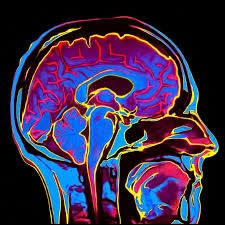
The Sound of a Shattered Mirror
We are obsessed with measuring the wrong things.
We love to weigh the mind. We give it scores, tests, indexes, and titles, attempting to lock human consciousness into a tidy box that fits neatly on a corporate shelf. If a person can calculate the trajectory of a falling satellite or recall the exact date of a forgotten treaty, we declare them a genius. We throw laurels at their feet. We build systems to protect their calculations.
This is a beautiful, necessary form of architecture. It is the intelligence of the grid.
But if you take that same person, place them in a dark room with an out-of-tune cello, and ask them to capture the feeling of grief, the machine often breaks down. The formulas fail. The logic turns cold. The map they spent a lifetime memorizing does not show the path through the swamp of human emotion.
So we must look closer.
Are the individuals who catch the quiet transmissions from the ether—the ones we label as "creative"—smarter than the ones who simply manage the existing facts? Or are they operating on an entirely different evolutionary frequency?
   [ THE INTELLECTUAL AXIS ]               [ THE CREATIVE AXIS ]
   ┌───────────────────────┐               ┌───────────────────┐
   │ • Accumulates data    │               │ • Empties data    │
   │ • Solves the puzzle   │      VS.      │ • Changes the shape │
   │ • Relies on safety    │               │ • Relies on risk  │
   │ • Polishes the glass  │               │ • Breaks the glass│
   └───────────────────────┘               └───────────────────┘
The answer is not found in a higher score. It is found in a lower pressure drop. The creator is not necessarily possessing more intellectual horsepower; they have simply forgotten how to use the brakes. They are willing to look absolutely foolish so the truth can enter the room.
The Static of the Certified Mind
To be traditionally smart is to carry a heavy backpack full of rules. It is to know what is permitted, what has been disproven, and what the consensus has deemed impossible. This is an incredible tool for survival, but it is a catastrophic barrier to revelation.
The Blindness of Expertise
When you become an expert in a field, your brain creates a highly efficient highway system. It finds the fastest route from a problem to a solution based on everything that has already happened. The more you know, the cleaner the highway becomes.
The creative process requires you to pull over on the shoulder, abandon your car, and walk directly into the thick brush without a compass.
-
The filter is too dense: A highly intellectualized mind filters out anomalies because they do not align with the established pattern. But the anomaly is always where the ghost lives.
-
The fear of the wrong answer: Intelligence is rewarded for accuracy. Creativity is born from the willingness to be wrong for weeks at a time until the error turns into a destination.
-
The trap of the reasonable: If an idea makes complete sense the moment it is whispered, it is rarely an act of creation. It is usually just an act of optimization. True art should feel slightly terrifying to the analytical monitor.
The Intelligence of the Receiver
What we mistake for intellectual superiority in creative people is often just an advanced state of porousness. They do not have a faster processor; they have a thinner skin.
They are susceptible to the world. They notice the specific pitch of a fluorescent bulb, the sudden change in temperature when a conversation shifts, or the pattern of rust on a dumpster that resembles a map of an ancient country. They do not analyze these elements; they let them accumulate like silt at the bottom of a riverbed until a new landform emerges.
A Lesson from the Quiet Room
Several years ago, I sat at a soundboard with a musician who had been invited to contribute an avant-garde arrangement to a classical symphony project. He had no formal training. He couldn't read a single line of music notation. If you asked him to explain the difference between a major third and a minor seventh, he would look at you with total blankness.
By every metric of the academy, he was illiterate.
In the same room sat a doctoral student from a prestigious conservatory. The student was a titan of musicology—flawless technique, absolute pitch, and the ability to transcribe complex polyrhythms in real time on a chalkboard. He was, by all conventional standards, the smartest person in the building.
We spent two days trying to write a transition section that felt like "the moment before a fever breaks."
[ Traditional Mastery ] ──► Analysis ──► Perfect Modulations ──► Rigid Form ──► Cold Take
[ Primitive Devotion ]  ──► Surrender ──► Broken Technique  ──► Raw Texture ──► True Awakening
The scholar went to work with his pencil. He calculated the mathematical relationships between the keys. He introduced elegant modulations that were structurally magnificent. On paper, it was an absolute triumph of human intellect.
But when the players performed it, the air in the studio didn't change. It sounded like an academic paper set to strings. It was clean, predictable, and entirely unbothered by human suffering.
The untrained musician sat on the floor, listening to the playback with his eyes closed. When the take ended, he walked over to an old, upright piano whose soundboard had been exposed to the elements. He didn't play a chord. Instead, he took a heavy metal coin from his pocket and dragged it slowly, roughly, along the bare copper strings inside the piano while holding down the sustain pedal.
The sound that left the instrument was a jagged, metallic, shrieking moan that dissolved into a low, terrifying hum. It sounded exactly like the first cold sweat of a sickness leaving the body. It made the engineer drop his pen. It made the classical scholar turn pale.
The scholar had used his immense intelligence to construct a beautiful cage for a bird that didn't exist. The primitive had simply opened his hand and let the actual wind blow through the room. He wasn't smarter in the way the world counts points; he was smarter in the way the earth knows how to rot a leaf to feed a root.
The Geometry of Cognitive Alignment
To understand the relationship between these two states of consciousness, we must map them across the fields of action. They are not pulling in the same direction, yet they cannot survive without each other's architecture.
| The Metric | The Intellectual Standard | The Creative Condition |
| Primary Tool | Deduction, classification, memory, logic. | Intuition, vulnerability, error, devotion. |
| Internal Space | A library where every book is numbered. | An attic where the windows have been broken. |
| Somatic State | Alert, analytical, suspicious of deviation. | Porous, relaxed, available to the accident. |
| The Core Threat | Becoming an imitation of previous excellence. | Formless drift; an explosion with no container. |
| The Final Measure | Is it defensible to the committee? | Does it make the skin turn cold? |
The Threshold of the Threshold
There is a theory in psychology that suggests intelligence and creativity only travel together up to a certain point. Once an individual's score crosses a specific baseline, the relationship stops moving in a straight line. The intellect begins to build a wall around its own achievements.
It becomes too proud to make a mess.
The ultimate trap of a high intelligence is that it can always find a perfectly logical reason why an idea will fail. It can prove, using data, history, and economics, that your dream is an impossibility. And it will be right. That is its curse.
But creation does not take place within the parameters of the defensible. The most radical shifts in our shared history—whether a chord progression that launched a movement or an equation that bent physics—arrived as outlaws. They looked like errors to the experts of the day because they didn't carry the proper identification papers.
If you are too smart to look ridiculous, you will spend your entire life polishing a monument to someone else’s discovery. You must be willing to unlearn your credentials at the door of the workspace. You must invite the child, the amateur, and the fool back into your nervous system, because they are the only ones who don't know that the wall cannot be climbed.
The Great Unfastening
We must stop asking if creative people are smarter. It is a question born out of a desire to rank things that cannot be compared.
The world is already full to the brim with brilliant, flawless, and perfectly calculated things that leave the human spirit entirely untouched. They are monuments to human vanity, built to demand applause rather than relationship. They are smart, but they are not alive.
The true work of the maker is not an exhibition of intellect. It is an act of deep, quiet surrender to the signal that was playing before we arrived and will continue playing long after we are returned to the dust. Drop your calculations. Turn off the monitor that tells you how the market will respond to your heart. Sit in the silence until you forget your own name, trust the wild shaking of your own hand, and let the madness do the writing.
- Arts
- Business
- Computers
- Giochi
- Health
- Home
- Kids and Teens
- Money
- News
- Personal Development
- Recreation
- Regional
- Reference
- Science
- Shopping
- Society
- Sports
- Бизнес
- Деньги
- Дом
- Досуг
- Здоровье
- Игры
- Искусство
- Источники информации
- Компьютеры
- Личное развитие
- Наука
- Новости и СМИ
- Общество
- Покупки
- Спорт
- Страны и регионы
- World

 English
 Russian
 French
 Spanish
 Portuguese
 Deutsch
 Turkish
 Dutch
Dutch
 Arabic
 Romaian
 Portuguese (Brazil)
 Greek
Greek