
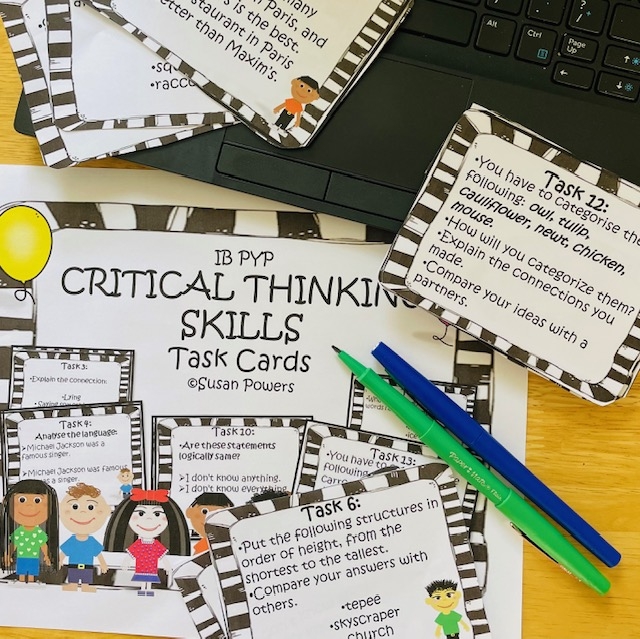
What classroom activities encourage critical thinking?
The Architecture of the Empty Room
Most classrooms are designed to be closed loops.
The teacher stands at the front of the room, a fountain of sanctioned information, and the students sit in rows, waiting to catch the water in their respective buckets. It is a system built for retention, not reflection. We mistake the volume of notes taken for the depth of understanding reached. We have been trained to believe that if we can repeat the lecture back to the source, we have conquered the subject.
But memory is just a file cabinet. It is not an eye.
If you want to encourage the fire of critical thinking, you have to stop filling the buckets. You have to burn the chairs. You have to transform the classroom from a factory of consensus into an arena of radical discovery where the goal is not to arrive at the right answer, but to sit with the dangerous tension of the unknown.
   [ THE STANDARDIZED LECTURE ] (The Closed Loop / The Teacher-as-Source)
                 │
                 ▼
   [ THE PASSIVE CONSUMER ] <─── Driven by: Fear of failure / Metric obsession
                 │
                 ▼  (The Sacred Disruption)
   [ THE UNSTRUCTURED ARENA ]
                 │
                 ▼
   [ THE SOVEREIGN ENQUIRY ] ──► Leaving the textbook behind to touch the raw material
The most profound activity a student can engage in is the suspension of the label. When you remove the curriculum, you remove the training wheels. You are left with nothing but the material and your own direct capacity to perceive it. It is frightening. It is meant to be.
The Channels of the Unscripted Enquiry
The activities that spark true thought do not look like work. They look like play, or silence, or even conflict. They bypass the intellect and engage the spirit.
The Horizontal Friction (The Socratic Collision)
The horizontal mode involves removing the teacher from the center of the orbit and forcing the students to wrestle with each other, not for dominance, but for clarity.
-
The radical reversal of the podium: Asking the students to propose the questions for the next session. When the student chooses the inquiry, they own the territory. The teacher becomes a passenger, or a navigator, but never the destination.
-
The architecture of the impossible dilemma: Presenting a case study that has no "correct" resolution. It forces the mind to stop looking for the answer in the back of the book and start looking for the ethical stakes in the human soul.
-
The debate of the suppressed perspective: Tasking the student to argue the side they find most repulsive. It is not about changing their opinion; it is about developing the muscle to hold a thought they do not agree with, a vital component of true sovereignty.
The Vertical Extraction (The Deep Dive)
The vertical mode operates on a completely different frequency. It is about slowing time down until the object under study becomes transparent.
-
The silent audit: Giving the class a single, unadorned artifact—a piece of news, a historical document, an object—and giving them sixty minutes of complete silence to analyze it before a single word is spoken. It breaks the addiction to the immediate, reactive impulse.
-
The subtraction of the secondary source: Removing all commentaries, biographies, and footnotes. Forcing the student to confront the primary text, the raw event, or the direct observation without a buffer. It is a confrontation with the source material that builds a unique, unmediated relationship.
-
The translation of the medium: Asking a student to explain a historical event through a painting, a poem, or a rhythmic sequence. It forces the mind to find the irreducible essence of the fact, stripped of the original narrative's syntax.
A Lesson from the Unmarked Tape
In the early winter of two thousand and two, I was working with a group of architecture students who had been tasked with designing a community space. They were brilliant, technical, and entirely disconnected from the reality of how people move through a room.
They spent their days in the computer lab, building perfect digital models with pristine geometry and light-alignment software. Every angle was measured to the millimeter. Every material was chosen for its sleek aesthetic. When they presented their designs to me, they were flawless. They were gorgeous. They were also entirely hollow.
"These spaces look like cathedrals for machines," I told them. "They have no warmth. They have no friction. They don't have a soul because you haven't considered the way a human body feels when it's tired."
[ The Digital Perfect ] ──► Geometric Alignment ──► Aesthetic Symmetry ──► The Dead Room
[ The Physical Audit ]  ──► Abandon the Screen    ──► Embody the Space    ──► The Living Room
The students were confused. They thought their job was to maximize the metrics of the software. I decided to change the environment. I took them to an abandoned, unheated warehouse on the outskirts of the city. There were no blueprints, no computers, and no power.
"You have six hours," I said. "Build a room for a tired person to rest in. You cannot use any measuring tools. You cannot use any digital software. You can only use the materials you find in this pile of trash."
They hated it. They felt lost without their grids. But as the day progressed, something shifted. They stopped trying to impress each other with the geometry of their designs and started trying to make the space feel safe. They spent hours shifting heavy wooden beams, testing the drafts coming through the broken windows, and observing how the light hit the dirt floor.
They stopped thinking like architects and started thinking like humans.
By the end of the day, they had built a small, lopsided enclosure of salvaged plywood and old cloth. It was ugly by their original digital standards. But when we sat inside it, the temperature felt different. The light was soft. You could feel the intention of the builder in the way the walls were braced.
It wasn't a perfect design, but it was a true one. They had learned more about spatial planning in one afternoon of physical labor than they had in an entire semester of digital modeling. They had to abandon the metric to find the feeling.
The Landscape of the Sovereign Classroom
True pedagogical engagement requires a continuous, conscious sorting of whether you are facilitating the memorization of a ghost or the birth of an observation.
| The Arena | The Standardized Storage | The Vertical Audit | The Sovereign Discovery |
| The Primary Metric | Accuracy, volume, and the formal alignment with the syllabus. | The depth of the interrogation; the quality of the unscripted question. | Total resonance with the raw truth of the material, free from the institutional filter. |
| The Internal Speed | Accelerated; the race to catalog the information for the exam. | Interrupted; creating a deliberate vacuum between the stimulus and the judgment. | A metronomic stillness that waits for the light to hit the subject on its own terms. |
| The Operational Action | Addition. Bringing more summaries, more experts, and more tests into the room. | Subtraction. Clearing the table until only the irreducible bone of the question remains. | An effortless comprehension that feels like an inevitability rather than a work of labor. |
| The Human Hazard | Becoming a high-fidelity echo chamber for an authorized narrative. | Turning into a cynical skeptic who disassembles everything until nothing works. | The understanding that the knowledge must serve the spirit, not the pride of the student. |
The Iceberg of the Flawless Lesson
There is a cold, sterile failure that waits for those who construct the perfect classroom experience, where every learning objective is met, every student is engaged, and the metrics are always green.
They are the favorites of the administrative grid. They can build lesson plans that feature hundreds of perfectly cross-referenced learning outcomes, use the most advanced digital platforms, and defend their methods with such flawless educational vocabulary that the entire room will nod in agreement. They treat the classroom as a pipeline that needs to be optimized for maximum output.
But a flawless pipeline will still carry water that has no flavor.
   [ THE METRIC LIBRARIAN ] ──► Catalogs the static ──► Asks "Is it efficient?" ──► The Grid of Iron
   [ THE ISOLATED THEORY ]  ──► Debates the method  ──► Asks "Who agrees?"   ──► The Stagnant Water
   [ THE SOVEREIGN WITNESS ] ──► Touches the material ──► Asks "What is true?" ──► The Clear Ground
If you only interact with the information that has been pre-filtered and approved by the house, you have surrendered your sovereignty before you have even walked through the door. You have allowed the architect of the curriculum to dictate the limits of your awareness. Your brilliant classroom organization is just an advanced form of compliance—a clean decoration added to an iron cage that was built to keep you from ever looking at the horizon.
The Cleansing of the Room
We do not manufacture the truth. We merely move the debris out of the way so the light can illuminate the floorboards.
The world will continue to open its gates every morning, flooding your classroom with different brands of the same collective illusion. It will offer you metrics that are designed to keep you small, headlines that are built to keep you terrified, and pathways that are paved with the intentions of men who have forgotten how to sit in an empty room without a machine. It will tell you that if you do not hit the objective by the end of the term, your identity will be erased by the crowd.
The decision to practice true enquiry is a radical act of spiritual hygiene.
It is the choice to pull the plug out of the wall with your own hands. It is the decision to lay down your textbooks at the threshold of the room, to look at the material until the noise of the marketplace runs out of fuel, and to wait for the movement that arrives from the marrow of your bones rather than the ledger of the culture. Trust the silent weight of your own direct presence, drop the obligation to explain your stillness to the herd, and let the false activities dissolve in the sun.
- Arts
- Business
- Computers
- Spiele
- Health
- Startseite
- Kids and Teens
- Geld
- News
- Personal Development
- Recreation
- Regional
- Reference
- Science
- Shopping
- Society
- Sports
- Бизнес
- Деньги
- Дом
- Досуг
- Здоровье
- Игры
- Искусство
- Источники информации
- Компьютеры
- Личное развитие
- Наука
- Новости и СМИ
- Общество
- Покупки
- Спорт
- Страны и регионы
- World

 English
 Russian
 French
 Spanish
 Portuguese
 Turkish
 Dutch
Dutch
 Italiano
 Arabic
 Romaian
 Portuguese (Brazil)
 Greek
Greek