
What are cognitive biases?
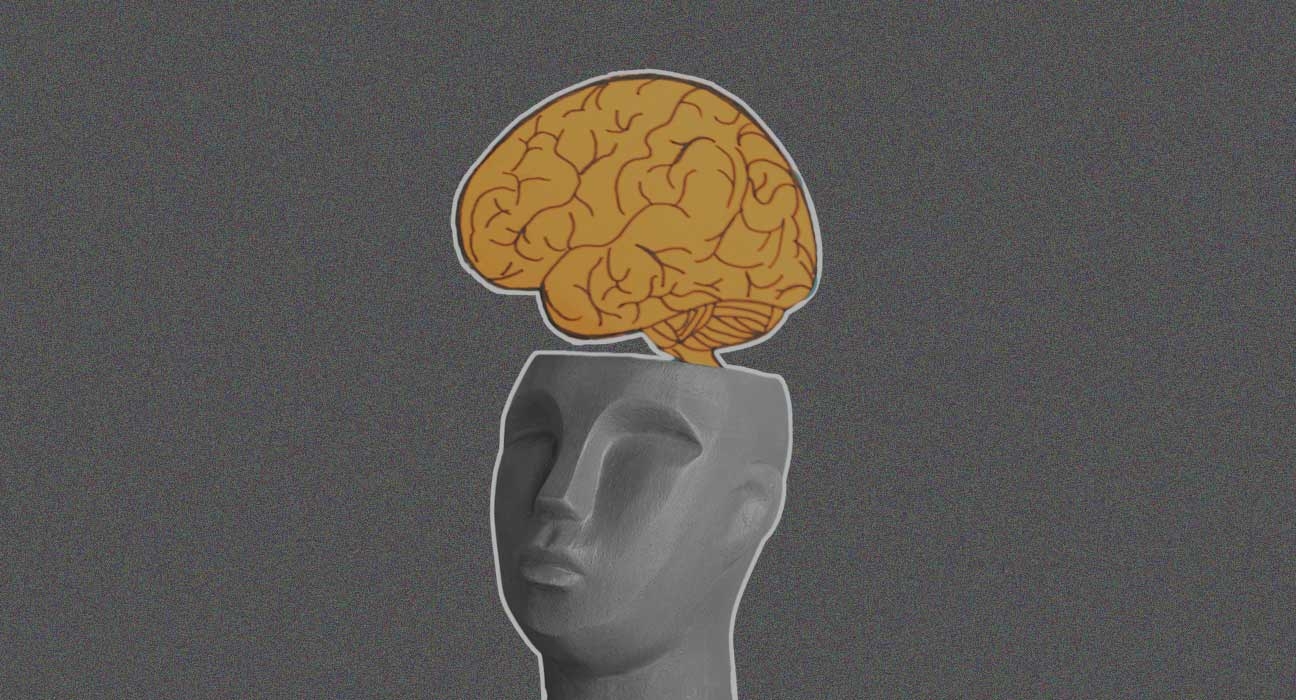
The Painted Window
We believe we are observers. We walk through the day, taking in the evidence of the world, and we trust that what we see is a transparent reflection of what is there. We imagine our minds to be clear, unblemished mirrors.
But the mirror is not clear. It is painted.
Cognitive biases are the pigments on that glass. They are the ancestral shortcuts the brain has evolved to survive the overwhelming velocity of existence. Because we cannot process every atom of data that hits our senses in a single moment, the brain creates templates. It simplifies. It guesses. It deletes the information that doesn't fit the existing architecture of our reality.
Most of the time, this is useful. It allows us to walk across a room without calculating the physics of every step. But when the environment changes—when we move from the safety of the tribe to the complexity of the global grid—these templates become filters. They don't just show us what is happening; they dictate what we are capable of seeing.
   [ THE RAW SIGNAL ] (The Infinite Data of the World)
                │
                ▼
   [ THE ANCESTRAL FILTER ] <─── Driven by: Speed / Survival / Cognitive Efficiency
                │
                ▼  (The Distorted Image)
   [ THE CONSTRUCTED REALITY ]
                │
                ▼
   [ THE BIASED JUDGMENT ] ──► We see what the filter allows, not what is there.
To understand cognitive bias is not to fix the mind. You cannot remove the pigment; the mind is a painter by nature. To understand it is to step back from the window, acknowledge that your view is tinted, and realize that everyone else in the room is looking through a completely different shade of blue.
The Geometry of the Mental Shortcuts
The brain is a creature of habit. It prefers the path of least resistance. It would rather be wrong and efficient than right and slow.
The Anchor of the Known (Confirmation Bias)
This is the most powerful current in the mental sea. We do not seek truth; we seek validation. When a piece of information enters our field of vision, the brain immediately sorts it: Does this support what I already believe? If yes, the information is welcomed. If no, the information is discarded as an anomaly, a lie, or an irrelevance.
-
The curated newsfeed: We choose the channels that describe the world in the tone of our own internal dialogue.
-
The blind spot for the contradiction: When presented with data that refutes our foundation, we do not update the foundation. We dig deeper. We become more entrenched.
-
The illusion of objectivity: The belief that "I am looking at the facts" while you are actually looking at the subset of facts that confirm your existing bias.
The Weight of the Immediate (Availability Heuristic)
We judge the probability of an event by how easily we can remember an example of it. If it is vivid, it must be common.
-
The dramatic bias: We fear the plane crash because it is on the news, even though the drive to the airport is a hundred times more dangerous. The brain remembers the explosion, not the mundane, silent statistics of the drive.
-
The recency trap: The most recent interaction with a person, a product, or a project dominates our assessment of their entire character. The past is forgotten; the present is the only reality.
A Lesson from the Stalled Project
In the spring of two thousand and twelve, I was working with a team that was developing a new audio interface. They were deeply committed to a specific design—a sleek, minimalist box that looked like a piece of high-end furniture. They had spent two years of their lives on it.
I asked them to perform a simple task: put the box in a room with a dozen musicians, give them no instructions, and watch what happened.
Within ten minutes, it was clear: nobody knew how to use it. They couldn't find the input ports. They were baffled by the lack of physical switches. The device was a total failure in the field.
The team, however, didn't see a failure. They saw a "learning curve."
"They’ll figure it out," the lead designer said. "Once they get used to the minimalism, they’ll appreciate the elegance."
He was looking at the product through the lens of confirmation bias. He had spent two years falling in love with his own idea, and he was pathologically unable to see that the object he had built was unusable. He had filtered out every negative signal—the furrowed brows, the sighs of frustration, the questions—and reframed them as a sign of the user’s inadequacy.
[ The Designer’s Vision ] ──► Filter out the "noise" ──► Reinforce the ego ──► The Product Fails
[ The Witness’s Audit ]   ──► Accept the friction  ──► Update the model   ──► The Product Lives
I had to force him to sit in the chair for three hours and watch the videos of the sessions. No talking. No defending his choices. Just the raw, unedited footage of people failing to make his device work.
At the end of the second hour, the color drained from his face. He finally saw what he had been filtering out. He saw that his "minimalism" was actually just a lack of clarity. He had been so blinded by his own commitment to the aesthetic that he couldn't see the reality of the user’s experience.
It was a painful moment of clarity, but it was the only way to save the project. He had to stop trying to be right and start trying to be observant.
The Landscape of the Sovereign Mind
The path to a more accurate perception is not to eliminate bias—that is impossible—but to become a conscious observer of your own filters.
| The Arena | The Standardized Storage | The Vertical Audit | The Sovereign Attunement |
| The Primary Metric | Consistency; holding onto the established narrative at all costs. | The depth of the interrogation; identifying the filter in real-time. | Total resonance with the raw reality of the world, free from the institutional filter. |
| The Internal Speed | Accelerated; the race to justify the choice before the feeling subsides. | Interrupted; the creation of a deliberate vacuum between the stimulus and the judgment. | A metronomic stillness that waits for the light to clarify the situation on its own terms. |
| The Operational Tool | Addition. Bringing more justifications, more experts, and more evidence to support the bias. | Subtraction. Clearing the table until only the irreducible bone of the evidence remains. | An effortless comprehension that feels like an inevitability rather than a work of labor. |
| The Human Hazard | Becoming a high-fidelity echo chamber for your own limited, ancestral perspective. | Turning into a frozen skeptic who dissects the perception until you lose the ability to act. | The understanding that the intellect must serve the spirit, not the pride of the witness. |
The Fortress of the Certified Illusion
There is a sophisticated, highly rewarded failure that waits for the person who masters their own biases perfectly, who can construct the most elaborate logical defenses for their mistakes, and who can argue for their own perspective with such nuance that the entire room will nod in agreement as they continue to operate on a foundation of sand.
They are the favorites of the boardroom and the lecture hall. They can explain away any anomaly, justify any failure, and defend any status quo with such brilliance that the whole community will celebrate as they march toward a predictable, avoidable catastrophe. They treat their perception as an infallible report on reality.
But a flawless defense of a broken view will still leave you lost in the dark.
   [ THE METRIC CLERK ]      ──► Catalogs the static ──► Asks "Is it consistent?" ──► The Grid of Iron
   [ THE ISOLATED THEORY ]   ──► Debates the language ──► Asks "Who agrees?"   ──► The Stagnant Water
   [ THE SOVEREIGN WITNESS ] ──► Touches the material ──► Asks "What is true?" ──► The Clear Ground
If you only use your intellect to protect your existing view, you are not thinking; you are simply managing the maintenance of your own ego. You are using your mind as a guard dog, keeping the truth outside the fence so you don't have to deal with the discomfort of being wrong.
The Cleansing of the Window
We do not manufacture the truth. We merely move the debris out of the way so the light can show us where the window is painted.
The world will continue to offer you an endless menu of convenient narratives, tailored specifically to match the shape of the bias you already carry. It will tell you that you are right, that you are informed, and that the people who disagree with you are the ones who are deluded.
The decision to practice true, sovereign perception is a radical act of spiritual hygiene.
It is the choice to pull the curtain back with your own hands. It is the decision to lay down your opinions at the threshold of the room, to look at the world until the noise of your own expectations runs out of fuel, and to wait for the movement that arrives from the raw reality of the event rather than the ledger of your own history. Trust the silent weight of your own direct presence, drop the obligation to defend your view to the herd, and let the false colors of the filter dissolve in the sun.
- Arts
- Business
- Computers
- Giochi
- Health
- Home
- Kids and Teens
- Money
- News
- Personal Development
- Recreation
- Regional
- Reference
- Science
- Shopping
- Society
- Sports
- Бизнес
- Деньги
- Дом
- Досуг
- Здоровье
- Игры
- Искусство
- Источники информации
- Компьютеры
- Личное развитие
- Наука
- Новости и СМИ
- Общество
- Покупки
- Спорт
- Страны и регионы
- World

 English
 Russian
 French
 Spanish
 Portuguese
 Deutsch
 Turkish
 Dutch
Dutch
 Arabic
 Romaian
 Portuguese (Brazil)
 Greek
Greek