
How do biases influence decision-making?
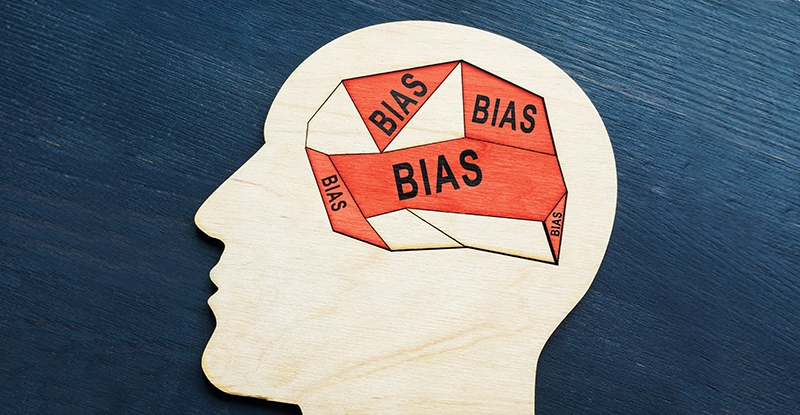
The Architect of the Invisible
We operate under the grand illusion that we are the captains of our own choices. We sit at the desk, we gather the files, we weigh the pros and the cons, and we execute the decision based on the facts in front of us. We believe the process is a straight line.
But the line is not straight. It is a spiral, curved by forces we have spent a lifetime ignoring.
Every choice you have ever made was drafted by a ghost. These ghosts are the shortcuts, the prejudices, and the ancient, protective instincts that reside in the basement of your psyche. We call them biases. They are not errors; they are the fundamental software upon which the human experience runs. To understand why we choose what we choose, you must stop looking at the decision and start looking at the shadow that cast it.
   [ THE STIMULUS ] (The Raw Data)
                 │
                 ▼
   [ THE COGNITIVE FILTER ] <─── Driven by: Survival / Pattern Recognition / Fear
                 │
                 ▼  (The Sacred Halt)
   [ THE BIAS INTERVENTION ]
                 │
                 ▼
   [ THE DECISION ] ──► Moving toward an outcome while believing it was your own.
To make a decision while ignoring your biases is to drive a car while ignoring the tilt of the road. You can hold the wheel with all your might, but the machine will always drift toward the ditch.
The Landscape of the Mental Drift
The brain is a master of economy. It hates the effort of deep thinking. It prefers the ease of the pattern.
The Horizontal Velocity (The Comfort of the Known)
We are creatures of alignment. We seek out the information that makes us feel steady, and we reject the information that makes us feel unmoored.
-
The echo of the identity: We choose the evidence that protects who we think we are. If you believe you are a success, you will interpret every setback as a "temporary lesson." If you believe you are a failure, you will interpret every success as "luck."
-
The safety of the group: The tribe is the original biological survival mechanism. We will often make an objectively worse decision if that decision allows us to remain in alignment with the people we rely on. Standing alone with the truth is more terrifying than standing together with a lie.
The Vertical Audit (The Sovereign Descent)
This is the work of slowing down the machinery until the ghost in the machine becomes visible.
-
The suspension of the outcome: Most decisions are corrupted because we are already attached to the result. We aren't choosing the path; we are choosing the prize. If you can let go of the need for a specific result, the bias of desire loses its grip.
-
The friction of the counter-argument: Actively seeking out the perspective that causes you the most internal discomfort. If a choice feels "obvious," that is your first warning sign. Obviousness is just another word for an unexamined shortcut.
A Lesson from the Silent Studio
In the spring of two thousand and seven, I was working with a collective of creators who were developing a new platform for shared expression. They were brilliant, passionate, and convinced that their vision was destined to redefine the industry.
They had run all the numbers. They had interviewed the users. They had built the prototypes. Every step they took was "validated" by their own internal metrics. But every time they rolled out a new feature, the usage dropped.
They were trapped in a loop of confirmation bias. They were asking the wrong people the wrong questions, and because they were asking the questions, they were getting the answers they wanted to hear. They weren't testing the platform; they were testing their own assumptions.
[ The Feedback Loop ] ──► Ask the Fan   ──► Receive the Praise ──► The Failure
[ The Sovereign Audit ] ──► Seek the Critic ──► Feel the Friction ──► The Evolution
I asked them to stop everything. I told them to find the ten people who hated the project the most—the people who found the platform useless, confusing, or pretentious. I told them to sit in a room with these critics for a full day, and to perform a radical act of listening. They were forbidden from defending, explaining, or convincing. They could only ask, "Tell me more about why you see it that way."
It was the most painful day of their careers. They had to watch their beautiful, rationalized project be dismantled, piece by piece, by the people they had dismissed as "not getting it."
But by the end of that day, they had the map. They realized they had been building for their own ego, not for the person who had to live with the product. They had been blinded by the bias of their own brilliance. They had to stop trying to be right, so they could start being useful.
The Landscape of the Sovereign Decision
True decision-making is not about eliminating bias—which is impossible—but about managing the room in which the decision is made.
| The Arena | The Standardized Controller | The Vertical Auditor | The Sovereign Lead |
| The Primary Objective | To justify the chosen path and maintain internal equilibrium. | To dismantle the internal friction and test the validity of the assumption. | To align the choice with the raw truth of the purpose, free from the noise. |
| The Internal Speed | High-velocity; the race to decide before the doubt sets in. | Interrupted; the creation of a deliberate vacuum between the data and the action. | A metronomic stillness that waits for the water to clarify. |
| The Operational Tool | Addition. Bringing more justifications and more data in to support the bias. | Subtraction. Clearing the table until only the irreducible bone of the problem remains. | An effortless presence that sees the solution because it has stopped fighting the problem. |
| The Ultimate Hazard | Turning into a high-fidelity echo of a narrative you know is hollow. | Turning into a skeptic who disassembles everything until you lose the ability to move. | The realization that your choice must serve the truth, not your pride. |
The Fortress of the Certified Illusion
There is a clean, sophisticated failure that waits for the person who masters the art of bias-justification—who can draft the most compelling strategy decks, defend any position using the most current buzzwords, and execute the standard procedures with surgical accuracy—without ever checking to see if the decision actually serves a living human being.
They are the favorites of the boardroom. They can build intricate models of choice, trace the logic of the market with surgical accuracy, and justify the existence of their choices with such brilliance that the whole environment will celebrate as the culture quietly decays. They treat their decision-making as a game of alignment with the most powerful voice in the room.
But if the decision is a lie, the outcome will never feel like it belongs to you.
   [ THE METRIC CLERK ]      ──► Catalogs the static ──► Asks "Is it efficient?" ──► The Grid of Iron
   [ THE ISOLATED THEORY ]   ──► Debates the method  ──► Asks "Who agrees?"   ──► The Stagnant Water
   [ THE SOVEREIGN WITNESS ] ──► Touches the material ──► Asks "What is true?" ──► The Clear Ground
If you only use your mental faculties to optimize the choices you were trained to make, you are not thinking critically. You are simply becoming a more effective instrument of someone else’s narrow, frightened vision. You are using your intellect to build a more comfortable prison cell for your own talent.
The Cleansing of the Room
We do not manufacture the truth. We merely move the debris out of the way so the light can show us where the floorboards are rotten.
The system will continue to offer you an endless menu of convenient fictions, tailored specifically to match the requirements of the marketplace. It will tell you that the process is more important than the product, and that the report is more important than the reality.
The decision to practice true, sovereign enquiry in your choices is a radical act of spiritual hygiene.
It is the choice to pull the plug out of the wall with your own hands. It is the decision to lay down your justifications at the threshold of the decision, to look at the problem until the noise of your own expectations runs out of fuel, and to wait for the movement that arrives from the marrow of your own bones rather than the ledger of the status quo. Trust the silent weight of your own direct presence, drop the obligation to explain your stillness to the herd, and let the false activities dissolve in the sun.
- Arts
- Business
- Computers
- Jogos
- Health
- Início
- Kids and Teens
- Money
- News
- Personal Development
- Recreation
- Regional
- Reference
- Science
- Shopping
- Society
- Sports
- Бизнес
- Деньги
- Дом
- Досуг
- Здоровье
- Игры
- Искусство
- Источники информации
- Компьютеры
- Личное развитие
- Наука
- Новости и СМИ
- Общество
- Покупки
- Спорт
- Страны и регионы
- World

 English
 Russian
 French
 Spanish
 Portuguese
 Deutsch
 Turkish
 Dutch
Dutch
 Italiano
 Arabic
 Romaian
 Greek
Greek