
Why Has the On-Demand Economy Grown So Rapidly?
A few decades ago, convenience was considered a bonus.
Today, it is often the starting point.
Think about how many decisions you make before lunch. You might order coffee from your phone, schedule a virtual meeting with a financial advisor, stream a podcast during your commute, and have groceries delivered before dinner. None of those actions feel particularly remarkable anymore. That's precisely the point.
The on-demand economy didn't grow because consumers suddenly became impatient.
It grew because businesses discovered that reducing friction creates extraordinary value.
When customers no longer have to reorganize their schedules around a company, they begin to expect the opposite. They expect businesses to adapt to them.
That expectation has quietly reshaped entire industries.
The companies that recognized this shift early weren't simply selling products faster. They were redesigning the customer experience around accessibility, flexibility, and immediacy.
Understanding why the on-demand economy has expanded so quickly requires looking beyond technology. The real story is about changing human behavior, evolving business models, and a new definition of convenience that continues to influence how organizations compete.
What Is the On-Demand Economy?
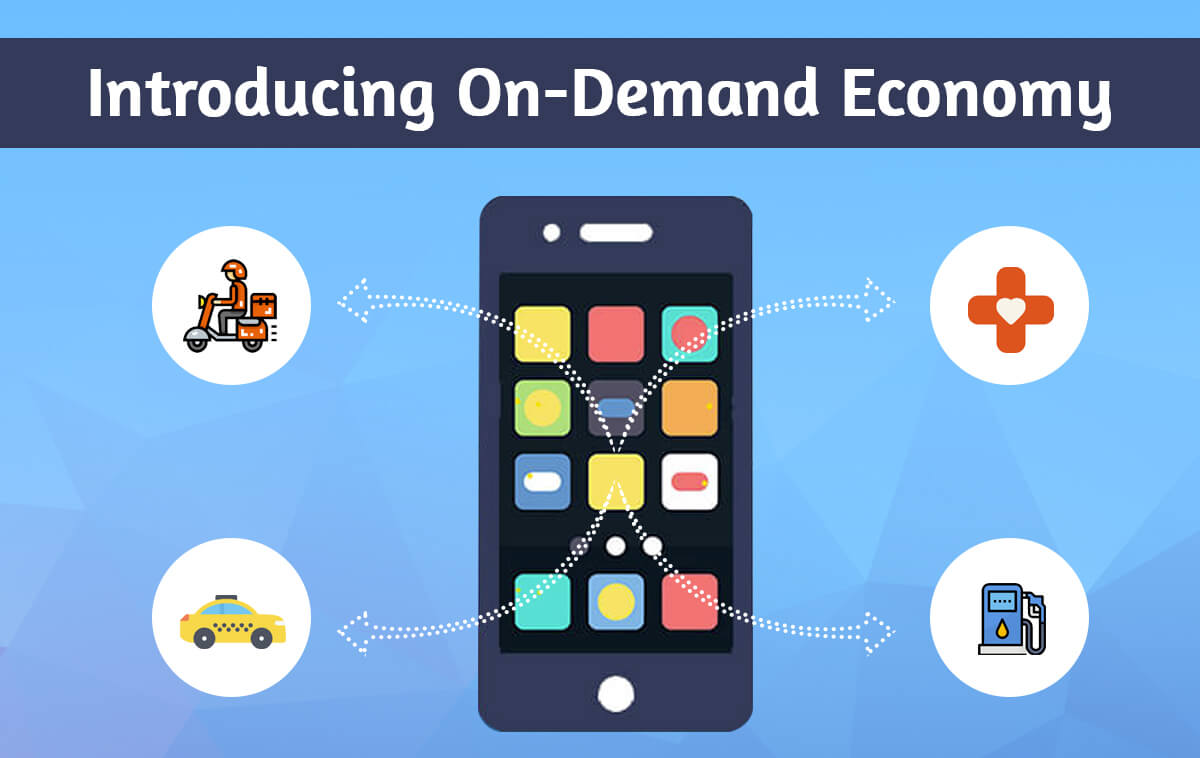
The on-demand economy is a business model that enables customers to obtain products or services whenever they need them, typically through digital platforms that coordinate requests, payments, and fulfillment in real time.
Unlike traditional models built around fixed operating hours or scheduled service windows, on-demand businesses place customers in control.
Customers decide:
- When they need a service
- Where they want it delivered
- How they prefer to access it
- Which provider best fits their needs
Businesses respond accordingly.
That reversal of control explains much of the model's appeal.
The Shift From Scheduled Commerce to Customer-Controlled Commerce
For generations, businesses determined the rules.
Stores opened at specific times.
Banks closed in the afternoon.
Television programs aired according to network schedules.
Customers adjusted.
Today's consumers rarely expect that arrangement.
Instead, they assume products and services should be available when they need them.
This represents more than operational efficiency.
It represents a philosophical shift.
The customer—not the business—sets the pace.
Why the On-Demand Economy Expanded So Quickly
Several powerful trends reinforced one another.
Each made the next wave of innovation possible.
1. Smartphones Changed Customer Behavior
The smartphone became more than a communication device.
It became a remote control for everyday life.
Customers suddenly carried an entire marketplace in their pockets.
Ordering transportation.
Scheduling appointments.
Watching entertainment.
Buying groceries.
Managing finances.
Access became nearly effortless.
Businesses no longer needed customers to visit physical locations.
Customers simply tapped a screen.
2. Digital Payments Removed Friction
Every unnecessary step reduces conversions.
Entering payment information repeatedly creates friction.
Waiting for invoices slows purchasing.
Modern payment systems simplified transactions dramatically.
Purchasing became almost invisible.
The easier it became to complete transactions, the more frequently customers used digital services.
3. Cloud Computing Made Scaling Easier
Many early technology companies struggled because expanding infrastructure required enormous investments.
Cloud computing changed that equation.
Businesses could increase capacity rapidly without building massive internal systems.
This flexibility accelerated innovation while reducing costs.
Organizations could grow alongside customer demand.
4. Consumers Learned to Expect Convenience
Perhaps the most underestimated driver wasn't technological.
It was psychological.
When customers experienced exceptional convenience in one industry, they began expecting similar experiences everywhere.
Someone accustomed to streaming entertainment instantly naturally wondered:
"Why can't healthcare work this way?"
Or banking.
Or education.
Or government services.
Convenience spreads through expectations.
5. Data Improved Customer Experiences
Every customer interaction generates information.
Businesses learned:
- Popular purchasing times
- Customer preferences
- Geographic demand
- Service bottlenecks
- Seasonal trends
Instead of guessing what customers wanted, organizations increasingly understood actual behavior.
Smarter decisions improved customer satisfaction.
Industries That Accelerated the On-Demand Economy
Growth didn't occur equally across every sector.
Some industries proved especially well suited to the model.
| Industry | Traditional Experience | On-Demand Experience | Primary Customer Benefit |
|---|---|---|---|
| Transportation | Scheduled taxis | Immediate ride requests | Speed |
| Retail | Store visits | Same-day delivery | Convenience |
| Entertainment | Broadcast schedules | Streaming libraries | Customer choice |
| Healthcare | Office scheduling | Virtual consultations | Accessibility |
| Education | Semester enrollment | Immediate course access | Flexibility |
| Professional Services | Office appointments | Virtual expertise | Time savings |
Notice a recurring pattern.
Every successful example removes unnecessary waiting.
The Relationship Between On-Demand and Membership
Interestingly, many organizations discovered that convenience alone wasn't enough.
Immediate access attracted customers.
Recurring relationships retained them.
This explains why many businesses now combine on-demand delivery with membership or subscription models.
Examples include:
- Digital learning platforms
- Fitness memberships
- Streaming entertainment
- Software services
- Professional communities
Customers enjoy continuous access instead of repeated purchasing decisions.
Businesses benefit from recurring revenue.
Both sides gain predictability.
A Lesson I Learned About Convenience
Several years ago, I worked with an organization that believed declining engagement required creating more educational resources.
Every planning meeting focused on expanding the content library.
The assumption seemed logical.
More resources should create more participation.
Instead, usage barely changed.
When we interviewed members, an entirely different issue emerged.
People weren't asking for additional content.
They couldn't easily find the material already available.
Navigation required too many clicks.
Search results lacked relevance.
Important resources remained hidden.
The organization invested less in production and more in accessibility.
Improved navigation.
Personalized recommendations.
Simplified search.
Engagement increased almost immediately.
That experience reinforced a lesson I continue to revisit.
Customers rarely confuse abundance with value.
They value accessibility.
Making existing value easier to reach often creates greater impact than creating something entirely new.
Why Businesses Benefit From the On-Demand Model
Organizations embracing on-demand operations frequently experience meaningful advantages.
Higher Customer Satisfaction
Removing delays generally improves customer experiences.
Convenience reduces frustration.
Satisfied customers often become repeat customers.
Greater Operational Efficiency
Digital coordination helps businesses allocate resources more effectively.
Demand becomes easier to forecast.
Capacity becomes easier to manage.
Better Customer Insights
Frequent interactions generate valuable behavioral information.
Organizations continuously improve based on real usage patterns.
Expanded Market Reach
Digital platforms reduce geographic barriers.
Businesses serve customers far beyond traditional physical locations.
Challenges That Accompany Rapid Growth
Rapid expansion also introduces meaningful complexity.
Expectations Continue Rising
Customers quickly adapt to convenience.
Yesterday's innovation often becomes today's standard.
Organizations must continue improving simply to remain competitive.
Operational Complexity Increases
Fast fulfillment requires sophisticated logistics, technology infrastructure, staffing, and customer support.
Simple customer experiences often hide remarkably complex operations.
Speed Cannot Replace Trust
Customers appreciate immediate service.
They also expect consistency.
Reliable quality remains essential.
Convenience without dependability rarely creates lasting loyalty.
The Future of the On-Demand Economy
Artificial intelligence will increasingly personalize recommendations.
Automation will streamline fulfillment.
Predictive analytics may anticipate customer needs before requests occur.
Connected devices will automate routine purchases.
Yet none of these developments changes the underlying principle.
People value businesses that simplify their lives.
Technology will continue evolving.
Customer expectations will continue rising.
Organizations that consistently reduce effort while maintaining trust will remain well positioned regardless of which technologies dominate the next decade.
Convenience Changes Expectations. Trust Sustains Growth.
Many discussions about the on-demand economy emphasize speed.
Speed certainly matters.
But it isn't the deepest driver.
Convenience changes customer expectations.
Reliability creates confidence.
Confidence encourages repeat behavior.
Repeat behavior becomes loyalty.
Organizations that understand this progression avoid a common mistake.
They don't compete solely on faster delivery.
They compete on easier experiences.
That distinction matters.
Because speed eventually becomes common.
Trust remains difficult to replicate.
The Better Question
Business leaders frequently ask:
"Why has the on-demand economy grown so rapidly?"
The obvious answers include smartphones, cloud computing, digital payments, and changing technology.
Those factors certainly accelerated adoption.
The more revealing answer is simpler.
The on-demand economy grew because it aligned business operations with how people actually prefer to live.
People value flexibility.
They appreciate transparency.
They reward businesses that respect their time.
The organizations thriving in this environment are not necessarily those with the fastest platforms or the largest budgets.
They are the ones that consistently remove unnecessary effort from the customer experience.
That may be the most enduring lesson of the on-demand economy.
Convenience attracts attention.
Consistency earns trust.
And businesses that repeatedly deliver both create relationships that extend far beyond individual transactions.
- Arts
- Business
- Computers
- Oyunlar
- Health
- Home
- Kids and Teens
- Money
- News
- Personal Development
- Recreation
- Regional
- Reference
- Science
- Shopping
- Society
- Sports
- Бизнес
- Деньги
- Дом
- Досуг
- Здоровье
- Игры
- Искусство
- Источники информации
- Компьютеры
- Личное развитие
- Наука
- Новости и СМИ
- Общество
- Покупки
- Спорт
- Страны и регионы
- World

 English
 Russian
 French
 Spanish
 Portuguese
 Deutsch
 Dutch
Dutch
 Italiano
 Arabic
 Romaian
 Portuguese (Brazil)
 Greek
Greek