
What are cognitive biases?
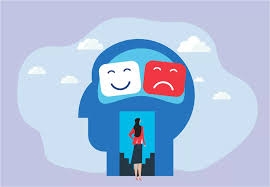
What Are Cognitive Biases? The Invisible Forces That Shape Every Decision
Every decision begins with a simple assumption: we believe we are seeing reality as it is.
That belief is remarkably persuasive. It also happens to be one of the greatest obstacles to sound judgment.
Ask a room full of experienced professionals why a project failed, and the explanations will differ dramatically. One person will blame poor leadership. Another will point to weak execution. Someone else will argue that the strategy was flawed from the beginning. Each explanation may contain elements of truth, yet each reflects more than objective observation. It reflects the lens through which reality is interpreted.
That lens is shaped by cognitive biases.
These biases are not signs of low intelligence or insufficient experience. On the contrary, they affect physicians, engineers, investors, executives, researchers, and policymakers alike. Expertise often changes what we know, but it does not eliminate how our minds simplify complexity.
I learned this lesson while participating in a strategic planning session several years ago. Our team had gathered extensive market research, financial projections, and customer feedback. We assumed that enough data would naturally lead everyone toward the same conclusion.
The opposite happened.
Each participant highlighted different evidence while reaching different recommendations. The information had not changed. Our interpretation of it had.
That experience taught me something I continue to revisit whenever an important decision arises: the greatest threat to good judgment is often not ignorance. It is the quiet confidence that our thinking is already objective.
What Is a Cognitive Bias?
A cognitive bias is a predictable pattern of thinking that systematically influences judgment.
Rather than processing every piece of information from first principles, the brain relies on shortcuts. These mental shortcuts—often called heuristics—allow us to make decisions quickly without analyzing every possible variable.
Most of the time, they are remarkably efficient.
Without them, ordinary life would become exhausting. Imagine calculating every possible consequence before choosing what to eat, how to respond to an email, or which route to drive home.
Efficiency, however, comes with trade-offs.
Shortcuts occasionally produce distorted conclusions, inaccurate estimates, or poor decisions.
The important point is that biases are not random mistakes.
They are consistent.
Because they are consistent, they can be anticipated—and often managed.
Why the Brain Depends on Mental Shortcuts
Human attention is limited.
Every day presents thousands of decisions competing for cognitive resources.
The brain naturally conserves effort by simplifying information.
Instead of evaluating every detail independently, it asks questions such as:
-
Have I seen something similar before?
-
Does this fit an existing pattern?
-
What conclusion seems most plausible?
-
Which explanation feels familiar?
These shortcuts usually save time.
Occasionally, they sacrifice accuracy.
Understanding that trade-off is the first step toward improving decision quality.
The Most Common Cognitive Biases
Although researchers have identified many cognitive biases, several appear repeatedly in business, finance, medicine, leadership, and everyday life.
Confirmation Bias
Confirmation bias encourages us to search for evidence supporting beliefs we already hold while overlooking contradictory information.
Imagine interviewing job candidates.
If your first impression is favorable, subsequent answers often appear more convincing.
If your first impression is negative, identical answers may seem less persuasive.
The evidence remains constant.
Your interpretation changes.
Anchoring Bias
The first number, opinion, or estimate we encounter frequently becomes a reference point for everything that follows.
Salary negotiations illustrate this clearly.
The initial offer strongly influences the final agreement, even when both parties recognize that the opening figure is arbitrary.
Anchors shape expectations long before careful reasoning begins.
Availability Bias
People estimate probability according to how easily examples come to mind.
A widely publicized airline accident may increase fear of flying despite aviation remaining statistically safe.
Recent, vivid, or emotional events often feel more common than they actually are.
Memory influences perception.
Perception influences decisions.
Overconfidence Bias
Most people believe their judgments are more accurate than they truly are.
Executives overestimate forecasts.
Investors predict market movements with excessive certainty.
Students expect higher exam scores than they ultimately receive.
Confidence feels persuasive.
Accuracy requires evidence.
Loss Aversion
Psychological research consistently shows that losses carry greater emotional weight than equivalent gains.
This helps explain why investors hesitate to sell losing assets and why organizations continue funding unsuccessful initiatives long after objective analysis recommends stopping.
The pain of admitting loss frequently exceeds the anticipated benefit of moving forward.
Sunk Cost Fallacy
Past investments should not determine future decisions.
Yet they often do.
People remain committed to unsuccessful projects because abandoning them feels like wasting prior effort.
The resources already spent cannot be recovered.
Only future costs and future benefits deserve consideration.
Comparing Common Cognitive Biases
Recognizing the differences among biases makes them easier to identify in practice.
| Cognitive Bias | Typical Behavior | Potential Consequence | Practical Countermeasure |
|---|---|---|---|
| Confirmation Bias | Seeking supporting evidence | Reinforced misconceptions | Look for disconfirming evidence |
| Anchoring | Relying on initial information | Distorted estimates | Create independent benchmarks |
| Availability Bias | Judging frequency by memorable examples | Misjudged risks | Examine historical data |
| Overconfidence | Excessive certainty in predictions | Unrealistic planning | Estimate probability ranges |
| Loss Aversion | Avoiding losses at almost any cost | Missed opportunities | Focus on expected future value |
| Sunk Cost Fallacy | Continuing because of past investment | Escalating commitment | Ignore unrecoverable costs |
An important pattern emerges.
None of these biases reflects a lack of intelligence.
Each reflects normal human cognition.
Why Intelligent People Still Make Poor Decisions
Intelligence improves analytical capacity.
It does not eliminate psychological tendencies.
In some situations, highly intelligent individuals become especially skilled at constructing persuasive arguments supporting conclusions they reached emotionally or intuitively.
Greater intelligence can therefore strengthen rationalization instead of reducing bias.
Humility becomes as valuable as expertise.
How Emotions Interact With Biases
Cognitive biases rarely operate independently of emotion.
Fear amplifies risk perception.
Anger increases confidence.
Pride discourages reconsideration.
Regret encourages excessive caution.
Emotion supplies momentum.
Bias shapes direction.
Together, they influence decisions far more than either factor alone.
Recognizing emotional states before making significant decisions can reduce the likelihood of biased reasoning.
Organizations Are Not Immune
People sometimes assume that groups naturally correct individual errors.
The opposite occasionally occurs.
Organizations develop collective biases.
Teams avoid disagreement to preserve harmony.
Leaders unintentionally influence discussions before alternatives receive consideration.
Successful strategies become unquestioned traditions.
These patterns can create environments where flawed assumptions persist despite abundant evidence.
Healthy organizations encourage constructive disagreement rather than automatic consensus.
My Most Valuable Lesson About Bias
One experience permanently changed my perspective.
During a planning workshop, I felt unusually confident that one proposal clearly represented the strongest option.
The supporting evidence seemed overwhelming.
Before finalizing the recommendation, a colleague asked a simple question.
"What evidence would convince you that you're wrong?"
The silence that followed surprised me.
I realized I had prepared extensive arguments defending my position but had invested almost no effort exploring reasons it might fail.
The proposal itself was not necessarily weak.
My evaluation of it was incomplete.
Since then, I have tried to treat confidence not as proof of correctness but as a signal to examine assumptions more carefully.
Practical Strategies for Reducing Cognitive Biases
Eliminating bias entirely is unrealistic.
Managing it is possible.
Several practices consistently improve decision quality.
Separate Observation From Interpretation
Record facts before explaining them.
Observation:
Sales declined by six percent.
Interpretation:
Customers dislike the product.
The first statement is measurable.
The second requires evidence.
Seek Contradictory Evidence
Instead of asking why your conclusion is correct, ask what evidence would challenge it.
This simple habit frequently uncovers overlooked assumptions.
Delay Irreversible Decisions
Strong emotions often reinforce biases.
Allowing time between analysis and commitment can produce noticeably better judgment.
Encourage Independent Opinions
Ask individuals to evaluate problems independently before group discussion begins.
This reduces conformity and preserves diverse perspectives.
Think in Probabilities
Avoid treating uncertain outcomes as certainties.
Rather than predicting one future, estimate several plausible scenarios.
Probability encourages humility.
Certainty often encourages bias.
Better Questions Produce Better Thinking
When confronting an important decision, consider replacing familiar questions with more useful ones.
Instead of asking:
"Am I right?"
Ask:
-
What assumptions am I making?
-
Which evidence contradicts my conclusion?
-
What would someone who disagrees notice?
-
Am I reacting to data or familiarity?
-
Which bias is most likely influencing my judgment?
These questions rarely eliminate bias completely.
They often reduce its influence substantially.
Conclusion: Cognitive Biases Are Part of Human Nature—Not Personal Failure
Cognitive biases are not flaws reserved for other people. They are ordinary features of how the human mind manages complexity, uncertainty, and limited attention. Without them, everyday life would become painfully inefficient. Because of them, important decisions become vulnerable to systematic error.
The objective, therefore, is not perfect rationality. It is disciplined thinking.
People who consistently make better decisions are not necessarily smarter or more experienced. They tend to question first impressions, welcome contradictory evidence, distinguish confidence from proof, and remain willing to revise their conclusions when reality changes.
Perhaps the most valuable insight is also the most humbling.
The moment we become completely certain that bias affects everyone except ourselves is often the moment it has already influenced our judgment.
Recognizing that possibility does not weaken decision-making.
It strengthens it.
- Arts
- Business
- Computers
- الألعاب
- Health
- الرئيسية
- Kids and Teens
- مال
- News
- Personal Development
- Recreation
- Regional
- Reference
- Science
- Shopping
- Society
- Sports
- Бизнес
- Деньги
- Дом
- Досуг
- Здоровье
- Игры
- Искусство
- Источники информации
- Компьютеры
- Личное развитие
- Наука
- Новости и СМИ
- Общество
- Покупки
- Спорт
- Страны и регионы
- World

 English
 Russian
 French
 Spanish
 Portuguese
 Deutsch
 Turkish
 Dutch
Dutch
 Italiano
 Romaian
 Portuguese (Brazil)
 Greek
Greek