
How Do Ratings and Reviews Affect Trust?
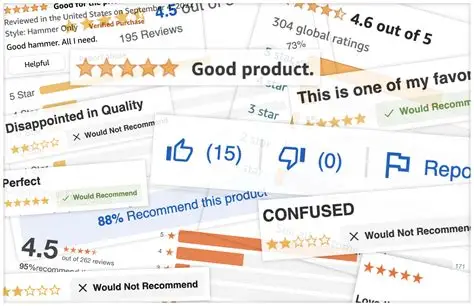
Trust is rarely built all at once. More often, it accumulates through tiny moments that feel almost insignificant when viewed individually. A recommendation from a colleague. A familiar logo. A thoughtful response to criticism. A stranger's five-star review written with enough detail to sound unmistakably real.
Years ago, I was helping a company redesign its customer onboarding experience. During one workshop, the executive team became consumed with improving their homepage. They debated headlines, colors, and imagery for hours. Then someone quietly asked a different question.
"What do our reviews actually say?"
The room went silent.
When we finally examined hundreds of customer reviews—not just the average score but the stories inside them—we discovered something surprising. Customers weren't praising the sophisticated features the marketing team emphasized. They kept talking about responsiveness, reliability, and feeling understood.
That moment changed the conversation completely.
The lesson wasn't simply that reviews matter. It was that reviews reveal where trust is actually being earned. Organizations often believe trust comes from the promises they make. Customers decide trust based on the experiences they describe.
That distinction changes everything.
Ratings Measure Confidence. Reviews Build It.
It's tempting to think of ratings and reviews as interchangeable.
They aren't.
A five-star rating is shorthand. It communicates an overall impression with remarkable efficiency. Reviews provide the narrative behind that impression.
Imagine meeting someone new.
If another person tells you, "She's amazing," you learn something.
If they instead tell you how she stayed late to solve a problem, admitted when she was wrong, and followed up months later to make sure everything worked—you begin forming trust yourself.
The story matters.
Humans naturally search for evidence that feels concrete. Numbers satisfy our analytical instincts, but stories satisfy our emotional ones. Together they reduce uncertainty.
That's the real function of ratings and reviews.
They don't merely persuade people to buy.
They lower the perceived risk of making a decision.
Trust Begins Before the First Purchase
One of the most overlooked realities in customer relationships is that trust often starts long before someone becomes a customer.
By the time a prospect visits a website, they've frequently researched alternatives, watched videos, compared prices, and read opinions from complete strangers.
Notice what happens during this process.
The company itself isn't doing most of the talking.
Its customers are.
That shift represents one of the most significant changes in modern buying behavior. Organizations can invest millions crafting the perfect brand message, but prospective customers increasingly assign greater credibility to people who have nothing to gain by sharing their experience.
Ironically, companies gain authority by surrendering control.
Why Imperfect Reviews Often Feel More Credible
Here's something many executives find uncomfortable.
Perfect ratings can reduce trust.
A flawless collection of five-star reviews may trigger skepticism because it doesn't resemble real life.
People understand that every organization occasionally disappoints someone. A handful of balanced critiques often increases confidence because they create authenticity.
What matters isn't avoiding criticism.
It's demonstrating how criticism is handled.
Consider two businesses.
The first has a perfect rating but never responds to feedback.
The second averages 4.6 stars, responds thoughtfully to every concern, acknowledges mistakes, and explains improvements.
Many consumers trust the second organization more.
Why?
Because responsiveness signals accountability.
Accountability signals confidence.
And confidence creates trust.
Reviews Reduce Information Asymmetry
Economists have long discussed information asymmetry—the imbalance that exists when one party knows far more than another.
Businesses know their products intimately.
Customers don't.
Reviews narrow that gap.
Rather than relying exclusively on advertising claims, prospective buyers gain access to firsthand experiences that answer practical questions marketers often overlook.
- Was setup actually easy?
- Did customer support answer quickly?
- Was the product worth the price?
- Would someone purchase it again?
These questions rarely appear in promotional copy.
They appear constantly in reviews.
The result is greater transparency, which reduces uncertainty.
And uncertainty is the enemy of trust.
The Psychology Behind Social Proof
People frequently describe reviews as "social proof," but that phrase barely scratches the surface.
The deeper mechanism is risk transfer.
Every purchase contains uncertainty.
When dozens—or thousands—of people publicly describe successful experiences, buyers unconsciously conclude that the risk has already been tested by others.
They're borrowing confidence.
Notice the subtle shift.
Consumers aren't necessarily thinking, "Everyone likes this."
They're thinking, "People like me succeeded with this decision."
That similarity matters enormously.
A review from someone facing comparable circumstances carries disproportionate influence.
Shared context creates shared confidence.
What Different Review Signals Actually Communicate
| Signal | What Customers See | What They Often Infer | Trust Impact |
|---|---|---|---|
| Average star rating | Overall satisfaction | General reliability | High initial influence |
| Number of reviews | Popularity | Consistency over time | High |
| Recent reviews | Current performance | Company remains dependable | Very high |
| Detailed narratives | Authentic experiences | Transparency | Very high |
| Company responses | Accountability | Customer commitment | High |
| Verified purchases | Authenticity | Lower manipulation risk | Very high |
| Mixed feedback | Realism | Honest representation | Moderate to high |
| Review trends over time | Continuous improvement | Long-term stability | High |
One signal rarely tells the entire story.
Together, they create a richer picture than any marketing campaign could produce.
Trust Is Dynamic, Not Static
Organizations sometimes celebrate reaching a 4.8-star average as though they've crossed a finish line.
But trust behaves differently.
It's constantly updated.
A restaurant with outstanding reviews from three years ago but none from the past twelve months raises questions.
A software company with glowing launch reviews but growing complaints about customer support tells a different story.
Trust depends on recency.
Customers naturally assume that today's experience matters more than yesterday's reputation.
This creates both opportunity and responsibility.
Every interaction becomes another public signal.
Negative Reviews Aren't Always Negative Outcomes
One lesson surprised me more than almost any other.
Negative reviews frequently become opportunities to strengthen trust.
Not because customers enjoy reading complaints.
Because they enjoy watching problems get solved.
I've watched organizations transform frustrated customers into loyal advocates simply by responding with empathy instead of defensiveness.
A thoughtful public response accomplishes several things simultaneously.
It acknowledges reality.
It demonstrates accountability.
It shows prospective customers what will happen if they ever encounter a problem themselves.
That's a remarkable trust-building opportunity.
Future customers aren't merely evaluating today's complaint.
They're evaluating tomorrow's relationship.
Why Trust Compounds
Membership organizations understand something many traditional businesses overlook.
Every satisfied member becomes a potential trust ambassador.
Their stories circulate through conversations, online communities, review platforms, and professional networks.
Each positive experience influences future decisions.
Those future customers generate additional experiences.
The cycle reinforces itself.
Trust compounds because people trust people.
Technology simply accelerates the visibility of those relationships.
The strongest organizations recognize that reviews aren't marketing assets.
They're relationship assets.
That's an important distinction.
Marketing seeks attention.
Relationships sustain trust.
Measuring More Than Star Ratings
Organizations obsessed with averages often miss richer insights hiding beneath the surface.
Instead of asking only, "What score did we receive?"
Ask different questions.
What emotions appear repeatedly?
Which expectations are consistently exceeded?
Where does disappointment emerge?
Which moments create delight strong enough that customers voluntarily write about them?
Those answers reveal something much more valuable than an average score.
They reveal the experiences worth replicating.
Trust isn't measured only by satisfaction.
It's measured by consistency.
The Organizations That Earn Trust Differently
The companies that consistently inspire confidence tend to share several characteristics.
They make it easy for customers to leave honest feedback.
They respond without becoming defensive.
They acknowledge imperfections.
They treat criticism as operational intelligence rather than public embarrassment.
Most importantly, they recognize that trust isn't something they own.
It's something customers continually grant.
That mindset changes priorities.
Instead of asking how to generate better reviews, leaders begin asking how to create experiences people naturally want to describe.
The reviews become a consequence rather than an objective.
Trust Lives in the Stories People Tell
Ratings attract attention.
Reviews provide evidence.
Experiences create belief.
Organizations sometimes spend enormous energy trying to polish perception while overlooking the interactions that shape it. Yet customers rarely separate the experience from the story they later share. Every support conversation, delivery update, billing interaction, or thoughtful follow-up becomes material for the next review.
That's why trust cannot be manufactured through clever messaging alone.
It emerges from repeated promises kept.
The most trusted organizations understand something surprisingly simple: customers don't remember every feature, every advertisement, or every campaign. They remember whether they felt respected, understood, and confident recommending the experience to someone they care about.
Ultimately, ratings and reviews don't create trust from nothing.
They illuminate it.
And once trust becomes visible, it has an extraordinary ability to spread—one authentic experience, one honest review, and one meaningful relationship at a time.
- Arts
- Business
- Computers
- Spiele
- Health
- Startseite
- Kids and Teens
- Geld
- News
- Personal Development
- Recreation
- Regional
- Reference
- Science
- Shopping
- Society
- Sports
- Бизнес
- Деньги
- Дом
- Досуг
- Здоровье
- Игры
- Искусство
- Источники информации
- Компьютеры
- Личное развитие
- Наука
- Новости и СМИ
- Общество
- Покупки
- Спорт
- Страны и регионы
- World

 English
 Russian
 French
 Spanish
 Portuguese
 Turkish
 Dutch
Dutch
 Italiano
 Arabic
 Romaian
 Portuguese (Brazil)
 Greek
Greek