
What Does PaaS Stand For? A Complete Guide to Platform as a Service
The first time I heard someone mention PaaS, the conversation moved so quickly that no one bothered to explain the acronym. Everyone around the conference table nodded as if its meaning were obvious. Servers, deployment pipelines, cloud infrastructure, application frameworks—the discussion jumped from one technical topic to another without ever answering the simplest question.
What does PaaS actually stand for?
Ironically, that's often how technology works. We become comfortable using abbreviations long before we fully understand the ideas behind them.
Several weeks later, while helping a growing software company evaluate cloud solutions, I finally understood why the acronym mattered. The executives weren't searching for another technology trend. They wanted a way for their development team to spend less time maintaining infrastructure and more time building products customers would value.
At that moment, the three letters became much more than technical shorthand.
They represented a different philosophy for developing software.
Understanding that philosophy begins with understanding the acronym itself.
What Does PaaS Stand For?
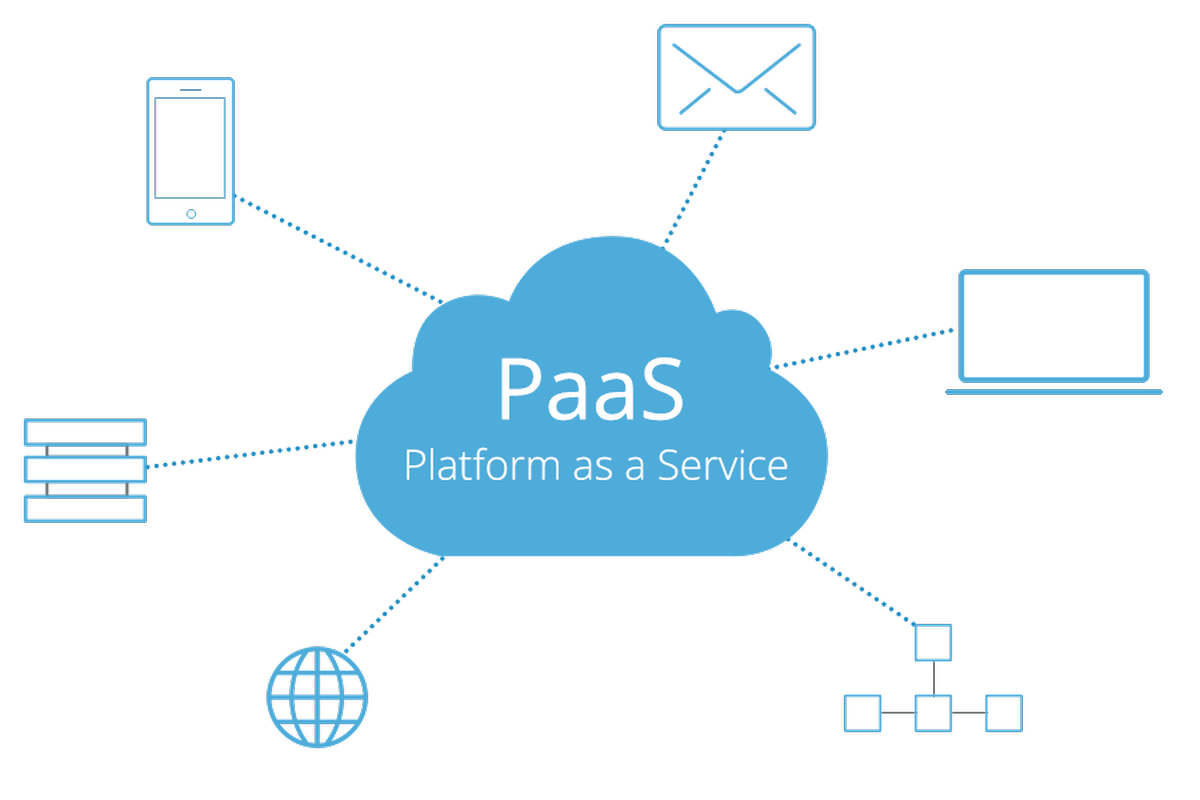
PaaS stands for Platform as a Service.
It is one of the primary cloud computing service models offered by cloud providers.
Rather than requiring organizations to purchase, configure, and maintain their own servers, operating systems, middleware, and development environments, Platform as a Service provides these components through a managed cloud platform.
Developers simply access the platform, write code, test applications, and deploy software.
The cloud provider manages much of the underlying infrastructure.
The organization focuses on creating value.
That distinction explains why PaaS has become increasingly important for businesses seeking faster software development without the burden of managing complex technology stacks.
Breaking Down the Name
The acronym itself tells a useful story.
Platform
A platform is the environment where software is built, tested, deployed, and managed.
It includes many technical components working together:
- Operating systems
- Runtime environments
- Databases
- Development tools
- Security services
- Networking
- Monitoring capabilities
Rather than assembling these elements individually, developers receive them as a unified environment.
As a Service
The phrase "as a Service" reflects the cloud delivery model.
Instead of purchasing hardware or installing software locally, organizations access computing resources over the internet.
This approach offers several advantages.
Resources become available quickly.
Updates occur automatically.
Infrastructure scales as demand changes.
Businesses typically pay only for what they use.
Ownership shifts from physical equipment to managed services.
Why Platform as a Service Exists
Software development has always involved far more than writing code.
Development teams must also manage:
Servers.
Operating systems.
Storage.
Security updates.
Application runtimes.
Databases.
Networking.
Deployment pipelines.
Historically, maintaining this infrastructure required significant investments in hardware, personnel, and ongoing maintenance.
Platform as a Service changes that model.
Instead of building and maintaining the technical foundation themselves, organizations rent a fully managed platform designed specifically for application development.
This allows developers to concentrate on creating software rather than maintaining systems.
Comparing the Major Cloud Service Models
| Cloud Model | What the Customer Manages | What the Cloud Provider Manages | Primary Use Case |
|---|---|---|---|
| Traditional On-Premises | Everything | Nothing | Maximum infrastructure control |
| Infrastructure as a Service (IaaS) | Applications, operating systems, middleware, data | Physical infrastructure and virtualization | Flexible infrastructure management |
| Platform as a Service (PaaS) | Applications and business data | Infrastructure, operating systems, middleware, runtime, databases | Rapid application development |
| Software as a Service (SaaS) | User settings and business processes | Entire application stack | Ready-to-use software |
This comparison highlights PaaS's unique role.
It removes much of the infrastructure burden while allowing organizations to build custom applications.
A Lesson That Changed My Perspective
During a software modernization project, I observed two development teams working under very different conditions.
One managed every aspect of its infrastructure.
Server updates interrupted development.
Configuration issues delayed deployments.
Routine maintenance consumed valuable engineering time.
The second team used a Platform as a Service solution.
Their conversations sounded completely different.
Instead of discussing hardware failures or operating system patches, they debated customer feedback, new features, and product improvements.
That contrast taught me something important.
Technology creates the greatest business value when it quietly removes distractions.
Developers rarely choose their profession because they enjoy configuring servers.
They choose it because they enjoy solving problems.
PaaS helps them spend more time doing exactly that.
How Platform as a Service Works
A PaaS provider manages the underlying computing environment required for application development.
Developers typically receive access to:
- Programming frameworks
- Databases
- Application hosting
- Runtime environments
- Security services
- Automated deployment tools
- Monitoring dashboards
- Development APIs
Behind the scenes, the provider manages servers, storage, networking, operating systems, backups, and much of the ongoing maintenance.
This shared responsibility simplifies software development considerably.
Benefits of Platform as a Service
Organizations adopt PaaS for several practical reasons.
Faster Development
Teams can begin building applications almost immediately rather than waiting for infrastructure preparation.
Development cycles become shorter.
Lower Infrastructure Management
Routine maintenance responsibilities shift to the cloud provider.
Internal teams focus on innovation instead of maintenance.
Easier Collaboration
Cloud-based environments enable distributed development teams to work from multiple locations using consistent tools.
Scalability
Applications can often expand automatically as demand increases without requiring hardware purchases.
Cost Predictability
Many providers offer usage-based pricing models that align expenses more closely with actual business activity.
Common Business Applications
Platform as a Service supports organizations across many industries.
Retail companies develop e-commerce platforms.
Healthcare organizations create patient engagement applications.
Banks modernize digital banking experiences.
Educational institutions build online learning systems.
Manufacturers deploy operational dashboards.
Government agencies improve citizen services.
Although industries differ, the objective remains similar.
Deliver software more efficiently while reducing operational complexity.
Potential Challenges
Like every technology solution, PaaS includes tradeoffs.
Organizations should evaluate:
Vendor Lock-In
Applications may rely on provider-specific tools, making migration more challenging.
Limited Infrastructure Control
Highly customized infrastructure configurations may not always be possible.
Regulatory Requirements
Organizations operating under strict compliance standards should confirm that providers satisfy industry regulations.
Long-Term Cost Management
As applications grow, cloud expenses require ongoing monitoring to maintain cost efficiency.
Thoughtful planning helps organizations maximize benefits while minimizing these risks.
Artificial Intelligence Is Expanding PaaS
Modern PaaS platforms increasingly include integrated artificial intelligence capabilities.
Developers can access services such as:
- Machine learning
- Speech recognition
- Image analysis
- Predictive analytics
- Natural language processing
- Intelligent automation
Rather than building complex AI systems independently, organizations often integrate these capabilities through managed platform services.
This significantly accelerates development.
Why the Acronym Matters More Than It Appears
At first glance, "Platform as a Service" sounds like another technical abbreviation among countless others.
But its significance extends beyond terminology.
The acronym represents a broader shift in how organizations approach technology.
Instead of investing heavily in maintaining infrastructure, businesses increasingly invest in improving customer experiences.
Instead of measuring success by server uptime alone, they focus on delivering new capabilities, responding to feedback, and accelerating innovation.
PaaS enables that shift.
It transforms infrastructure from a primary concern into a managed foundation supporting business growth.
Conclusion: Three Letters That Reflect a Bigger Transformation
So, what does PaaS stand for?
The literal answer is straightforward:
Platform as a Service.
The practical meaning is much richer.
It represents a cloud computing model that provides developers with the tools, infrastructure, and environments needed to build applications without requiring them to manage every technical component themselves.
More importantly, it changes where organizations direct their attention.
Developers write code instead of configuring servers.
Businesses improve products instead of maintaining infrastructure.
Customers ultimately benefit from faster innovation and more responsive digital experiences.
The acronym may consist of only four letters.
The shift it represents is considerably larger.
It reflects an evolution in how modern organizations think about technology—not as hardware to maintain, but as a foundation that enables people to create better solutions, solve meaningful problems, and deliver value more efficiently than ever before.
- Arts
- Business
- Computers
- Игры
- Health
- Главная
- Kids and Teens
- Деньги
- News
- Personal Development
- Recreation
- Regional
- Reference
- Science
- Shopping
- Society
- Sports
- Бизнес
- Деньги
- Дом
- Досуг
- Здоровье
- Игры
- Искусство
- Источники информации
- Компьютеры
- Личное развитие
- Наука
- Новости и СМИ
- Общество
- Покупки
- Спорт
- Страны и регионы
- World

 English
 French
 Spanish
 Portuguese
 Deutsch
 Turkish
 Dutch
Dutch
 Italiano
 Arabic
 Romaian
 Portuguese (Brazil)
 Greek
Greek