
What Are the Advantages of PaaS?
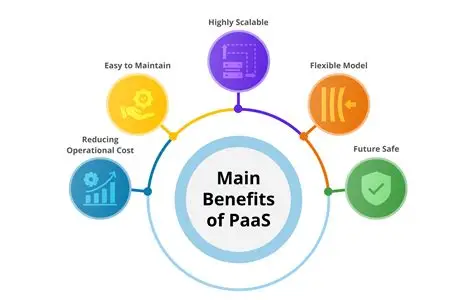
The Conversation That Changed How I Thought About Cloud Computing
Several years ago, I visited a software company that had just doubled its customer base in less than twelve months. On paper, it looked like a remarkable success story. Revenue was climbing, hiring plans were ambitious, and leadership was already discussing expansion into new markets.
Yet the engineering team wasn't celebrating.
Instead of debating new product ideas, they were spending meeting after meeting discussing server capacity, operating system updates, deployment failures, infrastructure monitoring, and database maintenance.
At one point, a senior developer quietly said something that has stayed with me ever since:
"We're becoming experts at running infrastructure instead of building products."
That sentence reframed the entire discussion.
The challenge wasn't technical competence. The team was exceptionally skilled.
The challenge was focus.
Platform as a Service (PaaS) exists to solve precisely that problem. It shifts much of the operational burden of managing infrastructure to the cloud provider so developers can concentrate on creating software that customers actually experience.
People often describe PaaS as a cloud computing model. That's accurate, but incomplete.
It's also a way of deciding where your organization's attention belongs.
And in a world where engineering talent is both expensive and limited, attention may be one of the most valuable resources a business possesses.
What Is PaaS?
Platform as a Service provides a complete cloud-based environment for building, testing, deploying, and managing applications.
Unlike traditional infrastructure, where organizations configure servers, operating systems, middleware, and runtime environments themselves, PaaS manages much of that complexity.
Developers write code.
The platform handles much of everything else.
This doesn't eliminate responsibility. Applications still require thoughtful design, security, testing, and maintenance.
What changes is the amount of undifferentiated operational work development teams must perform before they can deliver value.
Why the Advantages of PaaS Extend Beyond Technology
Cloud discussions often focus on technical specifications.
CPU utilization.
Storage capacity.
Networking.
Deployment pipelines.
Those details matter.
But the most meaningful advantages of PaaS often appear elsewhere.
They emerge in product roadmaps, hiring decisions, customer experiences, and organizational agility.
Technology becomes valuable not because of what it does, but because of what it allows people to accomplish.
With that perspective, the advantages of PaaS become much easier to understand.
1. Faster Application Development
Every software project encounters friction.
Provisioning environments.
Installing dependencies.
Configuring servers.
Resolving infrastructure inconsistencies.
None of these activities create customer value directly.
Yet they consume significant engineering time.
PaaS reduces much of that operational friction by providing preconfigured development environments and automated deployment workflows.
Instead of preparing infrastructure, teams begin building applications sooner.
The result is often shorter development cycles and faster product releases.
2. Developers Spend More Time Creating Value
One lesson I've learned after working alongside technology organizations is that developers rarely choose the profession because they enjoy configuring operating systems.
They want to solve problems.
Design experiences.
Write elegant code.
Improve products.
PaaS aligns more closely with those motivations.
By managing infrastructure behind the scenes, the platform allows developers to devote more attention to innovation rather than maintenance.
That shift improves more than productivity.
It often improves morale.
3. Lower Operational Complexity
Infrastructure introduces ongoing responsibilities.
Operating system updates.
Runtime patches.
Middleware upgrades.
Server monitoring.
Capacity planning.
Network configuration.
Each task may appear manageable on its own.
Together, they create considerable operational overhead.
PaaS simplifies much of this environment by centralizing platform management under the cloud provider.
Organizations still manage applications.
They simply inherit fewer infrastructure responsibilities.
4. Simplified Deployment
Deployment consistency has long challenged software teams.
Development environments differ from production.
Configurations drift.
Dependencies change unexpectedly.
PaaS reduces these inconsistencies by standardizing deployment processes across environments.
Automated pipelines help move applications from development through testing and into production with fewer manual steps.
The outcome isn't perfect software.
It's more predictable software delivery.
5. Automatic Scalability
Growth creates opportunity.
It also creates technical pressure.
Applications experiencing sudden traffic increases can overwhelm manually managed infrastructure.
PaaS platforms frequently include automatic scaling capabilities that adjust computing resources based on demand.
Organizations no longer need to guess future capacity months in advance.
Instead, infrastructure responds dynamically to changing workloads.
For businesses with seasonal demand or rapidly expanding customer bases, this flexibility can be especially valuable.
6. Reduced Infrastructure Costs
Purchasing physical hardware requires significant capital investment.
Maintaining that infrastructure requires additional personnel, monitoring tools, replacement equipment, and operational processes.
PaaS replaces much of this model with cloud-based services billed according to usage.
Organizations avoid many upfront expenses while reducing ongoing maintenance costs.
Perhaps more importantly, engineering resources shift from maintaining infrastructure toward developing customer-facing capabilities.
That opportunity cost often exceeds the infrastructure savings themselves.
7. Improved Collaboration
Software development rarely happens in isolation.
Developers collaborate with quality assurance engineers, security specialists, operations teams, designers, and product managers.
Inconsistent environments can slow those interactions.
PaaS provides standardized development platforms that simplify collaboration across departments.
Shared tooling, automated workflows, and consistent deployment environments reduce friction between teams.
The technology becomes less noticeable.
The collaboration becomes more productive.
8. Built-In Security and Maintenance
Security is a continuous responsibility rather than a one-time project.
Operating systems require patches.
Runtime environments require updates.
Infrastructure requires monitoring.
PaaS providers typically manage many platform-level maintenance activities, including security updates and system availability.
Organizations continue securing their applications and sensitive data, but much of the underlying platform maintenance becomes part of the service itself.
This shared responsibility model allows internal teams to focus on application-level security instead of infrastructure upkeep.
9. Easier Experimentation
Innovation depends on experimentation.
Experimentation depends on removing barriers.
Provisioning new infrastructure for every prototype slows learning.
PaaS allows development teams to launch environments quickly, test ideas, gather feedback, and refine applications without lengthy infrastructure preparation.
That ability encourages continuous improvement.
Not because experimentation becomes easier technically.
Because it becomes easier organizationally.
10. Greater Focus on Business Outcomes
This may be the most significant advantage of all.
Organizations don't invest in cloud platforms simply to modernize infrastructure.
They invest to improve products, accelerate innovation, enhance customer experiences, and respond more effectively to changing markets.
PaaS supports those objectives by reducing the operational work surrounding software development.
Infrastructure remains essential.
It simply stops dominating engineering conversations.
PaaS Advantages at a Glance
| Advantage | Business Impact | Why It Matters |
|---|---|---|
| Faster Development | Shorter release cycles | Teams begin coding sooner |
| Lower Operational Overhead | Reduced maintenance | Less time managing infrastructure |
| Automatic Scaling | Better performance during growth | Resources adjust dynamically |
| Simplified Deployment | Greater consistency | Fewer environment-related issues |
| Lower Infrastructure Costs | Improved budget efficiency | Reduced capital investment |
| Built-In Platform Maintenance | Less operational work | Provider manages updates |
| Improved Collaboration | Better team productivity | Shared development environments |
| Faster Innovation | More experimentation | Reduced setup time |
| Greater Developer Focus | Higher-value engineering work | More customer-facing development |
| Increased Agility | Faster response to market changes | Quicker product evolution |
Notice what these advantages have in common.
They don't necessarily make developers work harder.
They help developers spend their effort differently.
A Lesson I Didn't Expect
Early in my career, I often admired organizations with highly customized infrastructure.
The architecture looked sophisticated.
The engineering teams were deeply knowledgeable.
Owning every layer felt like a sign of technical maturity.
Then I observed something unexpected.
The organizations introducing the most meaningful customer innovations weren't always the ones with the most complex infrastructure.
They were the ones whose engineers spent the least time thinking about infrastructure at all.
Instead, they focused relentlessly on customer problems.
That realization changed how I evaluate technology decisions.
Technical excellence certainly matters.
But its greatest value lies in creating space for business excellence.
Infrastructure should enable innovation—not compete with it for attention.
Is PaaS Right for Every Organization?
Not necessarily.
Organizations with highly specialized infrastructure requirements, legacy enterprise systems, or strict regulatory constraints may require the flexibility offered by Infrastructure as a Service (IaaS) or private cloud environments.
PaaS delivers the greatest value when speed, collaboration, scalability, and developer productivity outweigh the need for extensive infrastructure customization.
The decision ultimately depends on where your organization creates competitive advantage.
If that advantage lies in your applications rather than your infrastructure, PaaS often becomes an attractive choice.
Conclusion
The advantages of PaaS extend far beyond simplifying cloud infrastructure.
It accelerates software development, reduces operational complexity, streamlines deployment, supports automatic scalability, lowers infrastructure costs, strengthens collaboration, simplifies maintenance, and gives developers more time to create meaningful customer experiences.
Yet beneath every technical benefit lies a broader organizational advantage.
Focus.
PaaS encourages teams to direct their expertise toward the work that differentiates their business instead of the operational responsibilities that every business shares.
For many organizations, that shift becomes the real source of value.
Because while infrastructure keeps software running, innovation is what keeps businesses moving forward.
- Arts
- Business
- Computers
- Spellen
- Health
- Home
- Kids and Teens
- Money
- News
- Personal Development
- Recreation
- Regional
- Reference
- Science
- Shopping
- Society
- Sports
- Бизнес
- Деньги
- Дом
- Досуг
- Здоровье
- Игры
- Искусство
- Источники информации
- Компьютеры
- Личное развитие
- Наука
- Новости и СМИ
- Общество
- Покупки
- Спорт
- Страны и регионы
- World

 English
 Russian
 French
 Spanish
 Portuguese
 Deutsch
 Turkish
 Italiano
 Arabic
 Romaian
 Portuguese (Brazil)
 Greek
Greek