
What Are the Best PaaS Providers?
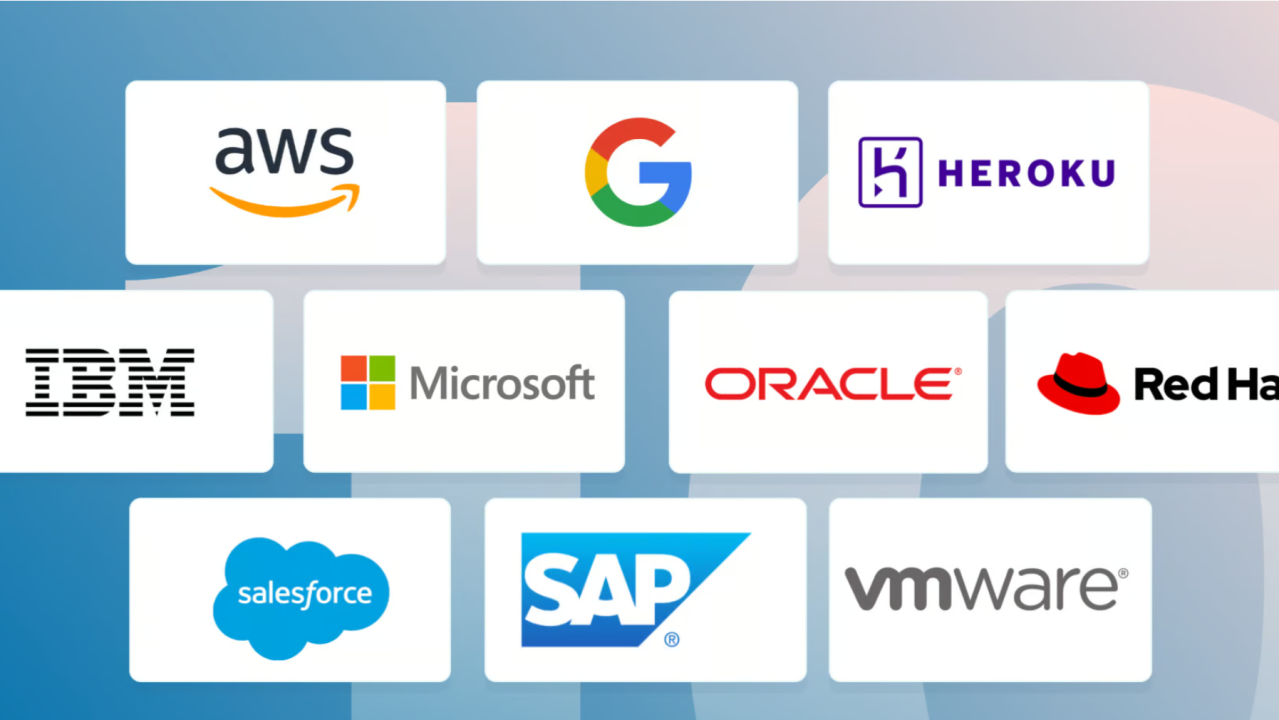
The Question Behind the Question: “Which Platform Will Still Fit Us in Three Years?”
A CTO once asked me something that sounded simple on the surface.
“We’re choosing a PaaS. Which one is best?”
Then he paused, almost as if he didn’t believe his own question was complete.
He wasn’t wrong.
He just wasn’t finished.
Because the real decision wasn’t about “best.”
It was about alignment under uncertainty.
Three years out, the company expected to be larger, more regulated, more global—and probably building products they hadn’t even imagined yet.
So the real question became:
Which platform helps us move quickly now without quietly constraining who we might become later?
That’s where the conversation about Platform as a Service (PaaS) actually begins.
Not with rankings.
With trade-offs.
What “Best” Actually Means in PaaS
“Best” is a slippery word in cloud architecture.
It often collapses into marketing comparisons:
- Features
- Pricing
- Market share
- Ecosystem size
But engineering leaders rarely choose platforms that way in practice.
They optimize for:
- Speed of delivery
- Operational overhead
- Developer experience
- Scalability patterns
- Compliance readiness
- Long-term portability
And sometimes, most importantly:
- Organizational fit
Because a “best” PaaS for a startup may be a liability for an enterprise. And a “best” enterprise platform may feel heavy for a small product team trying to iterate quickly.
So instead of ranking providers universally, the more useful question is:
What type of “best” are you actually looking for?
The Leading PaaS Providers (and What They’re Really Good At)
Below is a structured comparison of widely used PaaS platforms. Not as a leaderboard—but as a map of different philosophies.
| Provider | Core Strength | Best For | Key Advantage | Primary Trade-Off |
|---|---|---|---|---|
| Heroku | Simplicity & developer experience | Startups, MVPs, small teams | Extremely fast deployment | Limited infrastructure control |
| AWS Elastic Beanstalk | Integration with AWS ecosystem | Teams already on AWS | Deep service integration | Complexity at scale |
| Google App Engine | Automatic scaling & managed runtime | Web apps with variable traffic | Strong autoscaling model | Less customization flexibility |
| Microsoft Azure App Service | Enterprise integration | Large organizations using Microsoft stack | Strong enterprise tooling | Platform complexity |
| Red Hat OpenShift | Hybrid cloud & container orchestration | Regulated industries | Kubernetes-based flexibility | Operational overhead |
| Cloud Foundry | Multi-cloud abstraction | Large enterprises, portability-focused orgs | Vendor neutrality | Higher operational complexity |
| Vercel | Frontend-focused deployment | Web apps, frontend teams | Exceptional DX for web delivery | Narrow backend focus |
| Netlify | Jamstack & static-first apps | Content-driven web products | Fast frontend workflows | Limited backend depth |
Each of these platforms is “best” under different conditions.
The more interesting question is what each one optimizes for—and what it quietly deprioritizes.
1. Heroku: The Original Developer Experience Platform
Heroku often shows up in early-stage startups for a reason.
It removes friction aggressively.
- Push code
- Deploy instantly
- Minimal configuration
- Abstracted infrastructure
There is a psychological effect here that matters more than the tooling itself:
Teams feel like they are shipping instead of configuring.
Where Heroku shines
- MVP development
- Early product validation
- Small engineering teams
- Rapid iteration cycles
Where it starts to strain
- Cost at scale
- Limited infrastructure tuning
- Reduced control over runtime environment
Heroku doesn’t fail teams.
It eventually outgrows them.
And that distinction is important.
2. AWS Elastic Beanstalk: Power Inside a Larger System
Elastic Beanstalk is not really a standalone platform.
It is AWS trying to simplify AWS.
It provides managed application deployment while still allowing deep access to underlying services.
That duality is both its strength and its challenge.
Strengths
- Seamless AWS integration
- Flexible infrastructure control
- Scales with enterprise needs
- Strong ecosystem alignment
Trade-offs
- Steeper learning curve
- Less “opinionated” workflow
- Can feel inconsistent across configurations
One engineering leader once described it to me like this:
“It’s not hard because it’s limited. It’s hard because it’s everything.”
That’s a fair summary.
3. Google App Engine: Automation First, Control Second
Google App Engine represents a different philosophy entirely.
It prioritizes automation and scalability over customization.
You define your application.
Google handles almost everything else.
Strengths
- Strong automatic scaling
- Minimal infrastructure management
- High reliability at global scale
- Tight integration with Google Cloud services
Trade-offs
- Limited runtime flexibility
- Constraints on architecture choices
- Strong opinionation about application structure
App Engine works best when you want to disappear infrastructure entirely from the conversation.
But that disappearance comes with boundaries.
4. Microsoft Azure App Service: Enterprise Gravity
Azure App Service is often chosen not for its simplicity, but for its alignment with existing enterprise ecosystems.
If an organization already runs on Microsoft tooling, the value becomes clear quickly.
Strengths
- Deep Microsoft integration
- Enterprise identity and security tools
- Strong hybrid cloud capabilities
- Robust compliance features
Trade-offs
- Platform complexity
- Less intuitive developer experience compared to newer tools
- Strong alignment with Microsoft ecosystem (which can become a dependency)
Azure App Service is less about “ease” and more about “continuity.”
It fits where enterprises already are.
5. Red Hat OpenShift: Control Through Standardization
OpenShift is different from most traditional PaaS offerings.
It sits on top of Kubernetes and provides a managed container platform with strong enterprise governance.
It appeals to organizations that want control—but not chaos.
Strengths
- Kubernetes-native architecture
- Strong hybrid cloud support
- Enterprise-grade security and compliance
- High customization capability
Trade-offs
- Operational complexity
- Requires strong DevOps maturity
- Steeper learning curve
One CIO once told me:
“OpenShift didn’t simplify our environment. It disciplined it.”
That captures its role precisely.
6. Cloud Foundry: The Portability Promise
Cloud Foundry is built around a powerful idea:
Applications should be portable across infrastructure.
In theory, this reduces vendor lock-in.
In practice, it introduces its own constraints.
Strengths
- Multi-cloud portability
- Strong abstraction layer
- Enterprise adoption history
- Mature platform governance
Trade-offs
- Operational overhead
- Less developer-friendly than newer platforms
- Complexity in customization
Cloud Foundry is often chosen for strategic reasons rather than developer experience.
That tension shapes how it’s used.
7. Vercel: The Frontend Acceleration Engine
Vercel represents a modern shift in PaaS thinking.
Instead of abstracting everything, it optimizes one thing exceptionally well:
Frontend delivery.
It aligns deeply with modern web frameworks like Next.js.
Strengths
- Extremely fast deployment workflows
- Optimized frontend performance
- Strong developer experience
- Automatic scaling for web traffic
Trade-offs
- Backend limitations
- Ecosystem narrowing toward frontend-centric architectures
- Less control for complex backend systems
Vercel doesn’t try to be everything.
That restraint is part of its strength.
8. Netlify: Simplicity for Content-Driven Systems
Netlify focuses heavily on static sites and Jamstack architectures.
It reduces the complexity of deploying modern web applications.
Strengths
- Very fast setup
- Excellent CI/CD experience
- Strong static site performance
- Integrated serverless functions
Trade-offs
- Limited backend sophistication
- Not ideal for complex systems
- Architecture constraints at scale
Netlify works best when content and frontend experience matter more than backend complexity.
My Experience: When “Best” Was the Wrong Question
A company I advised once spent nearly six weeks evaluating PaaS providers.
They built comparison matrices.
Scored features.
Ranked performance.
Modeled cost projections.
They were trying to identify the “best” platform.
Eventually, they chose one of the most powerful enterprise options available.
Six months later, they quietly migrated a portion of their workloads to a simpler platform.
Not because they chose wrong.
But because they had optimized for criteria that didn’t matter most in practice.
The real constraint wasn’t scalability.
It was developer speed.
And the “best” platform on paper didn’t maximize that.
That experience changed how I think about PaaS decisions.
You don’t choose platforms for what they are.
You choose them for what they let your team stop worrying about.
How to Actually Choose the “Best” PaaS
Instead of asking:
“What is the best PaaS provider?”
Ask:
“What kind of friction can we afford to eliminate right now?”
Then map that answer to reality:
- If speed matters most → Heroku, Vercel, Netlify
- If enterprise integration matters → Azure, AWS, OpenShift
- If portability matters → Cloud Foundry, Kubernetes-based platforms
- If automation matters → Google App Engine
The decision becomes less about features.
More about direction.
The Hidden Pattern Across All PaaS Platforms
Despite their differences, every PaaS provider is solving the same underlying problem:
Reducing cognitive load.
They differ in how aggressively they do it.
- Some remove infrastructure entirely
- Some expose it selectively
- Some structure it through governance layers
- Some optimize for specific application types
The trade-off is always the same:
Less control in exchange for more speed.
Or more control in exchange for more responsibility.
There is no version of PaaS that eliminates this equation.
Only versions that tune it differently.
Conclusion: The Best PaaS Is the One That Matches Your Constraints, Not Your Aspirations
The idea of a universally “best” PaaS is comforting—but misleading.
Each platform is an expression of priorities:
- Speed vs control
- Simplicity vs flexibility
- Abstraction vs visibility
- Developer experience vs infrastructure power
The mistake many teams make is choosing based on what they admire rather than what they actually need to optimize.
But infrastructure is not a statement of ambition.
It is a system of trade-offs that either supports your current execution model—or slows it down.
The most successful teams don’t choose the best PaaS.
They choose the one that frees their attention fastest, with the least long-term friction for the direction they’re heading.
And that choice changes over time.
Because the right platform is never static.
It evolves with the company using it.
- Arts
- Business
- Computers
- الألعاب
- Health
- الرئيسية
- Kids and Teens
- مال
- News
- Personal Development
- Recreation
- Regional
- Reference
- Science
- Shopping
- Society
- Sports
- Бизнес
- Деньги
- Дом
- Досуг
- Здоровье
- Игры
- Искусство
- Источники информации
- Компьютеры
- Личное развитие
- Наука
- Новости и СМИ
- Общество
- Покупки
- Спорт
- Страны и регионы
- World

 English
 Russian
 French
 Spanish
 Portuguese
 Deutsch
 Turkish
 Dutch
Dutch
 Italiano
 Romaian
 Portuguese (Brazil)
 Greek
Greek