
How Much Does PaaS Cost?
A founder once asked me a question that seemed straightforward.
“How much will Platform as a Service cost us?”
He was expecting a number.
Maybe a range.
Perhaps a spreadsheet.
Instead, I asked him a different question.
“How much does complexity cost your team today?”
He paused.
Because that was the real issue.
The company had talented developers. They had ambitious product goals. They even had customers waiting for new features. What they didn’t have was time. Engineers were patching servers, troubleshooting deployments, and chasing infrastructure problems that generated little customer value.
The monthly cloud bill looked manageable.
The opportunity cost did not.
That conversation captures the central challenge of understanding PaaS pricing. Most organizations focus on the visible expenses—the subscription fee, compute resources, storage, and networking charges. Yet the true economics of Platform as a Service extend much further.
PaaS is not simply a technology purchase.
It is a decision about where your team invests its attention.
And attention, particularly among highly skilled engineers, is one of the most expensive resources in any organization.
The Simple Answer: PaaS Costs Anywhere from $5 to Thousands Per Month
If you want the shortest possible answer, here it is.
A small application running on a modern PaaS platform might cost between $5 and $50 per month.
A growing SaaS company could spend several hundred dollars monthly.
Large enterprises often invest tens of thousands of dollars per month across multiple environments, services, databases, and regions.
That range is enormous.
Which is why the question deserves a deeper examination.
The cost of PaaS depends on five primary variables:
- Application size
- Traffic volume
- Resource consumption
- Managed services usage
- Operational requirements
Each variable influences the final bill in ways that are not always obvious at the outset.
Why PaaS Pricing Feels So Different from Traditional Hosting
Traditional hosting asks developers to think about servers.
PaaS asks developers to think about applications.
That distinction changes the pricing model.
Instead of purchasing infrastructure components individually, organizations pay for a managed environment that abstracts away much of the operational burden.
You are not merely renting computing power.
You are outsourcing complexity.
The result is that PaaS often appears more expensive than raw infrastructure during early comparisons.
Yet those comparisons can be misleading.
A $50 virtual machine and a $150 PaaS environment may not deliver equivalent outcomes. One provides infrastructure. The other provides infrastructure plus automation, deployment workflows, monitoring, scaling capabilities, security updates, and operational simplification.
Comparing them directly is like comparing raw ingredients to a prepared meal.
The ingredients may cost less.
The preparation has value.
PaaS Pricing Comparison: Major Providers
The market offers a wide range of pricing structures. Some platforms emphasize simplicity. Others prioritize flexibility. Enterprise-focused providers often layer advanced governance and compliance features into their pricing.
Typical Entry-Level Pricing
| Platform | Starting Cost | Typical Small App Cost | Scaling Characteristics |
|---|---|---|---|
| Heroku | $5–$7/month | $25–$150/month | Costs rise quickly with scale |
| Render | $7/month | $25–$100/month | Predictable growth |
| Railway | $5/month usage-based | $10–$75/month | Flexible for small projects |
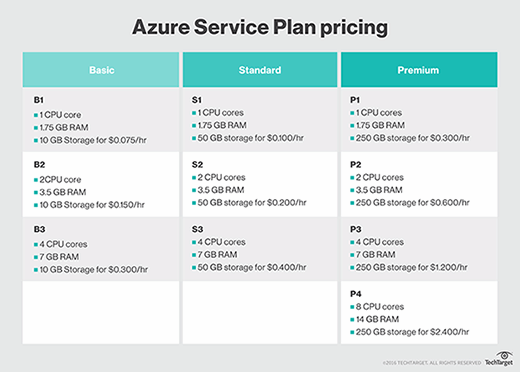
| Azure App Service | $13–$70/month | $50–$300/month | Strong enterprise scalability |
| AWS Elastic Beanstalk | No platform fee* | $30–$300/month | Pay for underlying resources |
| Google Cloud Run | Usage-based | $0–$200/month | Efficient for variable traffic |
| Platform.sh | $39+/month | $50–$500/month | Environment-focused pricing |
| OpenShift | Hundreds to thousands/month | Enterprise-scale | Built for large deployments |
*Elastic Beanstalk itself is free, but AWS resources generate charges.
The table provides a useful snapshot.
The reality is often more dynamic.
Because what begins as a $20 application can evolve into a $2,000 application surprisingly quickly.
The Hidden Cost Categories Most Teams Miss
When evaluating PaaS expenses, organizations often focus exclusively on compute resources.
That is rarely where surprises emerge.
Databases
Managed databases frequently become one of the largest recurring expenses.
A development environment may require only a small PostgreSQL instance.
Production environments are different.
High availability, backups, replication, and storage growth all contribute to rising costs.
For many SaaS companies, database spending eventually rivals application hosting costs.
Network Traffic
Outbound bandwidth is often overlooked during planning.
Then growth happens.
Customers upload files. APIs exchange data. Mobile applications synchronize continuously.
Traffic expands.
Bills follow.
Platforms vary significantly in how they charge for bandwidth, making careful forecasting important.
Multiple Environments
Most mature organizations operate more than one environment.
Development.
Testing.
Staging.
Production.
Perhaps multiple production regions.
Each environment increases resource consumption.
What appeared inexpensive for a single application can become substantial when replicated across an entire software delivery lifecycle.
Add-On Services
Monitoring tools.
Logging platforms.
Caching layers.
Search services.
Message queues.
Identity systems.
Modern applications rarely operate in isolation.
The ecosystem surrounding the application often contributes significantly to total platform expenditure.
The Startup Perspective: Why Cheap Isn't Always Affordable
There is a fascinating paradox in early-stage technology companies.
They are highly sensitive to spending.
Yet they are even more sensitive to speed.
A startup might save $200 per month by choosing a lower-cost infrastructure approach.
At first glance, that appears prudent.
But what happens if deployment complexity slows product releases?
What happens if onboarding new engineers takes longer?
What happens if technical founders spend weekends maintaining infrastructure rather than talking to customers?
The financial savings can evaporate quickly.
I have seen organizations celebrate infrastructure efficiencies worth hundreds of dollars while simultaneously losing weeks of engineering productivity.
The math rarely works in their favor.
A Lesson Learned from a Scaling SaaS Company
Several years ago, I advised a software company that was preparing for aggressive growth.
The leadership team became concerned about rising cloud costs.
Their PaaS spending had increased from roughly $400 per month to nearly $4,000.
Naturally, they began exploring alternatives.
Could they move to self-managed infrastructure?
Could they reduce expenses by hiring DevOps specialists and operating everything internally?
The numbers looked compelling.
Until we examined the broader picture.
The company had doubled deployment frequency.
New engineers were productive within days.
Infrastructure incidents had declined significantly.
Customer-facing teams were shipping improvements faster than ever.
The platform costs had increased.
But so had organizational velocity.
The lesson was surprisingly simple.
A rising PaaS bill is not automatically a problem.
Sometimes it is evidence that the business is creating more value.
Context matters.
Cost by Company Stage
Different organizations experience PaaS economics differently.
Early-Stage Startup
Typical monthly spending:
$10–$200
Primary objective:
Launch quickly.
At this stage, simplicity usually outweighs optimization.
Every hour spent configuring infrastructure is an hour not spent validating the product.
Growth-Stage SaaS Company
Typical monthly spending:
$500–$5,000
Primary objective:
Scale reliably.
This is often where platform selection becomes strategic. Traffic increases. Team size expands. Operational consistency becomes essential.
Mid-Market Organization
Typical monthly spending:
$5,000–$50,000
Primary objective:
Balance efficiency and governance.
Costs become meaningful enough to warrant optimization efforts. Yet productivity remains equally important.
Enterprise
Typical monthly spending:
$50,000+
Primary objective:
Risk reduction and operational control.
At enterprise scale, compliance, security, reliability, and governance often drive decisions as much as infrastructure economics.
The Real Cost Equation
Organizations frequently calculate PaaS costs using a narrow formula.
Monthly subscription fees.
Compute charges.
Storage expenses.
Bandwidth consumption.
That formula is incomplete.
A more useful framework includes four dimensions:
Direct platform costs
The visible line items appearing on invoices.
Operational labor
Time spent deploying, maintaining, monitoring, and troubleshooting.
Opportunity costs
Features delayed because engineering resources are allocated elsewhere.
Risk costs
Downtime, security incidents, and operational failures.
Viewed through this broader lens, the lowest-cost platform and the highest-value platform are often different things.
That distinction becomes increasingly important as organizations grow.
How to Estimate Your PaaS Budget
A practical budgeting approach starts with workload characteristics.
Ask:
- How many applications will be deployed?
- How much traffic is expected?
- What database requirements exist?
- How many environments are needed?
- What availability targets must be met?
- How rapidly is growth expected?
Then add a contingency buffer.
Most organizations underestimate growth-related consumption.
Applications become successful.
Customers arrive.
Usage expands.
That is a desirable problem, but it remains a problem if budgeting assumptions fail to account for it.
A reasonable planning buffer of 20–30 percent often prevents unpleasant surprises.
Is PaaS More Expensive Than IaaS?
The answer depends on what you measure.
On a purely infrastructure basis, Infrastructure as a Service often costs less.
Raw virtual machines are generally cheaper than managed platforms.
But infrastructure costs tell only part of the story.
When deployment automation, security management, patching, monitoring, backups, scaling, and operational support enter the equation, the comparison becomes more nuanced.
Organizations that evaluate only hosting costs frequently underestimate the labor required to operate infrastructure effectively.
The result can be a false economy.
The invoice decreases.
The workload increases.
The Question Behind the Question
When leaders ask, “How much does PaaS cost?”
They are often asking something deeper.
They are trying to determine whether convenience is worth paying for.
Whether operational simplicity justifies a premium.
Whether engineering talent should focus on infrastructure or innovation.
Those are strategic questions disguised as financial ones.
And strategic questions deserve strategic answers.
Conclusion: The Most Expensive PaaS Is Often the One That Looks Cheapest
The conversation about PaaS pricing tends to begin with dollars.
It should end with attention.
Because attention is finite.
Every hour spent managing infrastructure is an hour unavailable for improving products, serving customers, and discovering new opportunities.
A platform that costs $300 per month but saves dozens of engineering hours may be remarkably inexpensive.
A platform that costs $50 per month but introduces friction throughout the organization may be extraordinarily costly.
That is the provocative reality at the heart of PaaS economics.
The invoice tells you what you paid.
It does not tell you what it enabled.
And for organizations pursuing growth, innovation, and operational excellence, that distinction may be the most important cost calculation of all.
- Arts
- Business
- Computers
- Jocuri
- Health
- Home
- Kids and Teens
- Money
- News
- Personal Development
- Recreation
- Regional
- Reference
- Science
- Shopping
- Society
- Sports
- Бизнес
- Деньги
- Дом
- Досуг
- Здоровье
- Игры
- Искусство
- Источники информации
- Компьютеры
- Личное развитие
- Наука
- Новости и СМИ
- Общество
- Покупки
- Спорт
- Страны и регионы
- World

 English
 Russian
 French
 Spanish
 Portuguese
 Deutsch
 Turkish
 Dutch
Dutch
 Italiano
 Arabic
 Portuguese (Brazil)
 Greek
Greek