
Can PaaS Handle High Traffic?
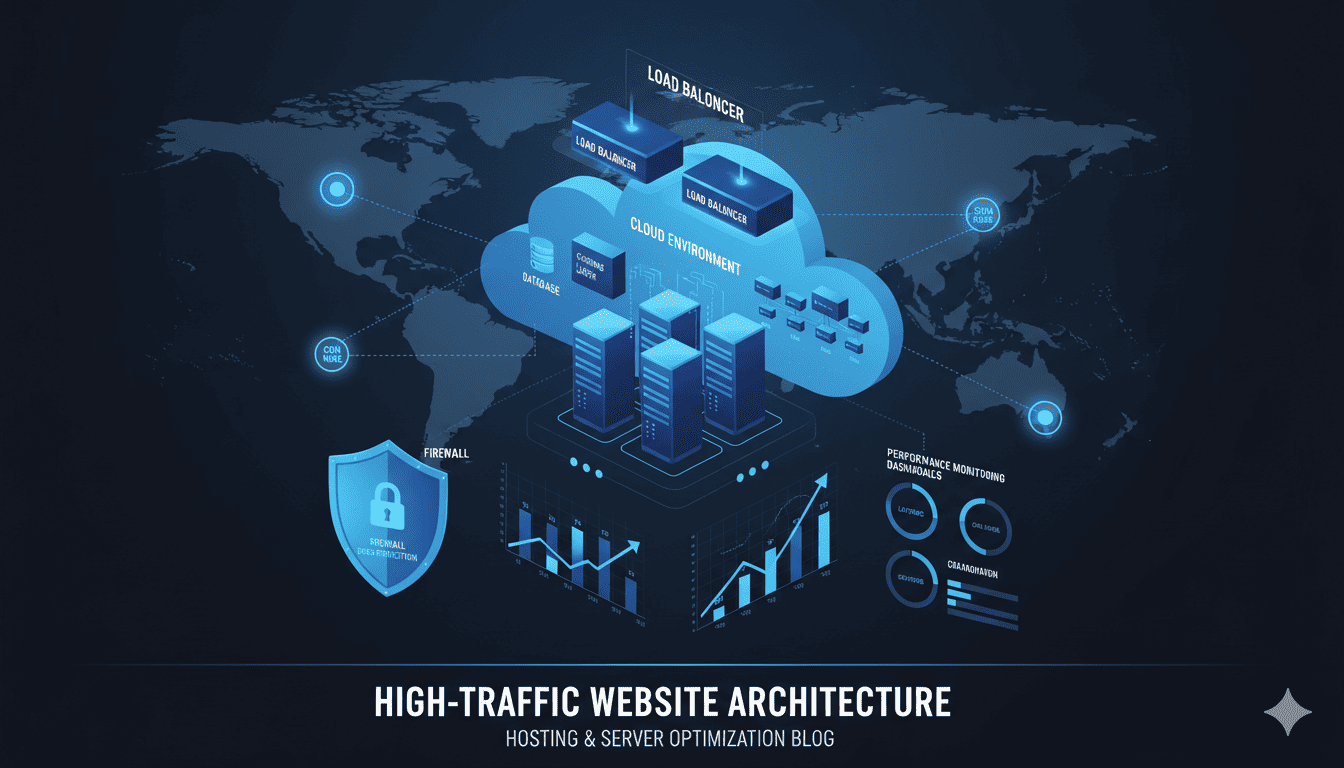
At 8:57 a.m., everything looked normal.
An e-commerce company was preparing for a promotional campaign. The infrastructure dashboard appeared healthy. CPU utilization was stable. Response times were predictable. The engineering team had spent weeks preparing for the event.
At 9:00 a.m., the campaign launched.
By 9:02 a.m., traffic had increased nearly tenfold.
By 9:05 a.m., customer sessions were climbing faster than forecasts had predicted.
And by 9:10 a.m., the leadership team faced the question that quietly haunts every growing digital business:
Can our platform actually handle this?
Years ago, that question often led directly to infrastructure planning meetings, emergency server provisioning, and frantic conversations about capacity limits.
Today, many organizations expect Platform as a Service (PaaS) environments to absorb those traffic surges automatically.
Sometimes they do.
Sometimes they do not.
The difference rarely comes down to marketing promises or vendor claims.
It comes down to architecture.
Because the answer to the question—Can PaaS handle high traffic?—is both reassuring and nuanced.
Yes, modern PaaS platforms are designed to handle high traffic workloads. But their success depends on how applications are built, how resources scale, and how bottlenecks are managed across the entire system.
The platform matters.
The application matters more.
Why High Traffic Has Become a Strategic Concern
Not long ago, extraordinary traffic spikes were relatively rare.
Today they are increasingly common.
Organizations face sudden demand from:
- Viral social media exposure
- Product launches
- Flash sales
- Live events
- Media coverage
- Seasonal shopping peaks
- AI-driven user growth
The challenge is not merely attracting attention.
The challenge is surviving success.
A website that becomes unavailable during peak demand loses revenue, credibility, and customer trust.
Growth can expose weaknesses as quickly as failure.
That reality makes scalability a business issue, not just a technical one.
What PaaS Was Designed to Solve
Platform as a Service emerged partly because infrastructure management had become a distraction.
Development teams wanted to build applications.
Instead, many spent substantial time managing:
- Servers
- Operating systems
- Capacity planning
- Scaling events
- Infrastructure maintenance
PaaS shifted much of that responsibility to the platform provider.
The promise was straightforward:
Focus on applications.
Let the platform manage infrastructure.
One of the most important outcomes of that model is scalable resource allocation.
And scalability is essential when traffic becomes unpredictable.
How PaaS Handles High Traffic
Modern PaaS environments typically rely on several mechanisms to support growing workloads.
Automatic Scaling
Perhaps the most visible capability.
As traffic increases, additional application instances can be created automatically.
When traffic declines, resources may be reduced.
This elasticity allows capacity to align more closely with demand.
Load Balancing
Incoming requests are distributed across multiple resources.
Instead of overwhelming a single server, traffic spreads across available instances.
This improves both performance and resilience.
Distributed Infrastructure
Many PaaS providers operate across multiple regions and availability zones.
This architecture reduces the impact of localized failures while supporting broader geographic demand.
Resource Monitoring
Platforms continuously evaluate:
- CPU utilization
- Memory consumption
- Request rates
- Response times
These metrics inform scaling decisions.
The result is a system designed to adapt rather than remain static.
Can Every Application Scale Equally Well?
This is where the conversation becomes more interesting.
Many organizations assume scalability is entirely a platform responsibility.
It is not.
Applications themselves influence scalability outcomes significantly.
Two applications deployed on the same platform can experience dramatically different results under identical traffic conditions.
Why?
Because application architecture determines how effectively resources can be utilized.
Applications generally scale more successfully when they are:
- Stateless
- Modular
- Efficiently coded
- Optimized for distributed environments
Applications dependent on fixed infrastructure assumptions often encounter challenges.
The platform can provide resources.
The application must be capable of using them.
High-Traffic Readiness Across Common PaaS Platforms
PaaS High-Traffic Capability Comparison
| PaaS Platform | Auto Scaling | Global Infrastructure | Load Balancing | High-Traffic Suitability |
|---|---|---|---|---|
| Google Cloud Run | Extensive | Extensive | Built-In | Excellent |
| Azure App Service | Strong | Extensive | Built-In | Excellent |
| AWS Elastic Beanstalk | Strong | Extensive | Built-In | Excellent |
| Render | Strong | Growing | Built-In | Strong |
| Heroku | Moderate to Strong | Strong | Built-In | Strong |
| Platform.sh | Strong | Strong | Built-In | Strong |
| OpenShift | Extensive | Organization Dependent | Extensive | Excellent |
The table highlights a key point.
Modern PaaS providers generally possess the infrastructure capabilities required for substantial traffic volumes.
The differentiator is often implementation rather than platform availability.
The Most Common High-Traffic Bottlenecks
Interestingly, application servers are not always the first component to fail.
Several bottlenecks frequently emerge before infrastructure limits are reached.
Database Constraints
Applications may scale horizontally.
Databases often scale differently.
Poorly optimized queries can create performance problems even when application instances are plentiful.
Third-Party APIs
Many applications depend on external services.
Payment processors.
Authentication providers.
Analytics platforms.
If these services impose rate limits, application performance may suffer regardless of platform scalability.
Session Management
Applications storing session information locally may struggle when traffic spreads across multiple instances.
Modern architectures typically externalize session storage to avoid this issue.
File Storage Systems
High-demand environments often require scalable storage architectures.
Traditional approaches may not keep pace.
The lesson is clear.
Traffic affects entire ecosystems, not merely application servers.
A Lesson Learned During a Viral Traffic Event
Several years ago, I observed an organization experience sudden visibility after receiving national media attention.
Traffic increased dramatically.
The PaaS platform performed exactly as designed.
Additional application instances launched automatically.
Load balancing functioned correctly.
Infrastructure remained healthy.
Yet users still reported delays.
The culprit was unexpected.
A reporting component generated complex database queries for every user session.
The application layer scaled effortlessly.
The database layer did not.
What appeared to be a scalability problem was actually an architectural problem.
That experience reinforced an important lesson.
High traffic reveals bottlenecks.
It does not necessarily create them.
Most bottlenecks already exist.
Traffic simply makes them impossible to ignore.
Auto Scaling Is Necessary—but Not Sufficient
Organizations often view auto scaling as the primary solution for high traffic.
It is certainly important.
But auto scaling addresses only one dimension of the challenge.
Successful high-traffic systems also require:
- Database optimization
- Caching strategies
- Efficient application design
- Monitoring systems
- Observability tools
Scaling resources without addressing inefficiencies can become expensive quickly.
Additional capacity does not eliminate poor performance patterns.
It sometimes amplifies them.
The Role of Caching
Caching remains one of the most effective techniques for managing heavy traffic.
Rather than generating every response from scratch, applications can temporarily store frequently requested information.
Benefits include:
- Faster response times
- Reduced database load
- Improved scalability
- Lower infrastructure costs
Many high-traffic applications rely heavily on caching layers.
The impact can be dramatic.
Sometimes a well-designed cache produces greater performance improvements than additional infrastructure.
How Modern Architectures Improve Scalability
Cloud-native design principles have expanded the traffic-handling capabilities of PaaS environments.
Examples include:
Microservices
Individual services scale independently.
High-demand components receive resources without affecting the entire application.
Containers
Containerized workloads allow efficient resource utilization and rapid scaling.
Event-Driven Systems
Applications process workloads asynchronously rather than forcing users to wait for completion.
These patterns improve resilience under load.
They also align naturally with modern PaaS capabilities.
Cost Considerations During Traffic Spikes
High traffic often creates a fascinating tension.
Organizations want scalability.
They also want cost control.
PaaS attempts to balance both objectives.
Resources increase when demand grows.
Resources decrease when demand subsides.
This flexibility can improve efficiency significantly compared with maintaining infrastructure sized permanently for peak demand.
However, traffic growth still consumes resources.
Scalability may reduce waste.
It does not eliminate consumption.
Understanding usage patterns remains critical.
What Happens During Extreme Demand?
Even highly scalable environments have limits.
No platform offers infinite capacity.
Extreme traffic scenarios may introduce challenges involving:
- Regional resource constraints
- Third-party dependencies
- Network congestion
- Database throughput limitations
The strongest organizations prepare for these scenarios through:
- Load testing
- Capacity planning
- Disaster recovery exercises
- Performance optimization
Preparation remains valuable even when infrastructure scales automatically.
The Future of High-Traffic Application Hosting
Several trends continue improving scalability capabilities.
These include:
- AI-driven scaling decisions
- Predictive capacity allocation
- Edge computing
- Serverless architectures
- Advanced observability platforms
The direction is unmistakable.
Platforms are becoming increasingly capable of adapting to demand automatically.
Yet architectural discipline remains essential.
Technology evolves.
Fundamental performance principles endure.
Conclusion: Yes, PaaS Can Handle High Traffic—When the Entire System Is Ready
So, can PaaS handle high traffic?
Absolutely.
Modern platforms are designed specifically to support dynamic workloads, automated scaling, load balancing, and distributed infrastructure.
Many of the world's most demanding applications rely on cloud platforms built around these principles.
Yet the more useful question may be slightly different.
Not whether the platform can handle high traffic.
Whether the entire application ecosystem can.
Because scalability is rarely determined by a single component.
It emerges from the interaction between applications, databases, networks, integrations, monitoring systems, and infrastructure.
The platform provides the foundation.
Architecture determines how effectively that foundation is used.
Organizations that understand this distinction tend to approach scalability differently.
They do not assume high traffic will be solved automatically.
They design for it.
They test for it.
They prepare for it.
And when demand finally arrives—whether gradually or all at once—the platform can do what it was built to do.
Not merely survive growth.
Enable it.
- Arts
- Business
- Computers
- Игры
- Health
- Главная
- Kids and Teens
- Деньги
- News
- Personal Development
- Recreation
- Regional
- Reference
- Science
- Shopping
- Society
- Sports
- Бизнес
- Деньги
- Дом
- Досуг
- Здоровье
- Игры
- Искусство
- Источники информации
- Компьютеры
- Личное развитие
- Наука
- Новости и СМИ
- Общество
- Покупки
- Спорт
- Страны и регионы
- World

 English
 French
 Spanish
 Portuguese
 Deutsch
 Turkish
 Dutch
Dutch
 Italiano
 Arabic
 Romaian
 Portuguese (Brazil)
 Greek
Greek