
Does PaaS Support DevOps?
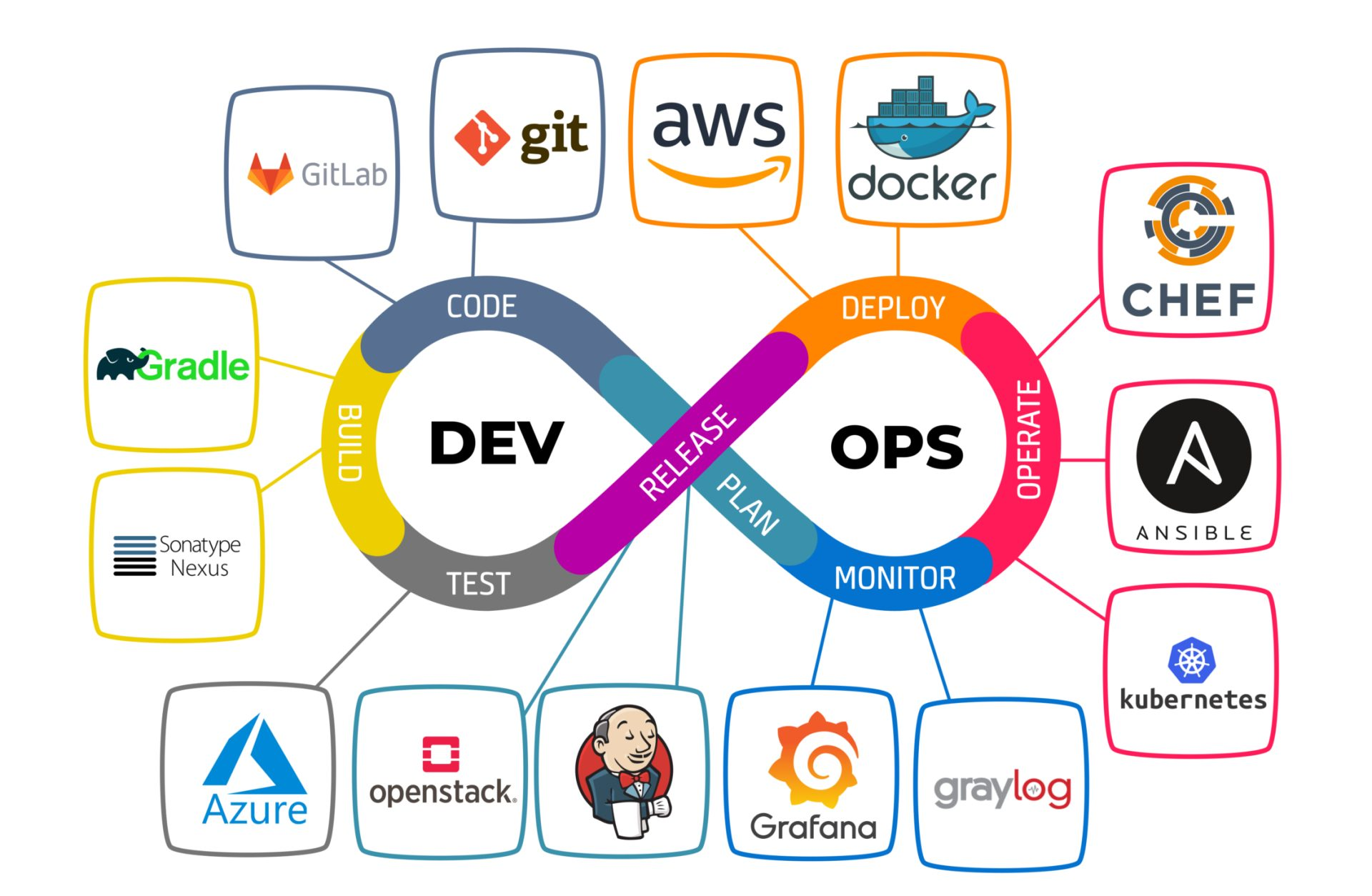
A few years ago, I sat in on a meeting that was supposed to last thirty minutes.
The agenda seemed straightforward: a software company wanted to accelerate releases. Their engineering leaders believed they had a DevOps problem. Their operations team believed they had a tooling problem. The finance team suspected they had a budget problem.
Three hours later, everyone was still talking.
What struck me wasn't the disagreement. It was that each group was describing a different symptom of the same issue: friction.
Developers waited days for environments. Operations teams worried about stability. Releases required coordination across multiple departments. Every improvement initiative eventually collided with infrastructure complexity.
Then someone asked a deceptively simple question:
"What if we stopped managing so much infrastructure ourselves?"
The room went quiet.
That question sits at the center of the conversation about Platform as a Service (PaaS) and DevOps. Because while DevOps is often discussed as a culture and PaaS as a technology, the relationship between them is much more interesting than that.
The real question isn't whether PaaS supports DevOps.
It's whether PaaS removes enough friction to allow DevOps to flourish.
Understanding What DevOps Is Really Trying to Achieve
Many organizations approach DevOps as a collection of practices:
- Continuous integration
- Continuous delivery
- Infrastructure as code
- Automated testing
- Monitoring and observability
Those practices matter. But they aren't the destination.
They're mechanisms.
At its core, DevOps aims to create a system in which software moves from idea to customer value with less delay, less risk, and less organizational conflict.
That's an operational goal.
It's also a human goal.
When developers and operations teams spend their energy negotiating infrastructure constraints, innovation slows. When deployment becomes routine instead of dramatic, teams can focus on customers rather than processes.
This is where PaaS enters the story.
What PaaS Actually Does
Platform as a Service provides developers with a managed environment for building, deploying, and running applications.
Instead of configuring servers, patching operating systems, maintaining runtime environments, and managing significant portions of infrastructure, teams interact with a platform that abstracts much of that complexity.
Popular examples include:
- Heroku
- Google Cloud Platform App Engine
- Microsoft Azure App Service
- Red Hat OpenShift
The promise is straightforward.
Developers spend less time managing infrastructure and more time building applications.
But simplicity alone doesn't create DevOps success.
The question is whether that simplification aligns with DevOps principles.
In many cases, it does.
The Natural Alignment Between PaaS and DevOps
DevOps emerged partly because infrastructure management became a bottleneck.
PaaS addresses that bottleneck directly.
Consider the traditional deployment workflow.
A developer finishes a feature. The application must be packaged. Servers must be provisioned. Dependencies must be configured. Security settings require validation. Monitoring tools need installation. Load balancers require adjustment.
Every step introduces opportunities for delay.
A mature PaaS platform compresses many of these activities into automated processes.
The result isn't merely convenience.
It's reduced organizational dependency.
And reduced dependency is one of the hidden engines behind DevOps performance.
When fewer handoffs are required, software moves faster.
When software moves faster, feedback loops shorten.
When feedback loops shorten, learning accelerates.
The connection becomes difficult to ignore.
How PaaS Supports Key DevOps Practices
Continuous Integration and Continuous Delivery
Modern DevOps environments depend on frequent code integration and rapid deployment.
PaaS platforms often include native support for automated build pipelines, deployment workflows, and rollback capabilities.
Developers push code.
The platform builds, tests, and deploys.
That doesn't eliminate engineering responsibility. Teams still design pipelines, establish quality gates, and define release strategies.
What changes is the amount of infrastructure plumbing required.
Less plumbing means more focus.
Environment Consistency
One of the oldest frustrations in software development is environmental inconsistency.
"It worked on my machine."
Every engineering leader has heard some variation of that sentence.
PaaS platforms reduce these discrepancies by standardizing runtime environments.
Applications run within predefined platform configurations.
Consistency doesn't guarantee success.
But inconsistency almost guarantees problems.
Infrastructure Automation
DevOps emphasizes automation because manual processes introduce variability.
PaaS extends automation into infrastructure operations.
Provisioning, scaling, patch management, runtime updates, and resource allocation become platform-managed activities.
Teams gain operational leverage without adding operational headcount.
That leverage matters.
Especially as applications grow.
Monitoring and Observability
Modern DevOps depends heavily on visibility.
Teams need telemetry, logs, performance metrics, and incident insights.
Many PaaS offerings integrate monitoring capabilities directly into the platform.
Developers gain access to operational intelligence without constructing extensive monitoring infrastructure from scratch.
Again, the pattern repeats.
Fewer distractions.
More focus.
Where PaaS and DevOps Sometimes Clash
The conversation becomes more nuanced here.
Because PaaS isn't automatically a DevOps accelerator.
In some organizations, it can create new constraints.
Reduced Infrastructure Control
DevOps teams often value flexibility.
PaaS platforms introduce opinionated architectures and predefined operational models.
That standardization creates efficiency.
It can also create limitations.
Teams with highly specialized workloads may discover that platform guardrails restrict optimization opportunities.
The very abstraction that simplifies operations can reduce customization.
Vendor Dependency
A mature DevOps strategy prioritizes resilience.
Heavy reliance on a specific PaaS provider can create platform dependency.
Migration may become difficult.
Operational assumptions may become embedded in application design.
This isn't necessarily a deal breaker.
But it is a strategic consideration.
The convenience dividend sometimes comes with switching costs.
Skills Can Atrophy
This point receives surprisingly little attention.
When platforms handle infrastructure management, engineering teams may gradually lose operational expertise.
That's not inherently negative.
After all, few companies need every developer to become a Linux administrator.
Yet organizations should be thoughtful about which capabilities they outsource and which capabilities they retain.
Knowledge, once lost, can be expensive to rebuild.
PaaS vs Traditional Infrastructure for DevOps
The differences become clearer when viewed side by side.
| Capability | Traditional Infrastructure | PaaS Environment |
|---|---|---|
| Server Provisioning | Manual or semi-automated | Fully automated |
| Deployment Speed | Variable | Typically faster |
| Environment Consistency | Team-dependent | Platform-managed |
| Infrastructure Maintenance | Internal responsibility | Provider responsibility |
| Scaling | Requires configuration | Often automatic |
| Operational Complexity | High | Lower |
| Customization | Extensive | Moderate |
| Time to Market | Slower | Faster |
| Infrastructure Expertise Required | Significant | Reduced |
| DevOps Enablement | Possible but effort-intensive | Built into platform design |
The table highlights something important.
PaaS doesn't replace DevOps.
It changes where teams spend their attention.
A Lesson Learned About DevOps Adoption
One experience continues to shape my thinking.
I worked with a company that invested heavily in DevOps transformation. New tools arrived. Consultants were hired. Dashboards multiplied.
Yet release cycles barely improved.
Months later, leadership adopted a managed platform strategy for several application teams.
The technical changes were meaningful.
The cultural changes were even more significant.
Developers stopped waiting for infrastructure approvals.
Operations teams spent less time performing repetitive maintenance.
Cross-functional meetings became shorter because fewer exceptions required discussion.
What improved wasn't simply deployment speed.
It was organizational trust.
That was the unexpected lesson.
Many executives assume DevOps success comes from better collaboration practices.
Collaboration matters.
But removing friction often improves collaboration more effectively than demanding it.
People cooperate more naturally when the system itself creates fewer points of conflict.
PaaS helped because it simplified the system.
The Economic Impact of PaaS-Driven DevOps
The financial implications deserve attention.
Organizations frequently calculate infrastructure costs while overlooking opportunity costs.
Every hour spent managing servers is an hour not spent improving customer experiences.
Every delayed release postpones learning.
Every operational bottleneck extends the distance between insight and action.
PaaS changes that equation.
Not because infrastructure disappears.
It doesn't.
Infrastructure remains essential.
Responsibility shifts.
And when responsibility shifts appropriately, organizations can allocate scarce talent toward differentiation rather than maintenance.
This distinction becomes increasingly important as software becomes central to competitive strategy.
Customers rarely reward companies for maintaining servers efficiently.
They reward companies for solving problems effectively.
Does PaaS Support DevOps? The More Interesting Answer
The simplest answer is yes.
PaaS supports DevOps by automating infrastructure tasks, standardizing environments, accelerating deployment pipelines, and reducing operational complexity.
But that answer feels incomplete.
A more useful perspective is that PaaS amplifies certain dimensions of DevOps.
It strengthens speed.
It strengthens consistency.
It strengthens automation.
It often strengthens collaboration by reducing organizational friction.
At the same time, it may limit flexibility, increase platform dependence, and create blind spots around infrastructure expertise.
Like most strategic choices, the value depends on context.
The organizations that benefit most are often those seeking faster delivery without turning every engineer into an infrastructure specialist.
The organizations that benefit least may be those requiring extensive customization or unique operational architectures.
The distinction matters.
Because technology decisions are rarely universal.
They're situational.
Conclusion: The Hidden Question Behind the Question
When leaders ask whether PaaS supports DevOps, they're often asking the wrong question.
The deeper question is this:
Where should your people spend their attention?
Should talented engineers spend their days managing infrastructure layers that customers never see?
Or should they focus on creating experiences, solving problems, and delivering value?
PaaS doesn't eliminate the need for DevOps discipline. It doesn't erase complexity. It doesn't magically transform culture.
What it can do is relocate effort.
And that relocation may be one of the most powerful operational decisions an organization can make.
The future of software delivery will not be defined by who manages the most servers.
It will be defined by who removes the most friction between an idea and a customer.
That's why the relationship between PaaS and DevOps matters.
Not because platforms are replacing practices.
But because the most effective systems are often the ones that quietly make collaboration easier, deployment faster, and innovation more likely.
And sometimes, the best support isn't doing more.
It's having less standing in the way.
- Arts
- Business
- Computers
- Spellen
- Health
- Home
- Kids and Teens
- Money
- News
- Personal Development
- Recreation
- Regional
- Reference
- Science
- Shopping
- Society
- Sports
- Бизнес
- Деньги
- Дом
- Досуг
- Здоровье
- Игры
- Искусство
- Источники информации
- Компьютеры
- Личное развитие
- Наука
- Новости и СМИ
- Общество
- Покупки
- Спорт
- Страны и регионы
- World

 English
 Russian
 French
 Spanish
 Portuguese
 Deutsch
 Turkish
 Italiano
 Arabic
 Romaian
 Portuguese (Brazil)
 Greek
Greek