
Can I Connect to External Databases in PaaS?
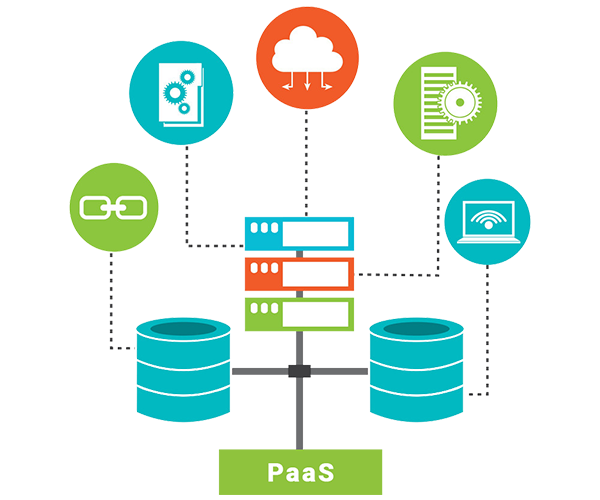
The question surfaced during a cloud migration workshop.
At first, it sounded almost tactical.
A company had decided to move several customer-facing applications to a Platform as a Service (PaaS) environment. The development team was excited. Deployment cycles would become faster. Infrastructure management would shrink. Operational overhead would decline.
Then someone from the data team raised a hand.
"What happens to our database?"
The room grew noticeably quieter.
Unlike the applications, the database wasn't moving.
Years of business records lived inside an existing environment. Compliance requirements complicated relocation. Internal systems depended on established integrations. Migrating the data layer would introduce significant risk.
So the question became unavoidable:
Can a PaaS application connect to an external database?
The answer, technically speaking, is straightforward.
Yes.
Most modern PaaS platforms support connections to external databases.
But that answer barely scratches the surface.
Because the real conversation isn't about connectivity.
It's about architecture.
It's about latency.
It's about security.
It's about operational tradeoffs.
And perhaps most importantly, it's about understanding which responsibilities disappear when adopting PaaS—and which responsibilities remain.
As with many technology decisions, the connection itself is often the easiest part.
Everything surrounding it is where the complexity lives.
Why Organizations Connect PaaS Applications to External Databases
When people first encounter PaaS, they often imagine a fully self-contained environment.
Applications run on the platform.
Databases run on the platform.
Everything exists neatly within the same ecosystem.
Sometimes that's exactly what happens.
Often, it isn't.
Organizations have many reasons for maintaining databases outside their PaaS environment.
Existing Investments
Enterprise databases rarely appear overnight.
They represent years of operational decisions, integrations, governance processes, and business logic.
Replacing them simply because an application moves to PaaS may create more disruption than value.
Regulatory Requirements
Certain industries impose strict requirements regarding data residency, access controls, and infrastructure ownership.
Healthcare organizations.
Financial institutions.
Government agencies.
In these environments, database placement may be driven by compliance obligations rather than architectural preference.
Hybrid Cloud Strategies
Many organizations intentionally distribute workloads across multiple environments.
Applications may operate within a PaaS platform while databases remain in private clouds, public cloud infrastructure, or on-premises environments.
This approach offers flexibility.
It also introduces complexity.
Specialized Database Platforms
Some organizations rely on highly optimized database technologies unavailable through their chosen PaaS provider.
In these cases, external connectivity becomes less of an option and more of a necessity.
The application moves.
The database stays.
The connection becomes the bridge.
How PaaS Connects to External Databases
One of the biggest misconceptions about PaaS is that applications become isolated from external systems.
Modern platforms are far more flexible than that.
Most PaaS environments support outbound network communication, allowing applications to connect with databases located elsewhere.
Typically, this occurs through:
- Secure TCP/IP connections
- VPN tunnels
- Private networking services
- Dedicated cloud interconnects
- SSL/TLS encrypted endpoints
- Private endpoints within cloud ecosystems
From the application's perspective, the database often behaves much like any other database connection.
Connection strings.
Authentication credentials.
Network routes.
Queries.
Transactions.
The development experience frequently remains familiar.
The operational considerations, however, become more nuanced.
The Architecture Question Most Teams Overlook
Connectivity is rarely the hardest problem.
Distance is.
Applications and databases communicate constantly.
Every query introduces a round trip.
Every transaction depends on network performance.
Every millisecond matters.
When applications and databases exist within the same environment, communication tends to be fast and predictable.
External databases introduce additional variables.
Network latency.
Regional differences.
Internet routing.
Cross-cloud communication.
Bandwidth constraints.
The farther data travels, the more noticeable these factors become.
This doesn't mean external databases are a bad idea.
It means architecture matters.
Organizations should evaluate not simply whether connectivity works but whether performance remains aligned with user expectations.
The distinction is significant.
Common External Database Scenarios
Not all external database connections look alike.
Several patterns appear repeatedly across modern PaaS deployments.
On-Premises Database Connectivity
Many enterprises continue operating mission-critical databases within their own facilities.
Applications hosted on PaaS platforms often connect back to these environments.
Benefits include:
- Regulatory compliance
- Existing infrastructure investments
- Internal governance controls
Challenges typically involve:
- Network complexity
- Security management
- Latency considerations
Cross-Cloud Database Access
Cloud adoption rarely occurs uniformly.
Organizations frequently use multiple cloud providers.
An application running on one platform may access a database hosted elsewhere.
For example:
- Application on Azure
- Database on AWS
Or:
- Application on Google Cloud
- Database on a private Kubernetes cluster
The architecture remains viable.
Careful planning becomes essential.
Managed Database Services
Increasingly, organizations rely on specialized managed database providers.
Examples include:
- MongoDB Atlas
- CockroachDB
- PlanetScale
- Neon
- SingleStore
Applications hosted on PaaS platforms connect directly to these services through secure endpoints.
This model often combines operational simplicity with architectural flexibility.
Comparing Internal and External Database Connectivity
The tradeoffs become clearer when viewed side by side.
| Factor | Internal PaaS Database | External Database |
|---|---|---|
| Setup Complexity | Lower | Higher |
| Network Latency | Typically lower | Potentially higher |
| Operational Control | Limited | Greater |
| Compliance Flexibility | Moderate | High |
| Vendor Independence | Lower | Higher |
| Disaster Recovery Options | Platform-dependent | More customizable |
| Security Configuration | Simplified | More extensive |
| Multi-Cloud Support | Limited | Strong |
| Migration Flexibility | Lower | Higher |
| Infrastructure Ownership | Provider-managed | Organization-controlled |
Notice something interesting.
Neither column dominates.
The decision is rarely about right versus wrong.
It's about priorities.
Security Becomes the Central Conversation
When external databases enter the picture, security moves to the forefront.
As it should.
Data frequently represents an organization's most valuable asset.
Applications can often be redeployed.
Infrastructure can often be rebuilt.
Lost or compromised data creates far more serious consequences.
Organizations connecting PaaS applications to external databases typically implement several safeguards.
Encryption in Transit
Communication between applications and databases should be encrypted.
TLS has become standard practice.
Not because compliance requires it.
Because the risk of transmitting sensitive information without encryption is difficult to justify.
Credential Management
Database credentials should never live directly inside application code.
Modern PaaS platforms typically provide secret management capabilities.
Used correctly, these features significantly reduce exposure risk.
Network Restrictions
Many organizations restrict database access to approved IP ranges, private endpoints, or trusted network paths.
The goal is straightforward.
Reduce unnecessary exposure.
Identity-Based Authentication
Increasingly, organizations are replacing static credentials with identity-based access controls.
The approach strengthens security while simplifying credential management.
A Lesson Learned About External Databases
Several years ago, I worked with a company that had successfully modernized nearly every aspect of its application stack.
Deployments were automated.
Monitoring was sophisticated.
Infrastructure management had improved dramatically.
The database remained external.
Initially, everything seemed fine.
Then customer growth accelerated.
Application traffic increased.
Database query volume expanded.
Performance began to degrade.
Not catastrophically.
Subtly.
Response times crept upward.
Users noticed occasional delays.
The engineering team initially focused on application optimization.
The real issue turned out to be geographic distance.
The application and database had gradually evolved into separate performance zones.
The architecture still worked.
It simply no longer worked optimally.
The lesson stayed with me.
Connectivity and performance are not interchangeable.
Just because systems can communicate doesn't mean they should communicate without architectural evaluation.
External database strategies succeed when connectivity decisions account for operational realities.
Not merely technical possibilities.
The Hidden Advantage of External Databases
Most discussions focus on the challenges.
The benefits deserve equal attention.
External databases often provide strategic flexibility.
Reduced Vendor Dependency
Applications can move between platforms more easily when the database exists independently.
This flexibility can influence long-term cloud strategy.
Independent Scaling
Applications and databases frequently grow at different rates.
Separating them allows organizations to scale each component independently.
Specialized Performance Optimization
Dedicated database environments often offer tuning capabilities unavailable through general-purpose PaaS services.
Broader Technology Choices
Organizations gain access to emerging database technologies without waiting for platform providers to add support.
Flexibility creates optionality.
Optionality creates resilience.
When External Databases May Not Be the Best Choice
Despite their advantages, external databases are not always ideal.
Organizations should proceed carefully when:
- Applications require extremely low latency
- Workloads generate massive query volumes
- Teams lack networking expertise
- Security requirements are difficult to manage
- Operational simplicity is the highest priority
Sometimes the most effective architecture is the simplest one.
Complexity should be justified.
Not assumed.
So, Can You Connect to External Databases in PaaS?
Absolutely.
Modern PaaS platforms are designed to support external database connectivity across a wide variety of environments.
Organizations routinely connect PaaS applications to:
- On-premises databases
- Public cloud databases
- Managed database providers
- Multi-cloud architectures
- Specialized database platforms
The technical capability is well established.
The more important question is whether the resulting architecture aligns with business objectives, performance requirements, and operational capabilities.
Because connectivity alone is not the goal.
Sustainable architecture is.
Conclusion: The Most Important Decision Isn't About the Connection
When organizations ask whether PaaS supports external databases, they often frame the discussion as a networking question.
In reality, it's a strategic question.
The connection itself is relatively straightforward.
Modern platforms handle connectivity exceptionally well.
The harder challenge involves understanding the consequences of that connection.
Where will data live?
How quickly must it travel?
Who will manage it?
How will security be enforced?
What happens as usage grows?
These questions matter far more than whether a connection string can be configured.
The strongest architectures emerge when organizations view external databases not as technical exceptions but as deliberate design choices.
Because PaaS was never intended to eliminate architectural thinking.
It was intended to eliminate unnecessary infrastructure burden.
And those are very different objectives.
The organizations that understand this distinction tend to make better decisions—not because they simplify every system, but because they simplify the right ones.
- Arts
- Business
- Computers
- Juegos
- Health
- Home
- Kids and Teens
- Money
- News
- Personal Development
- Recreation
- Regional
- Reference
- Science
- Shopping
- Society
- Sports
- Бизнес
- Деньги
- Дом
- Досуг
- Здоровье
- Игры
- Искусство
- Источники информации
- Компьютеры
- Личное развитие
- Наука
- Новости и СМИ
- Общество
- Покупки
- Спорт
- Страны и регионы
- World

 English
 Russian
 French
 Portuguese
 Deutsch
 Turkish
 Dutch
Dutch
 Italiano
 Arabic
 Romaian
 Portuguese (Brazil)
 Greek
Greek