
When Should a Company Use PaaS?
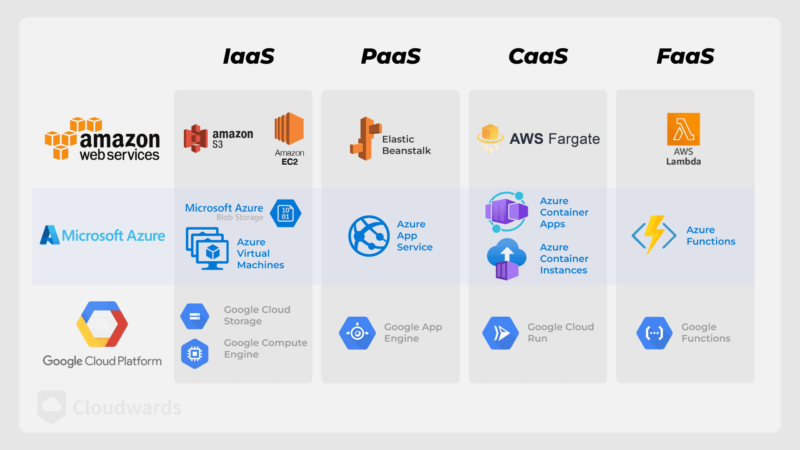
There is a question that surfaces in boardrooms, product meetings, and late-night architecture discussions with surprising frequency:
Should we build the infrastructure ourselves, or should we focus on building the business?
At first glance, the answer seems obvious. Every company wants to focus on its customers. Every leadership team wants engineers spending time on innovation rather than server maintenance.
And yet, many organizations find themselves investing enormous energy into managing environments, configuring databases, monitoring deployments, and solving operational problems that customers never see.
This is where Platform as a Service (PaaS) enters the conversation.
But the real question is not whether PaaS is good or bad. It is not even whether PaaS is cheaper than Infrastructure as a Service (IaaS) or more flexible than Software as a Service (SaaS).
The more useful question is this:
At what point does managing infrastructure stop creating strategic value?
That distinction matters because technology decisions are rarely technology decisions. They are business decisions disguised as technical ones.
Understanding What PaaS Actually Does
PaaS sits between raw infrastructure and fully packaged software.
With Infrastructure as a Service, companies manage operating systems, middleware, runtime environments, scaling configurations, and much of the deployment process themselves.
With Software as a Service, the vendor manages almost everything.
PaaS occupies the middle ground.
A PaaS provider supplies the application platform—runtime environments, development tools, deployment pipelines, scaling capabilities, databases, monitoring, and operational services—allowing development teams to focus primarily on writing and delivering code.
Instead of asking:
"How do we configure another server cluster?"
Teams can ask:
"How do we improve the customer experience?"
That shift may sound subtle. In practice, it can reshape how an organization allocates talent, budget, and attention.
The Strategic Test: Is Infrastructure Your Differentiator?
One lesson has stayed with me from a conversation with a technology executive several years ago.
His company had assembled a highly skilled engineering team. Yet release cycles remained painfully slow. Engineers spent substantial portions of their week troubleshooting environments, maintaining deployment scripts, and managing infrastructure issues.
The leadership team initially viewed this as evidence of technical sophistication.
Eventually, they recognized something uncomfortable.
Customers were not buying their product because of their deployment architecture.
Customers were buying outcomes.
Within months of moving significant workloads to a managed platform, deployment frequency increased dramatically, operational overhead dropped, and engineering capacity shifted toward product development.
The lesson was simple but powerful:
A company should own what makes it unique. Everything else deserves scrutiny.
PaaS becomes attractive when infrastructure management consumes resources without creating meaningful competitive advantage.
Signs Your Company Is Ready for PaaS
Not every organization benefits equally from platform services. However, several indicators consistently appear among successful adopters.
Your Development Team Is Spending Too Much Time on Operations
Highly compensated developers are expensive.
If talented engineers spend large portions of their workweek provisioning servers, patching operating systems, configuring environments, or troubleshooting deployments, the organization may be misallocating scarce talent.
PaaS reduces operational complexity by automating many of these responsibilities.
The result is not simply efficiency.
It is focus.
And focus is often the scarcest resource in a growing company.
Speed to Market Matters More Than Infrastructure Control
Many companies compete on innovation velocity.
They need to launch features quickly, test new ideas, and respond to customer feedback without waiting for lengthy infrastructure planning cycles.
PaaS platforms often include:
- Automated deployment pipelines
- Built-in scalability
- Integrated monitoring
- Managed databases
- Development frameworks
These capabilities compress development timelines significantly.
For organizations where speed determines market position, that acceleration can outweigh the benefits of maintaining granular infrastructure control.
Your Workloads Have Unpredictable Demand
Growth rarely follows a straight line.
A marketing campaign succeeds unexpectedly. A new feature gains traction. Seasonal demand spikes.
Traditional infrastructure planning can become a constant exercise in overestimating or underestimating future needs.
PaaS platforms typically provide automatic scaling capabilities, allowing resources to expand and contract based on demand.
That flexibility reduces both operational risk and wasted spending.
You Need Consistency Across Development Teams
As organizations scale, complexity tends to multiply.
Different teams adopt different deployment methods. Environments drift apart. Standards become difficult to enforce.
PaaS introduces a common operating framework.
Developers gain standardized workflows. Security policies become easier to manage. New employees onboard faster.
The platform creates organizational consistency without requiring constant oversight.
When PaaS May Not Be the Right Choice
Technology decisions become dangerous when framed as universal truths.
PaaS offers substantial advantages, but there are situations where it may introduce more constraints than benefits.
Highly Customized Infrastructure Requirements
Some organizations operate specialized workloads requiring extensive customization.
Examples include:
- High-performance computing
- Specialized networking architectures
- Certain financial trading systems
- Advanced scientific computing environments
These scenarios often demand infrastructure-level control that many PaaS solutions cannot provide.
Strict Regulatory Requirements
Industries such as healthcare, defense, and financial services may face compliance obligations that require specific deployment configurations, data residency controls, or security architectures.
While modern PaaS providers increasingly support regulatory requirements, organizations with highly specialized compliance needs must evaluate carefully.
Vendor Lock-In Concerns
One of the most frequently cited risks of PaaS is vendor dependency.
The deeper an organization integrates platform-specific services, the more difficult migration can become.
This does not necessarily make PaaS a poor decision.
It simply means companies should assess whether the productivity gains justify the potential switching costs.
Comparing PaaS with Other Cloud Models
The decision becomes clearer when viewed through a strategic lens rather than a technical one.
| Factor | Infrastructure as a Service (IaaS) | Platform as a Service (PaaS) | Software as a Service (SaaS) |
|---|---|---|---|
| Infrastructure Control | Very High | Moderate | Minimal |
| Operational Responsibility | High | Low | Very Low |
| Deployment Speed | Moderate | High | Immediate |
| Customization Flexibility | Extensive | Moderate to High | Limited |
| Engineering Overhead | Significant | Reduced | Minimal |
| Scalability Management | Customer Managed | Platform Managed | Vendor Managed |
| Time to Market | Slower | Faster | Fastest |
| Vendor Lock-In Risk | Lower | Moderate | Higher |
| Ideal User | Infrastructure-focused organizations | Product-focused organizations | End-user organizations |
| Cost Predictability | Variable | Moderate | High |
The table reveals something important.
PaaS is not positioned as the most powerful option or the simplest option.
It is positioned as the option that balances control and productivity.
And that balance is precisely why so many organizations find it compelling.
The Economics of Focus
Many PaaS discussions center on technical features.
The more revealing conversation concerns economics.
Consider two companies with identical engineering budgets.
The first allocates substantial resources to infrastructure maintenance.
The second automates much of that work through a platform provider.
Over time, the second company often gains an invisible advantage.
More experiments.
More customer-facing improvements.
More opportunities to learn.
More chances to discover what customers actually value.
This mirrors a broader pattern seen across industries.
Organizations create value not merely through capability, but through concentration.
The companies that thrive are often those that direct disproportionate energy toward the activities customers notice and appreciate.
PaaS can support that concentration.
Startups Versus Enterprises: Different Reasons, Same Outcome
Interestingly, startups and enterprises often arrive at PaaS from opposite directions.
Why Startups Choose PaaS
Startups frequently operate under severe resource constraints.
They need:
- Faster product launches
- Smaller operational teams
- Lower infrastructure complexity
- Rapid experimentation
For these organizations, PaaS can function as a force multiplier.
A small engineering team can achieve results that previously required much larger operational support structures.
Why Enterprises Choose PaaS
Large organizations face a different challenge.
Their problem is not usually a lack of resources.
It is organizational complexity.
Multiple business units. Diverse development teams. Legacy systems. Governance requirements.
PaaS can provide standardization and consistency across large environments while reducing operational burden.
The destination is the same.
Greater focus on delivering value.
The journey simply starts from different places.
Questions Leaders Should Ask Before Choosing PaaS
Before making a platform decision, leadership teams should examine several critical questions:
What Percentage of Engineering Time Goes Toward Infrastructure Management?
If the answer is substantial, PaaS may unlock meaningful productivity gains.
Does Infrastructure Create Competitive Advantage?
If customers would not notice whether infrastructure was managed internally or externally, ownership may deserve reevaluation.
How Important Is Speed?
Organizations competing in rapidly evolving markets often benefit disproportionately from faster deployment cycles.
What Is the Cost of Complexity?
Complexity rarely appears on financial statements.
Yet it affects hiring, onboarding, productivity, innovation, and customer experience.
PaaS often reduces complexity in ways that extend far beyond technology.
How Comfortable Are We with Platform Dependency?
Every strategic decision creates trade-offs.
The question is not whether dependency exists.
The question is whether the value generated exceeds the risk incurred.
The Real Decision Is About Attention
Conversations about PaaS often become trapped in discussions of architecture diagrams, deployment methods, and cloud services.
Those details matter.
But they are not the heart of the decision.
The heart of the decision is attention.
Every organization possesses a finite amount of managerial attention, engineering talent, and strategic energy.
The choice to adopt PaaS is ultimately a choice about where those resources should be directed.
Should talented teams spend their time managing infrastructure?
Or should they spend their time improving customer outcomes?
That question may feel deceptively simple.
Yet it reveals the deeper truth beneath most technology decisions.
The companies that gain lasting advantages are rarely the ones that control the most systems.
They are the ones that understand which systems deserve control and which responsibilities can be entrusted elsewhere.
And that is precisely when a company should use PaaS: when managing infrastructure becomes a distraction from creating value.
The most successful organizations do not outsource responsibility. They outsource activities that no longer deserve their full attention. In an environment where focus is increasingly scarce and customer expectations continue to rise, that distinction may matter more than any technical specification on a platform comparison chart.
- Arts
- Business
- Computers
- Jeux
- Health
- Domicile
- Kids and Teens
- Argent
- News
- Personal Development
- Recreation
- Regional
- Reference
- Science
- Shopping
- Society
- Sports
- Бизнес
- Деньги
- Дом
- Досуг
- Здоровье
- Игры
- Искусство
- Источники информации
- Компьютеры
- Личное развитие
- Наука
- Новости и СМИ
- Общество
- Покупки
- Спорт
- Страны и регионы
- World

 English
 Russian
 Spanish
 Portuguese
 Deutsch
 Turkish
 Dutch
Dutch
 Italiano
 Arabic
 Romaian
 Portuguese (Brazil)
 Greek
Greek