
What Industries Benefit Most from PaaS?
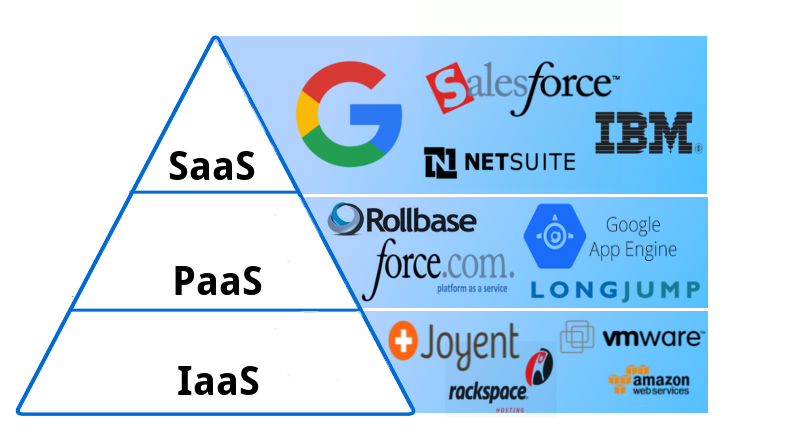
Every industry believes it is unique.
Healthcare leaders point to patient privacy requirements. Financial institutions emphasize regulatory oversight. Manufacturers highlight operational complexity. Retailers focus on customer expectations. Software companies argue that innovation speed changes everything.
And they are all right.
Yet beneath those differences lies a surprisingly universal challenge.
Organizations are under increasing pressure to deliver better digital experiences while simultaneously managing growing technical complexity.
Customers expect faster service.
Employees expect better tools.
Partners expect seamless integration.
Executives expect innovation.
Meanwhile, technology teams are often asked to accomplish all of this without proportionally increasing resources.
This tension helps explain the growing appeal of Platform as a Service (PaaS).
But a more interesting question remains:
Which industries actually gain the most value from PaaS?
The answer is not necessarily the industries with the largest technology budgets.
Nor is it the industries with the most sophisticated infrastructure.
The greatest beneficiaries are often organizations where speed, focus, scalability, and operational efficiency create measurable competitive advantages.
In other words, the industries where attention is more valuable than infrastructure ownership.
Understanding Why Industry Context Matters
Technology decisions rarely exist in a vacuum.
The same platform that creates extraordinary value for one organization may deliver only modest benefits for another.
That is because industries differ in critical ways:
- Regulatory requirements
- Customer expectations
- Innovation cycles
- Data sensitivity
- Operational complexity
- Growth patterns
The effectiveness of PaaS depends largely on how these factors interact with business priorities.
At its core, PaaS reduces infrastructure management responsibilities while accelerating application development and deployment.
Industries that derive significant value from those outcomes tend to benefit most.
The Common Characteristic Among High-Value PaaS Adopters
After observing cloud adoption across multiple sectors, a recurring pattern emerges.
The strongest candidates for PaaS share one important trait:
Their competitive advantage comes from what they build, not where they host it.
Customers rarely choose a retailer because its internal infrastructure team manually configured servers.
They choose retailers because of product selection, pricing, convenience, and customer experience.
Patients do not select healthcare providers based on deployment architecture.
They care about outcomes, accessibility, and quality of care.
When infrastructure ceases to be a source of differentiation, platform services become more compelling.
Software and SaaS Companies: The Most Natural Fit
If there is a category that seems almost purpose-built for PaaS, it is software companies.
Why Software Businesses Benefit
Software organizations compete on speed.
Not simply development speed.
Learning speed.
Iteration speed.
Adaptation speed.
The faster teams can launch features, gather feedback, and improve products, the stronger their market position often becomes.
PaaS supports this process by reducing operational overhead and simplifying deployment workflows.
Instead of investing resources in infrastructure maintenance, engineering teams can focus on product innovation.
Typical Use Cases
Software companies frequently use PaaS for:
- Customer-facing applications
- Mobile backends
- API services
- Internal development tools
- Testing environments
- Product experimentation
For many SaaS providers, the platform becomes an accelerator for continuous improvement.
Retail and E-Commerce: Where Customer Expectations Never Stop Rising
Retail operates under relentless pressure.
Customers expect speed.
They expect personalization.
They expect availability.
And they rarely care about the technological complexity required to deliver those experiences.
Why PaaS Works Well in Retail
Retail demand is often unpredictable.
Traffic spikes occur during:
- Holiday shopping seasons
- Promotional campaigns
- Product launches
- Viral marketing events
PaaS platforms provide elastic scalability that can accommodate sudden increases in demand without requiring extensive infrastructure planning.
Focus on Customer Experience
Retail success increasingly depends on digital capabilities.
Organizations must continuously improve:
- Mobile applications
- Loyalty platforms
- Personalization engines
- Inventory systems
- Customer portals
PaaS allows development teams to prioritize these customer-facing initiatives rather than infrastructure management.
Healthcare: Balancing Innovation and Compliance
Healthcare presents an interesting case.
Historically, many healthcare organizations approached cloud adoption cautiously due to privacy and compliance concerns.
Today, that landscape has evolved significantly.
The Growing Need for Digital Services
Healthcare providers increasingly rely on:
- Telehealth platforms
- Patient portals
- Scheduling systems
- Clinical applications
- Data analytics tools
These applications require scalability, reliability, and rapid development capabilities.
Modern PaaS Advantages
Many enterprise-grade PaaS providers now support healthcare compliance frameworks and security requirements.
As a result, healthcare organizations can gain operational efficiencies while maintaining necessary safeguards.
The goal is not merely cost reduction.
It is improved patient access and better service delivery.
Financial Services: A Surprising PaaS Success Story
Financial institutions have traditionally favored highly controlled environments.
Given the industry's regulatory obligations, that caution was understandable.
Yet many banks, insurance providers, and fintech companies now leverage PaaS extensively.
Why Financial Services Are Adopting PaaS
The industry faces increasing pressure to modernize customer experiences.
Consumers expect:
- Mobile banking
- Real-time transactions
- Personalized financial tools
- Digital onboarding
- Integrated services
Delivering these capabilities requires faster development cycles.
PaaS helps organizations accelerate innovation while reducing operational complexity.
The Rise of Fintech
Fintech startups, in particular, often embrace PaaS because it allows small teams to compete effectively against larger institutions.
The platform provides leverage.
And leverage is often the defining advantage of emerging companies.
Manufacturing: The Unexpected Beneficiary
Manufacturing is not always the first industry associated with cloud platforms.
Yet it increasingly benefits from PaaS adoption.
Manufacturing's Digital Transformation
Modern manufacturers depend on software-driven processes such as:
- Supply chain management
- Predictive maintenance
- Production monitoring
- Quality control systems
- Inventory optimization
These applications generate significant operational value.
Why PaaS Fits
Manufacturers often prefer focusing resources on operational excellence rather than infrastructure management.
PaaS enables technology teams to build and deploy business-critical applications more efficiently.
As manufacturing becomes increasingly data-driven, platform services provide additional flexibility.
Education: Supporting Rapidly Changing Expectations
Educational institutions face unique challenges.
Student expectations evolve.
Learning models change.
Technology budgets remain constrained.
Common Educational Applications
Schools, universities, and training organizations rely on:
- Learning management systems
- Student portals
- Virtual classrooms
- Assessment platforms
- Administrative applications
Benefits of PaaS
PaaS reduces the need for extensive internal infrastructure expertise while enabling institutions to deliver modern digital experiences.
This can be especially valuable for organizations with limited technical resources.
Media and Entertainment: Built for Scale
Few industries experience demand volatility quite like media and entertainment.
A streaming event goes viral.
A new release attracts millions of viewers.
Traffic surges unexpectedly.
Why Scalability Matters
Media companies must accommodate fluctuating demand without compromising performance.
PaaS platforms help support:
- Content delivery systems
- Subscription platforms
- User engagement applications
- Streaming support services
The ability to scale dynamically becomes a significant operational advantage.
Comparing Industry Benefits from PaaS
The relative value of PaaS varies across sectors.
The table below highlights common patterns.
| Industry | Innovation Speed Importance | Scalability Needs | Regulatory Complexity | PaaS Value Potential |
|---|---|---|---|---|
| Software & SaaS | Very High | High | Moderate | Very High |
| Retail & E-Commerce | High | Very High | Moderate | Very High |
| Healthcare | High | High | Very High | High |
| Financial Services | High | High | Very High | High |
| Manufacturing | Moderate to High | Moderate | Moderate | High |
| Education | Moderate | Moderate | Moderate | High |
| Media & Entertainment | High | Very High | Low to Moderate | Very High |
| Government | Moderate | Moderate | Very High | Moderate to High |
| Logistics & Transportation | High | High | Moderate | High |
| Professional Services | Moderate | Moderate | Low | Moderate to High |
A pattern becomes visible.
Industries that depend heavily on application development and customer experience tend to realize the greatest benefits.
The Lesson I Learned from a Multi-Industry Technology Initiative
Several years ago, I participated in discussions involving organizations from multiple sectors undergoing cloud modernization efforts.
At first, the industries appeared radically different.
One organization focused on healthcare.
Another operated in retail.
A third was involved in manufacturing.
The challenges seemed unrelated.
Yet as conversations progressed, a common theme emerged.
Each organization believed its infrastructure requirements were uniquely complex.
Each initially viewed infrastructure management as a strategic necessity.
And each eventually discovered that customers cared far more about outcomes than operational architecture.
The retailer needed better customer experiences.
The healthcare provider needed greater accessibility.
The manufacturer needed operational visibility.
Infrastructure mattered.
But it was rarely the primary source of competitive differentiation.
That lesson continues to shape how I think about PaaS adoption.
The most successful organizations often become remarkably disciplined about distinguishing between what creates value and what merely supports value creation.
Industries That May Benefit Less
Not every environment is equally suited for PaaS.
Certain sectors may encounter limitations.
Specialized Scientific Computing
Research environments involving highly customized computing architectures may require infrastructure-level control.
Highly Customized Government Systems
Certain government applications operate under specialized requirements that exceed standard platform capabilities.
Extreme Performance Workloads
Applications demanding precise hardware optimization may benefit from alternative infrastructure models.
Even in these cases, however, hybrid approaches are becoming increasingly common.
Organizations often use PaaS selectively rather than universally.
The Bigger Question Is Not Industry—It's Focus
It is tempting to categorize industries into winners and losers.
But that framing misses something important.
The more useful distinction is not between healthcare and retail.
Not between banking and manufacturing.
The real distinction is between organizations that benefit from managing infrastructure and those that benefit from delegating it.
Most industries now face increasing pressure to innovate faster.
To improve customer experiences.
To launch new services.
To analyze more data.
To adapt more quickly.
PaaS supports those objectives by reducing operational friction.
The industries that benefit most are simply those where operational simplification unlocks strategic focus.
Conclusion: The Greatest Beneficiaries Are the Ones Focused on Outcomes
When executives ask which industries benefit most from PaaS, they often expect a technical answer.
The reality is more nuanced.
PaaS delivers the greatest value in industries where customer expectations evolve rapidly, innovation cycles are compressed, and internal resources are better spent building capabilities than maintaining infrastructure.
Software companies, retailers, healthcare providers, financial institutions, manufacturers, educational organizations, and media companies increasingly fit this profile.
But the deeper insight extends beyond industry categories.
The organizations that gain the most from PaaS are those willing to challenge a longstanding assumption—that owning infrastructure necessarily creates advantage.
In many cases, it does not.
What creates advantage is serving customers better, learning faster, and directing talent toward meaningful outcomes.
And when viewed through that lens, the question is not which industries benefit from PaaS.
The question is which organizations are prepared to focus relentlessly on what makes them valuable in the first place.
- Arts
- Business
- Computers
- Игры
- Health
- Главная
- Kids and Teens
- Деньги
- News
- Personal Development
- Recreation
- Regional
- Reference
- Science
- Shopping
- Society
- Sports
- Бизнес
- Деньги
- Дом
- Досуг
- Здоровье
- Игры
- Искусство
- Источники информации
- Компьютеры
- Личное развитие
- Наука
- Новости и СМИ
- Общество
- Покупки
- Спорт
- Страны и регионы
- World

 English
 French
 Spanish
 Portuguese
 Deutsch
 Turkish
 Dutch
Dutch
 Italiano
 Arabic
 Romaian
 Portuguese (Brazil)
 Greek
Greek