
What Are Real-World Examples of PaaS?
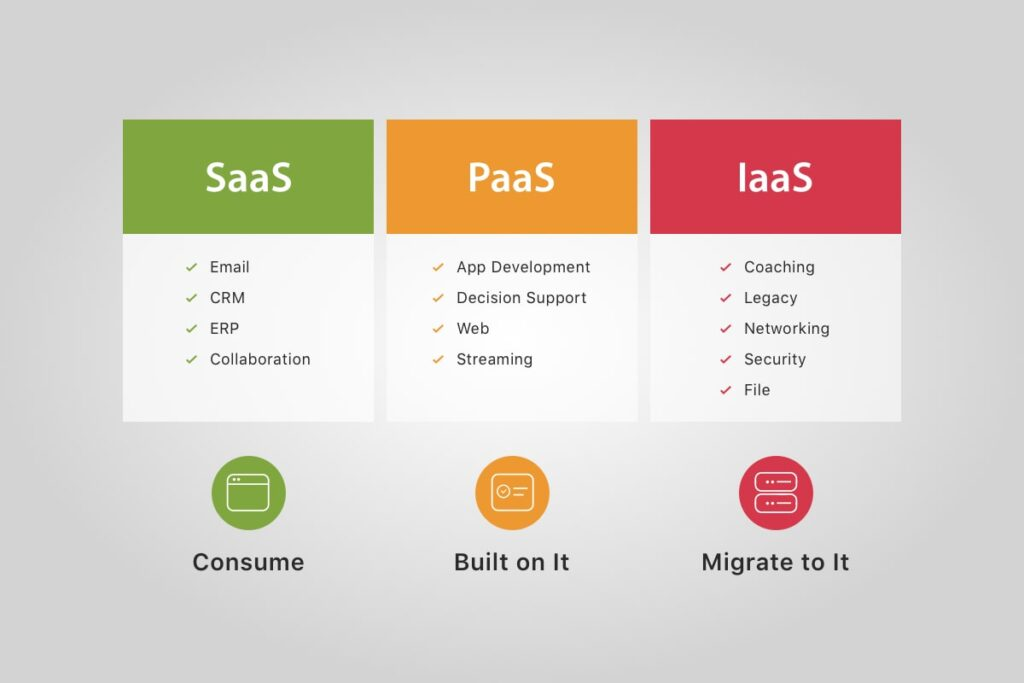
Most discussions about Platform as a Service begin with diagrams.
Boxes connected by arrows.
Layers labeled infrastructure, middleware, runtime, application.
Everything appears neat, logical, and predictable.
Real businesses rarely look like that.
Real businesses are messy.
A retailer launches a promotion and suddenly traffic triples. A healthcare provider needs a secure patient portal before a regulatory deadline. A startup discovers that a product prototype has become a production application almost overnight.
In those moments, executives are not thinking about cloud architecture models.
They are thinking about outcomes.
How do we launch faster?
How do we scale?
How do we avoid spending our best talent on infrastructure maintenance?
That is where PaaS becomes relevant—not as a technical abstraction, but as a practical business tool.
And perhaps the best way to understand PaaS is not through definitions.
It is through examples.
Because when leaders ask, “What are real-world examples of PaaS?” they are usually asking a deeper question:
What does PaaS actually look like when organizations use it to solve real problems?
The answer spans industries, company sizes, and use cases. Yet a common thread connects them all.
The organizations that benefit most from PaaS are often those that decide infrastructure management should support innovation—not compete with it.
Understanding What Counts as a Real-World PaaS Example
Before exploring specific platforms, it helps to establish what qualifies as PaaS.
A Platform as a Service solution provides a managed environment for developing, deploying, and operating applications.
The provider typically manages:
- Servers
- Operating systems
- Runtime environments
- Scaling infrastructure
- Monitoring capabilities
- Deployment services
Developers focus primarily on writing and improving applications.
The platform handles much of the operational complexity.
That distinction separates PaaS from traditional hosting and many Infrastructure as a Service (IaaS) offerings.
The value proposition is straightforward.
Less time managing infrastructure.
More time creating value.
The Most Recognizable PaaS Platforms in the Market
Many organizations use PaaS every day without necessarily describing it that way.
Several platforms have become foundational components of modern application development.
1. Microsoft Azure App Service
One of the most widely adopted enterprise PaaS offerings is Microsoft Azure App Service.
Azure App Service allows organizations to build, host, and scale web applications, APIs, and mobile backends without managing underlying servers.
Real-World Example
Consider a regional healthcare network launching a patient scheduling application.
Rather than provisioning servers, configuring load balancers, and building deployment pipelines from scratch, developers can deploy directly through Azure App Service.
The healthcare provider focuses on patient experience.
The platform handles much of the operational foundation.
Why Organizations Choose It
- Integration with Microsoft ecosystems
- Built-in scaling
- Enterprise security features
- Development productivity tools
For organizations already invested in Microsoft technologies, the platform often fits naturally into existing workflows.
2. Google App Engine
When discussing classic PaaS examples, Google App Engine remains one of the most influential.
Introduced early in the cloud computing era, it helped popularize the idea that developers could deploy applications without managing infrastructure directly.
Real-World Example
A growing educational technology company may use Google App Engine to support online learning platforms serving thousands of students.
As usage fluctuates throughout the academic year, the platform automatically adjusts resources.
Developers focus on learning experiences.
The platform handles scaling.
Key Advantages
- Automatic resource management
- Simplified deployment
- Global infrastructure support
- Strong integration with Google Cloud services
For organizations prioritizing rapid application delivery, these characteristics can be compelling.
3. Heroku
Few platforms have shaped developer perceptions of PaaS more than Heroku.
Heroku became popular because it simplified deployment dramatically.
Developers could move applications from development to production with minimal operational effort.
Real-World Example
A startup building a new SaaS product might choose Heroku during its early growth stages.
Rather than hiring dedicated infrastructure specialists, the team focuses entirely on product development.
This approach allows a small engineering group to accomplish work traditionally requiring larger operational teams.
Why Heroku Became Influential
Heroku demonstrated an important principle:
Developers often care less about infrastructure control than infrastructure invisibility.
The easier deployment becomes, the more energy teams can devote to innovation.
4. Salesforce Platform
Many people know Salesforce primarily as a CRM provider.
Less recognized is its substantial PaaS capability.
The Salesforce Platform enables organizations to build custom business applications on top of Salesforce infrastructure.
Real-World Example
An insurance company might create a claims management application directly within the Salesforce ecosystem.
Because customer information already exists within Salesforce, integration becomes significantly simpler.
Strategic Value
The platform allows organizations to extend existing systems rather than creating entirely separate environments.
This reduces duplication while improving operational consistency.
5. Red Hat OpenShift
OpenShift occupies an interesting position within the PaaS landscape.
It combines platform services with container-based architecture, making it attractive to organizations seeking flexibility without excessive operational complexity.
Real-World Example
A manufacturing company modernizing supply chain systems might use OpenShift to deploy applications across multiple environments.
The platform provides consistency while supporting complex enterprise requirements.
Why Enterprises Choose It
- Hybrid cloud support
- Container orchestration capabilities
- Strong security controls
- Enterprise-grade flexibility
For organizations balancing agility with governance, OpenShift often represents a compelling middle ground.
The Lesson I Learned Watching Two Teams Build the Same Product
Several years ago, I observed two development teams working on remarkably similar customer-facing applications.
The first team managed its own infrastructure.
The second relied heavily on a PaaS environment.
At first, the difference seemed insignificant.
Both teams were talented.
Both had clear objectives.
Both had access to adequate resources.
But over time, something interesting happened.
The infrastructure-heavy team gradually became consumed by operational responsibilities.
Deployment issues.
Server maintenance.
Environment configuration.
Scaling concerns.
Meanwhile, the PaaS-based team spent more time talking about customers.
More time discussing features.
More time experimenting.
The outcome was not determined by talent.
It was determined by focus.
That experience reinforced a lesson I have encountered repeatedly:
Technology platforms matter less because of what they do and more because of what they allow people to stop doing.
Comparing Popular PaaS Platforms
The differences among leading platforms become easier to understand when viewed side by side.
| Platform | Primary Audience | Automatic Scaling | Enterprise Focus | Development Simplicity | Hybrid Cloud Support |
|---|---|---|---|---|---|
| Azure App Service | Enterprises | High | Very High | High | Moderate |
| Google App Engine | Developers & Businesses | High | High | Very High | Moderate |
| Heroku | Startups & Developers | Moderate | Moderate | Very High | Limited |
| Salesforce Platform | Business Application Teams | High | High | High | Limited |
| Red Hat OpenShift | Large Enterprises | High | Very High | Moderate | Very High |
Notice something important.
No platform wins every category.
Each optimizes for different priorities.
That observation highlights a broader truth about PaaS adoption.
The best platform depends less on technical specifications and more on organizational goals.
Industry-Specific Examples of PaaS in Action
PaaS adoption is no longer confined to technology companies.
Organizations across industries use platform services to accelerate development and simplify operations.
Retail
Retailers deploy:
- E-commerce applications
- Loyalty platforms
- Customer portals
- Inventory management systems
PaaS enables rapid feature delivery while supporting seasonal demand fluctuations.
Healthcare
Healthcare organizations build:
- Patient portals
- Telehealth applications
- Appointment scheduling systems
- Clinical workflow tools
The ability to focus on patient experience rather than infrastructure administration creates meaningful operational benefits.
Financial Services
Banks and fintech firms use PaaS for:
- Mobile banking applications
- Customer onboarding systems
- Financial analytics platforms
- Internal productivity tools
Speed and reliability become increasingly important competitive factors.
Education
Educational institutions deploy:
- Learning management systems
- Virtual classroom platforms
- Student information portals
- Administrative applications
PaaS reduces operational complexity while supporting changing enrollment patterns.
What Real-World PaaS Successes Have in Common
Despite serving different industries and objectives, successful PaaS implementations often share several characteristics.
They Prioritize Focus
Organizations adopt PaaS when they recognize that infrastructure management is not their primary source of differentiation.
They Value Speed
The faster teams can launch, test, and improve applications, the more opportunities they have to create value.
They Seek Scalability Without Complexity
Growth frequently introduces operational challenges.
PaaS helps absorb some of that complexity.
They Want Consistency
Standardized deployment, monitoring, and operational practices reduce friction across teams.
These patterns appear repeatedly regardless of industry.
The Misconception About PaaS
One misconception persists despite years of cloud adoption.
Some leaders assume PaaS is primarily a technology decision.
In reality, it is often a strategic decision.
The question is not whether developers can manage infrastructure.
Many absolutely can.
The question is whether they should.
That distinction changes everything.
Because every hour spent maintaining infrastructure is an hour unavailable for product development, customer experience improvements, or innovation.
PaaS shifts that balance.
Conclusion: The Best PaaS Example May Not Be a Platform at All
When people ask for real-world examples of PaaS, they often expect a list of providers.
Azure App Service.
Google App Engine.
Heroku.
Salesforce Platform.
OpenShift.
Those examples matter.
But they are not the most important answer.
The most important example is the organization that deliberately chooses to focus its talent on creating customer value rather than managing operational complexity.
That organization might be a startup launching its first product.
A hospital improving patient access.
A retailer modernizing customer experiences.
Or an enterprise transforming decades-old systems.
The platform itself is not the story.
The story is what happens when teams reclaim time, attention, and energy previously consumed by infrastructure.
Because ultimately, the most powerful real-world example of PaaS is not a technology platform.
It is an organization that becomes better at serving customers because its people are focused on what matters most.
- Arts
- Business
- Computers
- Oyunlar
- Health
- Home
- Kids and Teens
- Money
- News
- Personal Development
- Recreation
- Regional
- Reference
- Science
- Shopping
- Society
- Sports
- Бизнес
- Деньги
- Дом
- Досуг
- Здоровье
- Игры
- Искусство
- Источники информации
- Компьютеры
- Личное развитие
- Наука
- Новости и СМИ
- Общество
- Покупки
- Спорт
- Страны и регионы
- World

 English
 Russian
 French
 Spanish
 Portuguese
 Deutsch
 Dutch
Dutch
 Italiano
 Arabic
 Romaian
 Portuguese (Brazil)
 Greek
Greek