
What are the different types of memory?
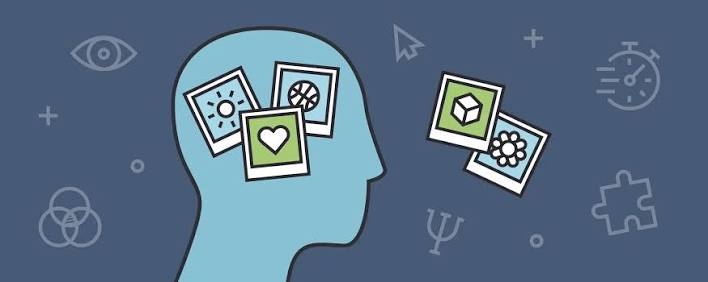
The mind is not a warehouse, and it is certainly not a hard drive. We are prone to thinking of memory as a commodity—a finite resource that leaks out of a cracked vessel as we experience the slow, inevitable erosion of time. We lament the "lost" key, the forgotten name, the evaporated appointment. We treat these lapses as proof of a fading faculty, a slow-motion unraveling of our cognitive hardware.
But I suspect the reality is far more interesting, and perhaps more inconvenient.
Your memory is not a singular, monolithic entity. It is a fragmented, multi-layered, and deeply fragile ecosystem of disparate systems, each evolving to handle different types of information, for different durations, with different degrees of reliability. We are not "remembering"; we are navigating a shifting geography of neural traces.
I remember spending a month with a professional memory competitor in a drafty, basement apartment in London. He didn't have a better brain than mine. He didn't have a higher IQ or a more resilient neural architecture. He had simply mastered the art of paying attention in a world that had become an expert at stealing it. He taught me that forgetting is rarely a symptom of biological decay; it is, more often than not, a failure of categorization. We are failing to build our memories because we treat every piece of information as if it were of equal value, ignoring the distinct mechanisms that the brain employs to store the trivial, the procedural, and the profound.
The Illusion of the Unified Record
We operate under the stubborn, persistent delusion that our memories are unified—that a "memory" of a childhood summer day is the same kind of thing as the "memory" of how to tie a shoelace. They are not. They are functionally, biologically, and structurally distinct.
The brain is an entropy-reduction device. It is constantly bombarded by a sensory onslaught—the hum of the refrigerator, the texture of your shirt against your skin, the shifting light in the room—most of which must be discarded immediately to prevent systemic collapse. Memory, therefore, is an act of extreme censorship. We only store what we actively engage with, and we store it in a way that is suited to its specific, utilitarian purpose.
The Taxonomy of Mental Storage
To understand the architecture of the mind, we must dismantle the false notion of the "single memory." We are instead looking at a complex array of overlapping systems.
| System Type | Cognitive Function | Duration | Structural Characteristic |
| Sensory | Immediate, raw environment encoding. | Milliseconds | High-fidelity, volatile, fleeting. |
| Working (Short-Term) | Active manipulation/problem solving. | Seconds to minutes | Limited capacity, high interference. |
| Procedural (Implicit) | Physical habits and skill execution. | Years to a lifetime | Deeply ingrained, subconscious, automatic. |
| Declarative (Explicit) | Factual knowledge and autobiographical. | Years to a lifetime | Subject to reconstruction and decay. |
The Tyranny of the Immediate
The greatest thief of memory is not time; it is the obsession with the immediate. We walk through our days in a state of high-functioning distraction. We treat our experiences as disposable—background noise to the urgent, insistent ping of our immediate anxieties. Memory, however, is not a passive process. It is an active, demanding labor.
Consolidation—the process by which a fragile, short-term memory is hardened into a permanent trace—requires time and cognitive stillness. It requires the brain to have the bandwidth to integrate the new with the old. When we fill every interstitial moment with stimuli, we are effectively preventing our brains from doing the work of structural maintenance. We are filling the bucket, but we haven't checked to see if the bottom has fallen out.
The Lesson of the Procedural Shift
A few years ago, I decided to test the limits of my own "fading" recall by learning to play a complex piece on a piano I had never touched. I wasn't interested in the theory. I was interested in the procedural—the way the hands, independent of the conscious mind, learn to anticipate the next chord.
The transformation was immediate. My explicit memory for the notes felt weak, but my implicit memory for the motion was stubborn, enduring, and remarkably resilient.
The lesson was humbling: I wasn't just losing my ability to remember facts; I was failing to engage the systems that didn't require me to "think" at all. I had stopped using the procedural pathways because it was easier to be forgetful of the mundane.
The Practice of Radical Categorization
If you want to reverse the feeling of cognitive decline or simply sharpen your mental acuity, you have to stop being a passive consumer of your own life. You have to start being an architect.
-
Introduce Frictional Encoding. When someone tells you their name, don't just nod. Stop. Look at them. Attach the name to a physical feature, a funny image, or a personal connection. Force your brain to do the work of creating a hook.
-
Respect the Incubation. If you have learned something meaningful, you need to provide the brain with the quiet it needs to stabilize the trace. Take a walk without a podcast. Sit in a room without a screen. Let the information settle.
-
Practice Retrieval, Not Review. Most of us "study" by reading over our notes. That is a waste of time. The power is in the effort of pulling the information back out. Close the book. Force yourself to remember. That strain—that uncomfortable sensation of your brain reaching for a connection—is exactly where the memory is built.
-
Embrace the Anomalous. The brain is designed to remember the weird. If you want to remember a fact, turn it into something absurd. The more ridiculous, the more physical, the more grotesque the image, the harder it will be for your brain to delete it.
The Provocative Conclusion: Are You Thinking, or Just Rearranging?
The feeling that your memory is failing is a symptom of a much larger ailment: a loss of curiosity. We have traded the hard, rewarding work of active observation for the frictionless convenience of the instantaneous. We are not losing our minds; we are losing our appetite for the specific, the local, and the strange.
Your memory is not a depleting resource. It is a biological organism that requires engagement to survive. If you treat it like a database, it will behave like a malfunctioning drive. If you treat it like an imagination, it will behave like a palace.
Stop lamenting the loss of the key. Start building the palace. The architecture is still there, waiting for you to walk through the doors and start decorating the walls. The only thing you have lost is the desire to take the time to notice the view. You are not a vessel that is emptying; you are a builder who has stopped laying bricks. Start again.
- Arts
- Business
- Computers
- Games
- Health
- Home
- Kids and Teens
- Money
- News
- Personal Development
- Recreation
- Regional
- Reference
- Science
- Shopping
- Society
- Sports
- Бизнес
- Деньги
- Дом
- Досуг
- Здоровье
- Игры
- Искусство
- Источники информации
- Компьютеры
- Личное развитие
- Наука
- Новости и СМИ
- Общество
- Покупки
- Спорт
- Страны и регионы
- World

 Russian
 French
 Spanish
 Portuguese
 Deutsch
 Turkish
 Dutch
Dutch
 Italiano
 Arabic
 Romaian
 Portuguese (Brazil)
 Greek
Greek
