
How can I memorize things faster?
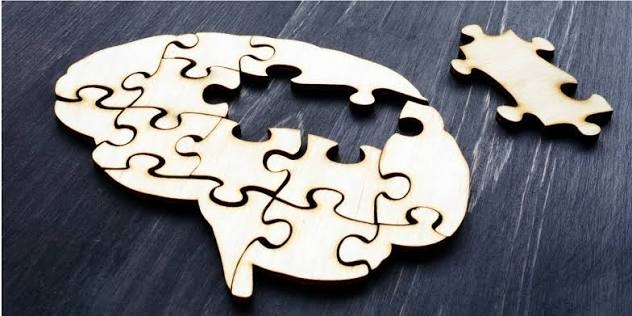
The mind is not a warehouse, and it is certainly not a hard drive. We operate under the stubborn, persistent delusion that our memories are finite—that we have a fixed capacity, a certain number of gigabytes of biological hard drive space that we slowly consume until we hit the inevitable, terrifying limit of a "full" brain. We treat the act of memorizing as a burden, a form of intellectual drudgery we must endure to pass a test or perform a task.
But this is not how the brain is built.
I remember standing in a drafty, cold auditorium in New York, watching a man memorize the sequence of an entire deck of playing cards in less than thirty seconds. He wasn't a savant. He wasn't gifted with a photographic recall that the rest of us lack. He was, by his own admission, a man of average intelligence who had spent his adult life mastering a series of ancient, spatial tricks. He was not a superhuman; he was an architect. He had learned that the secret to remembering faster wasn't to "try harder"—a strategy that is, in neurobiological terms, a recipe for failure—but to change the way he organized his mental real estate.
How can I memorize things faster? The question itself is framed incorrectly. It suggests that memory is a muscle that can be strengthened through repetitive, brutal lifting. It is not. Memory is a system of hooks and hangers. And like any system, it can be reconfigured for maximum velocity.
The Myth of the "Natural" Recall
We have all encountered the person who claims they have a "bad memory." We treat this as a fixed personality trait, as immutable as eye color or height. But what we call a "slow memory" is almost always just a lack of proper encoding strategies.
Most of us try to remember information the same way we were taught to read it: linearly, flatly, and without context. We see a name, and we repeat it to ourselves like a mantra, hoping the sound will somehow etch itself into our gray matter. We look at a list and try to brute-force it into our short-term storage. We are treating our brains like tape recorders, despite the fact that our brains are, by design, the worst possible tape recorders in existence.
The brain does not care about your to-do list. It does not care about your passwords or the names of the people you met at the conference. The brain cares about survival. It cares about the tiger in the grass. It cares about the strange, the vivid, the dangerous, and the intensely emotional. If you want to memorize faster, you have to stop trying to act like a machine and start acting like a human. You have to make the boring information scream for attention.
The Architecture of Retrieval
If memory is not a recording, what is it? It is a set of retrieval paths. When you "forget" something, it is rarely because the information has been deleted; it is because the path to that information has become overgrown and impassable. The professional mnemonists—those people who can recall thousands of digits of Pi—are not storing data in a better box. They are building better highways to the data.
| The Encoding Method | Cognitive Burden | Reliability | Structural Mechanism |
| Rote Rehearsal | High | Low | Pure neural firing; subject to rapid decay. |
| Semantic Elaboration | Medium | Medium | Connecting new facts to existing knowledge webs. |
| Spatial Loci (Method of Loci) | Low | High | Mapping information onto a familiar physical layout. |
| Vivid/Grotesque Imagery | Very Low | Very High | Hijacking the amygdala for emotional salience. |
The Landscape of the Mental Palace
The most effective tool ever invented for human memory is the Method of Loci, or the "Memory Palace." It is a technique that dates back to the rhetoric schools of antiquity, and it remains, even in our era of externalized knowledge, the most powerful way to bypass the limitations of our standard cognition.
The theory is simple: our brains are evolved to navigate space. We are, at our core, hunters who need to know where the water is and where the shelter lies. We are not evolved to remember abstract lists. So, the trick is to turn the abstract into the spatial.
I once tested this by attempting to memorize a list of fifty items in grocery-store order. By placing each item in a vivid, absurd location inside my own childhood home—a giant wheel of Parmesan cheese rolling down the banister, a flock of flamingos taking up residence in the bathtub—I was able to recall the entire list three days later without a single error. The information had become part of the house. I wasn't "remembering" it; I was simply taking a walk through my own memory.
The Power of the Absurd
Why did the flamingos in the bathtub work? Because they were strange. The brain is an anomaly-detection machine. If you want to remember something, you have to make it an anomaly. You have to dress your facts in bright colors. You have to give them weight and texture.
If you want to remember a person's name, don't just repeat the name. Look at their face and find an exaggerated feature—a nose, a chin, a pair of glasses—and associate the name with an absurd, high-definition image involving that feature. You are not "doing work" in the sense of studying; you are engaging in a moment of creative play. And in that play, the memory is formed.
The Discipline of the Long-Term Trace
We live in a world that encourages the immediate, the transient, and the disposable. We read a paragraph, and we forget it as we scroll to the next. We are constantly feeding the system, but we are never allowing the system to stabilize the trace.
Memory consolidation—the process by which a temporary neural firing becomes a permanent structural change—takes time. It requires a state of "quiet." It requires you to occasionally look away from the screen and actually think about what you have just read. It requires you to engage in the uncomfortable, vital practice of active retrieval.
When you finish a book, stop. Close the cover. Spend five minutes in total silence trying to reconstruct the core argument of the book from scratch. It will be painful. You will fail to recall most of it. That struggle—that specific, agonizing sensation of your brain grasping for a connection that isn't quite there—is the feeling of the memory being built. If you skip the struggle, you skip the memory.
The Provocative Conclusion: The Choice to Remember
Can memory speed be improved? Yes. But it cannot be improved by a pill, an app, or a passive "habit." It can only be improved by the decision to be a participant in your own experience.
We are living in an era of unprecedented forgetfulness, not because our brains are failing, but because we have outsourced the labor of attention. We have decided that remembering is something that the device should do for us. We have surrendered our status as the architects of our own mental palaces in favor of a cheap, externalized storage locker.
If you want to memorize faster, you must first reclaim the labor of the mind. You must pay attention. You must build the palaces. You must make the flamingos weird. You must be willing to endure the struggle of retrieval.
You are not the sum of what you have experienced; you are the sum of what you have bothered to keep. And that, in the final analysis, is a choice you make, over and over again, every single moment you decide to look at the world and actually, truly, see it.
- Arts
- Business
- Computers
- Juegos
- Health
- Home
- Kids and Teens
- Money
- News
- Personal Development
- Recreation
- Regional
- Reference
- Science
- Shopping
- Society
- Sports
- Бизнес
- Деньги
- Дом
- Досуг
- Здоровье
- Игры
- Искусство
- Источники информации
- Компьютеры
- Личное развитие
- Наука
- Новости и СМИ
- Общество
- Покупки
- Спорт
- Страны и регионы
- World

 English
 Russian
 French
 Portuguese
 Deutsch
 Turkish
 Dutch
Dutch
 Italiano
 Arabic
 Romaian
 Portuguese (Brazil)
 Greek
Greek
