
PaaS Comparison Chart: How the Right Platform Shapes Developer Focus, Product Velocity, and Business Growth
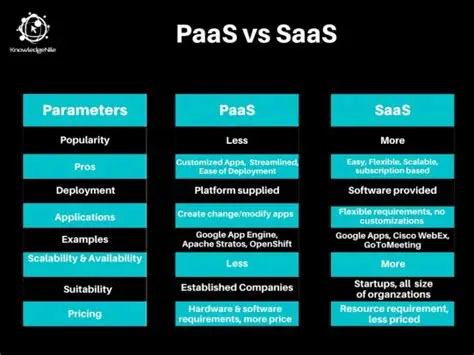
Most organizations think they're comparing infrastructure.
They're not.
They're comparing futures.
That may sound dramatic, but spend enough time inside growing software companies and a pattern emerges. The teams that move fastest are rarely those with the most sophisticated cloud architectures. They're often the teams that have removed enough operational friction to keep developers focused on customers instead of servers.
A Platform as a Service (PaaS) decision sits at the center of that dynamic.
Choose well, and deployments become routine. Scaling feels manageable. Engineers spend more time building features and less time maintaining environments.
Choose poorly, and infrastructure quietly becomes a second product—one nobody intended to build.
What's fascinating is how often companies evaluate PaaS platforms through technical specifications alone. CPU allocations. Memory limits. Deployment methods. Regional availability.
Those details matter.
But they don't tell the whole story.
The more important question is this:
Which platform best supports the way your organization wants to operate?
Because a PaaS isn't merely a hosting solution.
It's a philosophy about how software should be delivered.
Why PaaS Remains Relevant in 2026
Over the past decade, developers have gained access to an expanding universe of infrastructure options.
Virtual machines.
Containers.
Serverless platforms.
Kubernetes clusters.
Edge computing.
Managed databases.
The choices continue multiplying.
Ironically, the abundance of options has increased the appeal of PaaS.
Why?
Because complexity accumulates.
Every additional infrastructure layer introduces decisions. Every decision requires maintenance. Every maintenance task consumes attention.
PaaS platforms reduce that burden.
Rather than managing operating systems, networking configurations, deployment pipelines, and scaling policies, teams focus on application development.
The value proposition remains remarkably consistent:
Less infrastructure management.
More product development.
That promise continues to resonate because software organizations compete on customer value, not server administration.
What Should a PaaS Comparison Actually Measure?
Many comparison articles emphasize technical capabilities.
That's useful.
But it often misses the broader picture.
The strongest PaaS evaluation frameworks examine five dimensions.
Developer Experience
How quickly can a developer deploy an application?
How frequently must they think about infrastructure?
The best platforms reduce cognitive overhead.
Scalability
Can the platform accommodate growth without forcing architectural changes?
Some platforms shine during the early stages but struggle as applications mature.
Others scale effortlessly.
Ecosystem Integration
Modern applications depend on:
- Databases
- Authentication services
- Monitoring tools
- Message queues
- Background workers
Strong integrations simplify operations.
Cost Predictability
Infrastructure costs should be understandable.
Unexpected bills create organizational friction.
Operational Complexity
Every platform requires tradeoffs.
The question isn't whether complexity exists.
It's where complexity lives.
Comprehensive PaaS Comparison Chart
| Platform | Best For | Ease of Use | Scalability | Pricing Predictability | Enterprise Readiness | Key Strength |
|---|---|---|---|---|---|---|
| Heroku | Startups and small teams | Excellent | Good | Moderate | Moderate | Simplicity |
| Render | Modern SaaS companies | Excellent | Good | High | Good | Balanced platform |
| Railway | MVPs and rapid prototyping | Excellent | Moderate | High | Moderate | Fast deployment |
| Fly.io | Global applications | Good | Excellent | Moderate | Good | Edge infrastructure |
| AWS Elastic Beanstalk | AWS-focused organizations | Moderate | Excellent | Moderate | Excellent | AWS integration |
| Google App Engine | Google Cloud users | Good | Excellent | Moderate | Excellent | Managed scaling |
| Azure App Service | Enterprise environments | Good | Excellent | Moderate | Excellent | Microsoft ecosystem |
| DigitalOcean App Platform | Cost-conscious teams | Excellent | Good | High | Moderate | Simplicity and affordability |
| OpenShift | Large enterprises | Moderate | Excellent | Moderate | Excellent | Kubernetes flexibility |
| Northflank | Container-first development | Good | Excellent | Moderate | Good | Cloud-native workflows |
Heroku: The Platform That Changed Expectations
It's difficult to discuss PaaS without discussing Heroku.
The platform fundamentally altered what developers expected from deployment.
Before Heroku, deployment often felt like a separate operational discipline.
After Heroku, it began feeling like part of development itself.
Where Heroku Excels
Heroku remains exceptional at:
- Rapid onboarding
- Straightforward deployments
- Managed infrastructure
- Extensive add-on support
Developers often become productive almost immediately.
Where Challenges Emerge
Cost.
As workloads increase, Heroku can become expensive relative to alternatives.
The tradeoff is simple:
Pay more money.
Spend less attention on infrastructure.
For many organizations, that's a reasonable exchange.
Render: The Modern Default for Many Teams
Render has emerged as one of the strongest all-around PaaS offerings available today.
The platform feels modern in ways that are difficult to quantify yet immediately noticeable.
Many developers describe Render as delivering much of Heroku's simplicity while providing greater flexibility.
Why Render Continues to Grow
Render combines:
- Automated deployments
- Managed databases
- Background workers
- Private networking
- Infrastructure-as-code support
Without introducing significant complexity.
That balance appeals to growing SaaS companies.
Railway: Built Around Momentum
Some infrastructure providers optimize for scale.
Railway optimizes for action.
The experience is remarkably streamlined.
Developers connect repositories, provision databases, and deploy applications with minimal effort.
Ideal Use Cases
Railway excels for:
- MVPs
- Startup products
- Internal tools
- Experimental applications
The platform prioritizes reducing friction.
And friction often determines whether projects move forward.
Fly.io: Infrastructure That Thinks Globally
Most hosting providers focus on computing resources.
Fly.io focuses on geography.
Applications can run closer to users through globally distributed infrastructure.
This distinction matters.
Particularly for latency-sensitive applications.
Best Applications for Fly.io
Fly.io performs especially well for:
- Real-time systems
- Collaborative software
- Global SaaS products
- Interactive applications
The platform introduces some complexity.
The performance gains can be substantial.
AWS Elastic Beanstalk: Ecosystem Depth Matters
Elastic Beanstalk occupies an interesting position within the AWS portfolio.
It abstracts infrastructure while maintaining access to the broader AWS ecosystem.
Advantages
Organizations gain seamless access to:
- Amazon RDS
- S3
- CloudWatch
- IAM
- Auto Scaling
For AWS-centric companies, these integrations simplify governance and operations.
The Tradeoff
Compared to Render or Heroku, the platform requires more operational awareness.
Flexibility comes with responsibility.
Google App Engine: Automation at Scale
Google App Engine helped establish many of the concepts that define modern PaaS.
Its philosophy remains clear.
Developers focus on applications.
Google manages infrastructure.
Why Organizations Choose It
Benefits include:
- Automatic scaling
- Global infrastructure
- Managed deployments
- Strong reliability
For organizations already invested in Google Cloud, App Engine often feels like a natural extension.
Azure App Service: Enterprise-Friendly Without Excess Friction
Microsoft has steadily improved its application hosting capabilities.
Azure App Service now serves as a compelling platform for organizations requiring governance, compliance, and scalability.
Strongest Fit
Azure works particularly well for:
- Enterprise applications
- Hybrid cloud deployments
- Microsoft-centric environments
- Compliance-sensitive industries
The platform balances operational control with developer productivity.
DigitalOcean App Platform: Simplicity as Strategy
Some providers compete through feature expansion.
DigitalOcean frequently competes through clarity.
Its App Platform embraces straightforward workflows and predictable pricing.
Why Developers Appreciate It
The platform offers:
- Easy deployments
- Transparent costs
- Managed infrastructure
- Accessible documentation
Many organizations discover they don't require advanced enterprise functionality.
DigitalOcean serves that audience effectively.
OpenShift: Control Without Starting From Scratch
OpenShift occupies a different category than traditional PaaS offerings.
Built on Kubernetes, it provides substantial flexibility while abstracting portions of the operational burden.
Best For
OpenShift excels when organizations need:
- Hybrid cloud deployments
- Multi-cloud portability
- Advanced security controls
- Container orchestration
Large enterprises often find these capabilities particularly valuable.
Northflank: A Platform Built for Modern Architectures
Northflank reflects the growing influence of cloud-native development.
The platform supports containers, microservices, APIs, and databases within a unified environment.
Why It's Gaining Attention
Developers benefit from:
- Container-first workflows
- CI/CD automation
- Managed services
- Strong scalability
For teams building modern distributed systems, Northflank offers considerable flexibility.
A Lesson Learned About Infrastructure Decisions
Several years ago, I worked with a company preparing for a significant product expansion.
The leadership team spent weeks comparing hosting costs across multiple providers.
The discussion centered almost entirely on infrastructure economics.
What nobody evaluated was developer attention.
The company ultimately selected the platform with the lowest projected operating costs.
Within six months, engineers were spending increasing amounts of time troubleshooting deployments, maintaining infrastructure tooling, and managing operational processes.
Infrastructure expenses remained low.
Product velocity did not.
The organization had optimized for visible costs while ignoring invisible costs.
Eventually, leadership migrated to a more managed platform.
Monthly spending increased.
Release frequency improved.
Customer satisfaction improved.
Revenue growth accelerated.
The lesson was difficult to forget.
Infrastructure is rarely just a technology decision.
It's a resource allocation decision.
And attention is often the most valuable resource an organization possesses.
Which PaaS Platform Is Best?
There is no universal answer.
The strongest platform depends on organizational priorities.
If simplicity matters most, Heroku, Render, and DigitalOcean App Platform deserve serious consideration.
If rapid experimentation is critical, Railway stands out.
If global performance creates competitive advantage, Fly.io offers unique benefits.
Organizations already invested in AWS, Google Cloud, or Azure often benefit from remaining within those ecosystems.
And enterprises requiring extensive customization frequently gravitate toward OpenShift.
The best platform is the one that aligns with how your organization creates value.
The Most Revealing PaaS Metric Doesn't Appear on Feature Lists
Most comparison charts focus on capabilities.
CPU resources.
Memory limits.
Deployment methods.
Networking features.
Those metrics are useful.
But they rarely capture the most important outcome.
A better question is this:
How much organizational attention does this platform consume?
Because every deployment issue competes with product development.
Every operational burden delays customer value.
Every infrastructure distraction slows learning.
The most effective PaaS platform is not necessarily the most powerful.
It's the one that quietly fades into the background.
When developers stop thinking about infrastructure, they start thinking about customers.
And that's where meaningful growth usually begins.
- Arts
- Business
- Computers
- Games
- Health
- Home
- Kids and Teens
- Money
- News
- Personal Development
- Recreation
- Regional
- Reference
- Science
- Shopping
- Society
- Sports
- Бизнес
- Деньги
- Дом
- Досуг
- Здоровье
- Игры
- Искусство
- Источники информации
- Компьютеры
- Личное развитие
- Наука
- Новости и СМИ
- Общество
- Покупки
- Спорт
- Страны и регионы
- World

 Russian
 French
 Spanish
 Portuguese
 Deutsch
 Turkish
 Dutch
Dutch
 Italiano
 Arabic
 Romaian
 Portuguese (Brazil)
 Greek
Greek