
PaaS Security Best Practices: The Discipline of Trust in a Managed Cloud World
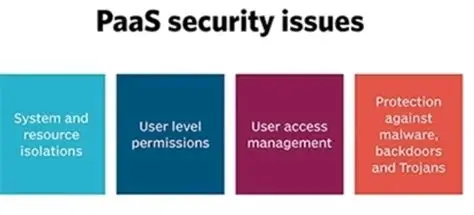
Security conversations often begin with a comforting illusion.
A company migrates an application to a Platform as a Service (PaaS) environment. Servers disappear from view. Patch management becomes automated. Infrastructure maintenance shifts to the provider. Dashboards display reassuring compliance badges. The architecture looks cleaner. Operations become lighter.
Then someone asks a deceptively simple question:
“Who is responsible if something goes wrong?”
The room usually gets quieter.
That silence reveals one of the most misunderstood realities of modern cloud computing. PaaS does not eliminate security responsibilities. It redistributes them. The provider assumes certain burdens, but not all of them. Security becomes less visible, yet in many respects more nuanced.
This is where organizations often stumble. They mistake abstraction for protection.
A PaaS platform can manage servers, operating systems, middleware, and runtime environments. It cannot prevent a developer from exposing sensitive data through an API. It cannot automatically correct excessive permissions. It cannot compensate for poor governance decisions.
Security in a PaaS environment is not about controlling every layer. It is about controlling the layers that remain under your influence—and understanding those boundaries with precision.
That distinction separates mature cloud security programs from expensive cautionary tales.
Why PaaS Security Requires a Different Mindset
Traditional security models evolved around ownership.
Organizations owned servers.
They owned networks.
They owned operating systems.
Consequently, security teams developed habits centered on infrastructure control.
PaaS changes that equation.
The organization still owns the application, the data, user access policies, and business logic. The provider assumes responsibility for much of the underlying infrastructure. The result is a shared responsibility model that feels intuitive in theory and surprisingly complex in practice.
The challenge is not a lack of control.
The challenge is knowing where control begins and ends.
Many breaches occur not because security teams ignored risks but because they misunderstood ownership.
Security failures often emerge in the gaps between assumptions.
The Shared Responsibility Model: The Foundation of Everything
Every discussion about PaaS security should begin here.
The shared responsibility model defines which security functions belong to the cloud provider and which remain with the customer.
A simplified view looks like this:
| Security Area | Cloud Provider Responsibility | Customer Responsibility |
|---|---|---|
| Physical Data Centers | Yes | No |
| Hardware Security | Yes | No |
| Network Infrastructure | Yes | No |
| Operating System Maintenance | Usually Yes | Limited |
| Runtime Environment | Mostly Yes | Limited |
| Application Security | No | Yes |
| User Access Controls | No | Yes |
| Data Classification | No | Yes |
| Compliance Management | Shared | Shared |
| Encryption Configuration | Shared | Shared |
The table appears straightforward.
Reality rarely is.
The organizations with the strongest security postures continually revisit these boundaries because cloud platforms evolve rapidly. New services create new responsibilities. New integrations create new attack surfaces.
Security becomes a moving target.
Identity Management: The Most Important Security Layer
Ask security professionals where breaches begin, and many will point toward identity.
Not malware.
Not infrastructure vulnerabilities.
Identity.
Modern attackers increasingly seek credentials because credentials unlock everything else.
For that reason, identity and access management should occupy the center of every PaaS security strategy.
Apply Least Privilege Relentlessly
Users should receive only the permissions required to perform their jobs.
This principle sounds obvious.
It rarely is.
Organizations accumulate permissions the way garages accumulate unused tools. Access rights are granted quickly and revoked slowly.
Over time, privilege sprawl emerges.
Every excessive permission creates another potential pathway for compromise.
Enforce Multi-Factor Authentication
Passwords alone are insufficient.
Modern PaaS environments should require multi-factor authentication for administrators, developers, and privileged users.
The objective is not perfection.
The objective is friction for attackers.
Even modest friction dramatically alters risk profiles.
Use Role-Based Access Control
Role-based access control introduces structure.
Instead of managing permissions individually, organizations assign users to predefined roles aligned with business functions.
The result is consistency, scalability, and reduced administrative error.
Security often succeeds because processes become repeatable.
Secure Your APIs Like Critical Infrastructure
PaaS environments thrive on connectivity.
Applications communicate constantly.
Services exchange data.
Integrations multiply.
APIs become the connective tissue holding everything together.
Unfortunately, they also become attractive targets.
Authenticate Every Request
Trust should never be implicit.
Every API request should undergo authentication and authorization validation.
Limit Exposure
Not every endpoint needs public accessibility.
Restrict access whenever possible through gateways, private networking, or application-level controls.
Monitor Usage Patterns
Abnormal API behavior often serves as an early warning signal.
Sudden spikes, unusual request locations, or unexpected data access patterns deserve investigation.
The most damaging incidents are rarely instantaneous. They frequently begin as subtle anomalies.
Encryption: Necessary but Frequently Misunderstood
Encryption enjoys near-universal support.
Few organizations argue against it.
The disagreements emerge around implementation.
Encrypt Data at Rest
Sensitive information stored in databases, backups, and storage services should remain encrypted.
Most leading PaaS providers offer built-in encryption capabilities.
Enable them.
Then verify them.
Assumptions are not controls.
Encrypt Data in Transit
Communication between applications, services, and users should utilize secure transport protocols.
TLS remains foundational.
Yet many organizations still discover internal traffic traveling through unencrypted channels during security assessments.
Manage Encryption Keys Carefully
Encryption strength depends heavily on key management.
Weak key governance undermines otherwise robust security architectures.
A sophisticated encryption strategy paired with careless key handling resembles a bank vault with an unlocked door.
Secrets Management: The Problem Hidden Inside Source Code
Several years ago, I participated in a security review involving a rapidly growing cloud application. The architecture appeared strong. Access controls were well designed. Encryption standards met regulatory requirements.
Then someone scanned the code repository.
Embedded credentials appeared in configuration files.
Database passwords.
API tokens.
Service account secrets.
The infrastructure itself was not the vulnerability.
The development process was.
That experience reinforced a lesson that continues to resonate: security failures often originate in convenience.
Developers facing deadlines sometimes choose the fastest solution.
Attackers appreciate that tendency.
Best Practices for Secrets Management
- Store credentials in dedicated secrets management services.
- Rotate secrets regularly.
- Audit access to sensitive credentials.
- Avoid hardcoded secrets entirely.
- Automate secret lifecycle management where possible.
Security becomes substantially stronger when sensitive information remains detached from application code.
Continuous Monitoring Is No Longer Optional
A common misconception portrays security as a preventative discipline.
Prevent attacks.
Prevent unauthorized access.
Prevent vulnerabilities.
Prevention matters.
Detection matters just as much.
Modern PaaS environments generate immense volumes of operational data.
That data becomes valuable only when organizations analyze it effectively.
Log Everything Relevant
Collect logs from:
- Applications
- Authentication services
- Databases
- Network controls
- Administrative actions
Visibility creates accountability.
Centralize Security Monitoring
Fragmented monitoring systems create blind spots.
Centralized visibility enables correlation across services and environments.
Build Actionable Alerts
Excessive alerts produce fatigue.
Insufficient alerts produce ignorance.
Effective monitoring balances urgency with relevance.
The objective is awareness, not noise.
Vulnerability Management in a PaaS Environment
One reason organizations embrace PaaS is reduced infrastructure maintenance.
That advantage can create complacency.
Providers may patch operating systems and platform components, but application vulnerabilities remain your responsibility.
Scan Applications Frequently
Regular vulnerability assessments should evaluate:
- Application dependencies
- Open-source libraries
- Containers
- Runtime configurations
Update Dependencies Aggressively
Many security incidents exploit vulnerabilities that already have available fixes.
Patch delays often become the real vulnerability.
Integrate Security into CI/CD Pipelines
Security checks should occur during development rather than after deployment.
This approach, commonly called shift-left security, identifies issues earlier when remediation costs less.
The most effective security programs integrate directly into software delivery workflows.
Data Governance: Security's Strategic Partner
Security and governance frequently occupy separate conversations.
That separation creates risk.
Organizations cannot adequately protect data they do not understand.
Classify Data
Different information requires different protections.
Examples include:
- Public data
- Internal data
- Confidential information
- Regulated records
Classification creates context.
Context enables appropriate controls.
Minimize Data Retention
Organizations often store information longer than necessary.
Every retained record increases exposure.
Delete what no longer serves a business purpose.
Establish Ownership
Every critical dataset should have a clearly defined owner.
Responsibility without ownership rarely produces meaningful accountability.
Security Automation: The Multiplier Effect
Cloud environments evolve rapidly.
Manual processes struggle to keep pace.
Automation fills that gap.
Common security automation practices include:
| Security Function | Manual Approach | Automated Approach |
|---|---|---|
| Access Reviews | Quarterly audits | Continuous validation |
| Compliance Checks | Periodic assessments | Real-time monitoring |
| Secret Rotation | Human intervention | Scheduled automation |
| Vulnerability Scanning | Occasional scans | Continuous scanning |
| Configuration Validation | Spot checks | Policy enforcement |
| Incident Detection | Manual review | Automated analytics |
Automation does not eliminate human oversight.
It amplifies it.
Security teams become more effective when technology handles repetitive tasks.
Building a Security Culture Around PaaS
Technology alone rarely determines security outcomes.
Culture often proves more influential.
Organizations with strong security cultures share common traits:
Developers Participate
Security is not isolated within a specialized department.
Developers understand their role.
Leadership Prioritizes Risk Awareness
Security discussions occur before incidents, not merely after them.
Training Remains Continuous
Threats evolve.
Education must evolve alongside them.
Accountability Is Clear
Responsibilities are documented, understood, and measurable.
The strongest security control may not be a technology at all.
It may be organizational clarity.
Conclusion: Security Is Not What the Platform Does for You
The most dangerous misconception surrounding PaaS security is the belief that responsibility diminishes as management responsibilities shift to the provider.
The opposite is often true.
As infrastructure complexity recedes into the background, strategic security decisions become more important.
Identity management becomes more important.
Data governance becomes more important.
Application security becomes more important.
Monitoring becomes more important.
The provider secures the platform.
You secure what happens on it.
That distinction sounds simple. Yet it reshapes how organizations think about risk, ownership, and trust.
Perhaps the most provocative truth about PaaS security is this: the greatest vulnerabilities rarely emerge from the components you cannot see. They emerge from the decisions you make every day—the permissions granted too broadly, the secrets stored too casually, the alerts ignored too frequently, the assumptions left unchallenged.
Security is not the absence of risk.
It is the discipline of understanding exactly where risk lives and refusing to look away.
- Arts
- Business
- Computers
- Juegos
- Health
- Home
- Kids and Teens
- Money
- News
- Personal Development
- Recreation
- Regional
- Reference
- Science
- Shopping
- Society
- Sports
- Бизнес
- Деньги
- Дом
- Досуг
- Здоровье
- Игры
- Искусство
- Источники информации
- Компьютеры
- Личное развитие
- Наука
- Новости и СМИ
- Общество
- Покупки
- Спорт
- Страны и регионы
- World

 English
 Russian
 French
 Portuguese
 Deutsch
 Turkish
 Dutch
Dutch
 Italiano
 Arabic
 Romaian
 Portuguese (Brazil)
 Greek
Greek
