
How Does Retail Work? The Invisible System Behind Every Purchase
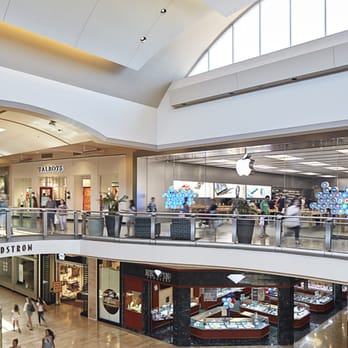
A customer walks into a store intending to buy toothpaste.
Ten minutes later, the shopping basket contains toothpaste, a bottle of mouthwash, a discounted package of batteries, and a snack that was never part of the original plan.
The customer checks out, pays, and leaves.
Transaction complete.
Or so it appears.
What the customer rarely sees is the intricate machinery that made that seemingly ordinary purchase possible. The toothpaste was manufactured months earlier, transported through distribution networks, allocated based on forecasting models, stocked according to merchandising plans, priced through strategic calculations, and placed deliberately within the store environment. Even the promotional sign attached to the shelf likely emerged from a data-driven decision designed to influence behavior.
Retail often looks simple because it has become remarkably good at hiding its complexity.
That complexity is worth examining.
Because understanding how retail works means understanding one of the most sophisticated systems in modern commerce—a system that combines logistics, psychology, economics, technology, and human behavior into a single customer experience.
The shelf may be visible.
The system behind it usually is not.
Retail at Its Core: Connecting Products and Consumers
At the most basic level, retail works by purchasing or sourcing products and then selling those products directly to consumers for personal use.
The retailer serves as the bridge between production and consumption.
A simplified version looks like this:
Manufacturer → Distributor → Retailer → Customer
Yet even this familiar sequence understates what retailers actually do.
Retailers do not merely move products from one place to another.
They create assortments.
They forecast demand.
They manage inventory.
They influence perceptions.
They shape purchasing decisions.
Most importantly, they reduce friction.
Consumers do not want to coordinate with dozens of manufacturers every time they need household essentials, clothing, electronics, or groceries. Retailers simplify access by bringing products together in one location—physical, digital, or increasingly both.
That convenience is not incidental.
It is the foundation of retail's value proposition.
The Retail Supply Chain: Where the Process Begins
Retail starts long before a customer encounters a product.
The journey typically begins with manufacturers.
Manufacturing
Manufacturers create products ranging from apparel and electronics to food and household goods.
These products enter broader supply chains before reaching consumers.
Distribution
Many products move through distributors or wholesalers.
Distributors perform important functions:
- Storage
- Transportation
- Inventory consolidation
- Regional allocation
This stage creates efficiency by connecting large numbers of manufacturers and retailers.
Retail Procurement
Retailers purchase inventory based on anticipated demand.
This decision sounds straightforward.
It rarely is.
Buy too much inventory and profitability suffers.
Buy too little and customers encounter empty shelves.
Retail success often depends on balancing these competing risks.
Forecasting, therefore, becomes one of the industry's most important disciplines.
Inventory Management: The Art of Prediction
If retail has a hidden superpower, it is prediction.
Retailers constantly attempt to answer questions about the future.
How many winter jackets will customers buy?
Which smartphone model will outperform expectations?
How much cereal should a particular store stock next month?
No retailer possesses perfect foresight.
Yet the best retailers consistently improve their odds through sophisticated forecasting systems.
Inventory management involves balancing three competing priorities:
- Product availability
- Cost control
- Operational efficiency
Too much inventory ties up capital.
Too little inventory disappoints customers.
Neither outcome is desirable.
Retail often resembles a continuous exercise in probabilistic decision-making.
Merchandising: Why Products Appear Where They Do
Consumers frequently assume product placement is random.
It rarely is.
Merchandising is the discipline of presenting products in ways that maximize visibility, convenience, and sales.
Consider a grocery store.
High-demand staples often occupy locations that encourage customers to travel through multiple aisles.
Seasonal products appear prominently.
Impulse purchases cluster near checkout areas.
Premium products receive favorable positioning.
These decisions reflect careful planning.
Merchandising influences how consumers interact with products and, ultimately, how they make decisions.
The shelf itself becomes a strategic tool.
Retail Is Really a Business of Influence
Barbara Kahn has long emphasized that consumer behavior rarely follows purely rational patterns.
Retail provides daily evidence.
Consumers often believe they make independent purchasing decisions.
Retailers understand that context shapes those decisions significantly.
Pricing influences perception.
Packaging influences attention.
Placement influences discovery.
Promotions influence urgency.
This does not mean consumers lack agency.
It means decisions occur within carefully designed environments.
Retailers create those environments intentionally.
The objective is not simply to offer products.
The objective is to make products appealing, accessible, and relevant.
Pricing: The Delicate Science of Value
One of the most misunderstood aspects of retail involves pricing.
Consumers often view pricing as a reflection of cost.
In reality, pricing reflects multiple considerations simultaneously.
Retailers evaluate:
- Product costs
- Competitive positioning
- Customer demand
- Brand perception
- Market conditions
- Profit objectives
A product priced too high may discourage purchases.
A product priced too low may undermine perceived value.
Finding the appropriate balance requires constant adjustment.
Pricing is not merely arithmetic.
It is strategy.
Comparing Key Retail Functions
| Retail Function | Primary Goal | Key Challenge | Impact on Customer Experience |
|---|---|---|---|
| Procurement | Secure inventory | Demand uncertainty | Product availability |
| Inventory Management | Balance supply and demand | Forecasting accuracy | Reduced stockouts |
| Merchandising | Increase visibility | Space constraints | Easier product discovery |
| Pricing | Maximize value and profit | Competitive pressure | Perceived affordability |
| Marketing | Generate demand | Customer attention | Brand awareness |
| Fulfillment | Deliver products efficiently | Logistics complexity | Convenience |
| Customer Service | Build trust | Consistency | Satisfaction and loyalty |
| Analytics | Improve decisions | Data interpretation | Better personalization |
The table highlights an important reality.
Retail functions are interconnected.
A failure in one area often creates consequences elsewhere.
Retail performance is rarely determined by a single factor.
How Technology Powers Modern Retail
Technology now influences nearly every aspect of retail operations.
Some applications are visible to customers.
Others remain entirely behind the scenes.
Customer-Facing Technologies
Examples include:
- Mobile apps
- Digital wallets
- Self-checkout systems
- Personalized recommendations
- Loyalty platforms
These technologies improve convenience and engagement.
Operational Technologies
Equally important are systems supporting internal operations:
- Demand forecasting software
- Inventory tracking systems
- Supply chain analytics
- Dynamic pricing tools
- Customer data platforms
These tools help retailers make faster, more informed decisions.
Technology has not replaced retail fundamentals.
It has amplified them.
The Rise of Omnichannel Retail
For decades, retailers organized operations around distinct channels.
Stores operated separately from websites.
Websites operated separately from mobile platforms.
Customers saw things differently.
To consumers, shopping is a continuous experience.
A customer might:
- Discover a product on social media.
- Research reviews online.
- Visit a store.
- Purchase through an app.
- Arrange home delivery.
From the customer's perspective, these activities represent a single journey.
Retailers increasingly design systems to support that expectation.
This approach is known as omnichannel retail.
Its goal is continuity rather than separation.
Consumers value flexibility.
Retailers respond by removing barriers between channels.
A Lesson Learned About How Retail Really Works
Several years ago, I worked on a project examining customer behavior within specialty retail environments.
Initially, our team focused heavily on product assortment.
We assumed that better products would naturally drive stronger results.
The data suggested otherwise.
Stores with nearly identical merchandise produced dramatically different outcomes.
The difference was not the inventory.
It was execution.
Some locations excelled at employee training, product presentation, and customer engagement. Others struggled despite carrying the same products.
That experience reshaped my understanding of retail.
Products matter.
But retail success often depends on how effectively those products are introduced, explained, displayed, and supported.
Retail is not merely a supply chain activity.
It is a communication system.
Customer Service: The Human Side of Retail
Technology receives substantial attention.
Yet human interaction remains a defining feature of many retail experiences.
Customer service influences:
- Trust
- Loyalty
- Repeat purchases
- Brand perception
Exceptional service often transforms routine transactions into memorable experiences.
Poor service can undermine even the strongest product offerings.
Retailers increasingly recognize that customer relationships represent valuable assets.
Products can be copied.
Relationships are harder to replicate.
Why Data Has Become Central to Retail Operations
Retailers generate enormous amounts of information.
Every transaction creates signals.
Those signals reveal:
- Purchase preferences
- Shopping frequency
- Price sensitivity
- Seasonal trends
- Product affinities
Data helps retailers understand not only what customers buy but also how they shop.
These insights influence:
- Product selection
- Marketing strategies
- Inventory decisions
- Pricing models
The retailers that interpret data effectively gain a significant advantage.
Information becomes a competitive resource.
The Economics Behind Retail
Retailers generate revenue by selling products at prices that exceed acquisition and operating costs.
The difference contributes to profitability.
However, margins vary widely.
Luxury retailers often operate with higher margins.
Grocery retailers frequently operate with much narrower margins.
As a result, operational efficiency becomes critically important.
Retailers continuously seek ways to:
- Reduce waste
- Improve forecasting
- Optimize inventory
- Increase productivity
- Enhance customer retention
Retail profitability often depends on executing thousands of small decisions exceptionally well.
Conclusion: Retail Works by Making Complexity Feel Simple
So, how does retail work?
The technical answer involves supply chains, inventory systems, merchandising strategies, pricing models, fulfillment networks, customer service operations, and sophisticated analytics.
The more interesting answer is simpler.
Retail works by transforming complexity into convenience.
Consumers encounter a curated selection of products rather than a sprawling global manufacturing network.
They experience availability rather than logistics.
They experience choice rather than forecasting.
They experience convenience rather than operational complexity.
The best retailers perform this transformation so effectively that customers barely notice the machinery behind it.
And perhaps that is the ultimate measure of retail success.
Not how visible the system becomes.
But how invisible.
Because when retail works exceptionally well, customers focus on what they need, what they want, and what they value—not on the thousands of decisions required to place the right product in the right place at the right time.
The shelves may look ordinary.
The system behind them is anything but.
- Arts
- Business
- Computers
- Jeux
- Health
- Domicile
- Kids and Teens
- Argent
- News
- Personal Development
- Recreation
- Regional
- Reference
- Science
- Shopping
- Society
- Sports
- Бизнес
- Деньги
- Дом
- Досуг
- Здоровье
- Игры
- Искусство
- Источники информации
- Компьютеры
- Личное развитие
- Наука
- Новости и СМИ
- Общество
- Покупки
- Спорт
- Страны и регионы
- World

 English
 Russian
 Spanish
 Portuguese
 Deutsch
 Turkish
 Dutch
Dutch
 Italiano
 Arabic
 Romaian
 Portuguese (Brazil)
 Greek
Greek
