
What Are the Different Types of Retail? A Deep Dive Into the Many Ways Consumers Buy
Stand in the middle of a shopping mall, scroll through an e-commerce marketplace, stop at a warehouse club on the way home, and then pick up a prescription at a neighborhood pharmacy.
At first glance, these activities appear unrelated.
Different products. Different environments. Different customer expectations.
Yet they all belong to the same industry.
Retail.
What makes retail fascinating is not merely its scale but its diversity. Consumers often speak about retail as though it were a single business model. In reality, retail is a collection of distinct formats, each designed to solve a different consumer problem.
Some retailers compete on convenience.
Others compete on expertise.
Some win through price.
Others through experience.
Some seek to be everywhere.
Others deliberately focus on a narrow niche.
This variety exists because consumers themselves are varied. The parent buying diapers at a discount retailer has different priorities than the shopper browsing luxury handbags. The customer ordering groceries online values something different from the enthusiast visiting a specialty electronics store.
Understanding the different types of retail is therefore about more than categorizing businesses. It is about understanding the different ways consumers define value.
And that is where the story becomes considerably more interesting.
Why Retail Comes in So Many Forms
Retailers all perform the same fundamental function: selling goods or services directly to consumers.
Yet the methods vary dramatically.
Why?
Because consumer needs vary dramatically.
A shopper looking for the lowest possible price behaves differently from a shopper seeking personalized advice.
A customer purchasing everyday essentials approaches the decision differently from someone buying an engagement ring.
Retail formats emerge as responses to these differences.
Each format represents a strategic answer to a fundamental question:
What does this customer value most?
The answer shapes everything from store design to pricing strategy.
Department Stores: The Original One-Stop Shop
For decades, department stores represented the epitome of retail convenience.
Their value proposition was straightforward.
Bring multiple categories together under one roof.
Customers could shop for:
- Apparel
- Home furnishings
- Beauty products
- Accessories
- Gifts
All during a single visit.
Department stores historically thrived because they simplified shopping.
Today, however, they face pressure from both specialty retailers and online competitors. Consumers increasingly seek either deeper expertise or greater convenience.
Even so, department stores remain important examples of broad-assortment retailing.
Their strength lies in variety.
Specialty Retailers: The Power of Focus
If department stores emphasize breadth, specialty retailers emphasize depth.
These retailers concentrate on specific categories such as:
- Sporting goods
- Electronics
- Beauty products
- Pet supplies
- Home improvement
Their competitive advantage comes from expertise.
Consumers often visit specialty retailers because they want guidance, selection, and category-specific knowledge.
A runner shopping for performance footwear expects a different experience than someone casually browsing a general merchandise retailer.
Specialty retailers understand this distinction.
They build businesses around it.
Discount Retailers: The Economics of Efficiency
Few retail formats have reshaped consumer expectations as dramatically as discount retail.
The promise is simple:
Offer acceptable quality at lower prices.
Achieving that promise is far from simple.
Discount retailers depend on operational excellence, scale efficiencies, streamlined assortments, and disciplined cost management.
Consumers flock to these retailers because price remains one of the most powerful decision drivers in commerce.
Not the only driver.
But an enduring one.
The success of discount retail demonstrates an important truth about consumer behavior: value often matters more than prestige.
Warehouse Clubs: Retail Through Membership
Warehouse clubs occupy an unusual position within retail.
Their model combines bulk purchasing, limited assortments, and membership fees.
Customers pay for access.
In return, they receive opportunities to purchase products at attractive prices.
The format works because it aligns incentives.
Consumers save money through volume purchases.
Retailers generate predictable membership revenue.
The relationship becomes mutually reinforcing.
Interestingly, warehouse clubs often cultivate extraordinary customer loyalty despite offering fewer choices than many competitors.
Sometimes less choice creates more satisfaction.
Grocery Retailers: The Frequency Advantage
Few retail categories interact with consumers more regularly than grocery stores.
People may purchase electronics occasionally.
They buy food repeatedly.
That frequency creates both opportunity and pressure.
Grocery retailers must manage:
- Perishable inventory
- Supply chain complexity
- Price sensitivity
- Competitive margins
At the same time, they benefit from habitual customer behavior.
The weekly grocery trip remains one of retail's most enduring rituals.
Increasingly, however, grocery retail extends beyond physical stores through delivery services, pickup options, and subscription models.
The category continues to evolve while maintaining its essential role.
Convenience Stores: The Business of Immediacy
Convenience stores operate according to a remarkably clear principle.
Consumers will often pay more for convenience.
These retailers prioritize:
- Accessibility
- Speed
- Location
- Extended hours
Their assortments tend to be narrower than those of supermarkets.
That limitation is intentional.
The objective is not comprehensive selection.
The objective is immediate satisfaction.
Convenience stores thrive because time itself has value.
E-Commerce Retailers: Retail Without Physical Boundaries
E-commerce transformed retail by removing geographic constraints.
A customer can browse thousands of products without entering a store.
Selection expands dramatically.
Accessibility improves.
Comparison shopping becomes easier.
Yet online retail introduces its own challenges.
Consumers cannot physically inspect products.
Shipping costs matter.
Delivery expectations continue rising.
As a result, successful e-commerce retailers invest heavily in user experience, fulfillment capabilities, and personalization technologies.
Convenience remains the primary attraction.
Execution determines success.
Luxury Retailers: Selling More Than Products
Luxury retail operates according to different rules.
Price competition matters less.
Brand perception matters more.
Luxury retailers emphasize:
- Exclusivity
- Craftsmanship
- Heritage
- Service
- Prestige
The products themselves are important.
The meanings attached to those products are equally important.
Consumers purchasing luxury goods often seek emotional and symbolic benefits alongside functional utility.
Luxury retail recognizes this dynamic and builds experiences accordingly.
Direct-to-Consumer Retailers: Eliminating Intermediaries
Direct-to-consumer (DTC) retailers sell products directly to customers rather than relying heavily on third-party retail partners.
This model offers several advantages:
- Greater control over branding
- Direct customer relationships
- Enhanced data collection
- Higher potential margins
Many emerging brands have embraced DTC strategies because they enable closer engagement with consumers.
The model reflects a broader shift toward relationship-driven commerce.
Comparing Major Retail Types
| Retail Type | Primary Strength | Product Assortment | Pricing Strategy | Customer Priority |
|---|---|---|---|---|
| Department Store | Variety | Broad | Mid-range | Convenience |
| Specialty Retailer | Expertise | Deep category focus | Variable | Knowledge |
| Discount Retailer | Affordability | Broad | Low-price leadership | Savings |
| Warehouse Club | Bulk value | Selective | Membership-based savings | Cost efficiency |
| Grocery Store | Necessity fulfillment | Food and essentials | Competitive pricing | Accessibility |
| Convenience Store | Speed | Limited | Premium convenience pricing | Immediacy |
| E-Commerce Retailer | Accessibility | Extremely broad | Dynamic pricing | Flexibility |
| Luxury Retailer | Prestige | Curated | Premium pricing | Exclusivity |
| Direct-to-Consumer | Brand control | Focused | Value optimization | Relationship |
The table reveals an important reality.
Retail formats differ because customer priorities differ.
No single format wins across all situations.
Each succeeds by serving specific needs exceptionally well.
The Rise of Omnichannel Retail
The traditional boundaries between retail formats are becoming increasingly blurred.
Several years ago, while researching customer shopping behaviors, I observed something that initially seemed contradictory.
A customer discovered a beauty product through social media, researched it on a brand website, tested it in a physical store, purchased it through a mobile app, and later reordered it via subscription.
Which retail format generated the sale?
The answer was not obvious.
And that was precisely the point.
Consumers no longer think in channels.
They think in journeys.
That observation reinforced a lesson many retailers have learned: customers care about outcomes, not organizational structures.
Retailers increasingly respond through omnichannel strategies that integrate physical and digital experiences.
The future may involve fewer distinctions between channels and more emphasis on continuity.
Retail Formats Reflect Human Behavior
What fascinates me most about retail formats is that they reveal patterns in consumer psychology.
Each format represents a response to a specific motivation.
Discount retail appeals to value seekers.
Luxury retail appeals to status-conscious consumers.
Convenience stores appeal to urgency.
Specialty retailers appeal to expertise-driven decision-making.
Warehouse clubs appeal to planners.
E-commerce appeals to flexibility.
The retail landscape functions almost like a map of consumer priorities.
Studying retail formats becomes a way of studying people.
Conclusion: There Is No Single Way to Do Retail
So, what are the different types of retail?
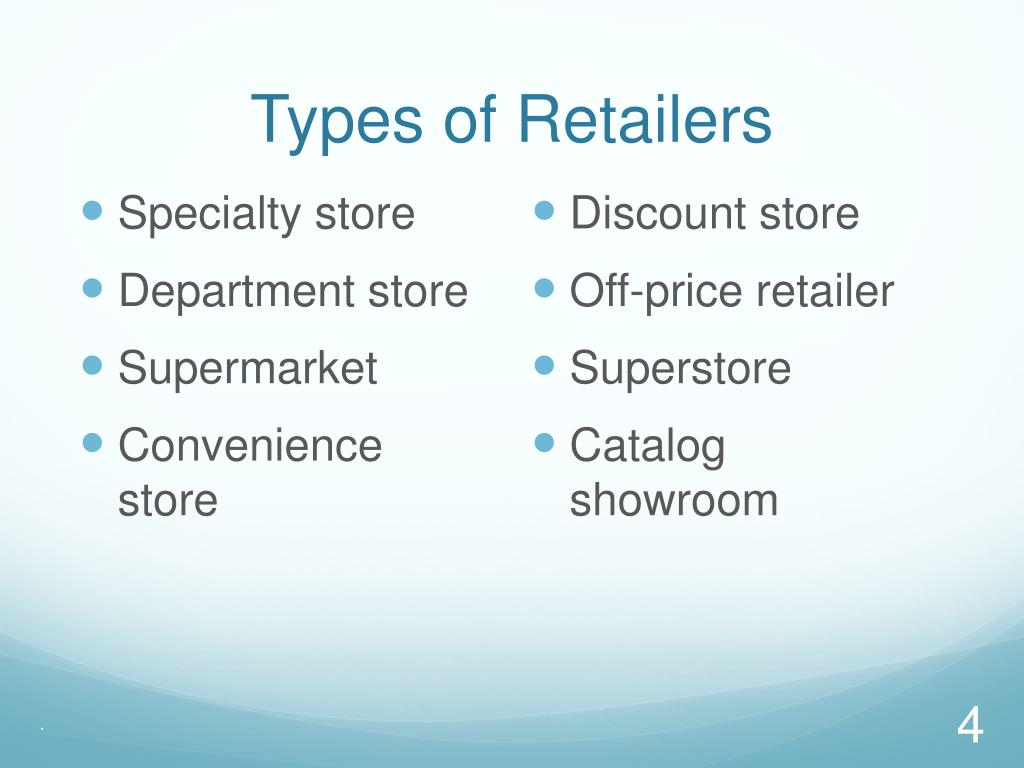
The technical answer includes department stores, specialty retailers, discount chains, grocery stores, convenience stores, warehouse clubs, luxury retailers, e-commerce businesses, and direct-to-consumer brands.
The more interesting answer is that retail formats are strategic responses to different definitions of value.
Consumers do not all want the same thing.
Some prioritize price.
Some prioritize expertise.
Some prioritize speed.
Some prioritize experience.
Retailers succeed when they identify which priority matters most to their target audience and organize their entire business around delivering it.
That insight explains why retail continues to evolve.
New technologies emerge.
Consumer preferences shift.
Business models adapt.
Yet the central challenge remains remarkably consistent.
Not deciding what to sell.
Deciding how customers want to buy it.
And perhaps that is the most important lesson of all.
Retail is not really a collection of stores, websites, or formats.
It is a collection of solutions to human needs.
The formats change.
The needs endure.
- Arts
- Business
- Computers
- Games
- Health
- Home
- Kids and Teens
- Money
- News
- Personal Development
- Recreation
- Regional
- Reference
- Science
- Shopping
- Society
- Sports
- Бизнес
- Деньги
- Дом
- Досуг
- Здоровье
- Игры
- Искусство
- Источники информации
- Компьютеры
- Личное развитие
- Наука
- Новости и СМИ
- Общество
- Покупки
- Спорт
- Страны и регионы
- World

 Russian
 French
 Spanish
 Portuguese
 Deutsch
 Turkish
 Dutch
Dutch
 Italiano
 Arabic
 Romaian
 Portuguese (Brazil)
 Greek
Greek
