
What foods should I avoid for better memory?
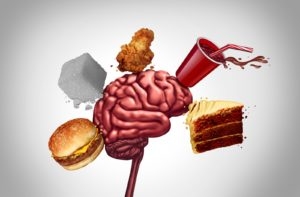
The mind is not a warehouse, and it is certainly not a hard drive. We operate under the stubborn, persistent delusion that our memories are finite—that we have a fixed capacity, a certain number of gigabytes of biological hard drive space that we slowly consume until we hit the inevitable, terrifying limit of a "full" brain. We treat the act of remembering as a feat of sheer, unadulterated willpower, as if we could simply brute-force our way to recall if we were only disciplined enough to keep our diet in check.
But this is not how the brain is built.
I remember standing in a drafty, cold auditorium in New York, watching a man memorize the sequence of an entire deck of playing cards in less than thirty seconds. He wasn't a savant. He wasn't gifted with a photographic recall that the rest of us lack. He was, by his own admission, a man of average intelligence who had spent his adult life mastering a series of ancient, spatial tricks. He was not a superhuman; he was an architect. He had learned that the secret to retention wasn't to "try harder"—a strategy that is, in neurobiological terms, a recipe for failure when the nervous system is saturated with the wrong inputs—but to understand the delicate, osmotic chemistry of his own cognition.
What foods should I avoid for better memory? The question itself is framed incorrectly. It suggests that there is a "bad list" of ingredients that will directly erode your ability to remember, like a slow-acting poison. There is not. The most damaging dietary choices are not those that actively destroy the hippocampus in a single sitting, but those that foster a state of systemic inflammation and metabolic volatility—the two greatest enemies of the delicate architecture of memory.
The Biology of the Inflammatory Fog
When we consume high quantities of ultra-processed, refined sugars and industrial seed oils, we are not just fueling our muscles; we are signaling to our nervous system. The brain, which accounts for only 2% of our body weight but consumes nearly 20% of our daily caloric intake, is exquisitely sensitive to the quality of that fuel.
Inflammation is the body’s way of addressing trauma. It is the fire department arriving to put out a blaze. But when your diet creates a constant, low-level conflagration, the fire department never leaves. The constant, smoldering state of systemic inflammation prevents the brain from performing its most sophisticated work: the stabilization of memory traces. When the brain is busy dealing with the cellular stress of a poor diet, it abandons the luxury of high-level consolidation.
The Glycemic Seesaw
Think of your blood sugar as a master regulator of your focus. When you eat foods with a high glycemic index—the refined starches and sugar-laden snacks that dominate modern convenience—your glucose spikes, followed by an inevitable, crushing crash.
Your hippocampus—the brain's primary gateway for new, declarative memories—finds itself starved of the steady fuel it needs to perform its high-energy work during those troughs. It is a brownout. The connections that were once clear become fuzzy. Signals that should travel with lightning speed begin to lag, stutter, and occasionally fail to bridge the synaptic gap altogether.
| The Dietary Offender | Physiological Mechanism | Cognitive Impact |
| Refined Sugars | Rapid insulin spikes; oxidative stress | Impairs working memory; hinders synaptic plasticity |
| Trans Fats | Increases membrane rigidity; inflammation | Inhibits neurogenesis; promotes cognitive decline |
| Excessive Alcohol | Depresses neurotransmission; disrupts sleep | Destroys consolidation (hippocampal blackout) |
| Ultra-Processed Foods | Promotes gut-brain axis dysbiosis | Increases brain fog; blunts neurotrophic factors |
The Lesson of the Afternoon Crash
I once spent a week attempting to work through a dense, complex project while relying on the convenient, sugar-heavy snacks that littered the breakroom of the office where I was conducting interviews. I was convinced that the immediate boost of energy I felt after a sugary muffin was a benefit to my work. I felt alert. I felt sharp. But as the afternoon waned, I felt the familiar, heavy blanket of fog descend.
I couldn't recall the core arguments I had formulated just three hours prior. I felt irritable, disconnected, and fundamentally unable to synthesize the information I had spent the morning collecting.
The lesson learned was not about my capacity to study; it was about the volatility of my own fuel. I had turned my brain into a roller coaster. I was trying to build the architecture of my memory palace on a foundation that was constantly shifting, expanding, and then crashing. I learned that you cannot construct a stable edifice for your thoughts if you are constantly poisoning the ground beneath it.
The Discipline of the Long-Term Trace
We live in a culture that encourages the immediate, the transient, and the disposable. We are constantly feeding the system, but we are never allowing the system to stabilize the trace. Chronic, low-level dietary inflammation ensures that we are always in a state of cognitive flux, always running at a percentage of our potential, always bracing for the next moment of confusion.
Memory consolidation—the process by which a temporary neural firing becomes a permanent structural change—takes time and a stable, non-inflammatory environment. If you are constantly living in a state of high-sugar, high-inflammation consumption, you are effectively preventing the consolidation from ever occurring with the necessary efficiency. You are, in effect, a person who attempts to paint a masterpiece while the canvas is being pulled in different directions.
The Practice of Rhythmic Intention
If you want a better memory, you must learn to navigate the physical needs of your mind. You must practice the meta-cognitive art of monitoring your internal state. When you feel that tightening in your temples, do not just accept it as a state of "stress" or "overwork." Identify it as a physiological, biochemical event. By naming it—by recognizing the dietary deficit—you move the activity from the impulsive response to the rational, prefrontal cortex. You are effectively telling your brain that the "fog" is an illusion, one that can be cleared with simple, disciplined action.
The Provocative Conclusion: Are You Thinking, or Just Withering?
Can we mitigate the impact of diet on memory? Yes, but it cannot be improved by a complex, multi-step regimen or a trendy, restrictive protocol. It can only be improved by the decision to be a participant in your own biology.
We are living in an era of unprecedented cognitive neglect, not because our brains are failing, but because we have outsourced the labor of attention to a world that ignores the basic, biological requirements of the mind. We have decided that our biological needs are something to be ignored, suppressed, or postponed. We have surrendered our status as the architects of our own mental palaces in favor of a cheap, externalized storage locker that crumbles the moment the inflammation rises.
If you want a better memory, you must reclaim the labor of the mind. Pay attention. Build the palaces. Make the images weird. Be willing to endure the struggle of retrieval, but be kind to your own neural plumbing while you do it. You are not the sum of what you have experienced; you are the sum of what you have bothered to keep. And that, in the final analysis, is a choice you make, over and over again, every single moment you decide to look at the world and actually, truly, see it.
- Arts
- Business
- Computers
- Spiele
- Health
- Startseite
- Kids and Teens
- Geld
- News
- Personal Development
- Recreation
- Regional
- Reference
- Science
- Shopping
- Society
- Sports
- Бизнес
- Деньги
- Дом
- Досуг
- Здоровье
- Игры
- Искусство
- Источники информации
- Компьютеры
- Личное развитие
- Наука
- Новости и СМИ
- Общество
- Покупки
- Спорт
- Страны и регионы
- World

 English
 Russian
 French
 Spanish
 Portuguese
 Turkish
 Dutch
Dutch
 Italiano
 Arabic
 Romaian
 Portuguese (Brazil)
 Greek
Greek
