
What Is Direct-to-Consumer (DTC) Retail?
The Store You Never Walked Into
A few years ago, I ordered a pair of running shoes from a brand I had never seen in a department store. No retail shelf. No sales associate. No giant advertising campaign. Just a website, a compelling story, a handful of customer reviews, and a checkout button.
Three days later, the shoes arrived.
What fascinated me wasn't the purchase itself. It was the realization that an entire retail transaction had occurred without any traditional retailer participating. No wholesaler. No big-box chain. No department store buyer deciding whether the product deserved shelf space.
The brand had built a direct relationship with me—and that relationship was the real product.
That simple transaction captures the essence of direct-to-consumer retail, often abbreviated as DTC. At its core, DTC is a business model in which brands sell products directly to customers rather than relying on intermediaries such as retailers, distributors, or marketplaces. Yet that definition, while technically correct, barely scratches the surface of why DTC has become one of the most consequential developments in modern retail.
The story is not merely about distribution. It is about control, customer insight, economics, branding, and, perhaps most importantly, ownership of the consumer relationship.
Defining Direct-to-Consumer Retail
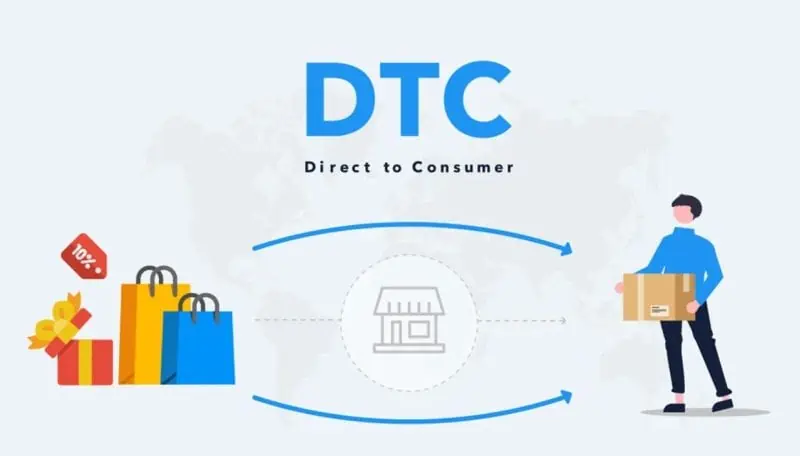
Direct-to-consumer retail refers to a sales model in which manufacturers or brands bypass traditional retail channels and sell directly to end customers.
Traditionally, a product might move through several layers:
Manufacturer → Distributor → Retailer → Consumer
In a DTC model, the path is shorter:
Brand → Consumer
That seemingly minor adjustment creates profound changes in how businesses operate.
When a company sells directly, it controls pricing, messaging, merchandising, customer service, packaging, and post-purchase engagement. The brand no longer rents access to customers through a retailer. Instead, it builds its own audience.
This distinction matters because retail has always been about access. Whoever controls customer access controls value.
Why DTC Emerged So Forcefully
For decades, retailers served as gatekeepers. Shelf space was scarce. Distribution networks were expensive. Building a national presence required enormous capital.
Then several forces converged.
E-commerce platforms reduced the complexity of launching online stores. Social media allowed brands to tell stories without buying television advertising. Digital payment systems streamlined transactions. Logistics providers made fulfillment more accessible.
Suddenly, a small company could reach consumers nationwide without negotiating with a major retailer.
But technology alone does not explain DTC's rise.
Consumer behavior changed as well.
Shoppers increasingly wanted authenticity. They wanted to know where products came from. They wanted transparency about ingredients, sourcing, sustainability, and manufacturing. Traditional retailers often sat between consumers and brands, filtering information along the way.
DTC brands promised something different: an unmediated connection.
The product became part of a larger narrative.
The Real Asset: Customer Data
One of the most misunderstood aspects of DTC retail is that products are often secondary to information.
Consider a traditional retail arrangement. A brand ships inventory to a retailer. The retailer sells products. The brand receives sales reports but frequently lacks detailed customer-level insights.
Who bought the product?
How often do they purchase?
What else are they interested in?
What messaging influenced the sale?
The answers may remain opaque.
A DTC brand, by contrast, owns much of this information.
Every website visit, abandoned cart, repeat purchase, email click, subscription renewal, and customer-service interaction creates valuable data.
This data allows brands to refine products, personalize communication, forecast demand, and increase customer lifetime value.
In other words, DTC is not simply a sales channel. It is a learning system.
DTC Versus Traditional Retail
The differences become clearer when viewed side by side.
| Factor | Direct-to-Consumer (DTC) | Traditional Retail |
|---|---|---|
| Customer Relationship | Owned directly by brand | Shared or controlled by retailer |
| Customer Data | Extensive first-party data | Limited visibility |
| Pricing Control | Brand controls pricing | Retailers may discount |
| Product Presentation | Fully controlled by brand | Influenced by retailer merchandising |
| Distribution Costs | Managed by brand | Shared across channel partners |
| Market Reach | Built through direct marketing | Expanded through retailer footprint |
| Brand Storytelling | Highly customizable | Limited by shelf environment |
| Inventory Management | Direct oversight | Dependent on retail partners |
| Customer Service | Brand-managed | Often retailer-managed |
| Profit Margins | Potentially higher per unit | Shared across intermediaries |
The table highlights a critical tradeoff.
DTC offers control.
Traditional retail offers scale.
The tension between those two benefits explains much of modern retail strategy.
The Economics Behind the Appeal
At first glance, DTC appears financially irresistible.
Remove intermediaries and keep more profit.
Simple.
Except retail is rarely simple.
When brands sell through retailers, they sacrifice margin but gain distribution, traffic, and operational support.
When brands go direct, they inherit new responsibilities.
Customer acquisition becomes their problem.
Website optimization becomes their problem.
Returns become their problem.
Last-mile delivery becomes their problem.
A lesson I learned while studying several emerging consumer brands is that many founders initially celebrated the elimination of wholesale margins. Then they discovered that acquiring customers through digital advertising could cost far more than anticipated.
The arithmetic shifted.
Instead of paying a retailer, they paid advertising platforms.
Instead of negotiating shelf placement, they competed for attention.
The intermediary changed, but the cost of reaching consumers did not disappear.
This realization separates sustainable DTC businesses from short-lived ones.
The Brands That Defined the Movement
Several companies became synonymous with the DTC revolution.
Mattress brands questioned why consumers needed sprawling showrooms.
Eyewear companies challenged traditional markups.
Shaving brands reframed routine purchases through subscription models.
Beauty brands transformed social media communities into commerce engines.
What united these companies was not their product category.
It was their strategic approach.
They identified friction within existing retail systems and removed it.
Sometimes the friction was price.
Sometimes it was convenience.
Sometimes it was consumer confusion.
The most successful DTC brands solved a retail problem before they built a marketing story.
Too many imitators attempted the reverse.
The Power of Brand Narrative
One reason DTC captured so much attention is that it elevated storytelling from a supporting function to a central business asset.
Traditional retail environments compress communication.
A product on a shelf may receive only a few seconds of consumer attention.
A DTC website can tell a much richer story.
Founders can explain their mission.
Brands can showcase manufacturing processes.
Customers can explore reviews, videos, tutorials, and community content.
The purchase journey becomes immersive rather than transactional.
This shift reflects a broader truth about consumer behavior.
People rarely buy products solely for functional reasons.
They buy meanings.
A water bottle is hydration.
A luxury handbag is status.
A running shoe is aspiration.
A skincare routine is self-care.
DTC brands often excel because they understand that consumers purchase stories as much as objects.
The Challenges Nobody Talks About Enough
The mythology surrounding DTC sometimes obscures its limitations.
Not every category works well in a direct model.
Many consumers still want to touch products before purchasing. Furniture, luxury goods, and certain apparel categories benefit from physical interaction.
Customer acquisition costs can rise rapidly.
Return rates can become burdensome.
Logistics expenses can erode margins.
Competition can intensify because barriers to entry are relatively low.
The result is a paradox.
Launching a DTC brand has become easier.
Building a profitable DTC brand has become harder.
As more companies compete for consumer attention, differentiation becomes increasingly difficult.
This reality has forced many originally direct-only brands to rethink their strategies.
The Rise of Omnichannel Thinking
An interesting evolution occurred after the initial wave of DTC enthusiasm.
Many successful direct brands eventually opened stores.
At first glance, this seemed contradictory.
If DTC represented the future, why invest in physical retail?
The answer reveals something fundamental about consumer behavior.
Customers do not think in channels.
Retail executives do.
Consumers simply want convenient, satisfying experiences.
Sometimes that experience happens online.
Sometimes it happens in a store.
Sometimes it starts in one place and ends in another.
The strongest brands now operate with an omnichannel mindset, integrating direct websites, physical locations, mobile experiences, social commerce, and selected wholesale partnerships.
The question is no longer whether a brand should be DTC or retail.
The question is how channels can reinforce one another.
What DTC Means for Consumers
From the customer perspective, DTC can deliver several advantages.
Prices may be lower because fewer intermediaries participate.
Product information is often richer.
Customer service can be more specialized.
New product development may become more responsive because feedback loops are shorter.
Yet consumers should also recognize the tradeoffs.
Retailers often provide comparison shopping opportunities.
They aggregate choices.
They reduce search costs.
A department store allows customers to evaluate multiple brands simultaneously.
A DTC website naturally emphasizes a single brand's perspective.
Neither approach is inherently superior.
Each creates different forms of value.
The Future of Direct-to-Consumer Retail
The next chapter of DTC will likely look different from its first.
The early era focused heavily on disruption.
The emerging era focuses on integration.
Artificial intelligence will enable deeper personalization.
Subscription models will become more sophisticated.
Loyalty programs will rely increasingly on first-party data.
Physical stores will evolve into brand experience centers rather than inventory warehouses.
Most importantly, ownership of customer relationships will remain strategically significant.
As privacy regulations reshape digital advertising and third-party data becomes less reliable, direct customer connections become even more valuable.
The brands that thrive will not necessarily be those with the largest advertising budgets.
They will be those that understand customers most deeply.
The Bigger Question
Direct-to-consumer retail is often described as a distribution strategy.
That description is accurate, but incomplete.
DTC is fundamentally a philosophy about proximity.
It reflects a belief that brands create greater value when they engage consumers directly rather than through layers of intermediaries.
Whether every brand should adopt a pure DTC model is doubtful. Retail history suggests that consumers reward convenience more consistently than ideology. They rarely care how a product reaches them. They care whether the experience feels effortless, trustworthy, and worthwhile.
That is why the most provocative question facing modern retail is not whether DTC will replace traditional retail.
It will not.
The more interesting question is whether traditional retailers can continue creating value when brands increasingly possess the tools to build direct relationships themselves.
The answer may determine the next era of commerce.
- Arts
- Business
- Computers
- Spiele
- Health
- Startseite
- Kids and Teens
- Geld
- News
- Personal Development
- Recreation
- Regional
- Reference
- Science
- Shopping
- Society
- Sports
- Бизнес
- Деньги
- Дом
- Досуг
- Здоровье
- Игры
- Искусство
- Источники информации
- Компьютеры
- Личное развитие
- Наука
- Новости и СМИ
- Общество
- Покупки
- Спорт
- Страны и регионы
- World

 English
 Russian
 French
 Spanish
 Portuguese
 Turkish
 Dutch
Dutch
 Italiano
 Arabic
 Romaian
 Portuguese (Brazil)
 Greek
Greek
