
What Is Franchise Retail?
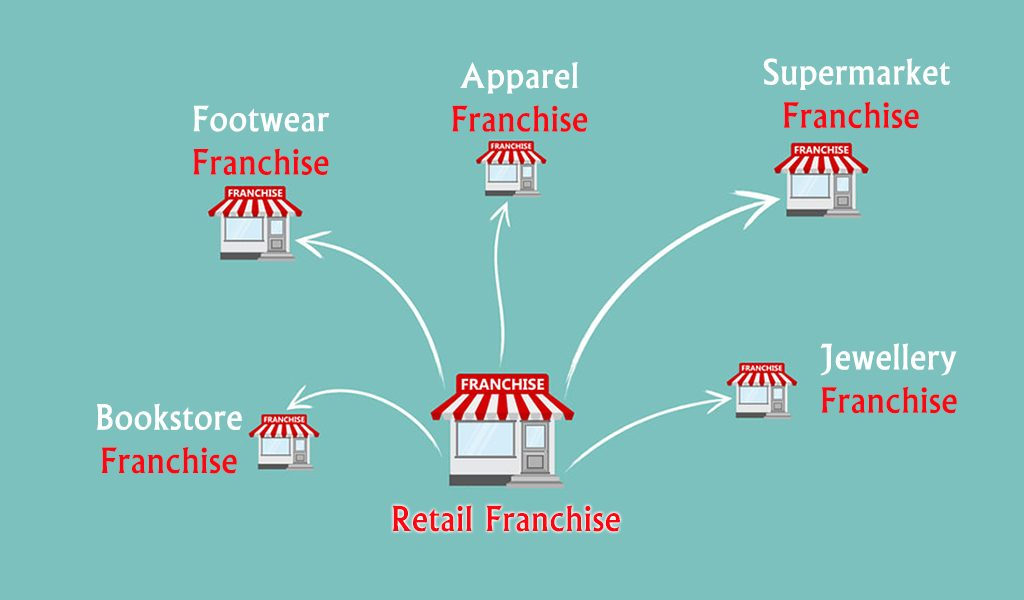
The Curious Contradiction Behind the Golden Arches
Walk into a fast-food restaurant in Phoenix. Then walk into another location of the same chain in Atlanta. The logo is identical. The menu looks familiar. The uniforms match. The colors, the signage, the packaging—even the scent drifting from the kitchen—feel remarkably consistent.
Yet there is a good chance those two locations are owned by entirely different people.
This is one of the most fascinating paradoxes in retail.
Consumers experience a single brand. Behind the scenes, however, the business may consist of thousands of independent entrepreneurs operating under one carefully orchestrated system.
That system is called franchise retail.
At first glance, franchising appears straightforward: a company licenses its brand to local operators. But that definition misses the real story. Franchise retail is not merely a legal arrangement. It is an economic architecture. It is a strategy for scaling trust. It is a method of balancing standardization with entrepreneurship, consistency with local knowledge, control with independence.
And perhaps most intriguingly, it solves one of retail’s oldest challenges: how to grow quickly without owning everything yourself.
Understanding franchise retail requires looking beyond storefronts and contracts. It requires examining the delicate relationship between brands and business owners—a relationship that has shaped some of the most recognizable retail names in America.
Defining Franchise Retail
Franchise retail is a business model in which a company—the franchisor—grants independent operators—the franchisees—the right to use its brand, products, systems, and operating methods in exchange for fees and ongoing royalties.
The franchisor owns the intellectual property.
The franchisee owns and operates the individual business location.
The relationship is contractual, but its significance extends far beyond legal documents.
A franchisee gains access to an established business formula. The franchisor gains expansion without directly funding every new location.
The result is a network of stores that appear unified to consumers while remaining independently owned and managed.
This distinction is critical because franchise retail sits somewhere between corporate ownership and pure independence.
It is neither fully centralized nor fully decentralized.
And that tension defines its strengths—and weaknesses.
Why Franchising Exists
Retail growth is expensive.
Opening stores requires capital. Leasing space requires capital. Hiring employees requires capital. Managing thousands of locations requires even more capital.
For many companies, owning every location creates financial and operational constraints.
Franchising offers an alternative.
Instead of investing company resources into every new market, a brand allows entrepreneurs to make those investments themselves.
The franchisee contributes capital.
The franchisor contributes the blueprint.
Together they create growth.
What makes this arrangement so powerful is that it aligns incentives in unusual ways. The local owner is often more motivated than a salaried manager because the business directly affects personal income and wealth.
The brand benefits from entrepreneurial energy.
The entrepreneur benefits from brand recognition.
Both sides have something to gain.
And both sides have something to lose.
The Retail Formula That Changed Scale
One reason franchise retail became so influential is that it transformed expansion economics.
Historically, retail growth followed a predictable pattern. Companies accumulated capital, opened stores, managed operations centrally, and gradually expanded.
Franchising accelerated that process.
Instead of one company financing one hundred stores, one hundred entrepreneurs financed one hundred stores.
The growth curve changed dramatically.
This model proved especially effective in categories where consistency mattered.
Restaurants.
Convenience stores.
Fitness centers.
Automotive services.
Hospitality.
Consumers wanted reliability. They wanted familiar experiences regardless of location.
Franchise systems delivered exactly that.
The store became reproducible.
Almost like software.
Standardization: The Hidden Product
Consumers often assume restaurants sell meals and retailers sell merchandise.
In franchise systems, however, the hidden product is standardization.
A franchisor's most valuable asset is frequently not the product itself but the process behind it.
How should employees greet customers?
How should products be displayed?
What should inventory levels be?
What should service times look like?
How should complaints be handled?
The franchise system codifies answers to these questions.
The result is operational consistency.
Consistency may sound boring.
Retail history suggests otherwise.
Consumers often reward predictability. They appreciate knowing what to expect. Familiarity reduces decision-making effort. Trust grows when experiences remain stable across locations.
This is why many successful franchise brands obsess over details that customers barely notice.
The smallest inconsistency can weaken the larger promise.
The Franchise Relationship: Cooperation and Friction
Franchising is often presented as a harmonious partnership.
Reality is more complicated.
The franchisor wants brand consistency.
The franchisee wants local flexibility.
These objectives frequently align.
Sometimes they do not.
Imagine a franchise owner who believes a local market demands different products. The owner sees an opportunity. The corporate office sees a threat to consistency.
Who is right?
The answer depends on circumstances.
And this is where franchising becomes strategically fascinating.
Strong franchise systems establish clear standards while leaving room for local adaptation. Weak systems drift toward one extreme or the other.
Too much control suppresses entrepreneurial initiative.
Too little control dilutes the brand.
The challenge is balance.
Retail history is filled with examples of companies that struggled to maintain it.
Franchise Retail vs. Company-Owned Retail
The distinctions become clearer when viewed side by side.
| Factor | Franchise Retail | Company-Owned Retail |
|---|---|---|
| Ownership | Independent franchisees | Corporate ownership |
| Expansion Capital | Primarily franchisee-funded | Company-funded |
| Operational Control | Shared | Centralized |
| Entrepreneurial Incentives | High | Moderate |
| Brand Consistency | Managed through standards | Directly controlled |
| Profit Structure | Royalties and fees | Store-level profits |
| Local Market Knowledge | Strong | Variable |
| Decision-Making Speed | Can be slower due to coordination | Often faster internally |
| Financial Risk | Shared across network | Concentrated with company |
| Scalability | Generally higher | Often more capital-intensive |
The table highlights an important truth.
Franchising is not inherently better than company ownership.
It simply optimizes different objectives.
If speed and capital efficiency matter, franchising can be attractive.
If complete control matters, company ownership may be preferable.
The right choice depends on strategic priorities.
The Economics of Franchise Retail
One of the most appealing aspects of franchising is its economic structure.
Franchisees typically pay:
- An initial franchise fee
- Ongoing royalty payments
- Marketing contributions
- Various operational expenses
In return, they receive access to the brand, training, systems, support, and established operating procedures.
For franchisors, this creates a potentially attractive revenue stream.
Instead of relying exclusively on store-level profits, they earn income from a broad network of operators.
This can produce scalability without proportional increases in capital investment.
Yet there is a common misconception worth addressing.
A recognizable brand does not guarantee franchise success.
Far from it.
Many franchisees underestimate operational complexity. Others overestimate local demand. Some struggle with staffing, competition, or changing consumer preferences.
The franchise system reduces uncertainty.
It does not eliminate it.
A Lesson Learned About Local Ownership
Years ago, I visited multiple locations of the same national retail chain while conducting research on customer experience.
On paper, the stores should have been nearly identical.
They were not.
One location felt energetic. Employees were engaged. The environment was spotless. Customer interactions felt authentic.
Another location appeared tired. Service was slower. The atmosphere lacked energy.
The brand standards were the same.
The ownership quality was not.
That experience reinforced an important lesson: franchise retail is ultimately a human system.
Processes matter.
Training matters.
Branding matters.
But leadership matters too.
A franchise network is only as strong as the people executing the model at the local level.
This reality explains why some operators consistently outperform others despite working under identical brand guidelines.
Why Entrepreneurs Choose Franchises
Starting an independent retail business can be daunting.
Everything must be built from scratch.
Brand awareness.
Operating procedures.
Marketing strategies.
Supplier relationships.
Customer acquisition plans.
Franchises offer a shortcut—not to success, but to infrastructure.
Instead of inventing a business model, franchisees implement one.
This distinction helps explain franchising's enduring appeal.
Many entrepreneurs are not seeking creative freedom above all else. They are seeking a higher probability of success.
The franchise system provides tested processes and recognizable branding.
For some operators, that tradeoff is attractive.
For others, the restrictions feel limiting.
Neither perspective is wrong.
They simply reflect different entrepreneurial preferences.
The Challenges Facing Franchise Retail
Franchise retail is not immune to disruption.
Consumer expectations evolve.
Labor markets shift.
Technology changes operating requirements.
Competitive pressures intensify.
As a result, franchise systems must continuously adapt while preserving consistency.
This balancing act becomes increasingly difficult as networks grow larger.
A change that benefits one region may create challenges elsewhere.
A new technology may excite corporate leadership while frustrating franchise operators.
Strategic alignment becomes more complex with scale.
Ironically, the very characteristic that enables rapid growth—the distributed ownership model—can also complicate transformation.
Large franchise networks sometimes move more slowly because consensus is harder to achieve.
The Rise of Hybrid Models
Modern retail increasingly blurs traditional boundaries.
Many companies now operate mixed systems that combine company-owned stores with franchised locations.
This approach offers flexibility.
Corporate stores can serve as innovation laboratories.
Franchised locations can accelerate expansion.
Insights move in both directions.
The result is a hybrid structure that attempts to capture advantages from both models.
This trend reflects a broader reality.
Retail strategies rarely remain static.
Companies continuously adjust ownership structures based on market conditions, capital availability, and competitive pressures.
The most successful organizations treat franchising not as an ideology but as a tool.
What Franchise Retail Means for Consumers
Most consumers rarely think about ownership structures.
Nor should they.
They care about convenience, quality, value, and experience.
Yet franchise retail influences all four.
Because franchisees have a direct financial stake in performance, many locations benefit from highly engaged local ownership.
At the same time, franchisor oversight helps maintain consistency.
Consumers receive the benefits of entrepreneurship and standardization simultaneously.
When the system works well, it can be remarkably effective.
When it breaks down, inconsistencies become highly visible.
The customer ultimately experiences the outcome regardless of where responsibility resides.
The Bigger Question About Franchise Retail
Franchise retail is often described as a method of expansion.
That description is accurate but incomplete.
At its heart, franchising is a sophisticated solution to a deceptively simple question:
How do you replicate success?
Not products.
Not buildings.
Not logos.
Success.
The answer franchising proposes is that success can be codified, documented, taught, monitored, and reproduced across hundreds—or thousands—of locations.
Sometimes that proposition works brilliantly.
Sometimes it encounters the stubborn realities of local markets, human behavior, and operational complexity.
Yet the model endures because it addresses a fundamental challenge of growth. Few businesses possess unlimited capital. Few entrepreneurs possess instant brand recognition. Franchising creates a bridge between those constraints.
And that may be the most interesting aspect of all.
Consumers see one brand.
Investors see a growth engine.
Entrepreneurs see an opportunity.
But beneath all those perspectives lies a deeper truth: franchise retail is an exercise in controlled replication, a system designed to scale trust without sacrificing ownership.
Whether that balance can be maintained as consumer expectations continue to evolve is not merely a question for franchise operators. It is a question for the future of retail itself.
- Arts
- Business
- Computers
- Jogos
- Health
- Início
- Kids and Teens
- Money
- News
- Personal Development
- Recreation
- Regional
- Reference
- Science
- Shopping
- Society
- Sports
- Бизнес
- Деньги
- Дом
- Досуг
- Здоровье
- Игры
- Искусство
- Источники информации
- Компьютеры
- Личное развитие
- Наука
- Новости и СМИ
- Общество
- Покупки
- Спорт
- Страны и регионы
- World

 English
 Russian
 French
 Spanish
 Deutsch
 Turkish
 Dutch
Dutch
 Italiano
 Arabic
 Romaian
 Portuguese (Brazil)
 Greek
Greek
