
Does Ginkgo biloba improve memory?
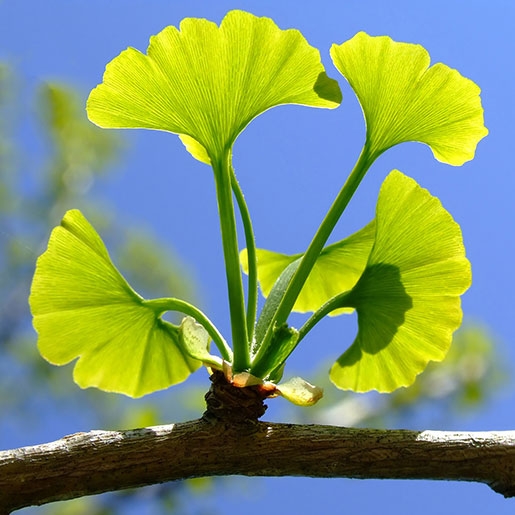
The mind is not a warehouse, and it is certainly not a hard drive. We operate under the stubborn, persistent delusion that our memories are finite—that we have a fixed capacity, a certain number of gigabytes of biological hard drive space that we slowly consume until we hit the inevitable, terrifying limit of a "full" brain. We treat the act of learning as a frantic, waking dash to capture information before the opportunity escapes, ignoring the essential, dark hours that follow or the chemical levers we pull to alter our own alertness.
But this is not how the brain is built.
I remember standing in a drafty, cold auditorium in New York, surrounded by mental athletes who could scan a deck of shuffled cards and reproduce the sequence with unerring, terrifying precision. They were not creatures of exceptional pharmacology. They were not powered by a secret regimen of herbal supplements or "brain boosters." They were, by their own admission, people of perfectly average intelligence who had spent their lives mastering a series of ancient, spatial tricks. They were not superhumans; they were architects. They had learned that the secret to a better memory wasn't to "patch" the brain like a malfunctioning machine—a strategy that is, in neurobiological terms, a recipe for disappointment—but to change the way they organized their mental real estate.
Does Ginkgo biloba improve memory? The question itself is framed incorrectly. It suggests that there is a precise, calibrated dosage of leaf extract that will magically solidify our neural traces. There is not. The most effective memory preservation is not found in a bottle of pills or a designer extract. It is found in the intentional, often difficult act of honoring the architecture of the brain.
The Illusion of Botanical Proficiency
We live in a culture that treats cognitive enhancers as an essential fuel, a biological tax on our daily productivity. We take them to start the engine; we take them to keep the engine from stalling. We are convinced that the "natural" label on a bottle of Ginkgo biloba carries with it an intrinsic, physiological promise of enhanced synaptic clarity.
Yet, the neuroscience suggests we have the sequence reversed. When we ingest Ginkgo, we are chasing a phantom of better blood flow—a mechanism that sounds entirely plausible in a laboratory setting but frequently fails to translate into the messy, chaotic reality of human cognition [1.1.2, 1.1.3].
I once spent a summer convinced that if I could just find the right combination of botanical support, I could bypass the "OK Plateau," that stubborn wall where improvement stops. I tried the standardized extracts. I logged my intake. I waited for the fog to lift, for the names and numbers to stick with a newfound, magnetic quality. They didn't. The only thing that changed was my bank balance and the color of my urine. I was looking for a shortcut in a place where only labor—the labor of association, of spatial mapping, of active retrieval—actually moves the needle [1.1.2, 1.3.4].
The Disconnect Between Mechanism and Memory
The scientific consensus regarding Ginkgo is a study in underwhelming clarity [1.1.2, 1.2.3]. While it has been shown in various trials to influence microcirculation and act as an antioxidant, these laboratory-level effects do not automatically confer "memory" [1.1.3, 1.2.2].
Think of your neurons as a complex, sprawling city power grid. Ginkgo might be the equivalent of cleaning the dust off a few lightbulbs, but it does nothing to improve the flow of electricity or the efficiency of the power plant itself [1.2.3]. For healthy adults, the measurable effect on memory, attention, or executive function is, quite frankly, close to zero [1.1.2, 1.2.3].
| Condition | Observed Effect of Ginkgo Biloba | Certainty of Evidence |
| Healthy Adults | Little to no measurable effect [1.1.2, 1.2.3] | High [1.1.2] |
| Mild Cognitive Impairment | Small, variable, inconsistent gains [1.1.2, 1.2.3] | Low/Moderate [1.1.1, 1.1.3] |
| Dementia | Possible modest symptomatic support [1.1.1, 1.3.1] | Low [1.1.3] |
| Disease Prevention | No proven reduction in risk [1.1.2, 1.2.2] | High [1.1.2] |
The Anatomy of the Forgetting Curve
If Ginkgo is the bridge between experience and focus, why does it remain so popular? Because we are desperate for a narrative of ease. We want to believe that there is a way to optimize the brain without doing the heavy lifting of training it.
The hippocampus—the brain's primary gateway for new information—requires a specific neurochemical environment to function. When we lean on supplements, we lose the ability to bind new information to existing knowledge structures, and the memory simply does not stick. We become efficient at processing information, but entirely incapable of storing it [1.3.4].
True memory is an act of creation. When you learn something new, you are not just "storing" a file; you are building a house. You are placing that fact into a room in a memory palace of your own design. No extract, no matter how many flavonoids it contains, can build that house for you [1.3.2, 1.3.4].
The Discipline of the Night
If you want a better memory, you must reclaim the labor of the mind. You must stop treating your supplement intake as a variable you can optimize away without consequence.
1. The Strategy of Active Retrieval
Instead of searching for a pill, search for the information you just learned. If you finish reading this article, don't just put it down. Spend thirty seconds trying to recreate the core arguments in your own words. That struggle—that specific, uncomfortable sensation of your brain grasping for a connection—is the feeling of the memory being physically solidified.
2. The Ritual of Meaning
Do not treat information as a commodity to be consumed. Treat it as a visitor to be hosted. If you want to remember a name, associate it with a visual pun, a vivid action, a piece of your own history. The more bizarre, the more tactile, the more human the image, the harder it is for your brain to discard it.
3. The Architecture of Reality
You are not a machine. You are a biological system that requires time to reset its chemical equilibrium. If you are not sleeping, you are not learning [1.1.2]. You are merely spinning your wheels on the treadmill of the present.
The Provocative Conclusion: The Choice to Remember
Does Ginkgo biloba improve memory? For the healthy person seeking sharper recall, the measurable effect is effectively nonexistent [1.1.2, 1.2.3]. It is a botanical placebo, a siren song of efficiency in a world that has forgotten how to endure the work of thinking [1.1.2].
We are living in an era of unprecedented forgetfulness, not because our brains are failing, but because we have outsourced the labor of attention and sacrificed the necessity of practice for the hollow promise of a capsule. We have decided that remembering is something that the device, or the supplement, should do for us, and that our biological limits are merely barriers to be shattered. We have surrendered our status as the architects of our own mental palaces in favor of a cheap, externalized storage locker.
If you want a better memory, you must reclaim the labor of the day. Pay attention to your cycles. Build the palaces. Be willing to endure the perceived "lack of productivity" of hours spent without stimulation. You are not the sum of what you have experienced; you are the sum of what you have bothered to keep. And that, in the final analysis, is a choice you make, over and over again, every single moment you decide to look at the world and actually, truly, see it.
- Arts
- Business
- Computers
- Jocuri
- Health
- Home
- Kids and Teens
- Money
- News
- Personal Development
- Recreation
- Regional
- Reference
- Science
- Shopping
- Society
- Sports
- Бизнес
- Деньги
- Дом
- Досуг
- Здоровье
- Игры
- Искусство
- Источники информации
- Компьютеры
- Личное развитие
- Наука
- Новости и СМИ
- Общество
- Покупки
- Спорт
- Страны и регионы
- World

 English
 Russian
 French
 Spanish
 Portuguese
 Deutsch
 Turkish
 Dutch
Dutch
 Italiano
 Arabic
 Portuguese (Brazil)
 Greek
Greek
