
How Do Retailers Increase Repeat Customers? The Real Secret Is Not What Most Retailers Think
A customer walks into a store for the first time.
The retailer celebrates the sale.
The transaction is recorded. Revenue increases. Marketing efforts appear successful.
Then something curious happens.
The customer never returns.
For many retailers, this scenario is far more common than they would like to admit.
The irony is striking. Retail organizations spend enormous resources attracting customers. Advertising budgets expand. Promotions multiply. Customer acquisition strategies become increasingly sophisticated. Yet the long-term success of most retail businesses depends less on acquiring customers than on keeping them.
A first purchase is important.
A second purchase is transformative.
A fifth purchase is where profitability begins to compound.
And a twentieth purchase? That is where retailers often discover the true value of customer relationships.
This reality raises a deceptively simple question: How do retailers increase repeat customers?
The answer is not found in a single loyalty program, promotional campaign, or email sequence. Repeat purchasing behavior emerges from a broader set of conditions. Customers return when retailers consistently create value, reduce friction, build trust, and make future purchasing decisions feel easier than alternatives.
In other words, repeat customers are not created through persuasion.
They are created through experience.
That distinction matters because it shifts the conversation away from marketing tactics and toward customer relationships.
And relationships, unlike transactions, take time to build.
The Economics of the Second Purchase
Retailers often focus heavily on customer acquisition metrics.
The attention is understandable.
New customers generate visible growth.
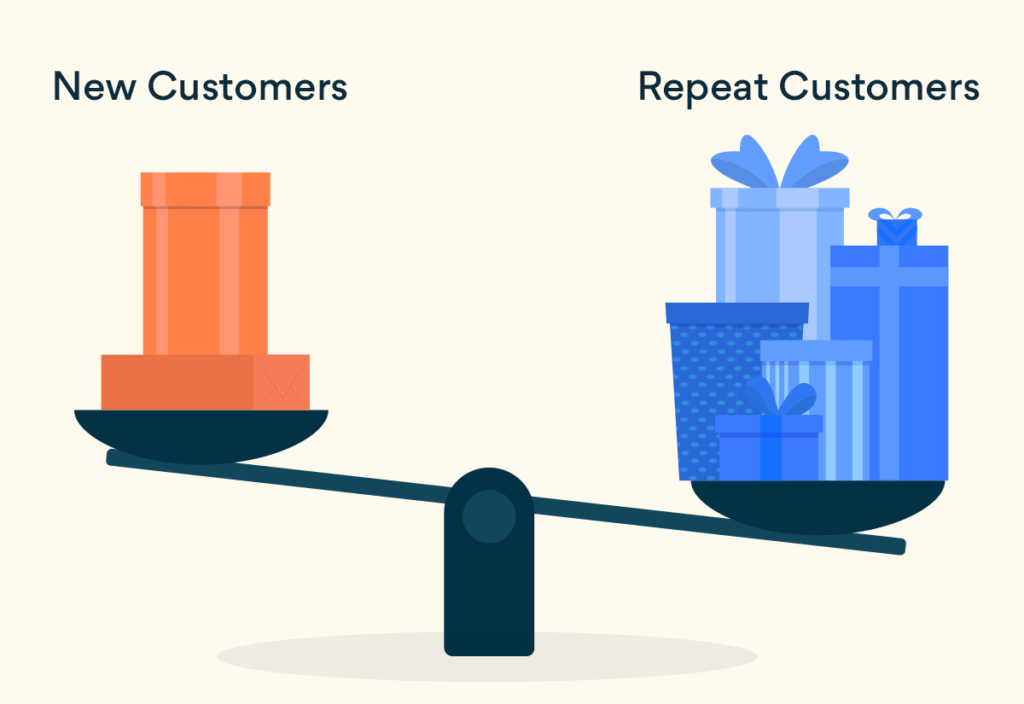
Yet repeat customers frequently generate stronger economics.
Why?
Because acquiring customers is expensive.
Advertising costs money.
Promotions cost money.
Outreach campaigns cost money.
Once customers enter the relationship, however, those acquisition expenses no longer need to be repeated at the same level.
This changes the financial equation considerably.
Customers who return often:
- Purchase more frequently
- Spend more over time
- Require less marketing investment
- Refer additional customers
- Exhibit higher lifetime value
The implications are significant.
A retailer with strong retention frequently outperforms a retailer with stronger acquisition but weaker loyalty.
Growth built on retention tends to be more stable.
And stability is an underrated advantage in retail.
Why Customers Return: The Psychology Behind Repeat Purchasing
Many retailers assume customers return because of satisfaction.
Satisfaction matters.
It is not always enough.
Think about your own shopping behavior.
There are likely stores you enjoy.
There are also stores you repeatedly visit.
The lists do not always overlap perfectly.
Repeat purchasing behavior is influenced by several factors:
- Trust
- Convenience
- Habit
- Emotional connection
- Consistent value
- Reliability
Customers rarely conduct a complete evaluation before every purchase.
That would be exhausting.
Instead, they develop preferences.
Those preferences simplify future decisions.
Retailers who earn preference gain something far more valuable than occasional transactions.
They gain default status.
And becoming the default choice is often the hidden objective of customer retention strategies.
Repeat Customers Are Built Through Consistency
Retailers often search for breakthrough ideas.
Customer retention is frequently more mundane.
Consistency creates repeat behavior.
Customers return when expectations are met repeatedly.
This consistency may involve:
- Product quality
- Inventory availability
- Customer service
- Pricing transparency
- Store experience
One exceptional interaction can create enthusiasm.
Repeated positive interactions create confidence.
Confidence encourages return visits.
The process is gradual.
Yet its cumulative effect can be extraordinary.
The Retail Retention Equation
Several factors consistently influence customer retention.
Key Drivers of Repeat Purchasing
| Retention Driver | Customer Impact | Business Impact | Strategic Importance |
|---|---|---|---|
| Product Availability | Reliability | Higher sales retention | Critical |
| Customer Experience | Satisfaction and trust | Increased loyalty | Very High |
| Convenience | Reduced effort | Higher repeat visits | Very High |
| Loyalty Programs | Incentivized engagement | Improved retention | High |
| Personalization | Relevance | Stronger relationships | High |
| Employee Interactions | Emotional connection | Greater customer trust | High |
| Consistent Value | Purchase confidence | Long-term retention | Critical |
The table highlights a crucial insight.
Repeat customers are influenced by multiple variables simultaneously.
Retailers rarely improve retention through a single initiative.
Customer Experience Is the Strongest Retention Strategy
Retail leaders often ask how to increase repeat customers.
A more revealing question may be:
Why would customers want to return?
The answer frequently begins with experience.
Customers remember friction.
They remember ease.
A positive customer experience typically includes:
- Easy navigation
- Helpful employees
- Available products
- Efficient checkout
- Simple returns
None of these elements are particularly revolutionary.
That is precisely why they matter.
Customers generally do not expect perfection.
They expect competence.
Retailers who consistently deliver competence often outperform competitors chasing novelty.
Trust Creates Repeat Behavior
Trust occupies a unique position in retail.
It reduces perceived risk.
Customers trust retailers that:
- Deliver what they promise
- Resolve problems fairly
- Communicate honestly
- Maintain product quality
Trust simplifies decision-making.
Instead of evaluating every possible alternative, customers return to retailers they already trust.
The psychological benefit is significant.
Trust saves time.
Customers value that more than many retailers realize.
My Lesson Learned About Repeat Customers
Several years ago, I worked with a specialty retailer struggling with customer retention.
Management focused heavily on promotions.
Every month introduced a new discount campaign.
Traffic increased temporarily.
Repeat purchasing behavior remained disappointing.
When customer interviews were conducted, the explanation became clear.
Customers appreciated the discounts.
They did not feel connected to the retailer.
The relationship was transactional.
Not relational.
The turning point came when the retailer improved service consistency, invested in employee training, and simplified the shopping experience.
Discount activity decreased.
Retention improved.
What changed was not pricing.
What changed was trust.
That experience reinforced an important lesson.
Customers may arrive because of promotions.
They often return because of confidence.
Loyalty Programs Work Best as Reinforcement
Loyalty programs remain a popular retention tool.
For good reason.
They can encourage:
- Repeat purchases
- Increased engagement
- Larger basket sizes
- Customer identification
Yet loyalty programs are frequently misunderstood.
Many retailers view them as loyalty creators.
More often, they function as loyalty amplifiers.
A customer who already values the retailer may become more engaged through rewards.
A customer with a poor experience rarely becomes loyal because points are available.
The underlying relationship still matters.
Programs support loyalty.
They do not substitute for it.
Personalization Strengthens Relationships
Customers increasingly expect relevance.
Personalization helps retailers deliver it.
Effective personalization includes:
- Product recommendations
- Relevant promotions
- Customized communications
- Purchase reminders
The emphasis should remain on usefulness.
Customers appreciate personalization when it reduces effort.
They resist personalization when it feels intrusive or irrelevant.
The difference often depends on execution.
Good personalization demonstrates understanding.
Customers respond positively when retailers appear to recognize their needs.
Convenience Is a Retention Strategy
Retailers often discuss convenience as an operational objective.
Customers experience it differently.
To customers, convenience represents value.
Convenience includes:
- Fast checkout
- Easy product discovery
- Reliable inventory
- Flexible fulfillment options
- Frictionless returns
These features reduce effort.
Reduced effort encourages repeat behavior.
The relationship is remarkably direct.
When shopping becomes easier, customers have fewer reasons to explore alternatives.
Employees Influence Retention More Than Technology
Technology receives substantial attention in retail discussions.
Employees remain critically important.
Customers frequently remember interactions with people.
Helpful associates can:
- Build trust
- Resolve concerns
- Improve confidence
- Create emotional connection
These outcomes influence future behavior.
A customer may forget specific products.
They often remember how they were treated.
This memory shapes return intentions.
Retailers that invest in employee capability frequently strengthen retention as a result.
Product Availability Protects Customer Loyalty
Few experiences damage retention more quickly than repeated stockouts.
Customers return expecting reliability.
Unavailable products undermine that expectation.
The consequences extend beyond immediate sales.
Customers begin questioning:
- Whether future visits will be worthwhile
- Whether alternatives offer greater reliability
- Whether loyalty remains justified
Inventory management therefore influences retention directly.
Retailers sometimes view availability as an operational metric.
Customers experience it as a trust metric.
Emotional Connections Create Durable Loyalty
The strongest customer relationships extend beyond convenience alone.
Customers sometimes develop emotional attachments to retailers.
These attachments may emerge from:
- Shared values
- Brand identity
- Community engagement
- Consistent experiences
Emotional connections create resilience.
Customers remain engaged despite occasional mistakes.
Price sensitivity decreases.
Advocacy increases.
Not every retailer needs deep emotional attachment.
Every retailer benefits from stronger relationships.
Measuring Repeat Customer Success
Retailers should evaluate retention using multiple metrics.
Important Retention Metrics
Repeat Purchase Rate
Measures how frequently customers return.
Customer Lifetime Value
Evaluates long-term revenue contribution.
Retention Rate
Tracks ongoing customer engagement.
Purchase Frequency
Measures transaction regularity.
Referral Activity
Reflects customer advocacy.
Together, these metrics provide a more complete understanding of customer relationships.
Retention is multidimensional.
Measurement should be as well.
Why Acquisition Alone Is a Fragile Growth Strategy
Many retailers pursue growth primarily through acquisition.
The approach can produce results.
It can also create vulnerability.
A business constantly replacing departing customers often faces increasing costs.
Marketing expenses rise.
Profitability becomes harder to sustain.
Retention changes the equation.
Repeat customers create recurring demand.
Recurring demand improves predictability.
Predictability improves planning.
This is one reason investors frequently pay close attention to retention metrics.
Repeat customers often signal business health more effectively than short-term sales spikes.
Conclusion: Customers Return When Retailers Earn the Right
When retailers ask, “How do retailers increase repeat customers?” they often search for tactics.
A better answer involves relationships.
Repeat customers are not generated through discounts alone.
They are not generated through loyalty programs alone.
They are not generated through marketing alone.
They emerge when customers repeatedly experience value.
Value through convenience.
Value through trust.
Value through reliability.
Value through relevance.
The strongest retailers understand that retention is not about persuading customers to return.
It is about giving customers compelling reasons to return.
Again and again.
That distinction changes how retailers think about growth.
Because the most successful retail businesses are not built solely on attracting attention.
They are built on earning preference.
And preference, once established, becomes one of the most powerful assets a retailer can possess.
- Arts
- Business
- Computers
- Игры
- Health
- Главная
- Kids and Teens
- Деньги
- News
- Personal Development
- Recreation
- Regional
- Reference
- Science
- Shopping
- Society
- Sports
- Бизнес
- Деньги
- Дом
- Досуг
- Здоровье
- Игры
- Искусство
- Источники информации
- Компьютеры
- Личное развитие
- Наука
- Новости и СМИ
- Общество
- Покупки
- Спорт
- Страны и регионы
- World

 English
 French
 Spanish
 Portuguese
 Deutsch
 Turkish
 Dutch
Dutch
 Italiano
 Arabic
 Romaian
 Portuguese (Brazil)
 Greek
Greek
