
What happens in the brain when we remember?
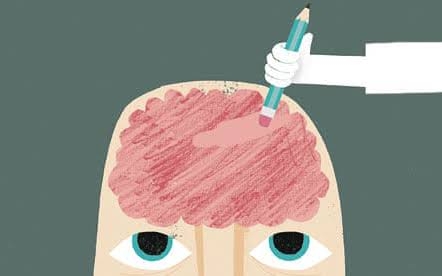
The mind is not a warehouse, and it is certainly not a hard drive. We operate under the stubborn, persistent delusion that memory is a thing—a discrete, static object tucked away in the dark, dusty corners of the cranium, waiting to be retrieved like a dusty volume from a shelf. We imagine our pasts as a collection of videotapes, neatly labeled and organized, ready to be slotted into the player whenever we feel the tug of nostalgia or the cold necessity of a fact.
But this is not how the brain is built.
I remember standing in the cramped, windowless office of a neuroscientist at MIT, watching a mouse navigate a labyrinth of glowing LEDs. The animal wasn't just solving a puzzle; it was, in the literal sense, rebuilding its own reality. Every time it took a wrong turn, a specific set of neurons fired in its hippocampus, creating a ripple that reached across the cortex. It wasn't "storing" the map. It was re-constructing the path, moment by harrowing moment. That mouse taught me that memory is not a noun. It is a verb. It is a process of creative reconstruction, a frantic, shimmering act of neural choreography that happens every time we look backward.
What happens in the brain when we remember? The question itself is framed incorrectly. It suggests that there is a single, central "memory center" that lights up like a pinball machine. There is not. The act of remembering is a symphony played by an orchestra that has no conductor, a distributed event that involves millions of microscopic connections sparking to life across a vast, wet, and incredibly delicate geography.
The Ecology of the Synaptic Trace
We live in a culture that treats the brain as a machine of input and output. We are constantly feeding the system, expecting a clean, digital reproduction of our experiences. We forget that the biological substrate is, by its nature, messy, associative, and inherently unstable.
Think of your memory as a desk covered in paper. When you experience a moment, you aren't filing a document. You are taking a thousand disparate scraps of information—the smell of the rain, the sound of a voice, the color of the light—and you are gluing them together with a fragile, translucent adhesive called attention. When you remember that moment, you aren't "pulling the file." You are, in that instant, re-gluing the scraps together, often using different pieces, different shadows, and different colors.
The Biological Circuit Breakers
The hippocampus—the brain's primary gateway for new information—serves as the librarian of our lives. It does not contain the books; it contains the card catalog. When you experience an event, the hippocampus coordinates the distribution of the sensory information across the cerebral cortex. The vision goes to the occipital lobe; the sound to the temporal lobe; the emotion to the amygdala.
When you remember, the hippocampus fires a sequence of signals back to those same regions, pulling the threads together. It is an act of tethering. If the tether is loose, the memory is blurry. If the tether is severed, the memory is lost.
| Stage of Memory | Neurobiological Mechanism | Primary Architecture |
| Encoding | Synaptic potentiation (LTP) | Hippocampal-Cortical binding |
| Consolidation | Protein synthesis/Dendritic remodeling | Hippocampal-to-Neocortical migration |
| Retrieval | Pattern completion/Re-activation | Frontal-Hippocampal synchronization |
| Reconsolidation | Labile protein update | Dynamic reconstruction of existing traces |
The Lesson of the Locked Room
I once spent a month obsessed with my own cognitive functioning, convinced that the erratic nature of my own recollections was a sign of a deeper, structural failure. I would try to recall the details of a trip I took years ago, only to find that my memory of the hotel was morphing into a memory of a different hotel, from a different city, from a different time. I spent those days in a state of quiet, rising panic, convinced I was suffering from some peculiar form of neurological decay.
The lesson I learned was not about my memory. It was about my transparency to myself. I had not "lost" my memories; I had simply caught them in the act of being rewritten. Every time I reached for that trip, I was not retrieving a stable image. I was performing a creative act of reconsolidation, integrating who I am now with the shards of what I remember from then. My brain was not failing. It was functioning perfectly. It was constantly ensuring that my past remained compatible with my present.
This is the distinction we often ignore: we are rarely "remembering" in the sense of a lost file. We are, more often than not, experiencing the present version of our own story.
The Discipline of the Observation
If you want to understand how we remember, you must first know how to watch the system. Do not look for the occasional, inevitable lapses of the human condition. Look for the disruption of the sequence.
1. The Narrative Test
Are you remembering the event, or are you remembering your previous telling of the event? The brain is a storyteller, and it prefers a clean narrative to a messy truth. Once you tell a story, you tend to overwrite the original, messy trace with the cleaner, more rehearsed version.
2. The Feedback Loop
Ask those closest to you. We are notoriously unreliable witnesses to our own past. Because our brains are the very tools we use to evaluate our own performance, they are subject to the same bias that causes a malfunctioning computer to report "all systems normal." Trust the external feedback of those who see you every day.
3. The Functional Impact
Are you still navigating your world? Are the lapses causing you to withdraw, to avoid situations, or to struggle with the tasks you once performed without thought? The moment the remembering begins to limit your interaction with reality, the observation period should end, and a professional assessment should begin.
The Provocative Conclusion: The Choice to Remember
When you experience the fluidity of your own memory, do not ask "Why am I losing it?" Ask "How am I building the future out of the ruins of my past?"
We are living in an era of unprecedented cognitive neglect, not because our brains are failing, but because we have outsourced the labor of attention to a world that ignores the basic, biological requirements of the mind. We have decided that our cognitive limits are something to be suppressed or ignored until they can no longer be hidden. We have surrendered our status as the architects of our own mental palaces in favor of a cheap, externalized storage locker that eventually leaks.
If you are concerned, do not look for a diagnostic shortcut. Look for the pattern. Be willing to endure the discomfort of self-scrutiny. You are not the sum of what you have experienced; you are the sum of what you have bothered to keep. And that, in the final analysis, is a choice you make, over and over again, every single moment you decide to look at the world and actually, truly, see it.
- Arts
- Business
- Computers
- Παιχνίδια
- Health
- Κεντρική Σελίδα
- Kids and Teens
- Money
- News
- Personal Development
- Recreation
- Regional
- Reference
- Science
- Shopping
- Society
- Sports
- Бизнес
- Деньги
- Дом
- Досуг
- Здоровье
- Игры
- Искусство
- Источники информации
- Компьютеры
- Личное развитие
- Наука
- Новости и СМИ
- Общество
- Покупки
- Спорт
- Страны и регионы
- World

 English
 Russian
 French
 Spanish
 Portuguese
 Deutsch
 Turkish
 Dutch
Dutch
 Italiano
 Arabic
 Romaian
 Portuguese (Brazil)
