
How Do I Market a Retail Store? Start by Forgetting What Most Retailers Think Marketing Is
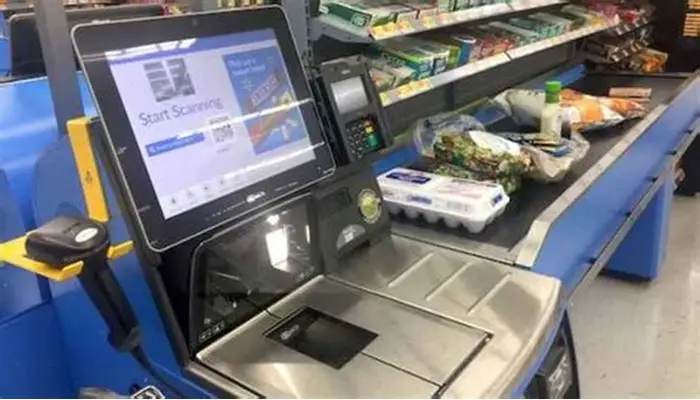
A retailer opens a beautiful store.
The merchandise is thoughtfully curated. The lighting is inviting. The staff is friendly. The location appears promising.
Then something unsettling happens.
Customers don't come.
Or perhaps they come once and never return.
The owner responds predictably. More advertising. More discounts. More social media posts. More promotions.
Yet sales remain stubbornly inconsistent.
This is the moment where many retailers misunderstand marketing.
They treat marketing as an activity.
In reality, marketing is a system.
That distinction sounds subtle. It isn't.
The strongest retailers rarely succeed because they advertise more aggressively. They succeed because they create a compelling reason for customers to care, and then communicate that reason consistently across every touchpoint.
Marketing is not simply attracting attention.
Attention is easy to buy.
The challenge is earning relevance.
And relevance has become one of the scarcest assets in retail.
So when someone asks, "How do I market a retail store?" the answer begins somewhere unexpected.
Not with advertising.
Not with social media.
Not with discounts.
It begins with positioning.
Before Marketing, Define Why Your Store Matters
Retailers often rush into tactics.
Instagram campaigns.
Email newsletters.
Influencer partnerships.
Paid advertising.
Yet many skip the foundational question:
Why should customers choose this store instead of another?
The answer cannot be "better service."
Everyone claims better service.
It cannot be "high quality."
Every retailer believes their products are high quality.
Effective retail marketing starts with differentiation.
Ask yourself:
- What do we sell that competitors don't?
- What experience do we create?
- What problem do we solve?
- What type of customer are we designed for?
The clearer the answers, the easier marketing becomes.
Because marketing amplifies positioning.
It does not create it.
Understand Your Customer Better Than Your Competitors Do
Many retailers know their products intimately.
Far fewer know their customers equally well.
That imbalance creates problems.
Customers do not purchase products.
They purchase outcomes.
A customer buying running shoes may actually be purchasing motivation.
A customer buying home décor may be purchasing self-expression.
A customer buying premium skincare may be purchasing confidence.
The product is merely the vehicle.
The underlying motivation matters more.
Retailers who understand these motivations create more effective marketing.
They speak to aspirations rather than specifications.
And aspirations tend to be more persuasive.
The Retail Marketing Funnel Is Not Linear
One of the biggest misconceptions in retail marketing is that customers move neatly from awareness to purchase.
Reality is messier.
Customers:
- Discover products on social media.
- Research online.
- Visit stores.
- Leave without buying.
- Read reviews.
- Return weeks later.
- Purchase through another channel.
The journey twists.
It pauses.
It restarts.
Successful retail marketing accommodates this complexity.
Rather than focusing exclusively on immediate sales, retailers build systems that nurture customer relationships over time.
Patience often outperforms pressure.
Local Marketing Still Matters More Than Many Retailers Realize
National brands receive significant attention.
Local retail often receives less.
This creates opportunity.
For many retailers, the highest-value customers live within a relatively small geographic radius.
Which means local visibility matters enormously.
Effective local marketing includes:
- Community partnerships
- Local events
- Neighborhood sponsorships
- Local SEO
- Business directory listings
- Community engagement
Retailers sometimes underestimate the power of physical proximity.
Customers frequently prefer convenience.
But they also appreciate familiarity.
A store that feels embedded within a community often enjoys advantages that advertising alone cannot replicate.
Social Media: Useful, But Frequently Misunderstood
Retailers often approach social media with a broadcasting mindset.
Post products.
Announce promotions.
Repeat.
The results are usually underwhelming.
Social media performs best when it creates engagement rather than interruption.
Customers respond to:
- Stories
- Behind-the-scenes content
- Product education
- Community participation
- Authentic brand perspectives
Interestingly, the most effective retail content often focuses less on selling and more on helping.
A clothing retailer might share styling advice.
A home goods store might provide decorating inspiration.
A specialty food retailer might offer recipes.
Value creates attention.
Attention creates trust.
Trust creates sales.
The sequence matters.
Email Marketing Remains Remarkably Effective
Despite recurring predictions about its decline, email continues to deliver meaningful results for retailers.
The reason is simple.
Unlike social platforms, email provides direct access to customers.
No algorithm determines visibility.
No platform changes dictate reach.
The relationship belongs to the retailer.
Effective retail email campaigns include:
- Product recommendations
- Loyalty rewards
- Educational content
- New arrivals
- Personalized offers
The strongest emails feel relevant rather than promotional.
Customers rarely object to useful communication.
They object to irrelevant communication.
Retail Marketing Channels Comparison Table
| Marketing Channel | Primary Objective | Typical Cost | Customer Intent Level | Best Use Case |
|---|---|---|---|---|
| Local SEO | Store discovery | Low to Moderate | High | Driving local traffic |
| Social Media | Awareness and engagement | Low to Moderate | Moderate | Brand building |
| Email Marketing | Retention and loyalty | Low | High | Repeat purchases |
| Paid Search | Immediate acquisition | Moderate to High | Very High | Conversion-focused campaigns |
| Influencer Marketing | Social proof | Moderate | Moderate | Product awareness |
| Events & Community Marketing | Relationship building | Moderate | High | Local customer acquisition |
| Loyalty Programs | Customer retention | Moderate | Very High | Increasing lifetime value |
| Content Marketing | Authority and education | Low to Moderate | Moderate | Long-term growth |
| SMS Marketing | Immediate engagement | Low | High | Time-sensitive promotions |
| Referral Programs | Advocacy | Low | Very High | Organic customer growth |
The most effective retailers rarely rely on a single channel.
They create an ecosystem.
Different channels serve different purposes.
Together, they reinforce one another.
Loyalty Programs: Marketing's Most Underappreciated Asset
Retailers often devote enormous resources to acquiring customers.
Far less attention is devoted to retaining them.
This imbalance can be expensive.
Acquisition is important.
Retention is often more profitable.
Loyalty programs help retailers:
- Encourage repeat purchases
- Gather customer insights
- Strengthen engagement
- Increase lifetime value
The strongest programs move beyond discounts.
They create experiences.
Early access.
Exclusive products.
Member benefits.
Recognition.
People enjoy feeling valued.
Effective loyalty programs acknowledge this reality.
The Power of In-Store Experiences
Retail has something digital channels cannot fully replicate.
Physical presence.
Customers can touch products.
Ask questions.
Interact with staff.
Experience atmosphere.
This creates unique marketing opportunities.
In-store events can include:
- Product demonstrations
- Workshops
- Community gatherings
- Launch events
- Educational sessions
These experiences generate both traffic and emotional connection.
And emotional connection remains one of retail's most durable advantages.
Data Is Transforming Retail Marketing
Retail marketing has become increasingly measurable.
Retailers can analyze:
- Customer acquisition costs
- Conversion rates
- Traffic sources
- Purchase behavior
- Lifetime value
- Campaign performance
This visibility improves decision-making.
Yet data introduces a new challenge.
Not all metrics matter equally.
I learned this lesson while advising a specialty retailer several years ago. Leadership celebrated growing social media engagement. Followers increased. Likes increased. Comments increased.
Everything appeared positive.
Sales growth, however, remained modest.
A deeper analysis revealed that engagement metrics were receiving disproportionate attention. Conversion metrics were not.
The audience was expanding.
Revenue was not expanding proportionally.
That experience reinforced a valuable lesson: visibility is not the same as effectiveness.
Retail marketers must distinguish between activity and impact.
The difference often determines success.
Personalization Is Becoming Essential
Consumers increasingly expect relevance.
Generic messaging struggles to resonate.
Personalization helps retailers tailor experiences based on:
- Purchase history
- Product preferences
- Browsing behavior
- Geographic location
- Loyalty status
The objective is not surveillance.
The objective is usefulness.
Customers generally appreciate communication that aligns with their interests.
They rarely appreciate communication that ignores them.
The Role of AI in Retail Marketing
Artificial intelligence is influencing retail marketing in significant ways.
AI systems can help retailers:
- Segment customers
- Predict purchasing behavior
- Recommend products
- Optimize advertising
- Personalize communications
Interestingly, AI does not replace marketing strategy.
It enhances execution.
Technology identifies patterns.
People determine meaning.
The partnership between the two is increasingly important.
Common Retail Marketing Mistakes
Several mistakes appear repeatedly across retail businesses.
Overreliance on Discounts
Discounting attracts attention.
Excessive discounting can erode brand value.
Ignoring Existing Customers
Many retailers focus heavily on acquisition while neglecting retention.
Inconsistent Branding
Customers should encounter a coherent experience across every channel.
Measuring Vanity Metrics
Traffic without conversion provides limited value.
Treating Marketing as a Campaign
Marketing is an ongoing system.
Not a periodic event.
The distinction matters.
Conclusion: Marketing a Retail Store Is Really About Creating Preference
Retailers often think marketing is about visibility.
Visibility matters.
But visibility alone is insufficient.
Customers encounter thousands of messages every day.
Most are forgotten almost immediately.
The retailers that stand out create preference.
They become memorable.
Relevant.
Distinct.
Trusted.
That process rarely happens because of a single advertisement, a viral social media post, or a temporary promotion.
It emerges through consistent execution across countless interactions.
A helpful email.
A thoughtful store experience.
A knowledgeable employee.
A relevant recommendation.
A seamless purchase.
Marketing, at its core, is the accumulation of these moments.
And perhaps that is the most important insight of all.
The strongest retail marketing does not feel like marketing.
It feels like understanding.
Understanding what customers value, why they buy, what they aspire to become, and how a retailer can genuinely help them achieve it.
Everything else—the channels, campaigns, content, and technology—is simply the mechanism for delivering that understanding at scale.
Because the ultimate objective of retail marketing is not attracting customers.
It is giving them a reason to come back.
- Arts
- Business
- Computers
- Jogos
- Health
- Início
- Kids and Teens
- Money
- News
- Personal Development
- Recreation
- Regional
- Reference
- Science
- Shopping
- Society
- Sports
- Бизнес
- Деньги
- Дом
- Досуг
- Здоровье
- Игры
- Искусство
- Источники информации
- Компьютеры
- Личное развитие
- Наука
- Новости и СМИ
- Общество
- Покупки
- Спорт
- Страны и регионы
- World

 English
 Russian
 French
 Spanish
 Portuguese
 Deutsch
 Turkish
 Dutch
Dutch
 Italiano
 Arabic
 Romaian
 Greek
Greek
