
How Do I Attract More Customers to My Store? The Answer Starts Before They Walk Through the Door
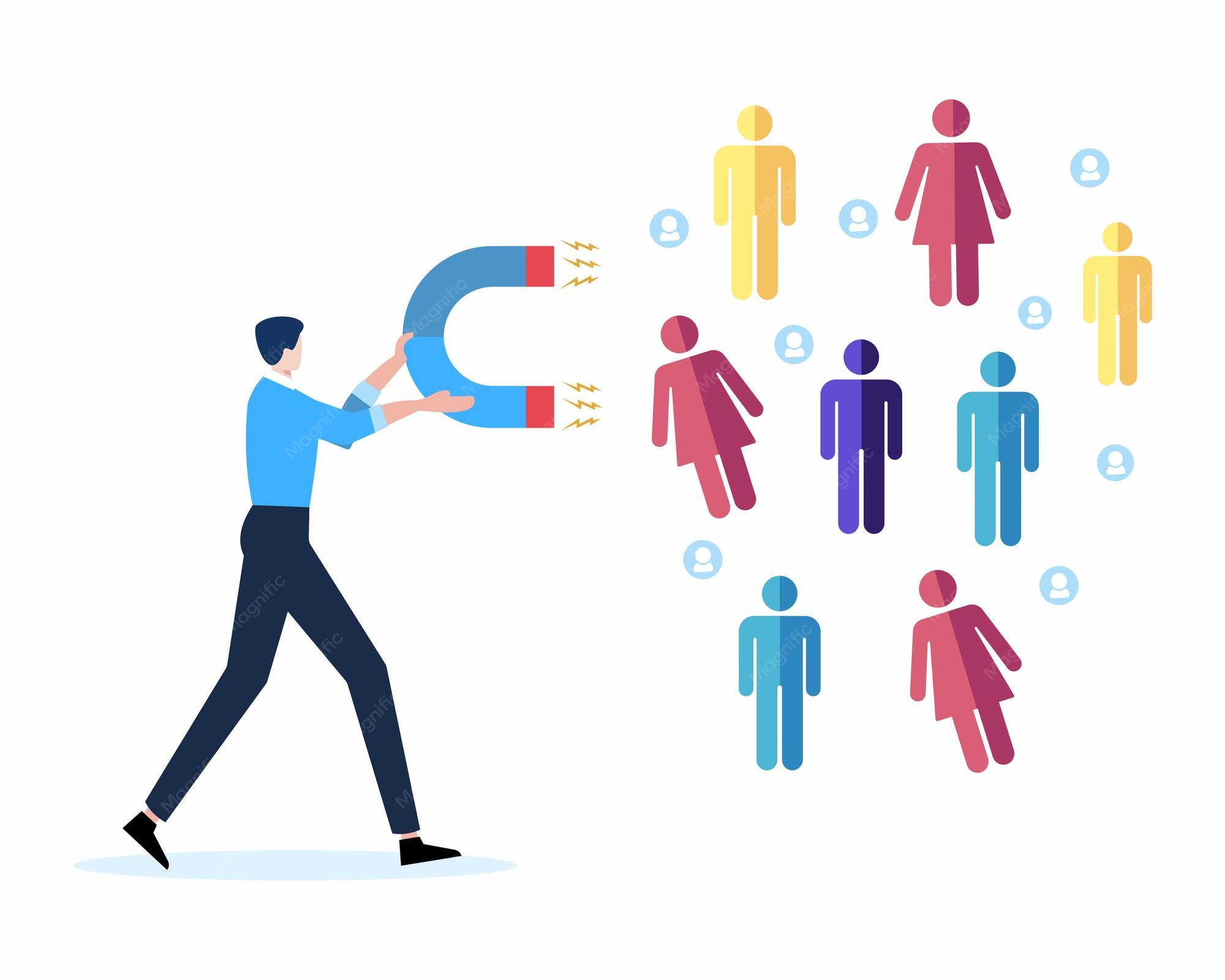
A retailer once told me, “I don’t need more marketing. I need more people coming through the door.”
The statement sounded reasonable.
It was also incomplete.
After spending time analyzing the business, one fact became impossible to ignore.
The store did not have a traffic problem.
It had a relevance problem.
People knew the store existed. They simply lacked a compelling reason to visit.
That distinction changed the entire strategy.
The owner had spent months investing in promotions, discounts, and advertising. Yet the most important question remained unanswered:
Why should a customer choose this store today?
Not eventually.
Not someday.
Today.
This is the challenge facing countless retailers.
Attracting customers is not simply about increasing visibility. Every business wants more attention. The difficult part is transforming attention into action.
The strongest retailers understand a fundamental principle:
Customers do not visit stores merely because stores exist.
They visit because something valuable is waiting for them.
Sometimes that value is convenience.
Sometimes it is expertise.
Sometimes it is discovery.
Sometimes it is belonging.
The job of retail marketing is to make that value unmistakable.
Start With the Customer, Not the Store
Many retailers begin customer acquisition by asking the wrong question.
“How do we get more people here?”
A better question is:
“What would make the right people want to come here?”
The difference matters.
Not every customer is equally valuable.
A retailer selling premium outdoor equipment does not necessarily need everyone walking past the storefront. It needs customers who appreciate quality products, seek expert advice, and are willing to invest.
Customer attraction begins with understanding:
- Who is your ideal customer?
- What motivates their purchase decisions?
- What problems are they trying to solve?
- Why would they choose you over competitors?
Clarity creates efficiency.
Without it, retailers often spend money trying to attract people who were never likely to become loyal customers.
Improve Your Storefront: The First Marketing Message
Before customers enter a store, they experience the store from the outside.
The storefront communicates.
Everything sends a message:
- Window displays
- Signage
- Lighting
- Cleanliness
- Product presentation
A neglected storefront creates hesitation.
A compelling storefront creates curiosity.
This does not require expensive renovations.
Often, small improvements create significant impact:
- Clear product displays
- Seasonal updates
- Visible promotions
- Strong branding
- Easy-to-understand messaging
The storefront is not decoration.
It is a silent salesperson.
And unlike employees, it works continuously.
Local Visibility: Make Sure Customers Can Find You
A surprising number of retailers underestimate discoverability.
A customer cannot choose a store they cannot find.
Local marketing remains one of the most practical ways to increase foot traffic.
Effective local strategies include:
- Optimizing Google Business Profile information
- Encouraging customer reviews
- Participating in community events
- Partnering with nearby businesses
- Creating location-specific content
The objective is simple:
When customers need what you sell, your store should appear as a natural option.
Visibility creates opportunity.
It does not guarantee purchase.
But without visibility, purchase cannot happen.
Create Reasons to Visit Beyond Buying Products
One of the biggest challenges physical retailers face is answering a difficult question:
Why should customers leave home?
Online shopping provides convenience.
Physical stores need to provide something different.
The strongest retailers create experiences.
Examples include:
- Product demonstrations
- Workshops
- Community events
- Expert consultations
- Exclusive launches
- In-store experiences
A customer who visits only to buy may compare prices.
A customer who visits for an experience develops a relationship.
Relationships are harder for competitors to copy.
Customer Attraction Strategy Comparison Table
| Strategy | Primary Goal | Cost Level | Speed of Results | Long-Term Impact | Best For |
|---|---|---|---|---|---|
| Local SEO | Increase discoverability | Low | Moderate | High | Local retailers |
| Loyalty Programs | Encourage repeat visits | Moderate | Moderate | Very High | Established stores |
| Community Events | Build relationships | Moderate | Fast | High | Neighborhood businesses |
| Social Media Marketing | Create awareness | Low to Moderate | Variable | Moderate | Brand building |
| Email Marketing | Drive repeat purchases | Low | Fast | High | Existing customers |
| Referral Programs | Generate trusted leads | Low | Moderate | Very High | Customer advocacy |
| Store Experiences | Increase engagement | Moderate | Fast | High | Specialty retail |
| Paid Advertising | Generate traffic | Moderate to High | Fast | Moderate | Customer acquisition |
| Partnerships | Expand reach | Low | Moderate | High | Local ecosystems |
| Personalized Offers | Improve conversion | Moderate | Fast | High | Data-driven retailers |
The table reveals an important pattern.
Many effective customer attraction strategies are not primarily advertising strategies.
They are relationship strategies.
Use Social Media to Create Interest Before the Visit
Retailers often treat social media as a place to announce promotions.
That approach limits its potential.
The strongest retail social media strategies create anticipation.
They show:
- New arrivals
- Customer stories
- Product demonstrations
- Behind-the-scenes moments
- Store personality
The goal is not simply to tell customers what is available.
It is to give them a reason to care.
A customer who feels connected to a store before visiting arrives with a different mindset.
The relationship has already begun.
Turn Existing Customers Into Your Best Marketing Channel
Retailers frequently underestimate their current customers.
Yet satisfied customers represent one of the most powerful acquisition tools available.
Why?
Trust.
Consumers generally trust recommendations from people they know more than traditional advertisements.
Referral strategies can include:
- Customer referral rewards
- Shareable experiences
- Review requests
- Community recognition
- Loyalty benefits
The strongest referrals do not feel manufactured.
They feel natural.
A customer recommends a store because the experience exceeded expectations.
That is difficult to replicate through paid advertising alone.
Build a Loyalty System That Creates Attachment
A loyalty program is not merely a discount system.
At its best, it creates recognition.
Customers want to feel known.
Effective loyalty programs provide:
- Personalized offers
- Early access
- Exclusive events
- Product recommendations
- Recognition for repeat visits
The objective is increasing customer lifetime value.
A first purchase creates revenue.
A repeat customer creates stability.
Improve Customer Experience Inside the Store
Attracting customers is only half the challenge.
Keeping them matters just as much.
A disappointing experience can undo successful marketing.
Retailers should evaluate:
- Employee helpfulness
- Checkout speed
- Product availability
- Store organization
- Return processes
I once worked with a retailer that believed its primary issue was insufficient advertising.
Leadership wanted more campaigns.
More promotions.
More traffic.
However, customer feedback revealed something else.
Visitors liked the products.
They disliked the shopping experience.
Employees were difficult to locate. Inventory information was inconsistent. Checkout processes created frustration.
The retailer invested heavily in attracting customers who were unlikely to return.
The lesson was clear:
Customer acquisition without customer satisfaction creates a leaking bucket.
Before filling the top, fix the bottom.
Use Data to Understand What Actually Works
Retailers now have access to more customer information than ever.
The challenge is interpretation.
Useful metrics include:
- Store traffic
- Conversion rate
- Average transaction value
- Repeat purchase rate
- Customer acquisition cost
- Customer lifetime value
These numbers reveal important patterns.
High traffic with low conversion suggests one problem.
Low traffic with high conversion suggests another.
Different problems require different solutions.
Data prevents retailers from treating every challenge as a marketing challenge.
Sometimes the issue is pricing.
Sometimes it is merchandising.
Sometimes it is service.
Good decisions begin with accurate diagnosis.
Create Partnerships Within Your Community
Retailers do not operate in isolation.
Nearby businesses can become valuable partners.
Examples include:
- Cross-promotions
- Joint events
- Local campaigns
- Community initiatives
A bookstore might partner with a coffee shop.
A fitness retailer might collaborate with local trainers.
A home goods store might work with interior designers.
The principle is simple:
Shared audiences create shared opportunities.
Personalization: Give Customers a Reason to Return
Attracting customers once is valuable.
Creating repeat behavior is more valuable.
Personalization helps retailers strengthen relationships.
Examples include:
- Birthday rewards
- Product recommendations
- Relevant promotions
- Follow-up messages
- Personalized shopping experiences
Customers notice when brands understand them.
They also notice when brands do not.
Relevance creates loyalty.
The Role of Technology in Customer Attraction
Technology increasingly influences how retailers attract customers.
Retailers use:
- Customer relationship management systems
- AI-powered recommendations
- Digital advertising tools
- Mobile apps
- Automated marketing platforms
These tools improve precision.
But technology alone does not create customer loyalty.
It amplifies strategy.
A poorly positioned retailer with sophisticated technology remains poorly positioned.
The foundation still matters.
Common Mistakes Retailers Make When Trying to Attract Customers
Several mistakes appear repeatedly.
Competing Only on Price
Discounts attract attention but rarely create loyalty.
Ignoring Existing Customers
Retention often costs less than constant acquisition.
Copying Competitors
Similarity creates invisibility.
Focusing on Traffic Alone
More visitors do not automatically create more revenue.
Neglecting the Store Experience
Marketing brings customers in.
Experience determines whether they return.
Conclusion: The Best Way to Attract Customers Is to Become Worth Visiting
Retailers often search for a tactic.
A new advertisement.
A new platform.
A new promotion.
But customer attraction is rarely solved by a single action.
The strongest retailers create a complete system.
They understand their customers.
They communicate clearly.
They create memorable experiences.
They build relationships.
They give people a reason to return.
Because the fundamental truth of retail has remained remarkably consistent:
Customers do not reward businesses merely for being available.
They reward businesses that are valuable.
A store becomes successful when it stops asking, “How do we get more people inside?”
and starts asking,
“Why would someone choose us?”
That question changes everything.
It transforms marketing from a pursuit of attention into a commitment to relevance.
And relevance is what turns occasional visitors into loyal customers.
- Arts
- Business
- Computers
- Oyunlar
- Health
- Home
- Kids and Teens
- Money
- News
- Personal Development
- Recreation
- Regional
- Reference
- Science
- Shopping
- Society
- Sports
- Бизнес
- Деньги
- Дом
- Досуг
- Здоровье
- Игры
- Искусство
- Источники информации
- Компьютеры
- Личное развитие
- Наука
- Новости и СМИ
- Общество
- Покупки
- Спорт
- Страны и регионы
- World

 English
 Russian
 French
 Spanish
 Portuguese
 Deutsch
 Dutch
Dutch
 Italiano
 Arabic
 Romaian
 Portuguese (Brazil)
 Greek
Greek
