
What Is Visual Merchandising? The Hidden Psychology Behind Why Customers Stop, Look, and Buy
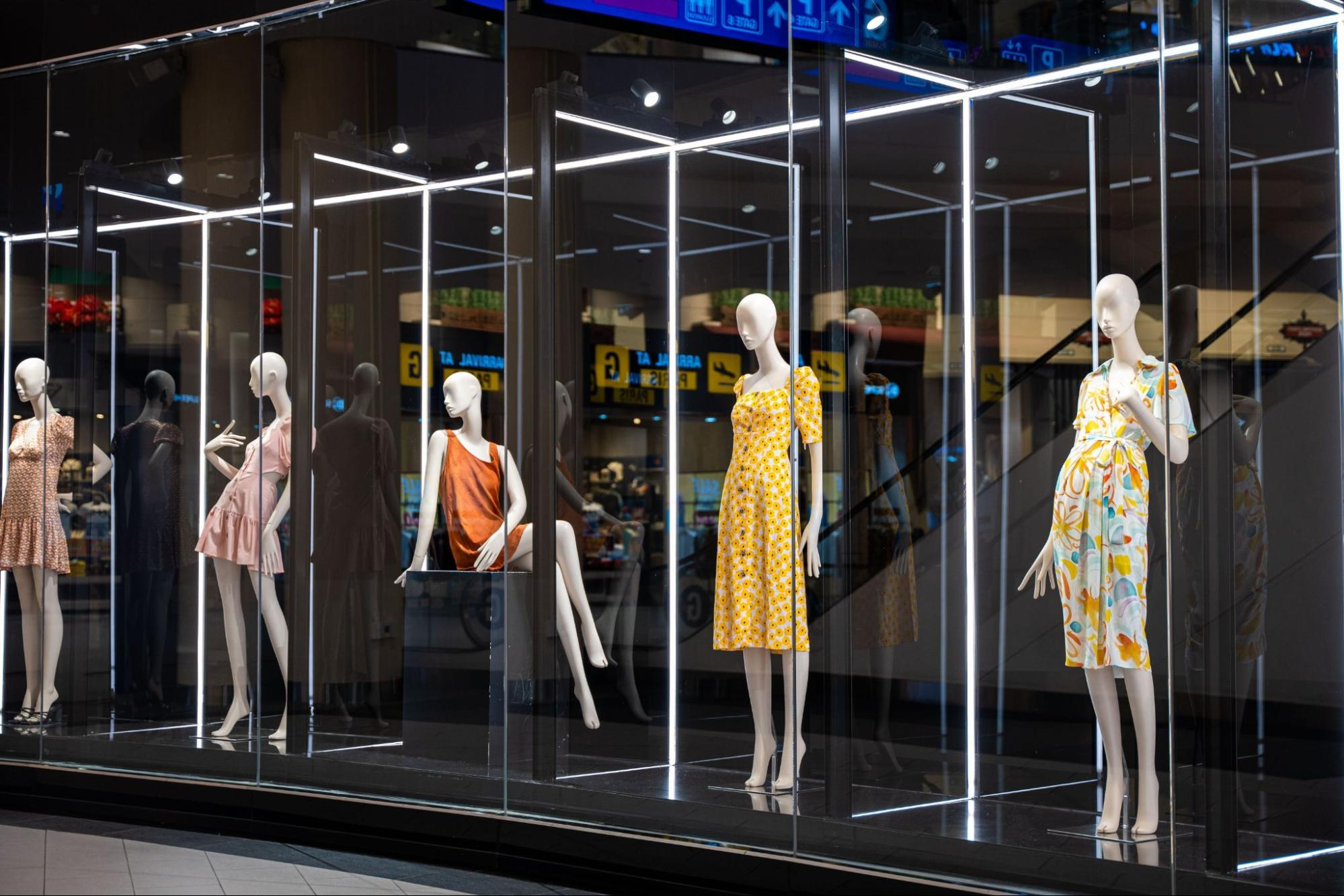
A customer walks into a clothing store.
She was not planning to purchase anything.
She was simply passing through.
Then something changes.
A carefully arranged display catches her attention. A mannequin shows an outfit combination she had not considered. The lighting highlights a new collection. The colors create a sense of possibility.
Five minutes later, she is trying on a jacket.
Thirty minutes after that, she leaves with a purchase.
What happened?
The answer is not simply “good products.”
The products existed before.
The difference was presentation.
This is the power of visual merchandising.
Often misunderstood as decoration, visual merchandising is actually a strategic discipline built around psychology, storytelling, and customer behavior.
It answers a fundamental retail question:
How do you transform products from objects into experiences?
Because customers rarely respond only to what they see.
They respond to what they imagine.
A display is not merely showing a product.
It is suggesting a lifestyle.
A possibility.
A solution.
The strongest retailers understand that every visual element communicates something.
The store layout.
The window display.
The product arrangement.
The lighting.
The colors.
The space between items.
Nothing is neutral.
Everything influences perception.
What Is Visual Merchandising?
Visual merchandising is the practice of designing retail environments and product presentations to attract customers, communicate brand identity, and encourage purchasing decisions.
It combines:
- Store design
- Product placement
- Display strategy
- Lighting
- Color psychology
- Customer behavior analysis
- Brand storytelling
The objective is not simply making a store look attractive.
A beautiful store that does not encourage purchasing has failed at visual merchandising.
The goal is creating an environment that guides customers naturally.
Where should they look?
Where should they walk?
What should they notice first?
What products should they consider together?
These decisions shape the customer journey.
Why Visual Merchandising Matters
Retail is an environment of choices.
Customers enter stores surrounded by competing messages.
Hundreds of products.
Multiple brands.
Different price points.
Limited attention.
Visual merchandising helps retailers organize that complexity.
It creates clarity.
A well-designed store reduces customer effort.
It answers questions silently:
- What is new?
- What is popular?
- What belongs together?
- What should I consider?
- What represents this brand?
The best visual merchandising does not feel controlling.
It feels intuitive.
Customers believe they are discovering products themselves.
That feeling matters.
The Psychology Behind Visual Merchandising
Visual merchandising works because human decision-making is influenced by environment.
People respond to:
- Color
- Arrangement
- Contrast
- Movement
- Space
- Context
A single product displayed alone communicates differently than the same product surrounded by complementary items.
A handbag placed beside a complete outfit tells a different story than a handbag sitting on a shelf.
Context creates meaning.
This is why retailers invest so heavily in presentation.
They are not only displaying merchandise.
They are shaping interpretation.
The Key Elements of Visual Merchandising
Visual merchandising consists of several interconnected components.
Each one influences the customer experience differently.
Store Window Displays: The First Impression
Before customers enter a store, they encounter the window.
The window is a retailer's opening statement.
It answers a critical question:
Why should someone come inside?
Effective window displays often include:
- A clear theme
- Strong focal points
- Seasonal relevance
- Brand personality
- Visual storytelling
A crowded window creates confusion.
An empty window creates indifference.
The strongest displays create curiosity.
They make customers want to see more.
Store Layout: Designing the Customer Journey
Once customers enter, layout becomes essential.
Retailers carefully consider:
- Traffic flow
- Product zones
- Customer movement
- High-visibility areas
- Checkout placement
Many stores use strategic placement to guide exploration.
Popular products may attract customers deeper into the store.
Complementary products may be positioned together.
Impulse items often appear near checkout.
The arrangement is intentional.
The customer may not consciously notice the strategy.
That is precisely the point.
Product Displays: Turning Items Into Stories
A product display should answer more than “What is this?”
It should answer:
“Why does this matter?”
Consider a kitchen retailer.
A single frying pan on a shelf communicates functionality.
A complete display showing the pan alongside cookware, ingredients, and a beautifully arranged kitchen scene communicates possibility.
The product becomes part of a story.
Stories influence decisions.
Lighting: The Overlooked Sales Tool
Lighting is one of the most underestimated aspects of visual merchandising.
It affects:
- Mood
- Product visibility
- Brand perception
- Customer comfort
Luxury retailers often use controlled lighting to create exclusivity.
Grocery stores may use bright lighting to emphasize freshness.
Beauty retailers carefully illuminate products to enhance presentation.
Lighting changes how customers perceive value.
Color and Visual Identity
Color influences recognition and emotion.
Retailers use color strategically to:
- Strengthen branding
- Highlight products
- Create atmosphere
- Signal seasons
A children’s store may use playful colors.
A luxury retailer may use restrained tones.
A sporting goods store may use energetic visual combinations.
Color is not merely aesthetic.
It communicates positioning.
Visual Merchandising Strategy Comparison Table
| Visual Merchandising Element | Primary Purpose | Customer Impact | Best Used For | Common Examples |
|---|---|---|---|---|
| Window Displays | Capture attention | Creates curiosity | Store entrances | Seasonal themes, new collections |
| Product Grouping | Encourage discovery | Simplifies choices | Cross-selling | Complete outfits, product bundles |
| Lighting Design | Influence perception | Enhances atmosphere | All retail formats | Accent lighting, displays |
| Store Layout | Guide movement | Improves navigation | Physical stores | Product zones, pathways |
| Signage | Provide information | Reduces confusion | Promotions and education | Price tags, product stories |
| Color Strategy | Reinforce identity | Shapes emotion | Brand environments | Seasonal palettes |
| Mannequins | Show possibilities | Inspires customers | Apparel retail | Styled outfits |
| Interactive Displays | Increase engagement | Creates involvement | Specialty retail | Demonstrations, samples |
The table reveals something important.
Visual merchandising is not one technique.
It is a coordinated system.
Visual Merchandising and Customer Behavior
Retailers often study how customers move through stores.
They analyze:
- Where customers pause
- Which displays attract attention
- Which products receive interaction
- Where purchases occur
These observations influence future decisions.
For example:
If customers consistently stop near a particular display but rarely purchase, the issue may not be attention.
It may be product selection.
Or pricing.
Or messaging.
Visual merchandising provides valuable behavioral information.
The Role of Technology in Visual Merchandising
Technology has expanded the possibilities of retail presentation.
Modern retailers use:
- Digital signage
- Interactive screens
- Smart displays
- Augmented reality experiences
- Data-driven merchandising tools
Digital displays can change quickly.
Promotions can update instantly.
Customer preferences can influence presentation.
However, technology does not replace creativity.
A digital screen showing irrelevant content is still irrelevant.
The strategy must come first.
How Visual Merchandising Supports Brand Identity
A store communicates before employees ever speak.
A premium retailer creates one expectation.
A discount retailer creates another.
A specialty retailer creates another.
Visual merchandising ensures that physical space aligns with brand promise.
Consistency matters.
A customer should recognize the brand through:
- Colors
- Layout
- Materials
- Product arrangement
- Atmosphere
The environment becomes part of the brand.
A Lesson Learned From a Retail Display Mistake
I once observed a retailer redesign an entire product section with one goal: increase visibility.
The company believed the merchandise was hidden.
So it created larger displays.
More signs.
More products.
More visual elements.
The result was unexpected.
Customers noticed the section more.
They also purchased less.
Why?
The display had become overwhelming.
Customers could see everything.
They could not understand anything.
The retailer simplified the presentation.
Fewer products.
Clearer messaging.
Stronger storytelling.
Sales improved.
The lesson was simple:
Visibility is not the same as clarity.
Effective visual merchandising does not maximize what customers see.
It improves what customers understand.
Common Visual Merchandising Mistakes
Even experienced retailers make mistakes.
Too Much Merchandise
More products do not always create more sales.
Ignoring Customer Flow
A beautiful display in the wrong location may fail.
Inconsistent Branding
The store experience should match the brand promise.
Changing Displays Too Rarely
Customers respond to freshness and discovery.
Focusing Only on Appearance
Visual merchandising must influence behavior, not simply create beauty.
The Future of Visual Merchandising
Visual merchandising continues to evolve.
Retailers are increasingly combining creativity with analytics.
Future strategies may include:
- More personalized displays
- AI-assisted product placement
- Dynamic digital environments
- Interactive shopping experiences
- Data-informed layouts
The direction is clear.
Visual merchandising is becoming more measurable.
But its foundation remains human psychology.
Customers still respond to stories.
They still seek inspiration.
They still make decisions influenced by emotion and context.
Technology may change the tools.
It does not change the principles.
Conclusion: Visual Merchandising Is Retail Storytelling Without Words
The most powerful retail displays do not simply show products.
They create ideas.
A jacket becomes confidence.
A kitchen appliance becomes creativity.
A piece of furniture becomes a vision of home.
A product becomes part of a customer's imagined future.
That is why visual merchandising matters.
It transforms retail from a collection of items into an experience.
The best retailers understand that customers do not enter stores looking only for products.
They enter looking for possibilities.
Visual merchandising creates those possibilities.
It guides attention.
Shapes perception.
Encourages discovery.
And ultimately influences decisions.
The future of retail will continue introducing new technologies, new channels, and new shopping behaviors.
Yet one principle will remain constant:
People buy what they can understand, imagine, and connect with.
Visual merchandising is the discipline of making that connection visible.
- Arts
- Business
- Computers
- الألعاب
- Health
- الرئيسية
- Kids and Teens
- مال
- News
- Personal Development
- Recreation
- Regional
- Reference
- Science
- Shopping
- Society
- Sports
- Бизнес
- Деньги
- Дом
- Досуг
- Здоровье
- Игры
- Искусство
- Источники информации
- Компьютеры
- Личное развитие
- Наука
- Новости и СМИ
- Общество
- Покупки
- Спорт
- Страны и регионы
- World

 English
 Russian
 French
 Spanish
 Portuguese
 Deutsch
 Turkish
 Dutch
Dutch
 Italiano
 Romaian
 Portuguese (Brazil)
 Greek
Greek
