
What Is Gross Margin in Retail?
A customer walks into a store and buys a sweater for $100.
The transaction takes less than two minutes.
The customer leaves with a shopping bag. The retailer records a sale. Everyone appears satisfied.
Yet hidden beneath that seemingly ordinary exchange is a question that determines whether the business thrives, struggles, or quietly disappears:
How much money did the retailer actually make?
Not revenue. Not sales.
Margin.
Retail executives spend extraordinary amounts of time discussing gross margin because it reveals something deeper than top-line growth. Revenue tells us what came in. Gross margin tells us what remains after paying for the merchandise itself.
That distinction may sound subtle.
It is not.
A retailer can generate billions in sales and still face significant financial pressure if gross margins deteriorate. Conversely, a retailer with smaller revenue may enjoy remarkable financial strength because it captures more value from every transaction.
This is one of retail’s enduring paradoxes. Bigger is not always better. More sales do not automatically create more profit. Sometimes the retailer selling less is actually earning more.
That is why gross margin occupies such a central place in retail strategy.
It is not merely an accounting metric.
It is a reflection of pricing power, merchandising effectiveness, supplier relationships, customer demand, and competitive positioning—all condensed into a single percentage.
What Is Gross Margin in Retail?
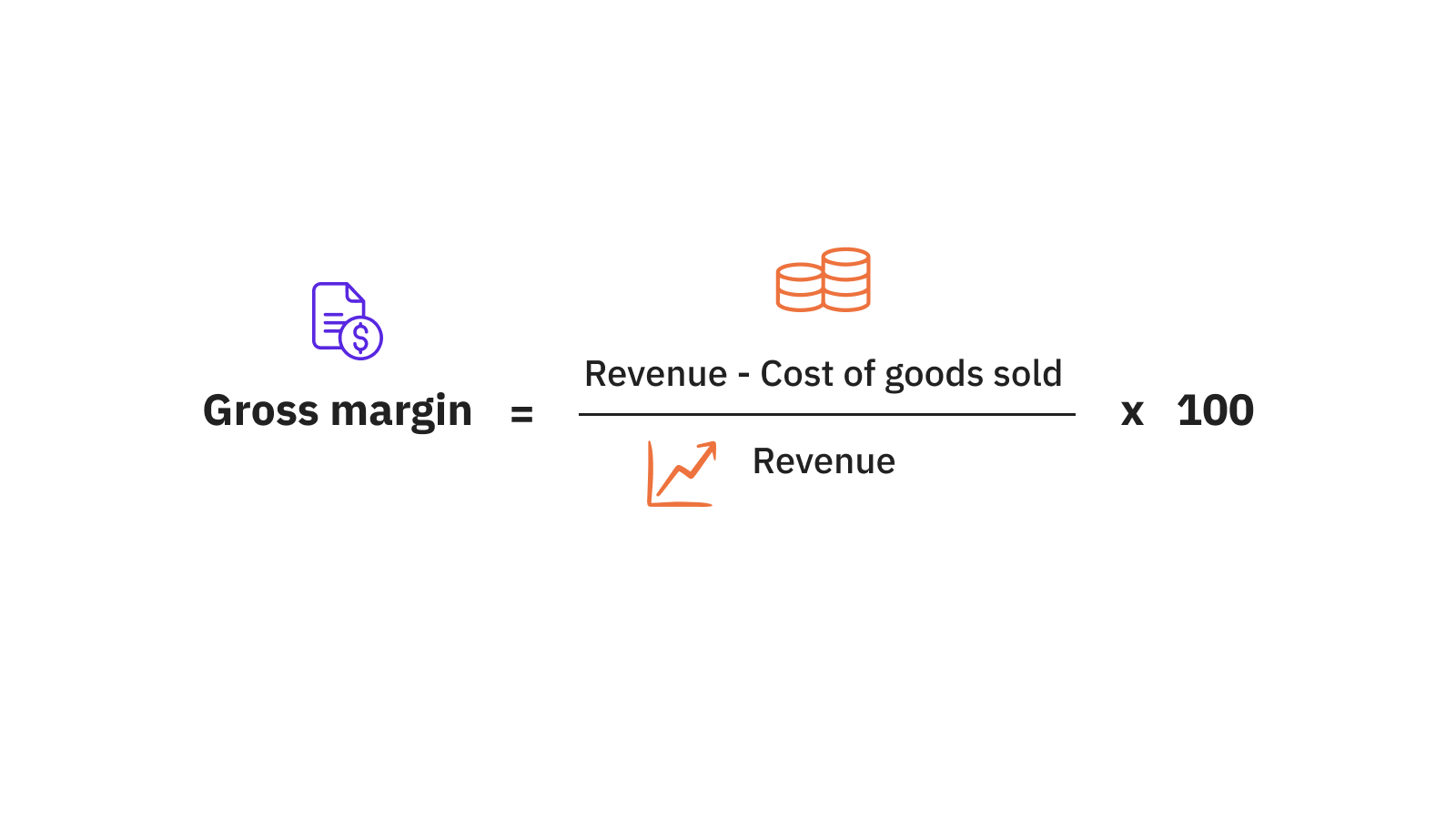
Gross margin measures the percentage of revenue remaining after subtracting the cost of goods sold (COGS).
In simpler terms, it shows how much money a retailer keeps from sales after paying for the products it sells.
The formula is:
Gross Margin (%) = ((Revenue – Cost of Goods Sold) ÷ Revenue) × 100
Suppose a retailer sells a product for $100.
The product costs the retailer $60.
The gross profit equals:
$100 – $60 = $40
The gross margin equals:
$40 ÷ $100 = 40%
Expressed as a percentage:
40% Gross Margin
This means the retailer retains 40 cents from every dollar of sales before accounting for operating expenses such as rent, labor, marketing, technology, and distribution.
The number appears straightforward.
The implications are anything but.
Why Gross Margin Matters More Than Many Retailers Realize
Retail businesses survive on a delicate balance.
They must attract customers with compelling products and competitive prices while generating sufficient profitability to support ongoing operations.
Gross margin sits at the center of that balancing act.
A healthy gross margin provides resources for:
- Store operations
- Employee wages
- Marketing investments
- Technology improvements
- Supply chain enhancements
- Future growth initiatives
When gross margins decline, pressure spreads throughout the organization.
Every decision becomes harder.
Every investment becomes more scrutinized.
Every forecast becomes less forgiving.
That is why experienced retailers often monitor gross margin as closely as they monitor sales.
Revenue creates excitement.
Margin creates sustainability.
Gross Margin vs. Gross Profit: Understanding the Difference
These terms are frequently confused.
They should not be.
Gross Profit
Gross profit refers to the actual dollar amount remaining after subtracting product costs.
Example:
- Revenue: $500,000
- Cost of Goods Sold: $300,000
Gross Profit:
$200,000
Gross Margin
Gross margin expresses that same relationship as a percentage.
Using the same numbers:
($200,000 ÷ $500,000) × 100 = 40%
Gross Margin:
40%
The distinction matters because percentages allow meaningful comparisons across stores, categories, and time periods.
A retailer generating $2 million in gross profit is not necessarily performing better than one generating $1 million.
Context matters.
Gross margin helps provide that context.
The Formula Behind Gross Margin
The calculation itself remains remarkably simple:
Gross Margin = (Sales Revenue – Cost of Goods Sold) ÷ Sales Revenue
Yet understanding what qualifies as cost of goods sold requires greater attention.
COGS generally includes:
- Merchandise acquisition costs
- Manufacturing costs for owned products
- Freight-in expenses
- Import duties
- Certain direct sourcing expenses
COGS generally excludes:
- Marketing expenses
- Store payroll
- Rent
- Administrative costs
- Technology investments
This distinction is critical because gross margin focuses specifically on product economics.
It answers one essential question:
How effectively does the retailer convert merchandise into profit?
Typical Gross Margins Across Retail Categories
Gross margins vary dramatically by sector.
A grocery retailer and a luxury retailer operate under fundamentally different economics.
The comparison below illustrates the range.
| Retail Category | Typical Gross Margin |
|---|---|
| Grocery Stores | 20%–35% |
| Discount Retailers | 20%–30% |
| Consumer Electronics | 15%–30% |
| Home Improvement | 30%–40% |
| Department Stores | 30%–45% |
| Sporting Goods | 30%–50% |
| Specialty Apparel | 40%–60% |
| Beauty Retail | 35%–65% |
| Luxury Goods | 50%–80% |
Notice something interesting.
The categories with the highest gross margins are not necessarily those with the highest sales volumes.
Luxury brands often generate exceptional margins despite lower transaction counts.
Grocery retailers generate enormous sales volumes despite comparatively thin margins.
Both approaches can be successful.
The path differs.
The destination remains the same.
Gross Margin Is Really About Value Perception
One of retail’s most fascinating realities is that customers never see gross margin.
They see prices.
They see products.
They see experiences.
Gross margin emerges from how customers perceive value.
Consider two handbags.
Each may cost a retailer roughly similar amounts to source.
Yet one sells for $80 while another sells for $800.
The difference lies not in manufacturing costs alone but in branding, design, storytelling, exclusivity, and customer perception.
This observation reveals an important truth:
Gross margin is often a measure of value creation as much as cost management.
Retailers with strong brands frequently sustain higher margins because customers perceive greater value.
The product becomes more than the product.
And that changes everything.
The Relationship Between Gross Margin and Pricing
Pricing decisions directly influence gross margin.
Raise prices while costs remain stable and margins increase.
Lower prices without reducing costs and margins decline.
Simple.
Yet retail pricing is rarely simple.
Customers constantly evaluate alternatives.
Competitors adjust prices.
Promotions reshape expectations.
Economic conditions evolve.
As a result, retailers must balance profitability against customer demand.
The challenge resembles a tightrope.
Price too aggressively and customers may leave.
Price too conservatively and profitability suffers.
The most effective retailers navigate this tension with remarkable precision.
How Inventory Management Affects Gross Margin
Many people associate gross margin primarily with pricing.
Inventory management deserves equal attention.
Poor inventory decisions can quickly erode margins.
Consider what happens when retailers overbuy merchandise.
Inventory accumulates.
Seasonal relevance declines.
Markdowns become necessary.
Gross margins shrink.
The opposite problem creates different challenges.
Insufficient inventory leads to stockouts and missed revenue opportunities.
Strong retailers therefore focus intensely on inventory productivity.
The goal is deceptively simple:
Sell merchandise at full price before discounts become necessary.
Achieving that consistently is extraordinarily difficult.
A Lesson I Learned About Gross Margin
Several years ago, I examined two specialty retailers operating in similar categories.
At first glance, one appeared stronger.
Its sales growth outpaced competitors.
Store traffic looked impressive.
Industry observers praised its momentum.
Then I reviewed the gross margin data.
A different story emerged.
The retailer was relying heavily on promotions to sustain sales growth. Discounts drove traffic, but they also compressed margins. Revenue increased while profitability weakened.
Meanwhile, a less celebrated competitor maintained stronger pricing discipline. Sales growth was slower, but margins remained healthy.
That experience reinforced an important lesson.
Growth and profitability are not always aligned.
Retail leaders must understand both.
A business cannot discount its way to long-term success indefinitely.
Eventually, margins demand attention.
Gross Margin Return on Investment (GMROI)
Sophisticated retailers often go beyond gross margin alone.
They evaluate Gross Margin Return on Investment, commonly called GMROI.
This metric measures how efficiently inventory generates gross profit.
Formula:
GMROI = Gross Margin Dollars ÷ Average Inventory Cost
The concept is powerful because inventory represents one of retail’s largest investments.
Retailers do not simply want higher margins.
They want higher margins generated efficiently.
A product with exceptional margins but extremely slow turnover may not perform as well as a lower-margin product that sells rapidly.
This insight helps explain why some retailers prioritize velocity while others prioritize margin.
Success often requires balancing both.
Common Mistakes Retailers Make With Gross Margin
Gross margin is valuable.
It is not infallible.
Several mistakes frequently occur.
Focusing Exclusively on Margin
A retailer can increase margins by raising prices.
But excessive price increases may reduce demand.
Margin improvement becomes meaningless if customers disappear.
Ignoring Customer Experience
Some retailers attempt to improve margins through aggressive cost reductions.
Lower staffing levels, weaker service, and diminished experiences can undermine customer loyalty.
Margin gains achieved at the expense of customer satisfaction rarely endure.
Comparing Across Categories
A 25% grocery margin may be exceptional.
A 25% luxury margin may signal trouble.
Benchmarks must always reflect category realities.
Without context, margin analysis becomes misleading.
Gross Margin in an Omnichannel Environment
Modern retail has complicated the margin equation.
Stores remain important.
Websites matter.
Mobile commerce matters.
Marketplaces matter.
Each channel introduces unique cost structures.
A store purchase and an online purchase may generate identical revenue yet produce different margins.
Shipping costs, returns, fulfillment expenses, and customer acquisition costs all influence profitability.
As a result, many retailers now evaluate gross margins at increasingly granular levels.
They analyze margins by:
- Product category
- Channel
- Region
- Customer segment
- Vendor relationship
This level of detail helps retailers identify where value is truly being created.
The era of relying solely on company-wide averages has largely passed.
How Leading Retailers Protect Gross Margins
Successful retailers tend to focus on several recurring strategies.
Strong Brand Positioning
Differentiated brands often command premium pricing.
Premium pricing supports stronger margins.
Private Label Development
Private-label products frequently generate higher margins because retailers capture more of the value chain.
Better Demand Forecasting
Accurate forecasting reduces markdowns and inventory waste.
Strategic Vendor Partnerships
Strong supplier relationships can lower merchandise costs while improving product quality and availability.
Customer Loyalty Programs
Loyal customers tend to be less price-sensitive, supporting healthier margins over time.
These initiatives differ operationally, but they share a common objective:
Protect profitability without compromising customer value.
Conclusion: Gross Margin Reveals the Quality of Retail Growth
Gross margin rarely receives the attention that revenue commands.
Sales figures dominate headlines.
Growth rates attract investor enthusiasm.
Store openings generate excitement.
Yet gross margin often tells the more important story.
It reveals whether a retailer is creating value or merely generating volume. It exposes the effectiveness of pricing decisions, merchandising strategies, inventory management, and brand positioning. It shows whether growth is being purchased through discounts or earned through customer demand.
The provocative reality is that revenue can sometimes conceal weakness.
Gross margin rarely does.
A retailer may report impressive sales growth while profitability quietly deteriorates. Another may grow more slowly while building a healthier and more resilient business.
That is why experienced retail leaders never stop at the top line.
They look beneath it.
Because gross margin is more than a financial metric. It is a measure of how effectively a retailer transforms customer demand into economic value. And in retail, where competition is relentless and customer expectations continually evolve, that ability often separates enduring brands from temporary success stories.
- Arts
- Business
- Computers
- Παιχνίδια
- Health
- Κεντρική Σελίδα
- Kids and Teens
- Money
- News
- Personal Development
- Recreation
- Regional
- Reference
- Science
- Shopping
- Society
- Sports
- Бизнес
- Деньги
- Дом
- Досуг
- Здоровье
- Игры
- Искусство
- Источники информации
- Компьютеры
- Личное развитие
- Наука
- Новости и СМИ
- Общество
- Покупки
- Спорт
- Страны и регионы
- World

 English
 Russian
 French
 Spanish
 Portuguese
 Deutsch
 Turkish
 Dutch
Dutch
 Italiano
 Arabic
 Romaian
 Portuguese (Brazil)
