
What Does SaaS Stand For? A Simple Acronym That Changed How Businesses Buy Software
Some acronyms remain confined to industry conferences and technical documentation.
Others escape.
They migrate into boardrooms, startup pitches, investor presentations, marketing strategies, and everyday business conversations. SaaS belongs firmly in the second category.
Mention the term in almost any business setting today and someone will immediately recognize it. Yet recognition and understanding are not necessarily the same thing.
Many people know SaaS has something to do with cloud computing.
Others associate it with subscription software.
Still others think of it as a technology category populated by companies like Salesforce, Zoom, Shopify, or HubSpot.
All of those associations are partially correct.
But the acronym itself tells a much larger story.
Because SaaS is not simply a technological evolution. It represents a fundamental shift in how software is created, distributed, purchased, maintained, and experienced.
And remarkably, that transformation is embedded in three simple words.
What Does SaaS Stand For?
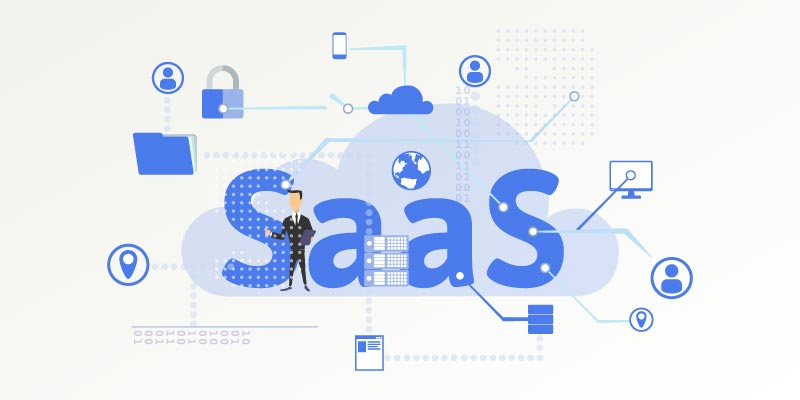
SaaS stands for Software as a Service.
At first glance, the phrase seems straightforward.
Software.
As.
A.
Service.
Yet each word carries significance.
Historically, software was treated as a product. Customers purchased licenses, installed programs on local computers, managed updates, and maintained infrastructure.
SaaS changed that model.
Instead of buying software as a product, customers access software as an ongoing service delivered through the internet.
The distinction appears subtle.
Its impact has been enormous.
Today, millions of businesses use SaaS platforms every day without installing anything beyond a web browser or mobile application.
Software became something customers access rather than something they possess.
That shift altered the economics of technology.
It also altered customer expectations.
Why the Word “Service” Matters
Of the three words in the acronym, the most important may be the last one.
Service.
For decades, software companies focused heavily on delivering products.
A product was completed.
Sold.
Installed.
Supported.
The transaction largely ended.
SaaS introduced a different relationship.
Customers subscribe.
Providers continuously improve the platform.
Updates happen automatically.
New features appear regularly.
Performance remains the vendor's responsibility.
The relationship becomes ongoing rather than transactional.
This distinction helps explain why SaaS businesses often obsess over customer satisfaction, retention, onboarding, and user engagement.
Revenue depends not only on acquiring customers but also on keeping them.
In many respects, SaaS transformed software companies into service businesses.
The acronym reflects that reality.
The Origins of SaaS
To appreciate SaaS, it helps to remember what software looked like before it became a service.
Years ago, purchasing enterprise software often involved substantial upfront investments.
Organizations purchased licenses.
Installed software on internal servers.
Maintained dedicated hardware.
Managed upgrades.
Employed technical staff to support implementation.
The process could take months.
Sometimes longer.
Large technology deployments often resembled construction projects.
Complex.
Expensive.
Difficult to modify once completed.
The emergence of cloud infrastructure created new possibilities.
Software providers could host applications centrally and deliver access through the internet.
Customers no longer needed to own the infrastructure.
Providers handled the complexity.
Users focused on outcomes.
What began as a technological innovation quickly evolved into a business revolution.
How SaaS Works
The mechanics of SaaS are surprisingly simple from the user's perspective.
A provider develops and hosts software.
Customers subscribe.
Users log in through browsers or apps.
The provider manages infrastructure, security, maintenance, and updates.
The customer accesses functionality.
The complexity remains largely invisible.
This invisibility is important.
Customers generally do not purchase software because they enjoy software.
They purchase software because they need solutions.
SaaS reduces the effort required to obtain those solutions.
And convenience, as many successful businesses have discovered, is often a powerful source of value.
SaaS vs. Traditional Software
The differences between SaaS and traditional software become clearer when viewed side by side.
| Factor | Traditional Software | SaaS |
|---|---|---|
| Delivery Method | Installed locally | Accessed online |
| Pricing Model | Upfront license fee | Monthly or annual subscription |
| Updates | Manual installation | Automatic updates |
| Infrastructure | Customer-managed | Vendor-managed |
| Accessibility | Device dependent | Accessible from multiple devices |
| Maintenance | Internal responsibility | Provider responsibility |
| Deployment Time | Often lengthy | Typically faster |
| Scalability | Hardware constrained | Flexible and scalable |
| Initial Investment | Higher upfront cost | Lower starting cost |
| Customer Relationship | Transaction-focused | Ongoing service-focused |
Notice what changed.
The software itself remains important.
But the customer experience changes dramatically.
Friction decreases.
Flexibility increases.
Complexity shifts away from users.
This helps explain why SaaS adoption accelerated across industries.
Common Examples of SaaS
Many people use SaaS daily without consciously identifying it as such.
Examples include:
- Customer relationship management platforms
- Project management software
- Video conferencing tools
- Accounting applications
- Email marketing systems
- E-commerce platforms
- Human resources software
- Collaboration tools
- Cloud storage services
- Productivity suites
The variety is striking.
SaaS is not limited to one function or industry.
It supports nearly every aspect of modern business operations.
That breadth reflects the versatility of the model itself.
Why Businesses Prefer SaaS
The popularity of SaaS stems from a combination of practical and strategic advantages.
Lower Initial Costs
Traditional software often required significant upfront expenditures.
SaaS spreads costs across subscription periods.
This makes sophisticated technology accessible to a wider range of organizations.
Faster Implementation
Organizations can often begin using SaaS platforms within days rather than months.
Speed matters.
Especially in competitive environments.
Continuous Improvement
Unlike static software products, SaaS applications evolve constantly.
Providers release enhancements regularly.
Customers benefit without disruptive upgrades.
Greater Flexibility
Businesses can frequently add users, remove users, upgrade plans, or expand capabilities as needs change.
This adaptability aligns well with modern organizational realities.
The SaaS Metrics That Matter
One interesting consequence of the SaaS model is the emergence of entirely new business metrics.
Traditional software companies focused heavily on license sales.
SaaS companies focus heavily on customer relationships.
Several metrics illustrate this shift.
Monthly Recurring Revenue (MRR)
MRR measures predictable subscription revenue generated each month.
It provides visibility into business stability.
Annual Recurring Revenue (ARR)
ARR annualizes recurring subscription revenue.
Investors frequently use this metric when evaluating SaaS businesses.
Customer Acquisition Cost (CAC)
CAC measures how much it costs to acquire a customer.
Growth becomes meaningful only when acquisition remains economically sustainable.
Customer Lifetime Value (CLV)
CLV estimates the long-term revenue generated by a customer relationship.
This metric reinforces one of SaaS's central principles: retention matters.
These measurements reveal something important.
SaaS companies succeed when customers continue finding value.
The business model encourages long-term alignment.
A Lesson I Learned About SaaS
Several years ago, I worked with an executive team evaluating new technology investments.
The conversation initially focused on software features.
Functionality.
Technical specifications.
Vendor comparisons.
Then a department leader asked a deceptively simple question:
"How quickly can our employees start benefiting from this?"
The room shifted.
Suddenly, the discussion was no longer about software.
It was about outcomes.
Implementation speed.
Ease of use.
Adoption.
Productivity.
That moment clarified something I had observed repeatedly throughout technology decisions.
Customers rarely care about software itself.
They care about what software enables them to accomplish.
SaaS succeeds because it aligns with that perspective.
It reduces barriers between the customer and the desired outcome.
The technology remains important.
The experience becomes more important.
The Evolution of SaaS Beyond Software
An interesting development has occurred over the past decade.
SaaS has evolved from a delivery model into a broader business philosophy.
The principles underlying SaaS increasingly appear across industries.
Recurring revenue.
Continuous improvement.
Customer-centric design.
Long-term relationships.
Service-oriented thinking.
These concepts influence businesses far beyond software.
Why?
Because they align closely with changing customer expectations.
Customers increasingly expect products and services to evolve, improve, and adapt over time.
SaaS anticipated that shift.
Common Misconceptions About SaaS
Despite its popularity, several misconceptions persist.
SaaS Is Not Just Cloud Storage
Cloud storage can be part of SaaS.
It is not synonymous with SaaS.
The category includes thousands of applications and services.
SaaS Is Not Only for Large Businesses
Many SaaS solutions are specifically designed for small businesses, entrepreneurs, and startups.
SaaS Is Not Necessarily Cheap
Subscription pricing reduces upfront costs.
Long-term expenses can still be substantial depending on usage and scale.
SaaS Is Not a Technology Trend
At this point, SaaS represents a mature business model rather than a temporary phenomenon.
It has become foundational infrastructure for many organizations.
Why the Acronym Continues to Matter
Some business terms fade as technologies mature.
SaaS has remained remarkably durable.
Part of the reason is that the acronym describes more than a technical architecture.
It captures a customer value proposition.
Software delivered as a service emphasizes accessibility, convenience, flexibility, and ongoing improvement.
Those benefits remain relevant regardless of technological changes.
Artificial intelligence may reshape software.
Automation may reshape workflows.
New interfaces may emerge.
Yet the underlying logic of SaaS remains compelling.
Customers generally prefer outcomes delivered with less friction.
SaaS embodies that preference.
Conclusion: SaaS Stands for More Than Three Words
Technically, SaaS stands for Software as a Service.
That is the correct answer.
But it is also an incomplete answer.
The acronym represents a broader transformation in how businesses think about technology. It reflects a move away from ownership and toward access. Away from one-time transactions and toward ongoing relationships. Away from static products and toward continuously evolving services.
The significance of SaaS is not that software became available through the internet.
The significance is that software became customer-centered.
The best SaaS companies do not merely deliver functionality. They deliver outcomes, adaptability, and ongoing value.
That is why SaaS remains one of the most influential business models of the modern era.
Three words.
One acronym.
And a profound redefinition of what software can be.
- Arts
- Business
- Computers
- Игры
- Health
- Главная
- Kids and Teens
- Деньги
- News
- Personal Development
- Recreation
- Regional
- Reference
- Science
- Shopping
- Society
- Sports
- Бизнес
- Деньги
- Дом
- Досуг
- Здоровье
- Игры
- Искусство
- Источники информации
- Компьютеры
- Личное развитие
- Наука
- Новости и СМИ
- Общество
- Покупки
- Спорт
- Страны и регионы
- World

 English
 French
 Spanish
 Portuguese
 Deutsch
 Turkish
 Dutch
Dutch
 Italiano
 Arabic
 Romaian
 Portuguese (Brazil)
 Greek
Greek
