
What Is the Difference Between SaaS, PaaS, and IaaS? Understanding the Three Layers of Cloud Computing
Every technology revolution creates a new vocabulary.
Some terms disappear quickly.
Others become so common that people use them without fully understanding what they mean.
SaaS. PaaS. IaaS.
Three acronyms.
Three different approaches to using technology.
And three concepts that often become blurred together.
The confusion is understandable. All three models rely on cloud computing. All three involve accessing technology through the internet. All three have transformed how organizations build, operate, and consume digital services.
Yet they represent very different levels of responsibility.
The simplest way to think about the distinction is this:
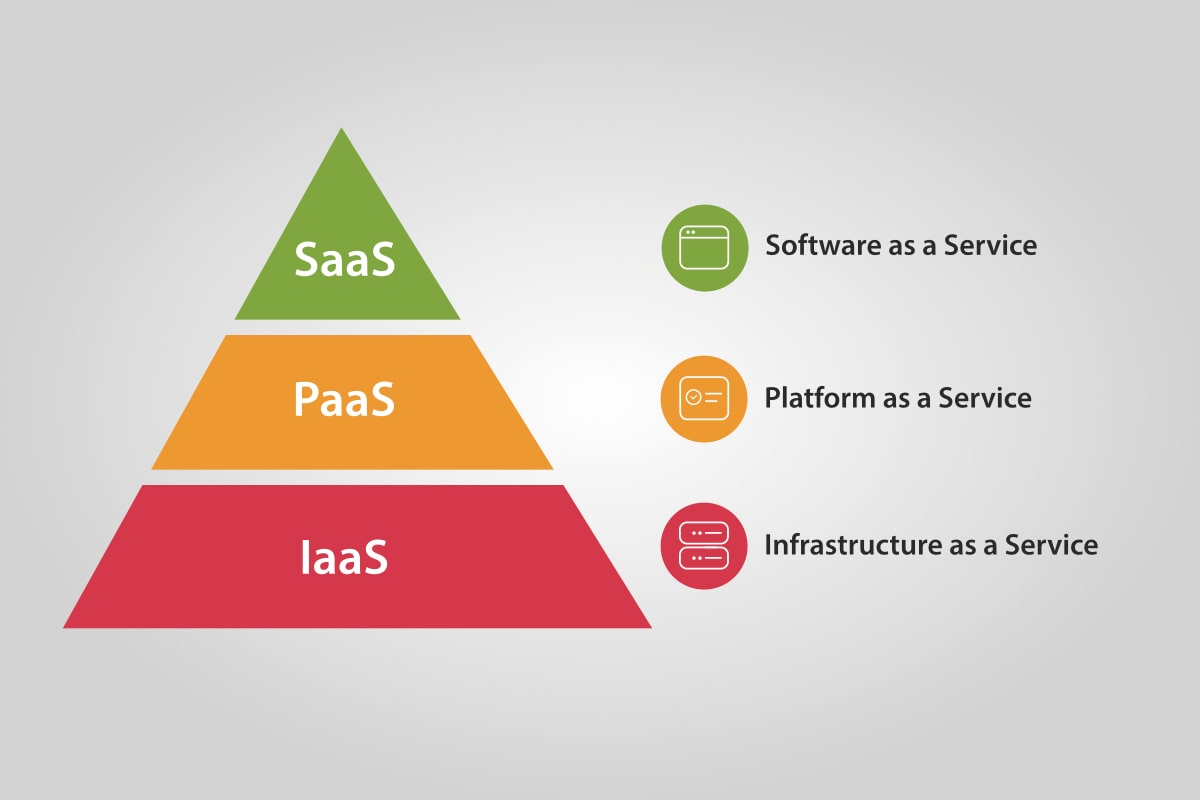
SaaS gives you finished software.
PaaS gives you a platform to build software.
IaaS gives you the infrastructure to create your own technology environment.
That difference may appear straightforward.
The implications are not.
Choosing between SaaS, PaaS, and IaaS is ultimately a decision about control, complexity, resources, and business priorities.
The question is not which model is best.
The question is which model gives an organization the right balance between convenience and control.
The Cloud Computing Stack Explained
Before comparing SaaS, PaaS, and IaaS, it helps to understand cloud computing as a layered structure.
Imagine a restaurant.
Some customers want a finished meal.
They do not want to purchase ingredients, operate a kitchen, or manage cooking equipment.
Others want a professional kitchen where they can create their own recipes.
Some want the entire facility and the freedom to design everything themselves.
Cloud computing follows a similar pattern.
At one end is maximum convenience.
At the other is maximum control.
SaaS sits closest to the customer experience.
IaaS sits closest to the underlying technology infrastructure.
PaaS exists between them.
Each layer solves a different problem.
What Is SaaS?
Software as a Service (SaaS) is the most familiar cloud model.
It delivers complete software applications through the internet.
Customers do not manage servers.
They do not maintain operating systems.
They do not install software manually.
They simply use the application.
Examples include:
- Customer relationship management platforms
- Email marketing tools
- Accounting software
- Collaboration applications
- Project management systems
When a company uses a SaaS platform, the provider manages nearly everything behind the scenes.
The customer focuses on using the software to accomplish business goals.
How SaaS Works
A SaaS provider hosts an application on cloud infrastructure.
Users access the application through browsers or mobile apps.
The provider handles:
- Software updates
- Security patches
- Infrastructure maintenance
- System availability
- Data storage
The customer receives functionality without managing technical complexity.
This explains why SaaS became so popular.
It removes barriers between businesses and the tools they need.
What Is PaaS?
Platform as a Service (PaaS) occupies the middle layer.
It does not provide finished applications.
Instead, it provides an environment where developers can build, test, and deploy applications.
Think of PaaS as a ready-made workshop.
The tools are available.
The workspace is prepared.
The developer focuses on creating.
PaaS removes much of the infrastructure management burden while preserving development flexibility.
Examples include platforms that provide:
- Development environments
- Database management tools
- Application hosting
- Deployment frameworks
- Programming resources
PaaS is particularly valuable for organizations building custom software.
How PaaS Works
A PaaS provider manages the underlying infrastructure.
Developers use the platform to create applications.
The provider handles:
- Servers
- Operating systems
- Runtime environments
- Infrastructure maintenance
Developers focus on:
- Code
- Application design
- Features
- User experience
The result is faster software development with fewer infrastructure concerns.
What Is IaaS?
Infrastructure as a Service (IaaS) provides the foundational computing resources businesses need to build technology environments.
Instead of purchasing physical servers, organizations rent infrastructure through the cloud.
IaaS provides:
- Virtual machines
- Storage
- Networking resources
- Computing power
The customer gains significant control.
But with that control comes responsibility.
Organizations manage more of the environment compared with SaaS or PaaS.
How IaaS Works
An IaaS provider supplies virtualized infrastructure.
Customers configure and manage their technology environment on top of that foundation.
The provider handles physical hardware.
The customer handles much of the software environment.
This model appeals to organizations with technical expertise and specialized requirements.
SaaS vs. PaaS vs. IaaS Comparison Table
The differences become clearer when viewed side by side.
| Category | SaaS | PaaS | IaaS |
|---|---|---|---|
| Full Name | Software as a Service | Platform as a Service | Infrastructure as a Service |
| Main Purpose | Use software applications | Build and deploy applications | Create technology infrastructure |
| Target Users | End users and businesses | Developers and engineering teams | IT teams and system administrators |
| Customer Control | Lowest | Medium | Highest |
| Provider Responsibility | Most of the technology stack | Infrastructure and development environment | Physical infrastructure |
| Customer Responsibility | Application usage and data | Application development and management | Operating systems, applications, configurations |
| Technical Skill Required | Low | Moderate | High |
| Examples | CRM, email, collaboration tools | Application development platforms | Virtual servers and cloud infrastructure |
| Customization Level | Limited to available features | High for applications | Very high |
| Deployment Speed | Very fast | Fast | Depends on configuration |
The pattern is clear.
The closer you move toward IaaS, the more control you gain.
The closer you move toward SaaS, the more simplicity you gain.
The Shared Responsibility Model
One of the most important concepts in cloud computing is responsibility.
Cloud providers and customers divide responsibilities differently depending on the service model.
SaaS Responsibility
The provider manages almost everything.
The customer manages:
- User access
- Data usage
- Business processes
PaaS Responsibility
The provider manages:
- Infrastructure
- Operating environment
- Platform tools
The customer manages:
- Applications
- Data
- Development decisions
IaaS Responsibility
The provider manages:
- Physical hardware
- Networking foundation
- Data center operations
The customer manages:
- Operating systems
- Applications
- Security configurations
- Data
This division explains why organizations choose different models.
More responsibility creates more control.
More provider management creates more convenience.
Why Businesses Choose SaaS
SaaS is ideal when organizations need immediate functionality.
A company needing accounting software does not necessarily want to build an accounting system.
A marketing team needing email automation does not want to create infrastructure.
They want solutions.
SaaS provides those solutions quickly.
Its strengths include:
- Simple deployment
- Predictable pricing
- Reduced maintenance
- Automatic updates
- Easy accessibility
For many businesses, SaaS represents the most efficient path to productivity.
Why Businesses Choose PaaS
PaaS becomes valuable when organizations need custom applications but do not want to manage infrastructure.
Software development traditionally required teams to configure servers, install environments, and maintain development systems.
PaaS simplifies that process.
Developers can focus on innovation rather than infrastructure preparation.
This makes PaaS attractive for:
- Software companies
- Enterprise development teams
- Startups building digital products
The platform handles complexity so developers can focus on creation.
Why Businesses Choose IaaS
IaaS appeals to organizations that need maximum flexibility.
Large companies often have unique technology requirements.
They may need customized environments, specialized configurations, or complete control over infrastructure decisions.
IaaS provides that freedom.
The tradeoff is complexity.
Organizations need skilled teams capable of managing the environment effectively.
Control always comes with responsibility.
A Lesson I Learned About Choosing Cloud Models
I once observed a company evaluating cloud solutions for a major technology project.
The initial conversation focused heavily on cost.
Leadership wanted the least expensive option.
The assumption was simple: lower price meant better value.
The evaluation process revealed something different.
A cheaper model required significantly more internal expertise, maintenance, and management time.
The most affordable option on paper was not the most efficient option in practice.
The lesson was valuable.
Technology decisions are rarely about price alone.
They are about alignment.
The right cloud model depends on what an organization needs to control and what it prefers to delegate.
How SaaS, PaaS, and IaaS Work Together
These models are not competitors.
They are often layers of the same ecosystem.
A SaaS application may run on infrastructure provided through IaaS.
A developer may use PaaS tools to create applications hosted on IaaS.
A business may use SaaS applications while maintaining custom systems built through PaaS.
The models frequently work together.
Cloud computing is not a choice between three isolated paths.
It is a spectrum of possibilities.
The Future of Cloud Service Models
Cloud computing continues evolving.
Artificial intelligence platforms.
Automation tools.
Industry-specific solutions.
Developer ecosystems.
The boundaries between service models may become less obvious over time.
However, the fundamental distinction will remain.
Organizations will always balance convenience against control.
Some will prefer ready-made solutions.
Others will need platforms for innovation.
Others will require complete infrastructure flexibility.
The cloud succeeds because it accommodates all three.
Conclusion: The Difference Between SaaS, PaaS, and IaaS Is About Control
SaaS, PaaS, and IaaS are often grouped together because they all belong to cloud computing.
But they represent different philosophies.
SaaS says: use the solution.
PaaS says: build the solution.
IaaS says: create the environment.
The right choice depends on organizational goals, technical expertise, and desired control.
A company looking for efficiency may choose SaaS.
A development team building applications may choose PaaS.
An enterprise requiring complete flexibility may choose IaaS.
The most successful organizations understand that cloud computing is not about choosing the most advanced option.
It is about choosing the option that removes the right problems.
Because technology is not valuable simply because it is powerful.
It is valuable when it helps people accomplish more with less unnecessary complexity.
That is the real distinction between SaaS, PaaS, and IaaS.
Three models.
Three levels of control.
One fundamental question:
How much of the technology burden does your organization actually want to carry?
- Arts
- Business
- Computers
- Giochi
- Health
- Home
- Kids and Teens
- Money
- News
- Personal Development
- Recreation
- Regional
- Reference
- Science
- Shopping
- Society
- Sports
- Бизнес
- Деньги
- Дом
- Досуг
- Здоровье
- Игры
- Искусство
- Источники информации
- Компьютеры
- Личное развитие
- Наука
- Новости и СМИ
- Общество
- Покупки
- Спорт
- Страны и регионы
- World

 English
 Russian
 French
 Spanish
 Portuguese
 Deutsch
 Turkish
 Dutch
Dutch
 Arabic
 Romaian
 Portuguese (Brazil)
 Greek
Greek
