
Empty Shelves, Lost Sales, and Broken Expectations: What Really Causes Retail Inventory Shortages?
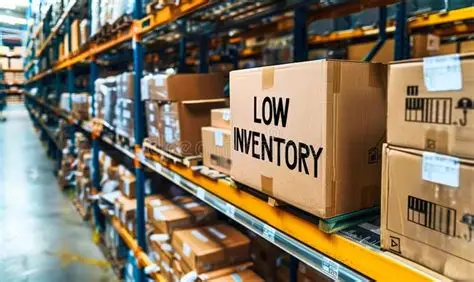
A customer walks into a store searching for a product they saw online.
They know the brand. They know the price. They may even know the exact shelf location.
But the space is empty.
The disappointment arrives quickly. The customer does not see the missed forecast, the delayed shipment, the supplier problem, or the inventory report buried inside a retailer’s operations system. They see one thing: the product is unavailable.
An empty shelf appears simple. It is not.
Retail inventory shortages are rarely caused by a single failure. They are usually the result of a chain reaction — a series of small miscalculations, unexpected disruptions, and decisions made with incomplete information.
The retailer ordered too little. The supplier produced too slowly. Demand increased faster than expected. Transportation costs delayed replenishment. A forecasting model missed a shift in consumer behavior.
The final result is visible to the shopper.
The causes are hidden.
I learned this lesson while observing a retailer struggle with a sudden surge in demand for a product that had been considered a steady seller rather than a breakout success. The company had inventory systems, supplier relationships, and historical data. Yet the shelves still emptied. The problem was not a lack of information. It was the difficulty of interpreting changing behavior quickly enough.
That experience revealed an important truth about modern retail: inventory shortages are not simply supply problems. They are prediction problems.
The Anatomy of an Inventory Shortage
Retail inventory shortages occur when customer demand exceeds available product supply.
The formula sounds straightforward:
Demand rises.
Supply falls behind.
Customers cannot buy what they want.
But behind that simple equation are multiple variables.
Retailers must predict:
- How many units customers will purchase
- When demand will increase or decline
- Where products should be stored
- How quickly suppliers can respond
- How much inventory is financially reasonable to maintain
Every decision involves uncertainty.
Holding too much inventory creates excess costs.
Holding too little creates missed revenue and disappointed customers.
The challenge is finding the narrow space between abundance and scarcity.
The Major Causes of Retail Inventory Shortages
1. Inaccurate Demand Forecasting
Forecasting is the foundation of inventory planning.
Retailers analyze previous sales patterns, seasonal trends, promotions, economic conditions, and customer behavior to estimate future demand.
The problem is that consumers do not always behave according to historical patterns.
A product may suddenly become popular because of:
- Social media attention
- A celebrity endorsement
- A cultural trend
- A competitor’s shortage
- A sudden change in consumer priorities
A forecasting system built primarily on past data can struggle when the future looks different from the past.
A retailer may believe it is making a careful decision by ordering based on historical averages. Then demand accelerates, and inventory disappears.
The shortage is not caused by poor planning alone.
It is caused by planning in an environment where behavior changes faster than assumptions.
2. Supplier Disruptions
Retailers depend on networks of manufacturers, distributors, and raw material providers.
A problem at any point in that network can affect product availability.
Common supplier disruptions include:
- Factory delays
- Labor shortages
- Material scarcity
- Quality issues
- Production capacity limits
- Geopolitical disruptions
A retailer may have strong customer demand and sufficient warehouse space, but still fail to deliver because the product never arrived from the source.
Supply chains are interconnected systems. A delay hundreds or thousands of miles away can eventually appear as an empty shelf in a local store.
3. Transportation and Logistics Problems
Products do not move instantly.
They travel through complex logistics networks involving ports, warehouses, carriers, and distribution centers.
Inventory shortages can occur when:
- Shipping routes are disrupted
- Transportation capacity decreases
- Fuel costs increase
- Delivery schedules become unreliable
- Warehouses experience congestion
A product may technically exist but remain unavailable because it is trapped somewhere between production and purchase.
This distinction matters.
Retailers do not only manage inventory. They manage inventory movement.
4. Unexpected Demand Surges
Sometimes shortages occur because retailers underestimate customer enthusiasm.
A product that performs normally for months can suddenly become highly desirable.
Consider the pattern:
A retailer launches a product.
Early sales are stronger than expected.
Customers begin sharing their purchases.
Demand accelerates.
Inventory disappears.
By the time the retailer increases production, the opportunity may already be shrinking.
Fast-moving consumer trends create a difficult challenge: companies must react quickly without overproducing.
5. Poor Inventory Visibility
Retailers cannot manage what they cannot accurately see.
Inventory visibility refers to knowing:
- What products exist
- Where they are located
- How quickly they are selling
- When replenishment is needed
A company may believe it has inventory available because its system shows stock. However, the actual product may be:
- Misplaced in a warehouse
- Already allocated to another order
- Delayed during transportation
- Incorrectly recorded
Small data errors can create large operational problems.
Inventory Shortage Comparison Table
| Cause of Shortage | Primary Trigger | Warning Signs | Business Impact | Typical Solution |
|---|---|---|---|---|
| Forecasting Errors | Demand differs from predictions | Sudden sales spikes or slowdowns | Lost sales and customer frustration | Improve forecasting models and human analysis |
| Supplier Delays | Production problems or limited capacity | Late shipments, reduced availability | Stockouts across locations | Diversify suppliers and improve communication |
| Transportation Disruptions | Logistics interruptions | Longer delivery times, rising shipping costs | Delayed replenishment | Build flexible transportation options |
| Demand Surges | Unexpected consumer interest | Rapid sales acceleration | Missed revenue opportunities | Create faster replenishment systems |
| Inventory Data Problems | Incorrect tracking information | Stock records do not match reality | Inefficient ordering decisions | Improve inventory technology and processes |
| Seasonal Planning Mistakes | Incorrect seasonal assumptions | Excess demand during peak periods | Empty shelves during critical periods | Use historical and real-time demand signals |
The Hidden Cost of Empty Shelves
An inventory shortage creates more than immediate lost sales.
It can affect:
Customer Loyalty
Customers often have alternatives.
If a shopper cannot find a product at one retailer, they may purchase from another. A single missed transaction can become a lost relationship.
Brand Perception
Availability influences trust.
A retailer that consistently lacks popular products may appear unreliable, even if the underlying reasons are complex.
Employee Efficiency
Inventory problems also affect store operations.
Employees spend time answering availability questions, managing customer frustration, and searching for products that may not exist.
The shortage becomes an organizational problem, not just a sales problem.
Why Some Retailers Intentionally Keep Inventory Limited
Not every empty shelf represents failure.
Some retailers deliberately use limited inventory strategies.
Scarcity can create:
- Exclusivity
- Urgency
- Reduced waste
- Lower storage costs
Luxury brands, for example, may maintain limited availability to protect brand positioning.
The difference is consumer perception.
A customer who believes an item is rare may feel excitement.
A customer who believes an item is unavailable due to poor management feels frustration.
The same empty shelf can communicate two completely different messages.
Technology’s Role in Preventing Shortages
Retailers increasingly rely on advanced tools to improve inventory decisions.
Modern systems can analyze:
- Sales patterns
- Customer behavior
- Regional demand differences
- Supplier performance
- Inventory movement
Artificial intelligence and automation can help identify signals earlier.
However, technology does not eliminate uncertainty.
A prediction model can identify possibilities. It cannot guarantee outcomes.
Retail remains a business built around human choices.
The Balance Between Too Much and Too Little
Inventory management is a constant negotiation.
Too much inventory creates:
- Higher storage costs
- Discounting pressure
- Waste
- Reduced profitability
Too little inventory creates:
- Lost sales
- Customer disappointment
- Competitive disadvantages
The goal is not maximum inventory.
The goal is responsive inventory.
The best retailers create systems that adapt.
Conclusion: The Empty Shelf Is a Strategic Warning
An empty shelf may look like a simple retail inconvenience.
It is often something deeper.
It is evidence of a gap between prediction and reality.
Retailers operate in a world where customer preferences shift quickly, supply networks face constant pressure, and every inventory decision involves risk.
The companies that succeed will not be those that eliminate uncertainty. That is impossible.
They will be the companies that recognize uncertainty earlier, respond faster, and build systems flexible enough to absorb unexpected change.
Because inventory shortages are not really about missing products.
They are about missed connections — between data and decisions, between supply and demand, and between what a customer expects and what a retailer can provide.
The empty shelf is not where the problem begins.
It is where the problem becomes visible.
- Arts
- Business
- Computers
- Игры
- Health
- Главная
- Kids and Teens
- Деньги
- News
- Personal Development
- Recreation
- Regional
- Reference
- Science
- Shopping
- Society
- Sports
- Бизнес
- Деньги
- Дом
- Досуг
- Здоровье
- Игры
- Искусство
- Источники информации
- Компьютеры
- Личное развитие
- Наука
- Новости и СМИ
- Общество
- Покупки
- Спорт
- Страны и регионы
- World

 English
 French
 Spanish
 Portuguese
 Deutsch
 Turkish
 Dutch
Dutch
 Italiano
 Arabic
 Romaian
 Portuguese (Brazil)
 Greek
Greek
