
What Is SaaS Pricing? The Most Underrated Product Decision in Software
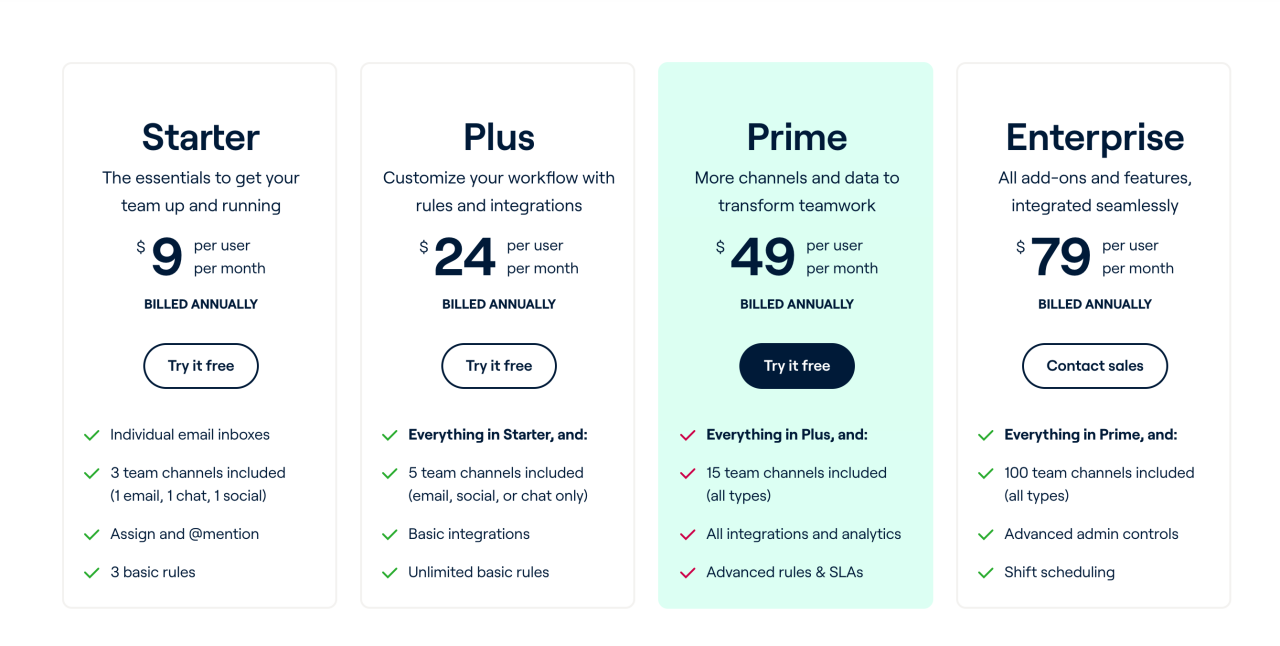
Software companies like to talk about innovation. Founders showcase product roadmaps. Product managers obsess over feature releases. Engineers debate architecture.
Yet one of the most consequential decisions a software company makes often receives remarkably little attention outside executive meetings: pricing.
That is curious because pricing does not merely determine revenue. It shapes customer behavior, signals value, influences positioning, and can even alter how a product evolves over time.
I have seen organizations spend months refining a dashboard feature while devoting a single afternoon to deciding whether the product should cost $29 or $49 per month. The imbalance is striking. Customers do not experience pricing as a spreadsheet exercise. They experience it as part of the product itself.
That is why understanding SaaS pricing requires moving beyond a narrow discussion of monthly subscriptions. Pricing is not simply about charging customers. It is about creating a value exchange that feels fair to the buyer and sustainable for the seller.
The companies that understand this distinction often outperform competitors with objectively similar technology.
What Is SaaS Pricing?
SaaS pricing refers to the strategy and structure software companies use to charge customers for access to their cloud-based products.
Unlike traditional software, which was historically purchased through one-time licenses, Software-as-a-Service (SaaS) products are typically sold through recurring subscriptions. Customers pay monthly or annually to continue using the software.
But that definition barely scratches the surface.
A pricing model answers several questions simultaneously:
- How much should customers pay?
- What exactly are they paying for?
- When should they pay?
- Which customers should pay more?
- Which customers should pay less?
- How should value increase as usage grows?
The elegance of SaaS pricing lies in its flexibility. A company can charge based on users, usage, features, transactions, storage, outcomes, or some combination of these variables.
The challenge is that each choice sends a message.
Pricing is communication disguised as mathematics.
Why SaaS Pricing Matters More Than Most People Realize
Many executives treat pricing as a financial decision. Customers rarely do.
Customers interpret pricing emotionally before they evaluate it rationally.
A low price may suggest affordability, but it can also imply limited capability. A premium price can signal confidence and quality, yet it may create hesitation among new buyers.
This dynamic resembles consumer goods markets. Luxury brands do not merely sell products; they sell signals. Software companies do something similar, though often less consciously.
Consider two project management platforms offering nearly identical capabilities.
One costs $8 per user per month.
The other costs $24 per user per month.
Even before seeing a demo, buyers begin constructing assumptions. They infer reliability, sophistication, support quality, and target audience.
Pricing becomes part of positioning.
The software has not changed. Perception has.
The Evolution of SaaS Pricing
The earliest SaaS companies largely adopted straightforward subscription models.
Pay a monthly fee.
Receive access.
Simple.
As the market matured, software providers discovered that customer value was not distributed evenly. A small startup and a global enterprise might use the same platform in dramatically different ways.
Charging both customers the same amount left money on the table while creating growth constraints.
The result was a wave of increasingly sophisticated pricing approaches.
Today, SaaS pricing strategies often reflect a company's understanding of customer value rather than its internal costs.
That shift is important.
Customers rarely care how expensive a product was to build. They care about the outcome it creates.
A CRM that helps generate $500,000 in additional revenue is not evaluated according to server expenses. It is evaluated according to business impact.
The Most Common SaaS Pricing Models
Flat-Rate Pricing
Flat-rate pricing offers one product at one price.
Every customer receives the same package.
Advantages:
- Easy to understand
- Simple billing
- Predictable revenue
Disadvantages:
- Limited flexibility
- Difficult to serve diverse customer segments
- Potential revenue loss from high-value customers
This model works best when customer needs are relatively similar.
Per-User Pricing
Per-user pricing charges organizations based on the number of users accessing the platform.
For example:
- 10 users = $200/month
- 50 users = $1,000/month
This remains one of the most widely used SaaS pricing structures because customers intuitively understand it.
Yet simplicity can create unintended consequences.
Organizations may restrict employee access to reduce costs, limiting product adoption and potentially slowing growth.
Tiered Pricing
Tiered pricing divides customers into predefined packages.
A typical structure might include:
- Basic
- Professional
- Business
- Enterprise
Each tier unlocks additional capabilities.
The brilliance of tiered pricing lies in choice architecture. Customers feel empowered because they select among options rather than simply accepting a price.
At the same time, companies can align pricing with customer sophistication.
Usage-Based Pricing
Usage-based pricing charges customers according to actual consumption.
Examples include:
- API calls
- Data storage
- Processing volume
- Transactions
This model has gained significant traction because it aligns cost with value creation.
Customers pay more when they derive more value.
The challenge is predictability.
Finance teams appreciate stable expenses. Variable pricing can create uncertainty, particularly for rapidly growing organizations.
Freemium Pricing
Freemium provides a free version while reserving advanced functionality for paying customers.
At first glance, free access appears generous.
In reality, it is a carefully calibrated acquisition strategy.
The objective is not to maximize free users. The objective is to convert the right users into paying customers.
When executed effectively, freemium creates a powerful product-led growth engine.
When executed poorly, it creates a large population of non-paying users consuming resources.
Comparing SaaS Pricing Models
| Pricing Model | How It Works | Best For | Main Advantage | Primary Risk |
|---|---|---|---|---|
| Flat-Rate | Single price for all users | Simple products | Easy understanding | Revenue limitations |
| Per-User | Charges based on user count | Collaboration tools | Predictable scaling | Seat hoarding |
| Tiered | Multiple package levels | Diverse customer segments | Market coverage | Complexity |
| Usage-Based | Charges based on consumption | Infrastructure and APIs | Strong value alignment | Revenue variability |
| Freemium | Free entry with paid upgrades | Product-led growth companies | User acquisition | Low conversion rates |
| Hybrid | Combination of multiple models | Mature SaaS businesses | Flexibility | Management complexity |
The Psychology Behind SaaS Pricing
Pricing strategy is often discussed as an economic problem.
It is equally a behavioral problem.
Customers do not calculate value with scientific precision. They use shortcuts.
One common shortcut is anchoring.
Imagine a pricing page displaying three plans:
- Starter: $29/month
- Growth: $99/month
- Enterprise: $399/month
Many customers gravitate toward the middle option.
Why?
Not because they independently concluded that $99 represents optimal value.
Rather, the surrounding prices create context.
The $399 option makes $99 appear reasonable.
Behavioral economists have documented this phenomenon repeatedly across industries. SaaS is no exception.
Another psychological factor is loss aversion.
Customers often react more strongly to losing access than gaining new capabilities.
That insight explains why many SaaS companies emphasize limits, restrictions, and upgrade thresholds. The motivation is not manipulation. It is recognition of how people naturally evaluate choices.
How Successful SaaS Companies Think About Value
The strongest SaaS pricing strategies begin with a deceptively simple question:
What outcome are customers buying?
Not features.
Not dashboards.
Not workflows.
Outcomes.
A marketing platform may sell lead generation.
An accounting tool may sell financial clarity.
A cybersecurity solution may sell peace of mind.
The distinction matters because customers rarely purchase software for its own sake.
They purchase progress.
When pricing reflects the value of that progress, resistance often declines.
When pricing reflects internal assumptions disconnected from customer outcomes, friction emerges.
This is where many organizations stumble.
They price according to what they built rather than what customers achieve.
Those are not always the same thing.
A Lesson I Learned About Pricing
Several years ago, I participated in a workshop with software executives evaluating a new pricing structure.
The discussion began conventionally. We examined competitors, revenue targets, and operational costs.
Then someone asked a different question:
“What would customers lose if this product disappeared tomorrow?”
The room became noticeably quieter.
Suddenly, the conversation shifted.
We were no longer discussing software features. We were discussing business dependence.
Some customers would experience inconvenience.
Others would face substantial operational disruption.
That distinction revealed something important: value was unevenly distributed across the customer base.
A single price could never capture that reality effectively.
The eventual pricing strategy incorporated multiple value-based tiers. Adoption improved, expansion revenue increased, and customer conversations became easier.
The lesson was memorable.
Pricing becomes far more effective when companies focus on customer consequences rather than product characteristics.
The Rise of Hybrid SaaS Pricing
Increasingly, SaaS companies are abandoning rigid pricing structures in favor of hybrid models.
A hybrid model might combine:
- Base subscription fee
- Per-user charges
- Usage-based components
- Premium feature access
At first, this sounds unnecessarily complicated.
Yet modern software serves increasingly diverse customer groups.
A startup with five employees and a multinational enterprise with 50,000 employees often require fundamentally different pricing approaches.
Hybrid models allow companies to accommodate that diversity while preserving alignment between price and value.
The danger, however, is excess complexity.
Customers should never need a calculator and a legal team merely to understand what a product costs.
Transparency remains a competitive advantage.
How to Evaluate SaaS Pricing as a Buyer
For buyers, the lowest price is rarely the most useful metric.
Instead, evaluate:
Total Cost of Ownership
Subscription fees represent only one component.
Consider:
- Training costs
- Implementation expenses
- Integration requirements
- Administrative effort
Scalability
Will costs remain reasonable as usage grows?
A platform that appears inexpensive today may become surprisingly costly at scale.
Value Delivered
What measurable outcome does the software produce?
Revenue growth?
Time savings?
Risk reduction?
Customer retention?
The answer should justify the investment.
Pricing Predictability
Can finance teams forecast future expenses accurately?
Predictability often matters as much as affordability.
The Future of SaaS Pricing
Artificial intelligence is already reshaping pricing conversations.
Historically, software vendors charged for access.
Increasingly, they may charge for outcomes.
If an AI platform completes work that once required human labor, should pricing reflect usage, productivity gains, or business impact?
There is no universal answer yet.
But the direction is revealing.
As software becomes more autonomous, the connection between pricing and delivered value will likely become even tighter.
The most successful companies will not simply ask, “How much should we charge?”
They will ask, “How should value be measured?”
That is a fundamentally different question.
Conclusion: Pricing Is Strategy Wearing a Different Name
SaaS pricing is often treated as a tactical exercise, tucked away between product development and sales operations.
That perspective misses its true significance.
Pricing defines who a company serves, how customers perceive value, and where growth ultimately comes from. It shapes behavior on both sides of the transaction. It influences adoption, retention, expansion, and profitability.
Most software products can be copied eventually. Features migrate across competitors with surprising speed. Interfaces evolve. Technologies change.
Pricing, however, sits at the intersection of economics, psychology, and strategy. It reveals how deeply a company understands its customers.
The best SaaS pricing models do not merely extract revenue.
They express a theory of value.
And in software markets crowded with similar products, that theory may be one of the few truly enduring advantages.
- Arts
- Business
- Computers
- Jeux
- Health
- Domicile
- Kids and Teens
- Argent
- News
- Personal Development
- Recreation
- Regional
- Reference
- Science
- Shopping
- Society
- Sports
- Бизнес
- Деньги
- Дом
- Досуг
- Здоровье
- Игры
- Искусство
- Источники информации
- Компьютеры
- Личное развитие
- Наука
- Новости и СМИ
- Общество
- Покупки
- Спорт
- Страны и регионы
- World

 English
 Russian
 Spanish
 Portuguese
 Deutsch
 Turkish
 Dutch
Dutch
 Italiano
 Arabic
 Romaian
 Portuguese (Brazil)
 Greek
Greek
