
What Are the Different SaaS Pricing Models? A Strategic Look at How Software Companies Charge for Value
Most software companies spend enormous energy discussing product features.
Should the dashboard be redesigned?
Should AI capabilities move into the premium tier?
Should integrations be expanded?
Yet when customers finally arrive at the pricing page, something fascinating happens. All those carefully engineered features are suddenly filtered through a single question:
Is this worth what they're asking me to pay?
That moment is more consequential than many executives realize.
Pricing is often presented as an operational decision—a matter for finance teams and revenue analysts. But pricing is something much larger. It is a statement about value. It signals positioning. It influences adoption. It determines which customers stay and which customers leave.
In many ways, pricing is the product's final act of communication.
And nowhere is this more evident than in Software-as-a-Service (SaaS).
Unlike traditional software, where revenue arrived through one-time purchases, SaaS businesses rely on recurring relationships. Customers continually reassess whether the software deserves a place in their monthly budget. As a result, the pricing model itself becomes a strategic asset.
The question isn't simply, "How much should we charge?"
The more important question is, "What should customers pay for?"
That distinction explains why SaaS companies have developed a surprisingly diverse collection of pricing models—each built around a different theory of value.
Why SaaS Pricing Models Matter
Before examining the various models, it is worth understanding why the structure of pricing often matters more than the actual price.
Imagine two software companies.
Each generates identical value for customers.
Each charges roughly $100 per month.
At first glance, they appear economically equivalent.
Yet one charges per user while the other charges based on usage.
The result?
Customers behave differently.
Sales conversations unfold differently.
Revenue grows differently.
The same dollar amount produces dramatically different business outcomes.
That is because pricing models do not merely capture value. They shape behavior.
A pricing model is essentially an answer to a strategic question:
What metric best reflects customer success?
Every model attempts to solve that puzzle differently.
The Evolution of SaaS Pricing
Early SaaS businesses favored simplicity.
Customers paid a subscription fee.
Access was granted.
Everyone moved on.
As software categories matured, however, companies discovered something important.
Not all customers create equal value.
A five-person startup and a multinational corporation might use the same application, but their willingness to pay is rarely identical.
This realization sparked experimentation.
Instead of charging solely for access, companies began charging for users, transactions, storage, outcomes, features, and combinations thereof.
Today, pricing has become one of the most sophisticated levers in the SaaS playbook.
Flat-Rate Pricing
The Simplicity Model
Flat-rate pricing is exactly what it sounds like.
One product.
One package.
One price.
Every customer receives the same offering regardless of company size or usage patterns.
For example:
| Plan | Monthly Price |
|---|---|
| Standard Access | $99 |
The appeal is obvious.
Customers understand it immediately.
There are no complicated calculations or upgrade thresholds.
From a marketing perspective, simplicity reduces friction.
But simplicity comes with tradeoffs.
A small customer may feel the product is too expensive, while a large enterprise may happily pay far more than the listed price.
Consequently, flat-rate pricing often leaves revenue opportunities untapped.
Best For
- Niche SaaS products
- Single-purpose applications
- Businesses serving relatively similar customer segments
Per-User Pricing
The Most Recognizable SaaS Model
Per-user pricing has become almost synonymous with SaaS.
The formula is straightforward:
Price × Number of Users
For example:
| Users | Monthly Cost |
|---|---|
| 10 | $200 |
| 50 | $1,000 |
| 100 | $2,000 |
Collaboration tools, productivity platforms, and CRM systems frequently adopt this approach.
The reason is psychological as much as financial.
Customers intuitively understand seats.
The relationship between cost and usage appears logical.
More employees using the software means greater organizational value.
At least in theory.
The Hidden Drawback
Per-user pricing can create unintended resistance.
Managers often limit licenses to control costs.
Ironically, software designed to encourage adoption can end up discouraging broader usage.
Many SaaS companies eventually discover that seat-based pricing can place growth and pricing in direct conflict.
Per-Active-User Pricing
A More Flexible Variation
Some companies address the limitations of traditional seat pricing by charging only for active users.
Inactive accounts are excluded from billing calculations.
This model feels fairer because customers pay only for actual engagement.
The approach is particularly attractive for organizations with seasonal workers, contractors, or fluctuating workforce participation.
Advantages
- Reduces customer anxiety
- Encourages wider deployment
- Improves perceived fairness
Challenges
- Revenue predictability becomes more difficult
- Tracking activity can create operational complexity
Tiered Pricing
The Architecture of Choice
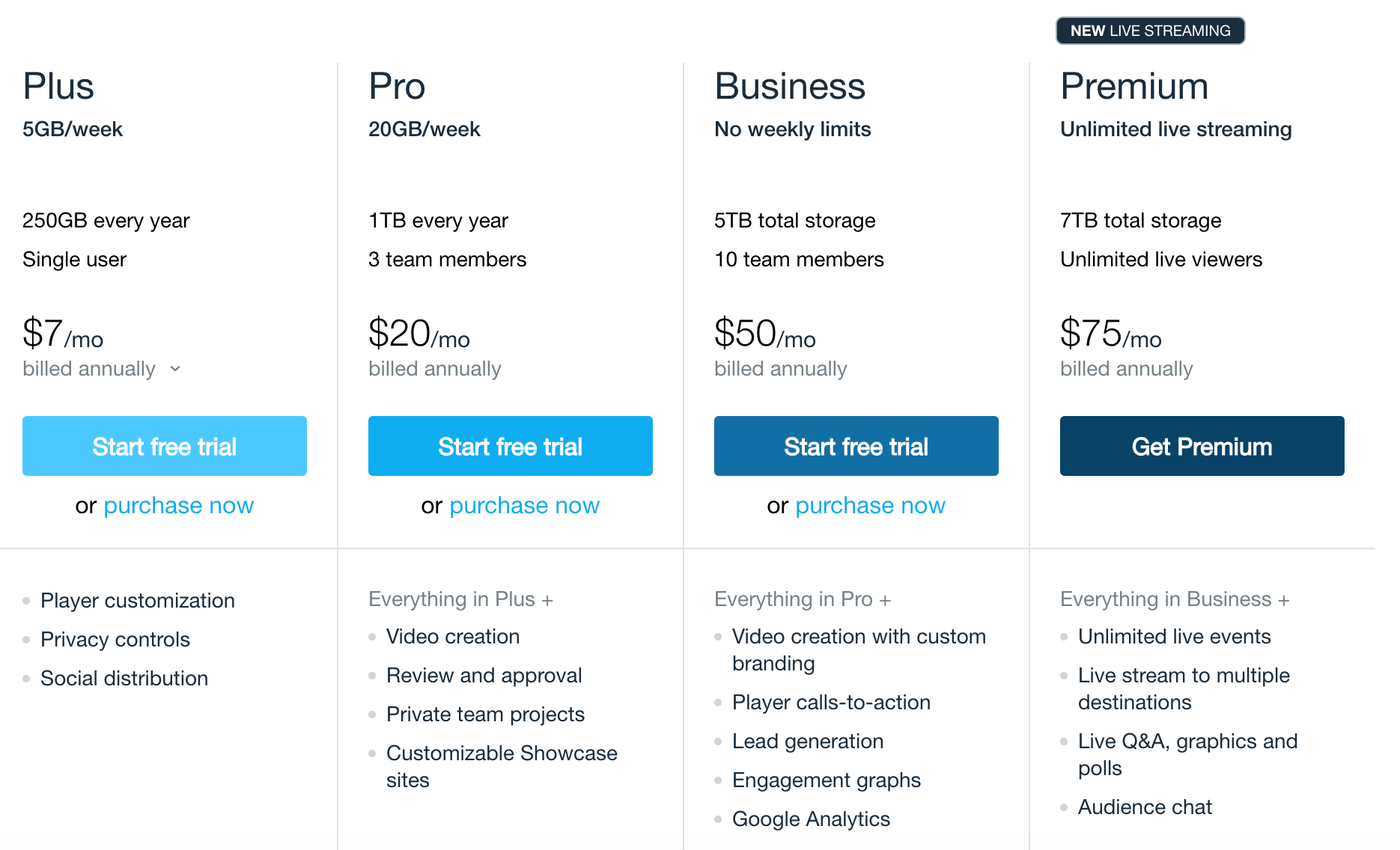
Few SaaS pricing strategies are more common than tiered pricing.
Customers select from multiple packages that differ in features, capacity, or support levels.
A typical structure looks like this:
| Tier | Monthly Price |
|---|---|
| Starter | $29 |
| Growth | $99 |
| Professional | $299 |
| Enterprise | Custom |
At first glance, tiered pricing appears to be a method of segmentation.
It is.
But it is also a form of behavioral design.
Most customers gravitate toward the middle option.
Behavioral economists call this the compromise effect.
People frequently avoid extremes.
The cheapest plan feels limiting.
The most expensive plan feels excessive.
The middle plan feels safe.
Many SaaS companies intentionally design pricing pages around this tendency.
Usage-Based Pricing
Paying for Consumption
Usage-based pricing ties cost directly to consumption.
Customers pay according to what they actually use.
Common metrics include:
- API requests
- Storage volume
- Transactions processed
- Data transferred
- AI tokens consumed
Cloud infrastructure providers have embraced this model extensively.
The logic is compelling.
Customers pay more as they derive more value.
Unlike seat-based pricing, usage pricing scales naturally with business growth.
Why Investors Like It
Investors often favor usage-based businesses because customer expansion happens organically.
Revenue growth becomes embedded in customer success.
As usage increases, spending follows.
That alignment can be extraordinarily powerful.
Why Customers Sometimes Don't
Budgeting becomes more difficult.
Predictability decreases.
Unexpected spikes in activity can produce surprising invoices.
And nobody enjoys surprises when money is involved.
Freemium Pricing
The Art of Strategic Generosity
Freemium pricing offers a permanently free version of the product while reserving advanced capabilities for paying users.
The goal is straightforward:
Reduce acquisition barriers.
Allow customers to experience value before committing financially.
Successful examples have appeared across collaboration software, design tools, communication platforms, and productivity applications.
But freemium is often misunderstood.
The objective is not maximizing free users.
The objective is maximizing qualified conversions.
A million free users who never upgrade may create impressive vanity metrics while generating disappointing economics.
Best For
- Products with strong network effects
- Product-led growth strategies
- Software with viral adoption patterns
Feature-Based Pricing
Charging for Capability
Under feature-based pricing, customers pay according to functionality rather than consumption.
Basic plans include essential features.
Premium plans unlock advanced capabilities.
This approach works because customer sophistication varies dramatically.
Some buyers require only foundational tools.
Others need automation, analytics, compliance features, or enterprise controls.
Feature differentiation enables software companies to serve both groups simultaneously.
The challenge is balance.
If too much value sits behind premium tiers, entry-level plans feel weak.
If too little value is restricted, upgrades become difficult to justify.
Per-Storage Pricing
Capacity as the Value Driver
Certain software categories naturally lend themselves to storage-based pricing.
Examples include:
- Cloud backup solutions
- File management platforms
- Data warehousing tools
Customers pay according to storage consumption.
A company storing 500 GB pays less than a company storing 50 TB.
This creates a transparent connection between usage and cost.
Yet storage alone rarely captures the complete value delivered by modern software, which is why this model often appears alongside other pricing mechanisms.
Outcome-Based Pricing
The Future-Oriented Model
Perhaps the most intriguing SaaS pricing model is outcome-based pricing.
Instead of charging for access or activity, companies charge according to results achieved.
Examples might include:
- Leads generated
- Sales completed
- Revenue influenced
- Support tickets resolved
Conceptually, this is elegant.
Customers pay for success.
The software provider shares accountability.
But implementation can be extraordinarily difficult.
Measuring outcomes fairly requires trust, transparency, and robust attribution systems.
Despite these challenges, advances in analytics and artificial intelligence are making outcome-based pricing increasingly feasible.
Hybrid Pricing Models
When One Model Isn't Enough
Many modern SaaS companies combine multiple approaches.
A hybrid structure might include:
- Base subscription fee
- Per-user charges
- Usage-based overages
- Premium feature tiers
This approach reflects reality.
Customer value rarely emerges from a single metric.
Hybrid pricing allows businesses to align revenue with multiple dimensions of value simultaneously.
The tradeoff is complexity.
Every additional pricing variable increases cognitive load.
Customers appreciate flexibility—up to a point.
Beyond that point, confusion begins to replace clarity.
Comparing SaaS Pricing Models
| Pricing Model | Primary Metric | Revenue Predictability | Customer Flexibility | Complexity Level | Best Use Case |
|---|---|---|---|---|---|
| Flat-Rate | Access | High | Low | Low | Simple products |
| Per-User | Seats | High | Medium | Low | Team collaboration tools |
| Per-Active-User | Engagement | Medium | High | Medium | Variable workforce environments |
| Tiered | Package Selection | High | High | Medium | Diverse customer segments |
| Usage-Based | Consumption | Medium | Very High | Medium | Infrastructure and APIs |
| Freemium | Conversion | Low | Very High | Low | Product-led growth |
| Feature-Based | Capability | High | Medium | Medium | Complex software suites |
| Per-Storage | Capacity | Medium | Medium | Low | Data-heavy platforms |
| Outcome-Based | Results | Variable | Very High | High | Performance-driven solutions |
| Hybrid | Multiple Metrics | High | High | High | Mature SaaS businesses |
A Lesson I Learned About Pricing
Several years ago, I attended a strategy session where executives were debating whether to increase subscription prices.
The discussion revolved around competitors, margins, and operating costs.
Then a customer success leader interrupted.
She asked a deceptively simple question:
"What are customers actually buying from us?"
Not features.
Not dashboards.
Not integrations.
Results.
That shift transformed the conversation.
Instead of debating prices, the team began discussing value creation.
Some customers used the platform occasionally.
Others had integrated it into the core of their operations.
A single pricing model could not adequately reflect those differences.
The eventual solution was a hybrid structure that combined subscription fees with usage-based elements.
Customer retention improved.
Expansion revenue accelerated.
Most importantly, pricing felt more aligned with customer outcomes.
That experience reinforced something I have observed repeatedly: pricing works best when it reflects how customers experience value rather than how companies organize products.
Conclusion: Every Pricing Model Is a Theory of Value
SaaS pricing models are often presented as financial mechanisms.
They are not.
They are strategic hypotheses.
Flat-rate pricing assumes value is relatively uniform.
Per-user pricing assumes value grows with participation.
Usage-based pricing assumes value increases through consumption.
Outcome-based pricing assumes value can be measured through results.
Each model tells a different story about what customers are purchasing.
The most successful SaaS companies are not necessarily those with the lowest prices or the most elaborate pricing pages. They are the ones that correctly identify the metric customers care about most. They understand that pricing is not merely a method of collecting revenue. It is a framework for expressing value.
And as software becomes increasingly intelligent, automated, and outcome-driven, the companies that master that expression may discover that pricing is not the final step in product strategy.
It is where strategy becomes visible.
- Arts
- Business
- Computers
- الألعاب
- Health
- الرئيسية
- Kids and Teens
- مال
- News
- Personal Development
- Recreation
- Regional
- Reference
- Science
- Shopping
- Society
- Sports
- Бизнес
- Деньги
- Дом
- Досуг
- Здоровье
- Игры
- Искусство
- Источники информации
- Компьютеры
- Личное развитие
- Наука
- Новости и СМИ
- Общество
- Покупки
- Спорт
- Страны и регионы
- World

 English
 Russian
 French
 Spanish
 Portuguese
 Deutsch
 Turkish
 Dutch
Dutch
 Italiano
 Romaian
 Portuguese (Brazil)
 Greek
Greek
