
SaaS vs. Cloud Computing: Why Most Businesses Are Comparing the Wrong Things
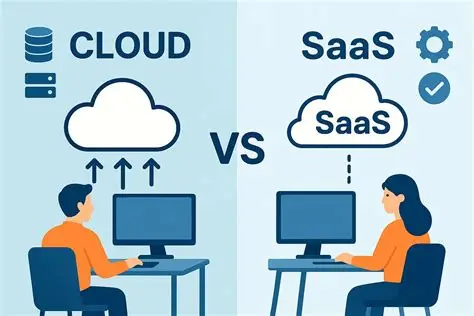
There is a peculiar habit in business decision-making.
We compare things that do not belong in the same category.
A company debates whether it should prioritize growth or profitability, as though one automatically excludes the other. Consumers compare luxury brands to discount retailers, despite each serving entirely different motivations. Executives discuss artificial intelligence and automation as interchangeable concepts, even though one is a capability and the other is an outcome.
The SaaS versus cloud computing debate falls into the same trap.
I was reminded of this during a conversation with a technology executive who confidently announced that his organization was “moving from SaaS to cloud computing.” The statement sounded sensible. It was also fundamentally flawed.
What he meant, after several minutes of discussion, was that the company was shifting from purchasing ready-made software to building and managing more of its own cloud infrastructure.
The distinction mattered.
Because SaaS and cloud computing are not direct competitors.
One is a specific service model.
The other is an entire delivery ecosystem.
Comparing SaaS to cloud computing is a little like comparing streaming services to the internet. One exists within the other.
Yet the confusion persists. And that confusion leads organizations toward poor technology decisions, misguided investments, and strategic misunderstandings.
So before asking which is better, we should first ask a more useful question:
What exactly are we comparing?
The Category Problem: SaaS Is Part of Cloud Computing
At the highest level, cloud computing refers to the delivery of computing resources over the internet.
Those resources can include:
- Software
- Storage
- Databases
- Networking
- Servers
- Development platforms
- Analytics tools
- Artificial intelligence services
Cloud computing is the umbrella.
SaaS sits underneath it.
Specifically, Software-as-a-Service (SaaS) is one of the most widely adopted cloud computing models.
When businesses use applications like customer relationship management systems, collaboration platforms, accounting tools, or marketing automation software delivered through a browser, they are using SaaS.
And because those applications are delivered through cloud infrastructure, they are also using cloud computing.
This is where many discussions go off course.
SaaS is not an alternative to cloud computing.
SaaS is a form of cloud computing.
The real strategic decision is often whether an organization should consume software through SaaS or take greater ownership of cloud resources through other cloud service models.
That distinction changes the conversation entirely.
Understanding the Cloud Computing Ecosystem
Cloud computing is best understood as a spectrum of responsibility.
As organizations move across that spectrum, they assume greater control—and greater complexity.
The three primary cloud service models include:
Software-as-a-Service (SaaS)
The provider manages nearly everything.
Infrastructure.
Maintenance.
Updates.
Security operations.
Users simply access the application.
Platform-as-a-Service (PaaS)
The provider supplies development environments, operating systems, and infrastructure.
Customers build and manage applications.
Infrastructure-as-a-Service (IaaS)
Organizations gain access to virtual servers, storage, networking resources, and computing power.
Customers maintain much greater control over applications and configurations.
Viewed this way, SaaS represents the most managed experience within cloud computing.
Cloud computing itself encompasses all three approaches.
The distinction is subtle.
The implications are enormous.
Why SaaS Became the Face of Cloud Computing
Ask most business leaders what comes to mind when they hear the phrase "cloud computing."
Many will immediately think of SaaS applications.
That reaction is understandable.
SaaS transformed how organizations purchase and consume technology.
Historically, software required installation.
Hardware procurement.
Maintenance contracts.
Upgrade projects.
Dedicated support teams.
The process was cumbersome.
SaaS simplified everything.
Organizations could subscribe, log in, and begin working.
The value proposition was remarkably straightforward.
Less infrastructure.
Less maintenance.
Less waiting.
More productivity.
This simplicity explains why SaaS became the most visible expression of cloud computing.
Not because it is the only cloud model.
Because it is often the easiest to understand.
SaaS vs. Cloud Computing: A Side-by-Side Comparison
Although SaaS exists within cloud computing, organizations often compare SaaS solutions against broader cloud infrastructure strategies.
The following table clarifies the differences.
| Feature | SaaS | Cloud Computing (Broadly) |
|---|---|---|
| Definition | Software delivered over the internet | Delivery of computing resources via the internet |
| Scope | Specific cloud service model | Umbrella category |
| User Focus | End users and business teams | IT teams, developers, and businesses |
| Infrastructure Management | Vendor-managed | Depends on service model |
| Customization | Limited to application settings | Can range from low to extensive |
| Deployment Speed | Extremely fast | Varies significantly |
| Technical Expertise Required | Low | Moderate to high |
| Maintenance Responsibility | Mostly vendor | Shared or customer-managed |
| Flexibility | Moderate | Potentially extensive |
| Cost Structure | Subscription-based | Consumption-based, subscription, or hybrid |
| Typical Use Case | Ready-to-use applications | Software, storage, platforms, and infrastructure |
The table reveals an important insight.
SaaS optimizes for convenience.
Cloud computing, broadly defined, optimizes for flexibility.
Neither objective is inherently superior.
Each serves a different organizational need.
The Hidden Trade-Off: Simplicity Versus Strategic Freedom
Business markets frequently reward convenience.
Consumers prefer products that reduce effort.
Organizations behave similarly.
SaaS succeeds because it minimizes complexity.
Yet minimizing complexity can also limit flexibility.
This creates one of the most important strategic tensions in technology.
The more responsibility a vendor assumes, the less responsibility an organization carries.
But the inverse is also true.
The more responsibility a vendor assumes, the less control an organization retains.
For many businesses, this trade-off is entirely acceptable.
For others, it becomes restrictive.
A Lesson Learned the Hard Way
Several years ago, I worked with a company that enthusiastically embraced SaaS across nearly every department.
The decision made sense.
Implementation was fast.
Operational costs were predictable.
Employee adoption was strong.
At first.
Then growth introduced complexity.
The company developed specialized workflows.
Customer expectations evolved.
Data integration requirements expanded.
What initially felt liberating gradually became limiting.
Teams discovered they were adapting business processes to fit software rather than adapting software to fit business processes.
The organization ultimately invested in broader cloud infrastructure services to support custom applications and integrations.
The lesson was memorable.
Convenience creates value.
But convenience is not always the same thing as flexibility.
Organizations must understand which capability matters more at a particular stage of growth.
Cost Considerations: The Question Behind the Question
Executives often ask whether SaaS is cheaper than cloud computing.
The question sounds reasonable.
It is also incomplete.
Because SaaS itself is cloud computing.
What leaders are usually asking is whether consuming ready-made software costs less than managing broader cloud resources.
The answer depends on context.
When SaaS Often Costs Less
SaaS can reduce expenses by eliminating:
- Hardware purchases
- Infrastructure maintenance
- System administration
- Software upgrade projects
- Data center costs
For many small and midsize businesses, these savings are substantial.
When Broader Cloud Strategies Create More Value
Organizations with highly customized requirements may discover that standardized SaaS platforms become expensive in different ways.
Not because subscription fees are excessive.
Because limitations create operational inefficiencies.
Custom cloud environments often require larger investments.
Yet those investments can produce strategic advantages that standardized software cannot deliver.
Cost alone rarely determines the correct choice.
Value creation does.
Security: More Nuance Than Most Headlines Suggest
Security discussions frequently suffer from oversimplification.
One side argues that SaaS providers offer stronger protection.
The other insists internal control improves security.
Both perspectives contain elements of truth.
SaaS Security Strengths
Major SaaS providers often invest heavily in:
- Threat detection
- Continuous monitoring
- Security engineering
- Compliance certifications
- Data encryption
Many organizations benefit from expertise they could not independently replicate.
Broader Cloud Security Considerations
Cloud computing beyond SaaS introduces greater flexibility.
It also introduces greater responsibility.
Organizations may manage configurations, access controls, applications, and workloads themselves.
This creates opportunities.
It also creates risks.
Security outcomes ultimately depend less on the service model and more on implementation quality.
Technology architecture matters.
Governance matters more.
Innovation and Competitive Advantage
This is where the distinction becomes strategically significant.
Most SaaS applications are designed for standardization.
That is their strength.
Businesses gain access to proven capabilities used across industries.
But innovation often emerges from differentiation.
And differentiation frequently requires customization.
Broader cloud computing services—particularly PaaS and IaaS—enable organizations to create proprietary applications, unique customer experiences, and specialized workflows.
The result is a different type of value.
Not operational efficiency.
Competitive distinction.
Companies must decide which objective matters most.
Because the answer shapes the technology strategy.
When SaaS Is the Better Choice
SaaS typically excels when organizations need:
Rapid Deployment
Speed matters.
Ready-made software delivers immediate functionality.
Limited Technical Complexity
Companies without large IT teams often benefit from vendor-managed environments.
Predictable Costs
Subscription models simplify budgeting.
Standard Business Processes
Functions such as accounting, collaboration, and customer support often align well with SaaS solutions.
In these situations, SaaS can produce exceptional results with minimal operational burden.
When Broader Cloud Computing Makes More Sense
Cloud infrastructure, platforms, and custom environments become attractive when:
Customization Is Critical
Unique workflows often require greater flexibility.
Innovation Creates Competitive Advantage
Custom applications can differentiate organizations in meaningful ways.
Integration Requirements Are Extensive
Complex technology ecosystems frequently benefit from broader cloud architectures.
Strategic Control Matters
Some businesses simply require deeper ownership of systems and processes.
For these organizations, broader cloud capabilities may unlock greater long-term value.
Conclusion: The Real Debate Is About Responsibility
The question "SaaS vs. cloud computing" sounds logical.
Yet it masks the more important issue.
How much responsibility should your organization own?
SaaS represents the most convenient expression of cloud computing. It delivers software while minimizing operational complexity.
Broader cloud computing services offer greater flexibility, customization, and control—but they also demand greater expertise and management.
Neither approach is universally superior.
Both create value under different conditions.
The organizations that thrive are not necessarily those with the most sophisticated cloud strategies.
Nor are they those with the most SaaS subscriptions.
They are the ones that understand a deceptively simple principle:
Technology creates value when responsibility is allocated intelligently.
Own the complexity that differentiates your business.
Outsource the complexity that does not.
Everything else is merely architecture.
- Arts
- Business
- Computers
- Jogos
- Health
- Início
- Kids and Teens
- Money
- News
- Personal Development
- Recreation
- Regional
- Reference
- Science
- Shopping
- Society
- Sports
- Бизнес
- Деньги
- Дом
- Досуг
- Здоровье
- Игры
- Искусство
- Источники информации
- Компьютеры
- Личное развитие
- Наука
- Новости и СМИ
- Общество
- Покупки
- Спорт
- Страны и регионы
- World

 English
 Russian
 French
 Spanish
 Deutsch
 Turkish
 Dutch
Dutch
 Italiano
 Arabic
 Romaian
 Portuguese (Brazil)
 Greek
Greek
